Form & Structure
Theme and Variations
Theme and variations is a musical form in which a theme is stated and then repeated several times, each time changed in melody, rhythm, harmony, key, texture or character, while staying recognizable.
In theme and variations, a composer presents a theme, usually a short, simple tune of eight to thirty-two bars, and then plays it again and again, changing something each time. Each repetition is a variation. The outline is easy to write:
- A – A1 – A2 – A3 – A4 …
The fun lies in how much a composer can change while you still recognize the theme underneath.
Ways to vary a theme
- Melodic decoration: extra notes fill the gaps around the theme's notes, often in faster rhythms.
- Rhythmic change: the theme in triplets, dotted rhythms, or a different meter.
- Change of mode: a major theme in minor, or the reverse. Composers sometimes label such a variation minore or maggiore.
- Harmonic change: the same melody over new chords.
- Texture and register: the tune moves to the bass, appears in counterpoint, or is split between the hands.
- Character: the theme becomes a march, a waltz, a slow lament or a fast finale.
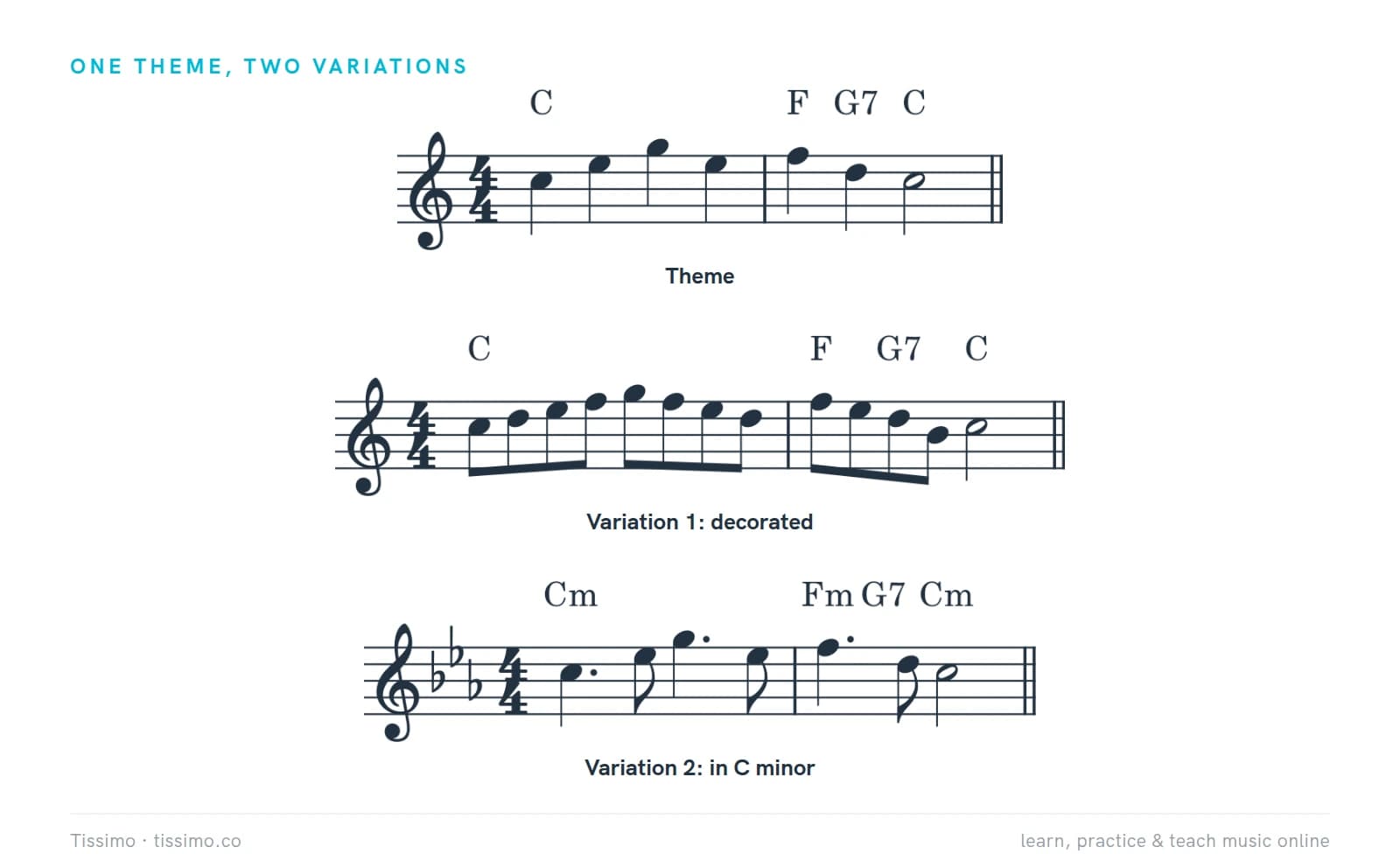
Two kinds of variation form
- Sectional variations: each variation is a self-contained section, usually with the same length and phrase structure as the theme, and ends with a cadence. Most sets for piano work this way.
- Continuous variations: a short bass line or chord pattern repeats over and over while the upper parts change, without stopping between variations. A repeating bass of this kind is called a ground bass, and it underlies the Baroque passacaglia and chaconne. Pachelbel's Canon in D is built over one.
Well-known examples
- Mozart's 12 Variations on "Ah, vous dirai-je, maman," K. 265, on the tune English speakers know as "Twinkle, Twinkle, Little Star."
- Bach's Goldberg Variations: an aria followed by thirty variations.
- Beethoven's Diabelli Variations: thirty-three variations on a short waltz.
- The slow movement of Haydn's "Surprise" Symphony (No. 94).
- Elgar's Enigma Variations for orchestra.
In jazz, a performance that plays a tune's chord progression over and over while soloists improvise new melodies is a close relative of variation form.
Try it yourself
Take any simple tune you know and play it four ways: as written, decorated with passing notes, in minor, and in a new rhythm or meter. The Musical form worksheet has a theme and a sample variation to start from.
Common questions
What is an example of theme and variations?
Mozart's 12 Variations on "Ah, vous dirai-je, maman" (the "Twinkle, Twinkle" tune), Bach's Goldberg Variations and Beethoven's Diabelli Variations are among the best known.
How many variations are in a theme and variations?
There is no fixed number. Short teaching sets may have three or four, Mozart's K. 265 has twelve, and Beethoven's Diabelli Variations have thirty-three.
Practice it: free worksheets
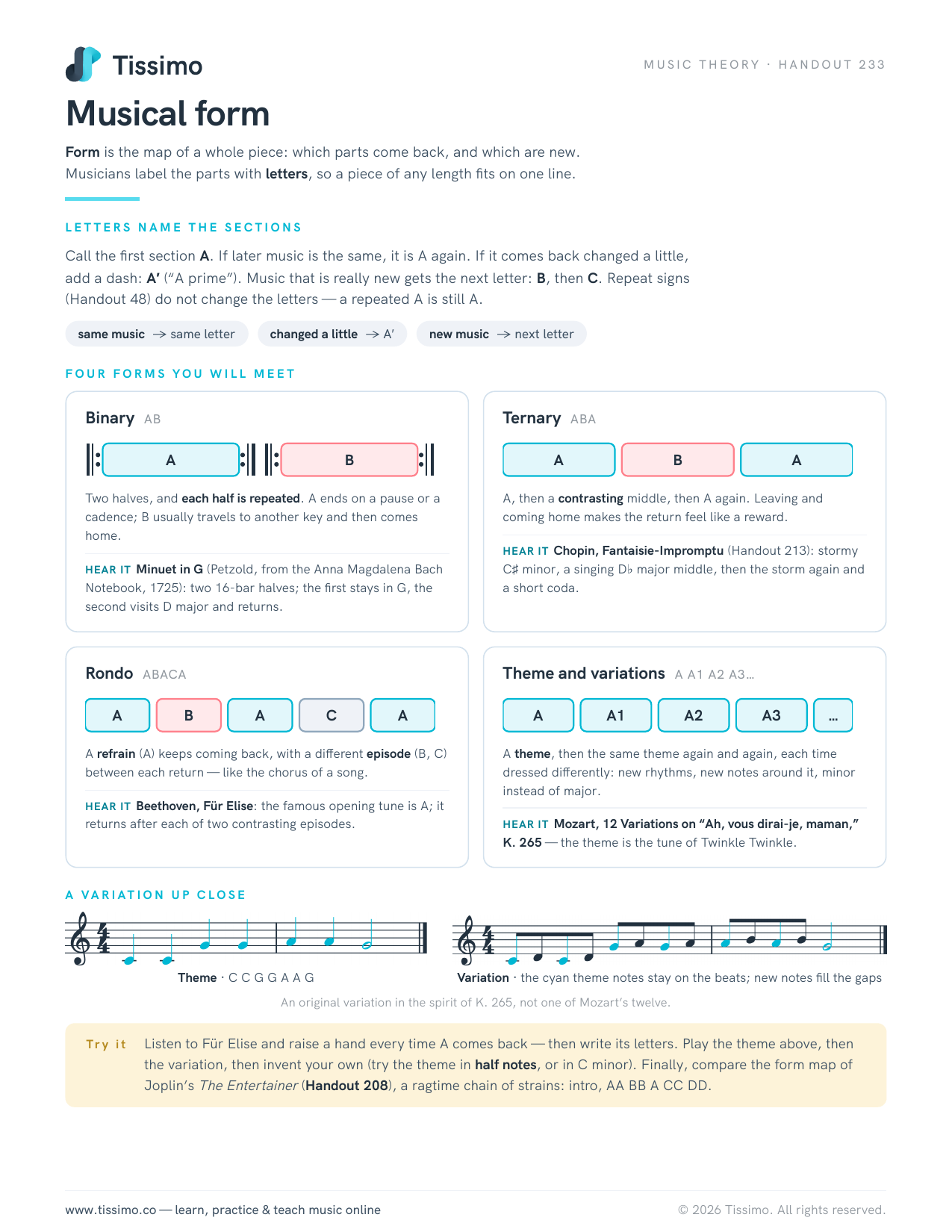 Musical formForm is the map of a whole piece: which parts come back, and which are new. Musicians label the parts with letters, so a piece of any length fits on one line.
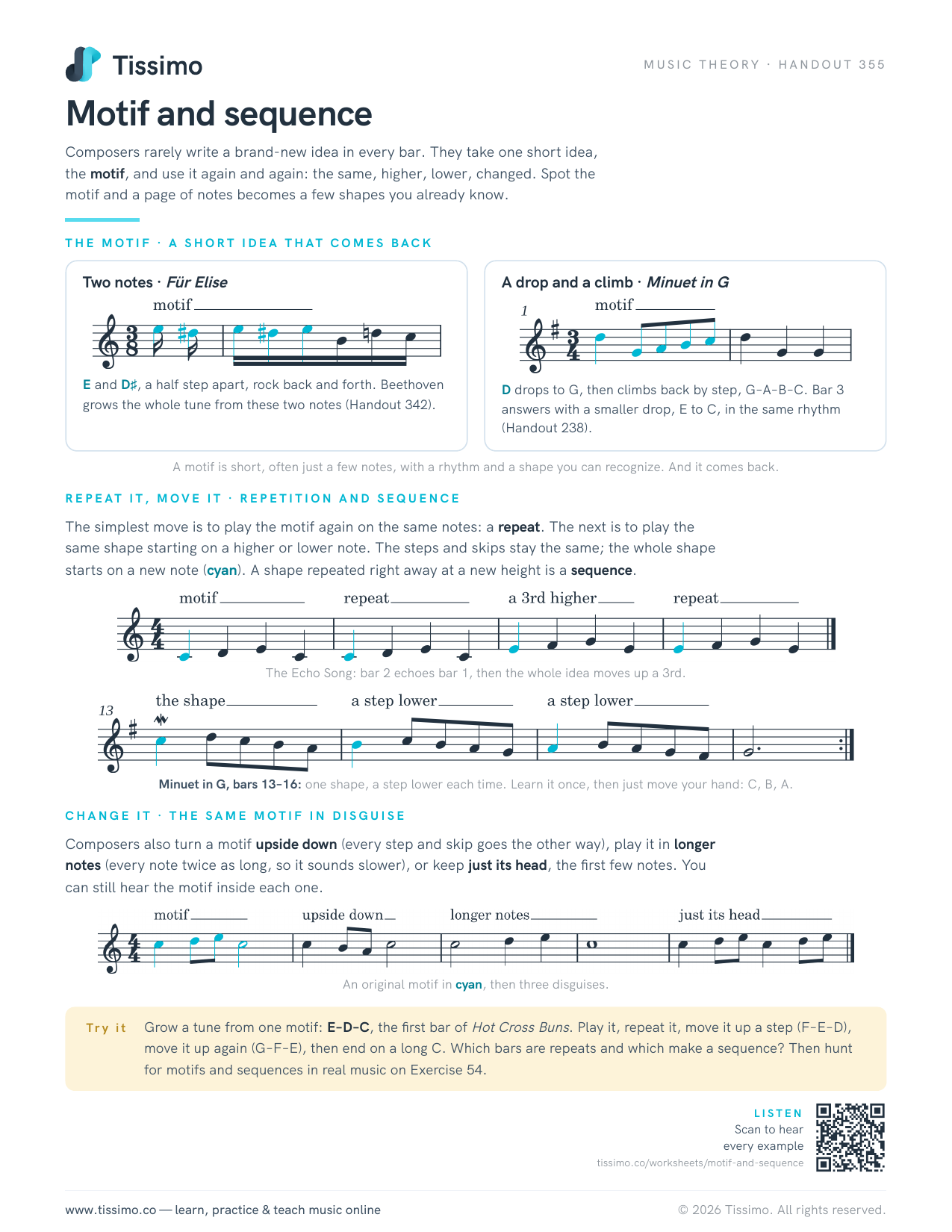 Motif and sequenceComposers rarely write a brand-new idea in every bar. They take one short idea, the motif, and use it again and again: the same, higher, lower, changed. Spot the motif and a page of notes becomes a few shapes you already know.