Form & Structure
Development
The development is the middle section of a sonata-form movement, where themes from the exposition are broken up, transformed and moved through several keys before the music returns home.
In sonata form, the development comes between the exposition and the recapitulation. The exposition has introduced the themes; the development takes them apart and puts them under pressure. It is usually the least stable part of the movement: keys change quickly, minor keys appear, and familiar ideas turn up in unexpected shapes.
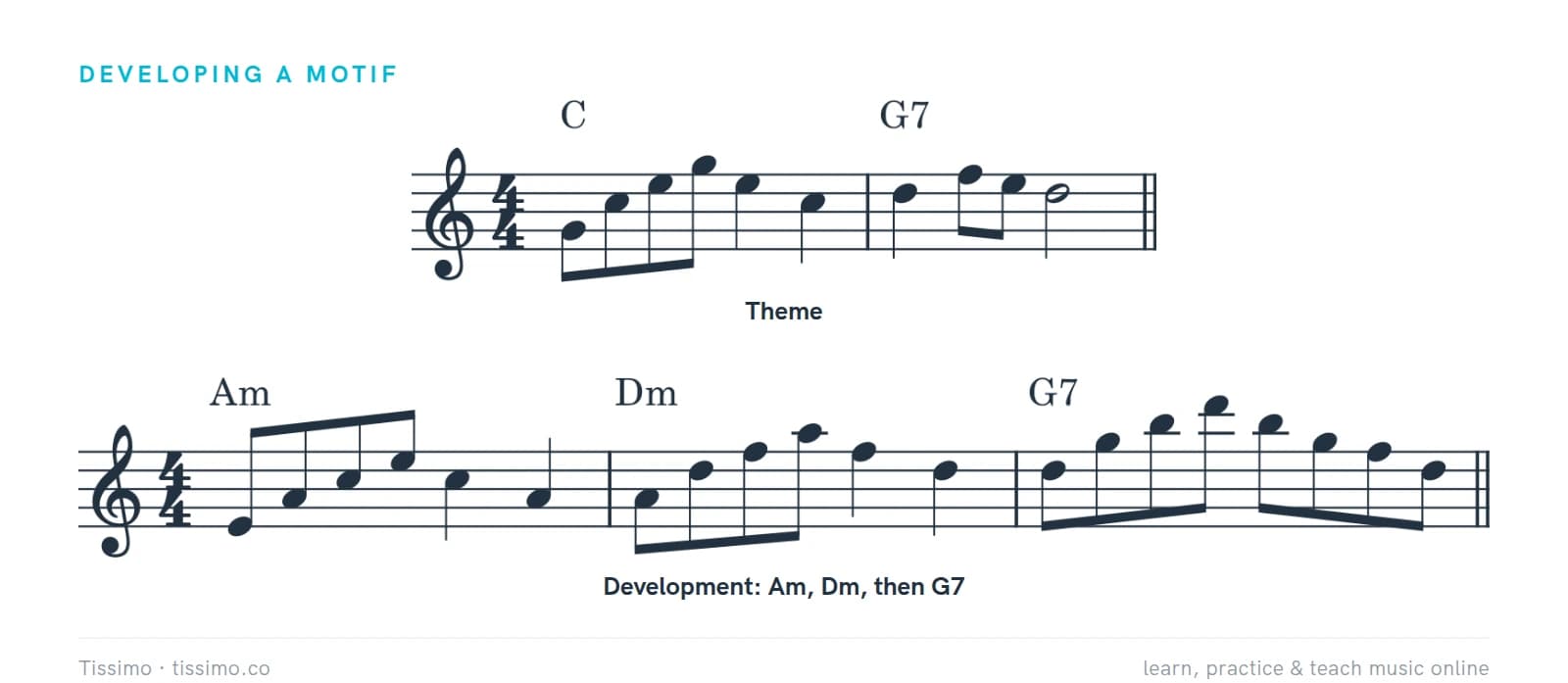
The word also has a general meaning: thematic development is any process of building new music out of an existing idea, wherever it happens in a piece.
Techniques you will hear
- Fragmentation: only a piece of the theme is used, often its first bar or a short motif.
- Sequence: a fragment is repeated on higher or lower steps, carrying the music from key to key.
- Modulation through several keys, often minor ones and keys that did not appear in the exposition.
- Changes of texture and register: a melody moves into the bass, or two ideas are combined in counterpoint and imitation.
- Changes of rhythm, harmony and dynamics: a lyrical theme becomes stormy, or a bright one is darkened in minor.
How a development ends
Near the end, most developments settle on the dominant of the home key, often with a long held or repeated bass note (a dominant pedal). This passage, the retransition, builds suspense until the first theme returns in the home key at the start of the recapitulation. Some composers, Haydn among them, liked to play with that expectation by bringing the theme back in the "wrong" key first, a so-called false recapitulation.
How long is it?
It varies enormously. In a sonatina the development may be only a few bars, and in some slow movements and overtures there is hardly any development at all. In Beethoven's larger works it can be the longest and most dramatic part of the movement. The Sonata form worksheet shows where the development begins and ends in Mozart's K. 545 and Clementi's Op. 36 No. 1.
Common questions
What happens in the development section?
Themes from the exposition are fragmented, sequenced, recombined and moved through several keys. The section usually ends on the dominant of the home key, preparing the recapitulation.
What is a false recapitulation?
A passage near the end of a development where the first theme returns, often in the wrong key, as if the recapitulation had begun, before the development continues. Haydn was fond of the effect.
Practice it: free worksheets
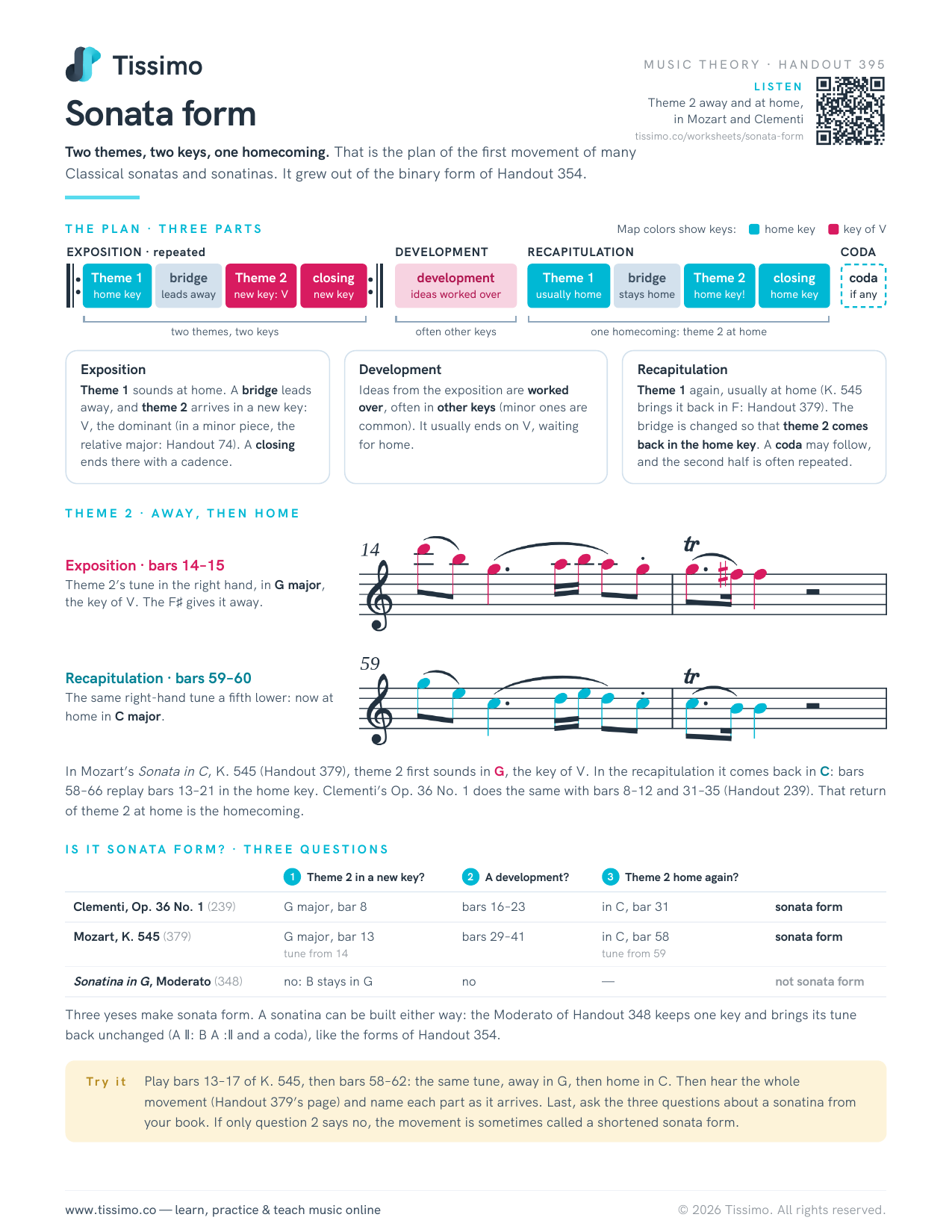 Sonata formTwo themes, two keys, one homecoming. That is the plan of the first movement of many Classical sonatas and sonatinas. It grew out of the binary form of Handout 354.
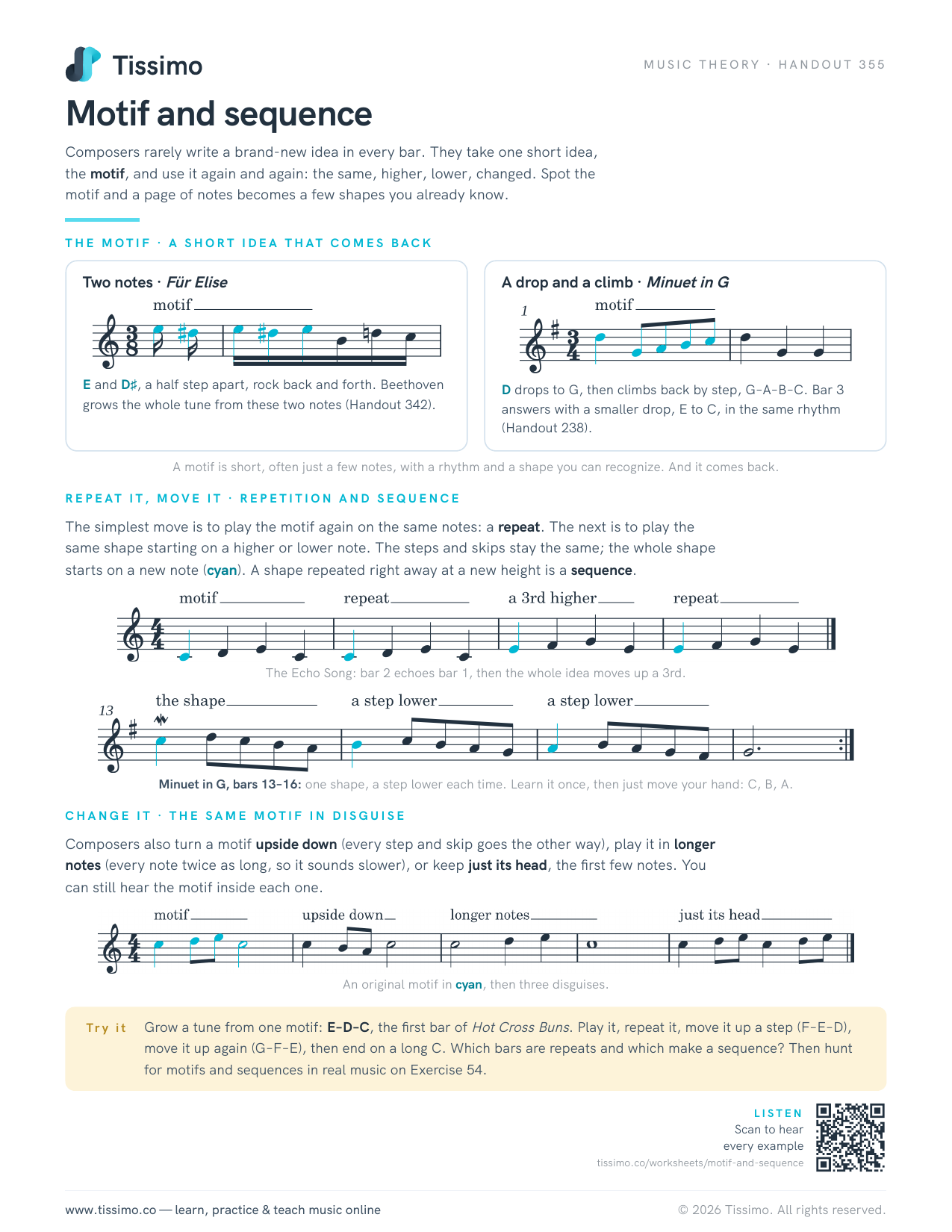 Motif and sequenceComposers rarely write a brand-new idea in every bar. They take one short idea, the motif, and use it again and again: the same, higher, lower, changed. Spot the motif and a page of notes becomes a few shapes you already know.
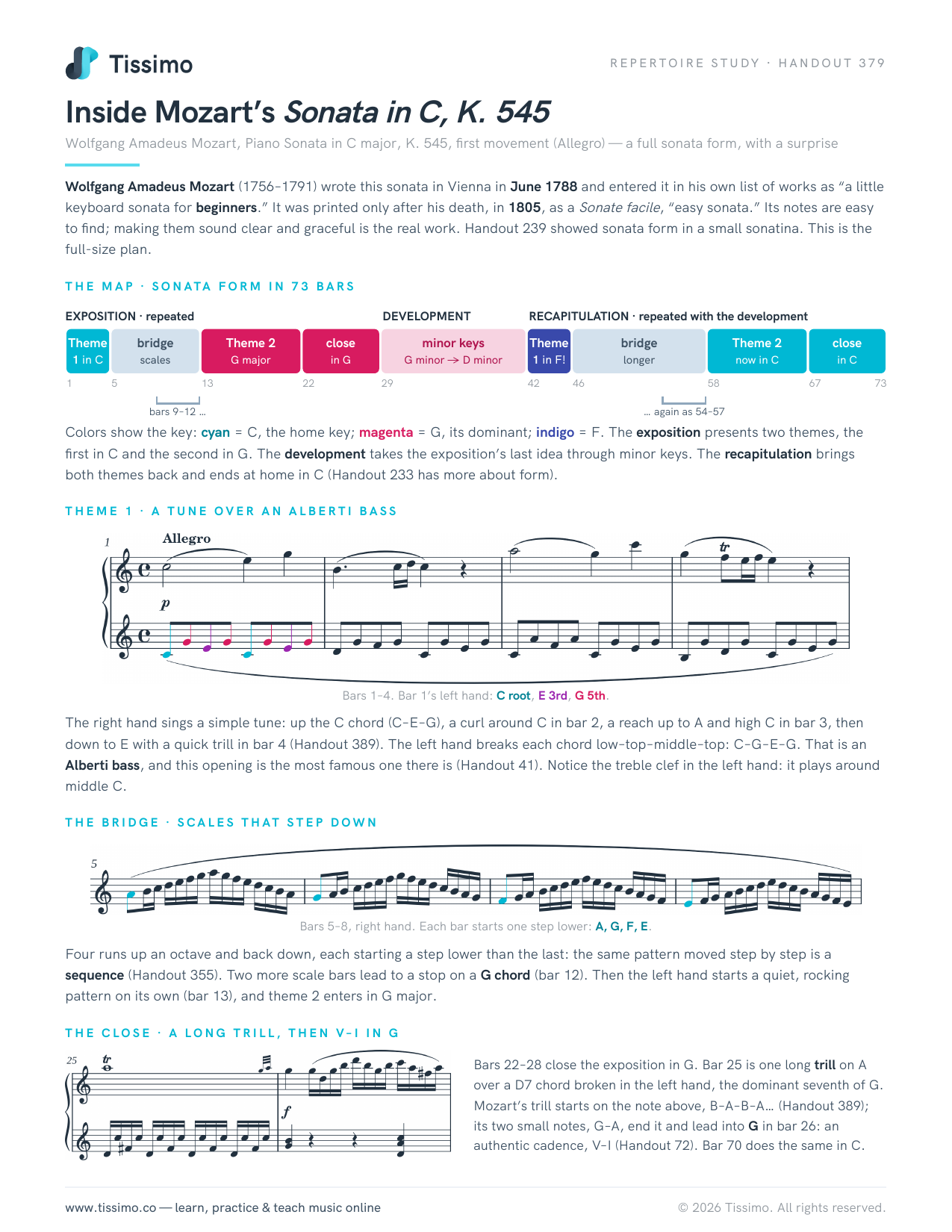 Inside Mozart’s Sonata in C, K. 545Wolfgang Amadeus Mozart, Piano Sonata in C major, K. 545, first movement (Allegro) — a full sonata form, with a surprise