Form & Structure
Strophic Form
Pronounced STROF-ik
Strophic form is a song form in which every verse (strophe) of the text is sung to the same music, so the outline is A A A. It is the form of most hymns and many folk songs.
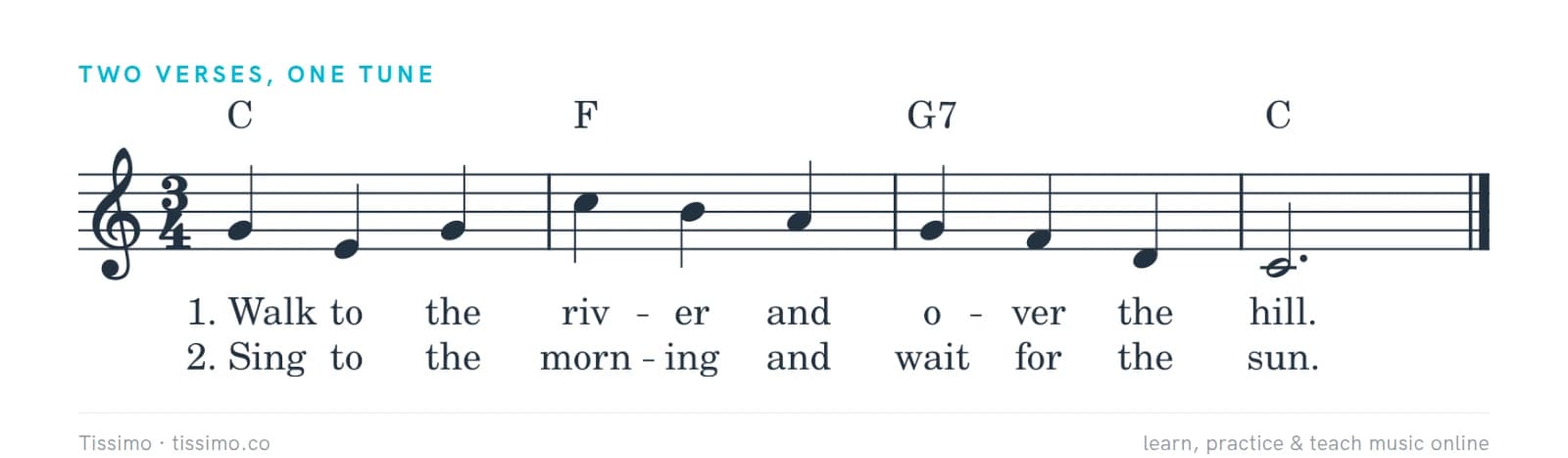
A song in strophic form uses one piece of music for every verse. The words change from verse to verse, but the melody, harmony and accompaniment stay the same. A stanza of a poem is also called a strophe, which is where the name comes from. The outline is simply:
- A – A – A – A … (one A per verse)
Where you will find it
- Hymns and carols: one tune, printed once, with several verses of text underneath.
- Folk songs and ballads: a long story told in many verses to the same tune, which makes it easy to remember and pass on by ear.
- Art songs: many 19th-century Lieder are strophic. Schubert's "Heidenröslein" is a well-known example.
- Blues: a blues song repeats the same twelve-bar progression for each verse, so it is strophic too.
Modified strophic form
In a modified strophic song, most verses share the same music but one or more are changed, usually to match a turn in the story. The outline might be A A A′ A. Schubert's "Die Forelle" ("The Trout") is a famous example: its third verse gets new music when the fisherman finally catches the trout.
Strophic or through-composed?
The opposite of strophic form is through-composed form, in which the music keeps changing to follow the text, with little or no repetition. Strophic form puts the words first in a simple way: the music provides a frame, and the singer brings each verse to life through phrasing, dynamics and tone color. Through-composed songs illustrate each line musically.
Strophic form and verse–chorus
A modern pop song with verses and a chorus is not strictly strophic, because the chorus brings contrasting music. But the verses themselves usually share one melody, so the strophic principle is still at work inside verse–chorus form.
Common questions
What is an example of strophic form?
Most hymns and carols, many folk ballads, twelve-bar blues songs and art songs such as Schubert's "Heidenröslein" are strophic: every verse is sung to the same music.
What is the opposite of strophic form?
Through-composed form, in which the music changes to follow the text and sections are rarely repeated. Schubert's "Erlkönig" is a famous through-composed song.