Tempo Markings
Stringendo
Pronounced streen-JEN-dohWritten as string.
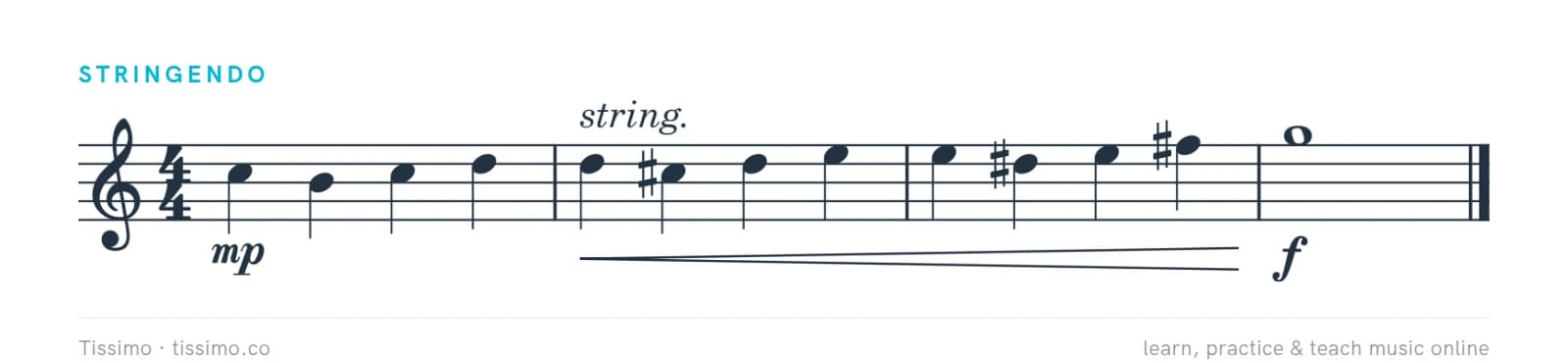
Stringendo, written string., means pressing forward: gradually speed up with growing tension, usually toward a climax. It is an accelerando with a sense of urgency.
Stringendo means "squeezing", "tightening" or "pressing", from the Italian stringere, to tighten. Written string., it asks for a gradual increase in tempo with growing tension, as if the music were being pushed forward toward a goal.
Stringendo or accelerando?
Both speed up gradually. Accelerando describes the speed; stringendo adds a feeling of urgency, of the music being driven or squeezed. It often comes with a crescendo and leads to a climax, a sudden loud chord or a new, faster tempo. Some musicians use the two words almost interchangeably, so the context of the passage tells you how much drive to add.
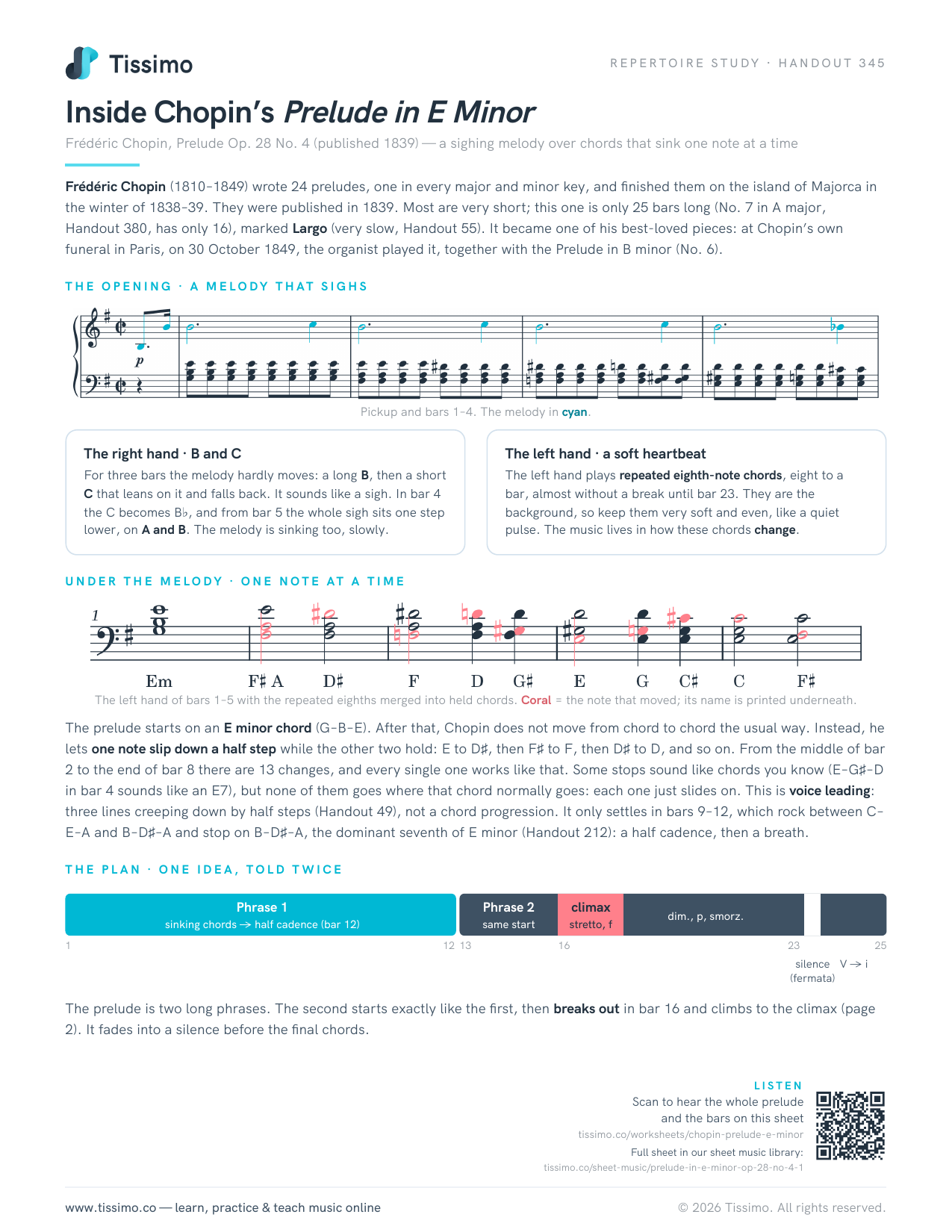
A close relative is stretto, "narrow" or "tight", which also asks for a pressing of the tempo, often near a climax or in a coda. Chopin writes stretto in his Prelude in E minor; see our Prelude in E minor study. (In a fugue, stretto has a different meaning: entries of the subject that overlap.)
Playing stringendo
- Let the tension build. Lean a little more into each beat as the speed rises.
- Shape it with the dynamics. A stringendo under a crescendo hairpin should feel like one gesture.
- Keep control. Pressing forward is not the same as losing the beat. The pulse should stay clear even as it quickens.
A dance that gets faster and faster toward its end is a familiar effect in many folk traditions, often without any word written down. Stringendo is the notated version of that excitement.
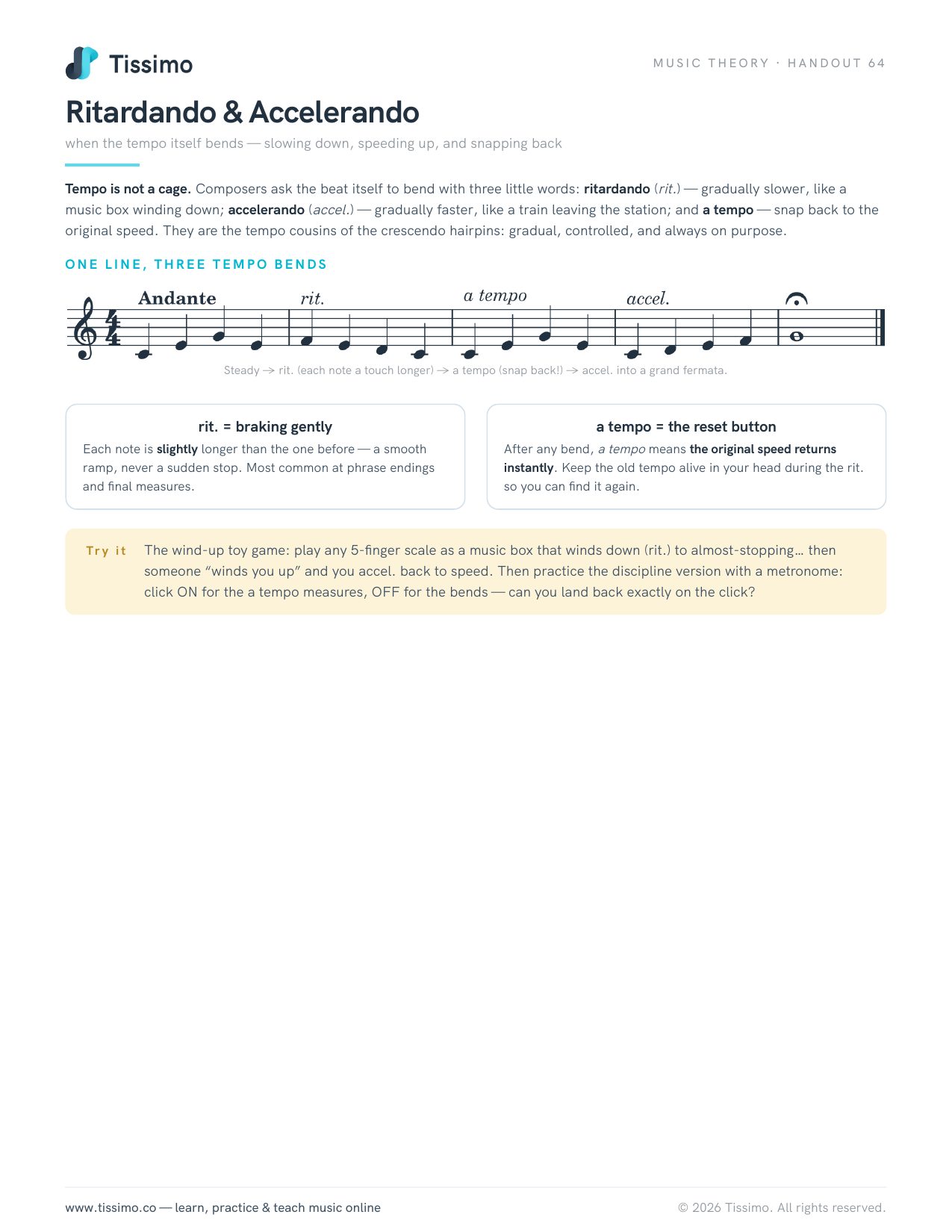
To practice the speeding up on its own, start with the accel. in Ritardando & Accelerando.
Common questions
What is the difference between stringendo and accelerando?
Both mean getting gradually faster. Stringendo adds pressure and tension, a sense of being pushed toward a climax, while accelerando describes the change of speed alone.