Tempo Markings
Grave
Pronounced GRAH-veh
Grave is a tempo marking that means very slow and solemn. It is usually listed as the slowest of the common tempo words, and it asks for a heavy, serious character as well as a slow beat.
Grave is the heaviest of the slow tempo words. In Italian it means "heavy" or "serious", and it asks for two things at once: a very slow beat and a solemn, weighty character. Many modern metronome charts place it somewhere around 25 to 45 beats per minute, below largo, though the charts disagree and the music itself matters more than any number.
Pronounce it as two syllables, GRAH-veh. It is the same word as the English adjective in "a grave expression", not the noun for a burial place.
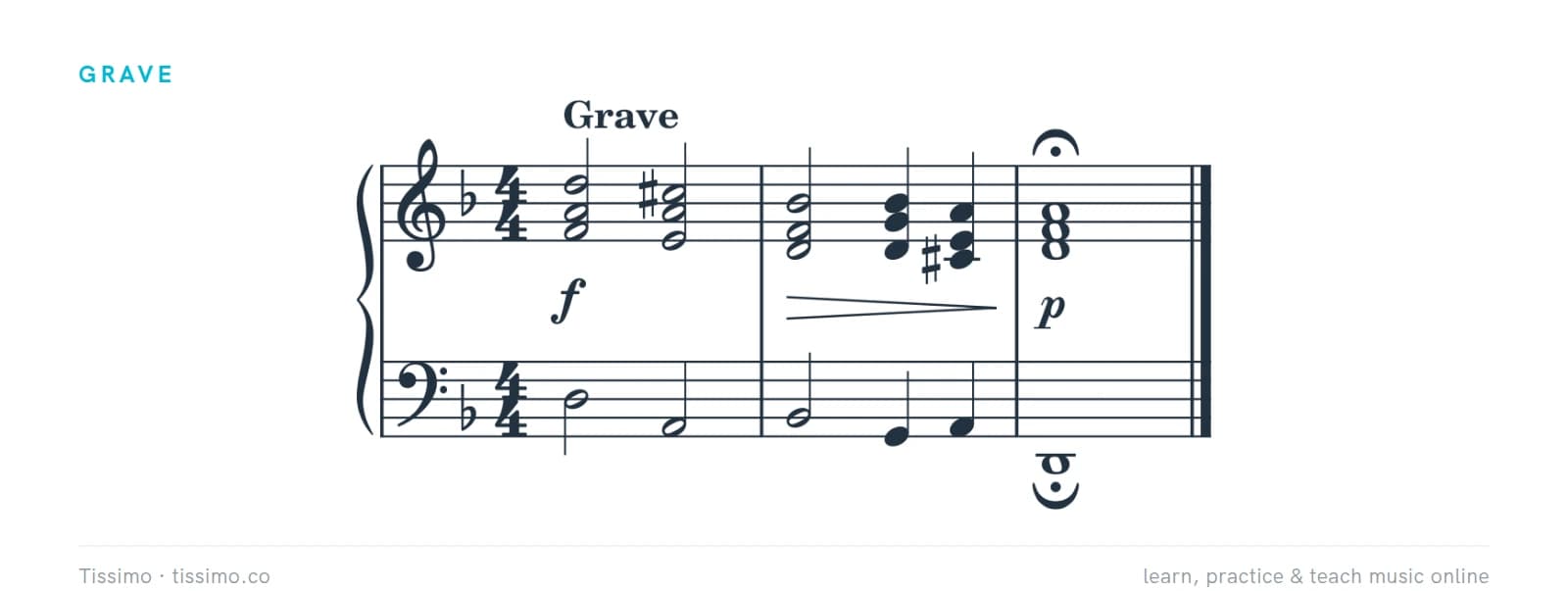
How grave music sounds
Grave often marks a slow introduction: full chords, low registers, dotted rhythms and strong contrasts of loud and soft. Beethoven's Pathétique Sonata, Op. 13, opens with a Grave introduction before the fast Allegro begins, and the contrast between the two tempos is part of the drama.
Playing grave
- Count subdivisions. At such a slow beat, feel the eighth notes (or even the sixteenths), so long notes get their full value and dotted rhythms stay sharp.
- Give chords weight, not hardness. Let the arm sink into the keys. Grave is heavy, not harsh.
- Keep the tension through the rests. In very slow music the silences belong to the line; do not let them sag.
If a passage marked grave starts to feel merely slow and calm, you have probably drifted toward adagio. Bring back the weight.
The Musical terms & signs chart places grave at the slow end of the tempo words, Match the terms: level 4 tests its meaning, and Dynamics & Tempo Ladders practices the slow-to-fast ladder from Largo to Presto.
Common questions
Is grave slower than largo?
On most modern charts, yes: grave is usually listed as the slowest common tempo word. But it describes a solemn character as much as a speed, so a Grave introduction is sometimes taken at about the pace of a Largo.
Practice it: free worksheets
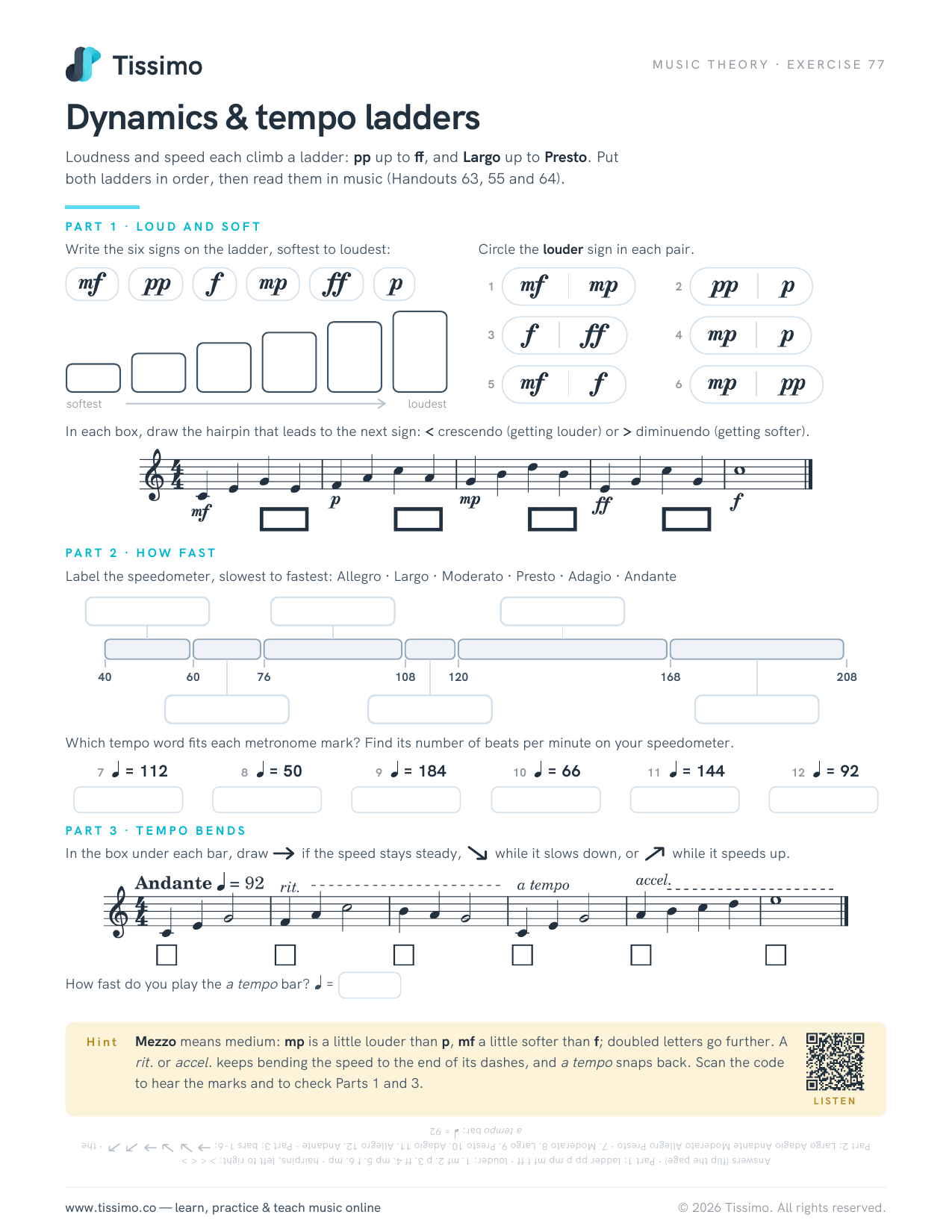 Dynamics & tempo laddersLoudness and speed each climb a ladder: pp up to ff, and Largo up to Presto. Put both ladders in order, then read them in music (Handouts 63, 55 and 64).
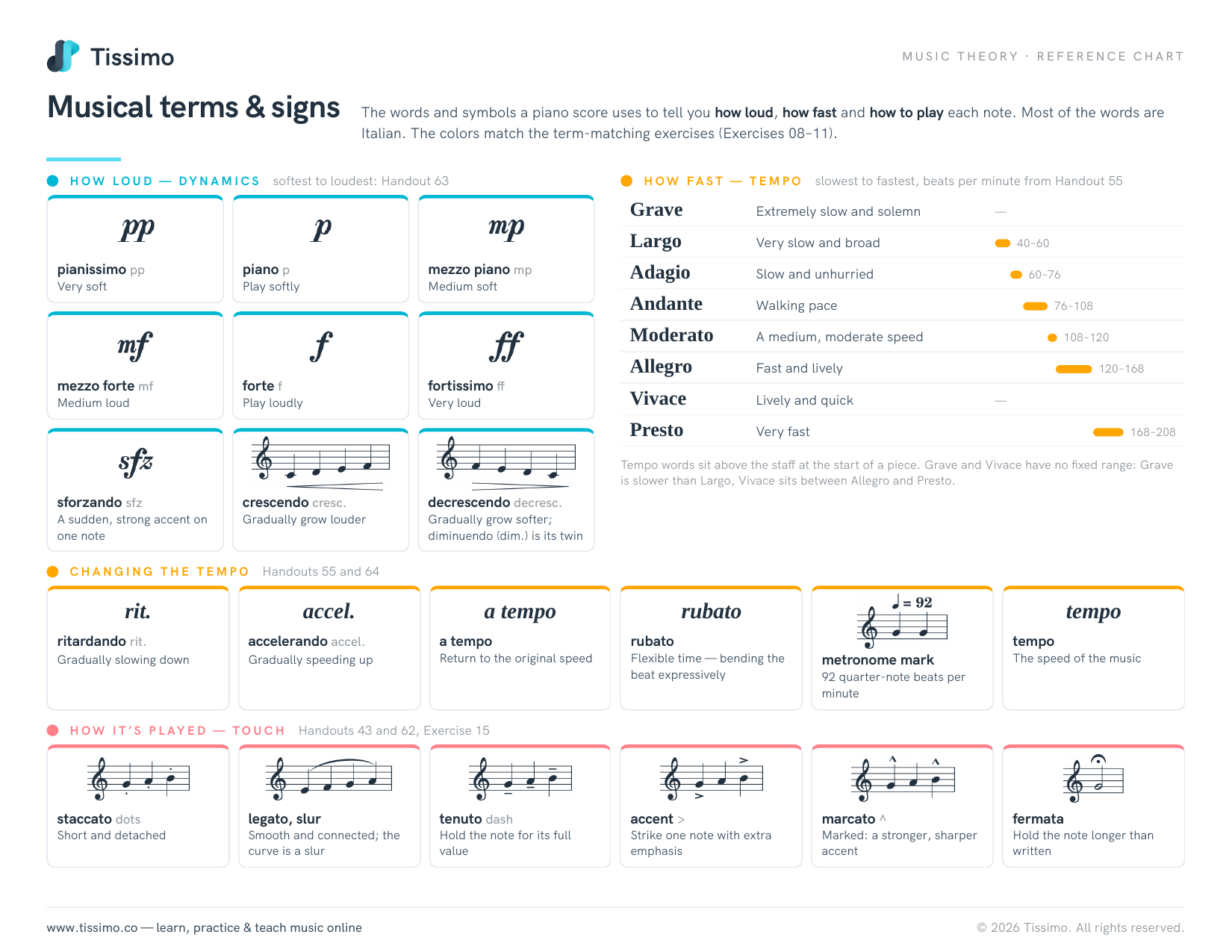 Musical terms & signsThe words and symbols a piano score uses to tell you how loud, how fast and how to play each note. Most of the words are Italian. The colors match the term-matching exercises (Exercises 08–11, 74 and 75).
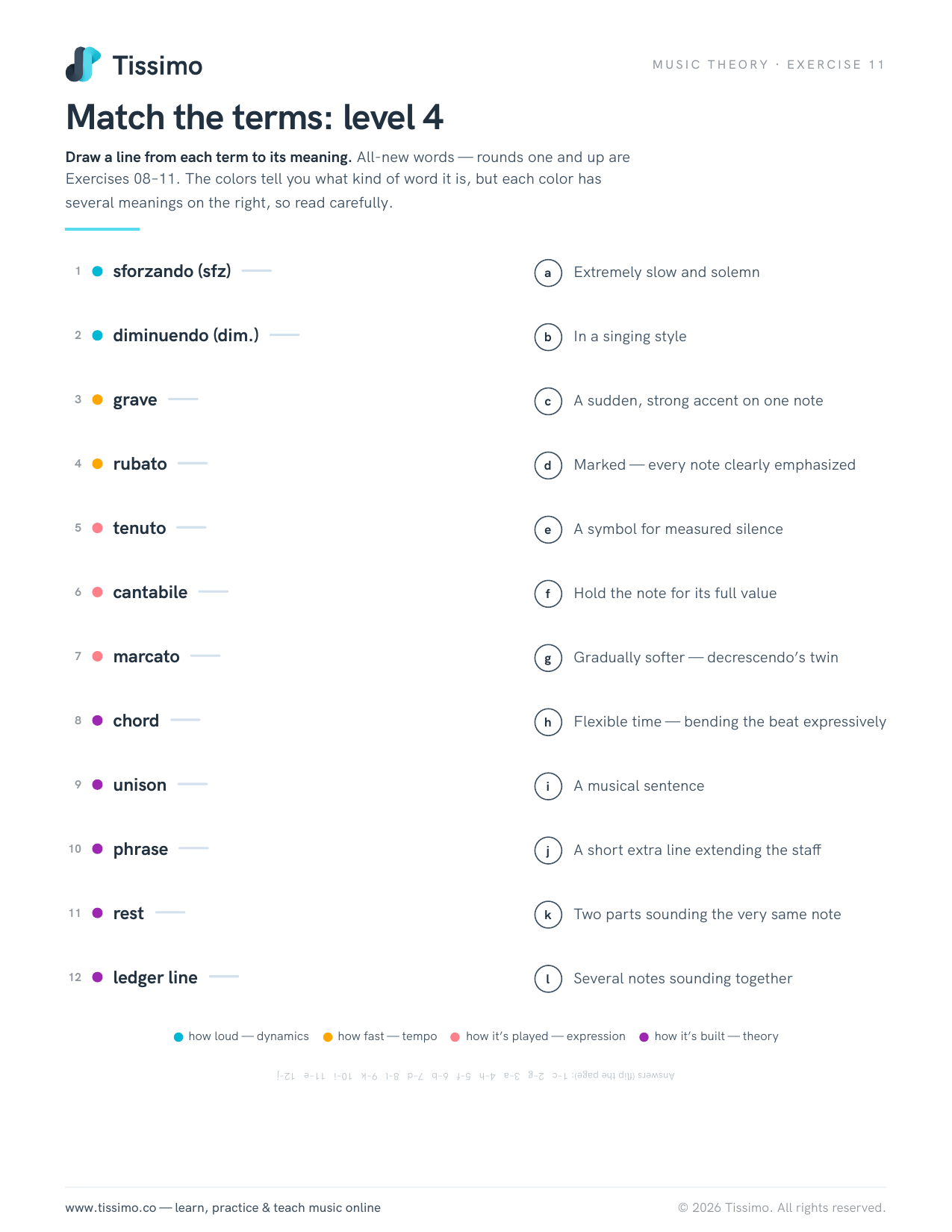 Match the terms: level 4Draw a line from each term to its meaning. All-new words — rounds one and up are Exercises 08–11. The colors tell you what kind of word it is, but each color has several meanings on the right, so read carefully.