Dynamics & Expression
Pesante
Pronounced peh-ZAHN-teh
Pesante means 'heavily': play with weight, giving each note emphasis and a full, solid sound, often at a steady, unhurried tempo. It is the opposite of leggiero.
Pesante means "heavy" or "weighty". It asks for a deliberate, solid sound in which each note carries weight and emphasis, often with a feeling of slowness even when the tempo itself has not changed. It appears below the staff as an expression word, or in headings such as Allegro pesante or Moderato pesante.
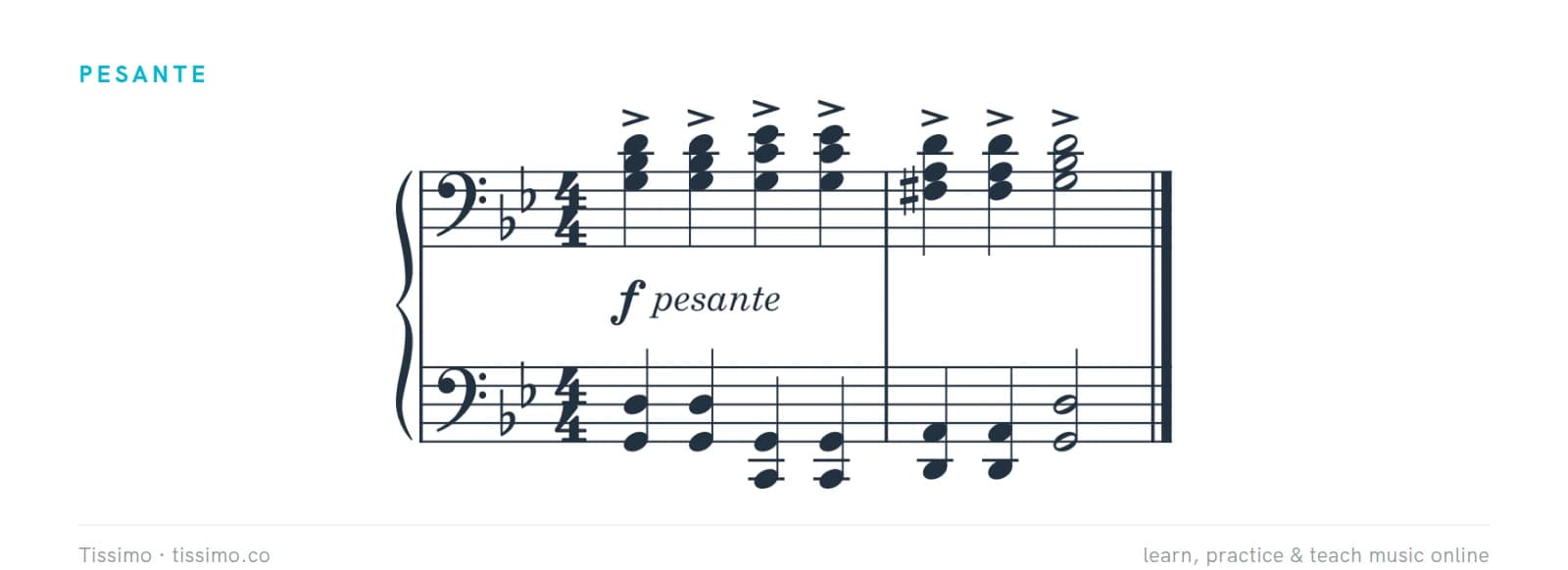
What makes music sound heavy
- Every note emphasized. Pesante passages often carry accents or tenuto lines on most notes (see Fermata, Tenuto & Accent and Read the Marks).
- Low registers and thick chords, octaves in the bass and open fifths.
- A steady, unhurried pulse. Heavy music plods rather than hurries; if the tempo creeps forward, the weight disappears.
- Full dynamics, usually f or louder, though a quiet pesante (heavy but soft) is possible too.
Playing pesante at the piano
Use the weight of the whole arm on each note or chord, as if each one were set down rather than struck. Keep the wrist flexible so the sound is full rather than harsh. Hold each note almost its full length, with only small separations between them, so the emphasis is clear.
Pesante, maestoso and grave
Maestoso is majestic: grand and proud, often with dotted rhythms. Grave is a very slow, solemn tempo. Pesante is about weight: it can appear at many tempos and in moods from grim to comic, as in a lumbering dance. Its opposite is leggiero, light.
Common questions
What does pesante mean in music?
Heavily: play with weight, giving each note emphasis and a solid, full sound, usually without hurrying.
Practice it: free worksheets
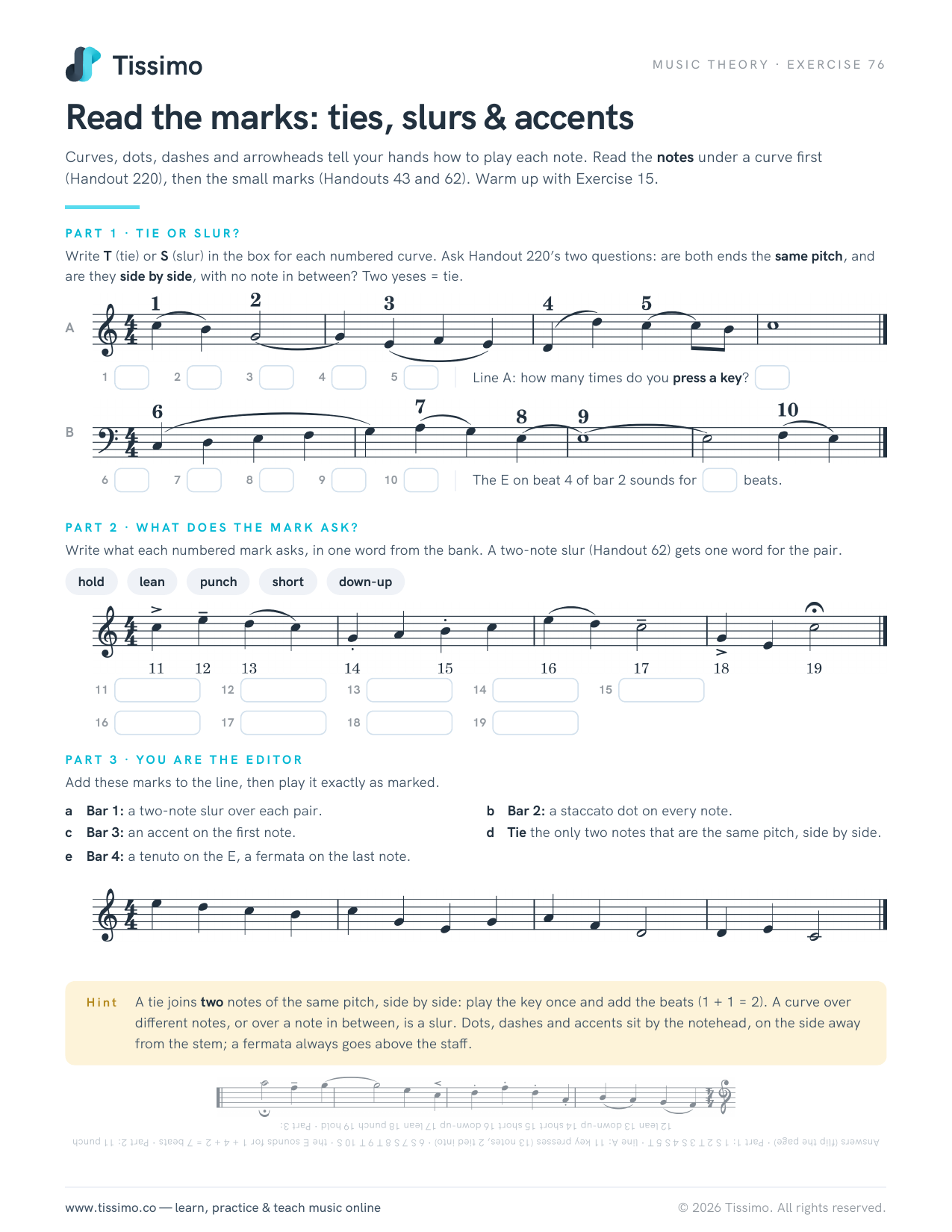 Read the marks: ties, slurs & accentsCurves, dots, dashes and arrowheads tell your hands how to play each note. Read the notes under a curve first (Handout 220), then the small marks (Handouts 43 and 62). Warm up with Exercise 15.
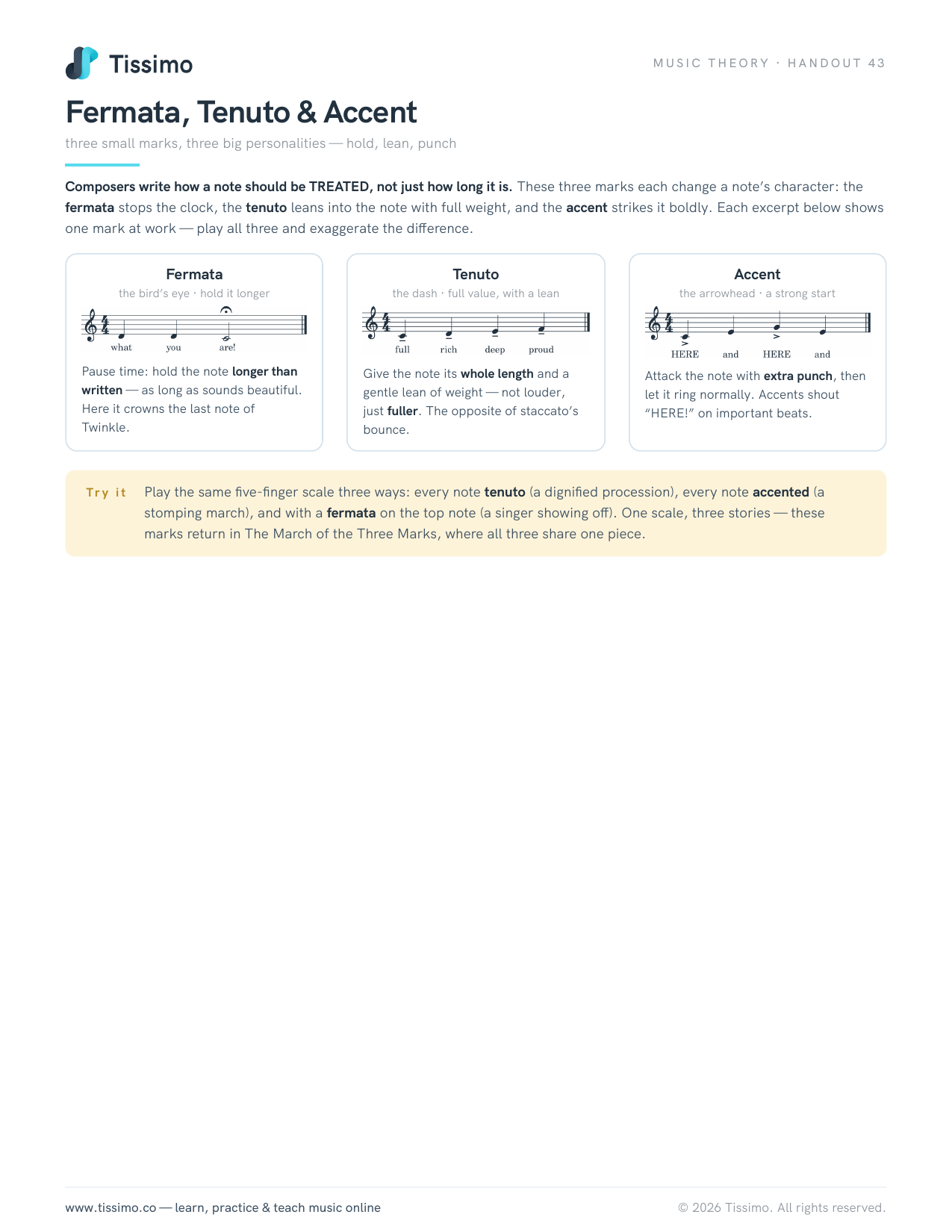 Fermata, Tenuto & Accentthree small marks, three big personalities — hold, lean, punch