Dynamics & Expression
Scherzando
Pronounced skair-TSAHN-doh
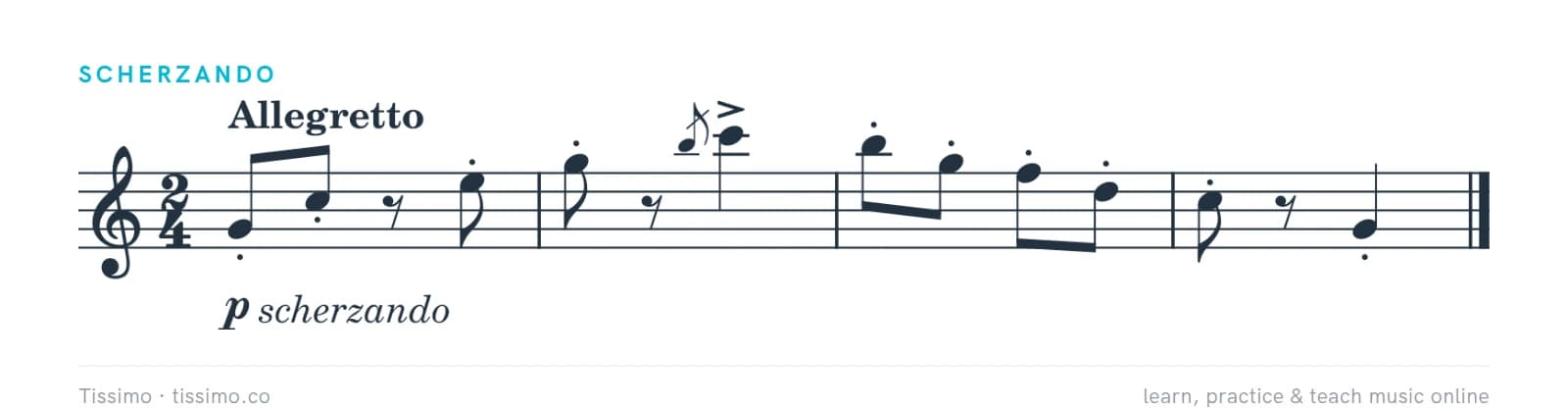
Scherzando means 'playfully' or 'jokingly': play with lightness and humor, crisp staccatos and a sense of surprise. It comes from the same word as scherzo, a 'joke'.
Scherzando means "joking" or "playing", from the Italian scherzare, to joke. It asks for lightness and wit: crisp, short notes, sudden contrasts, little surprises. The word comes from the same root as scherzo, the quick, often humorous movement that Beethoven and later composers used in sonatas and symphonies.
Scherzando in real music
- Beethoven's Eighth Symphony has a second movement marked Allegretto scherzando, with a ticking accompaniment that keeps poking fun at its own steadiness.
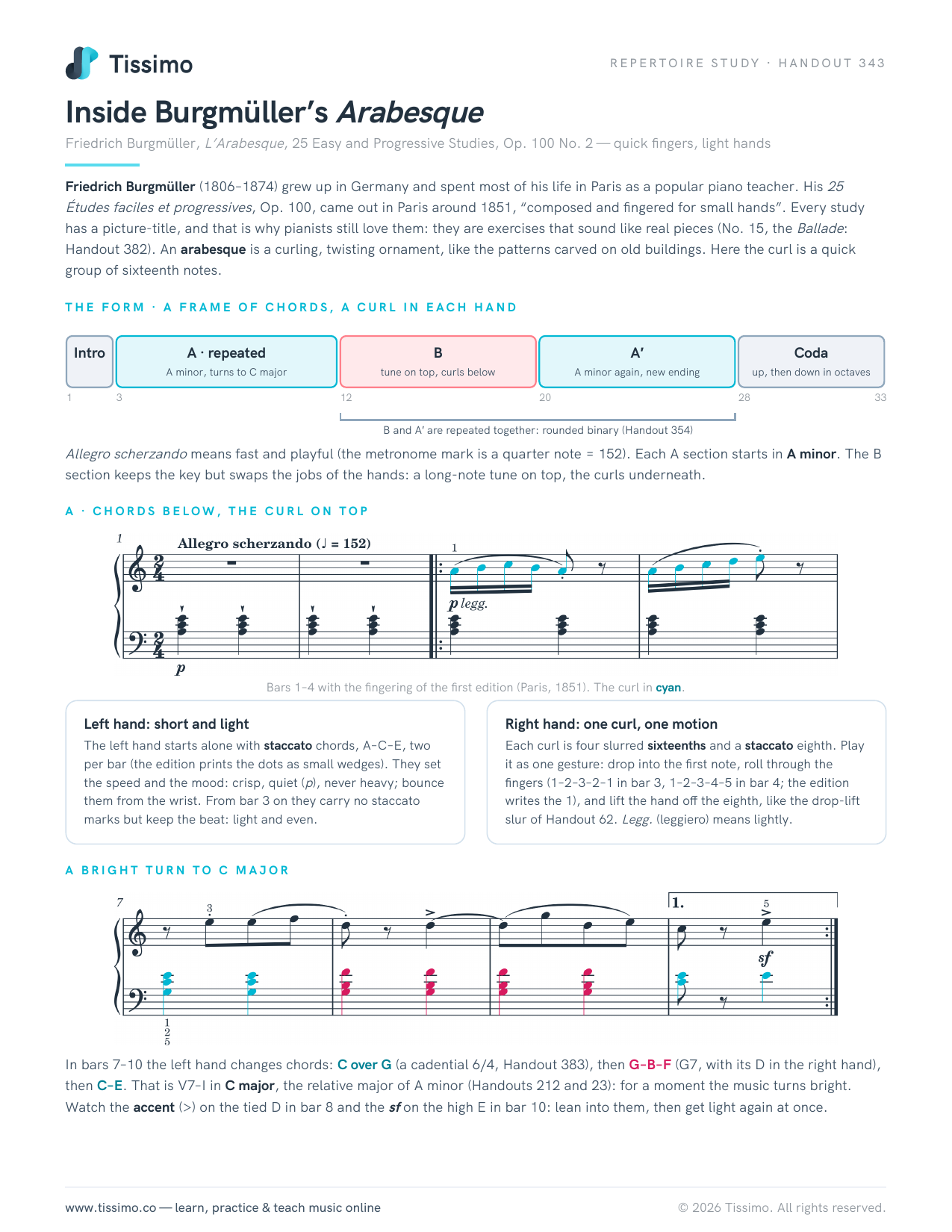
- Burgmüller's Arabesque is marked Allegro scherzando (♩ = 152) in the edition used for our Arabesque study: quick, light hands and crisp staccatos.
What makes music sound playful
- Short, light staccatos and rests that let the music breathe.
- Unexpected accents or a sudden loud note in a soft passage.
- Grace notes, quick ornaments and leaps.
- A light dynamic, usually p or mp, so that surprises can stand out.
Playing scherzando
Keep the touch light, from the fingers and wrist, with the arm floating. Make rests exact: much of the humor lives in the silences. And keep a straight face, musically speaking: a joke works best when it is timed precisely.
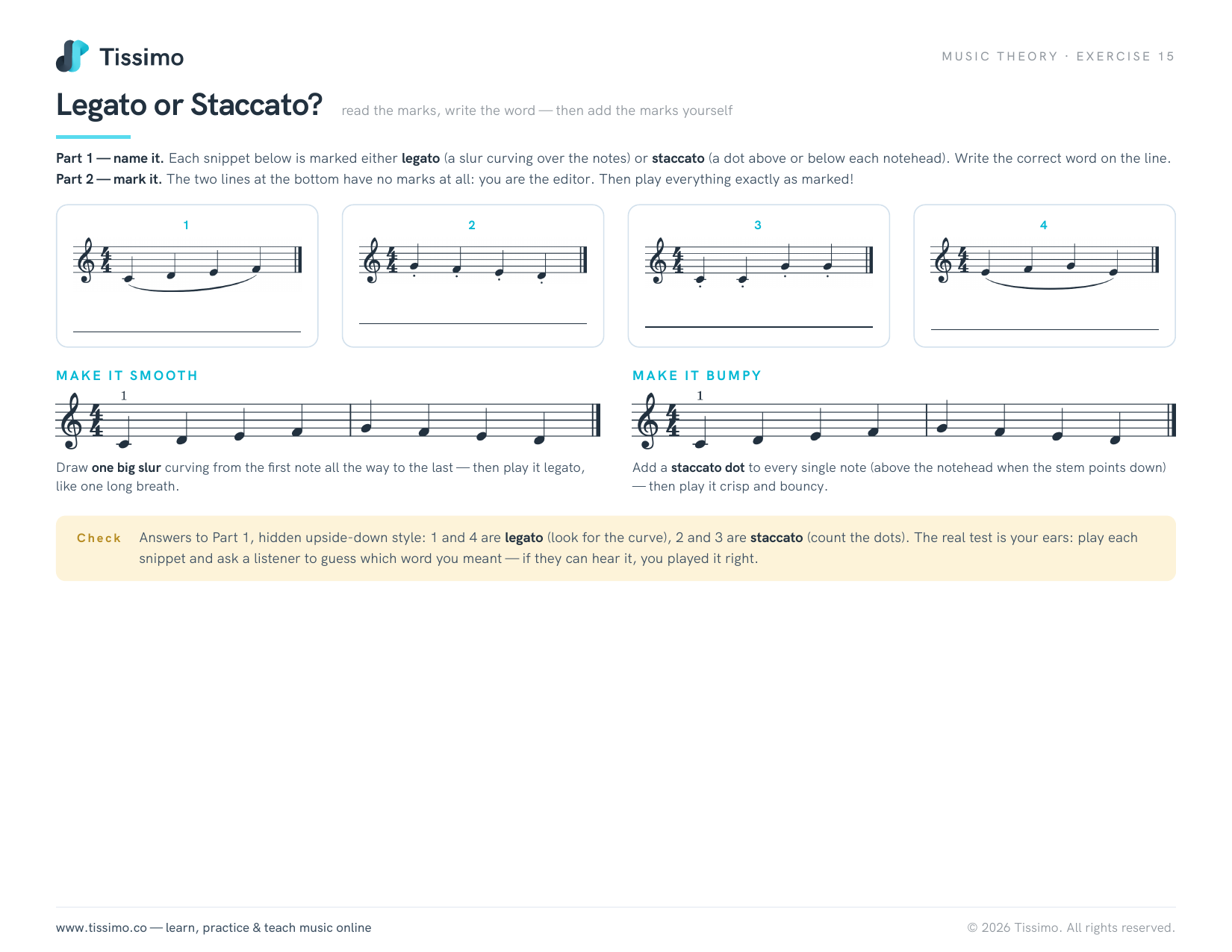
Compare grazioso (graceful), giocoso (merry) and leggiero (light). For the crisp staccato touch that scherzando depends on, see Legato or Staccato?
Common questions
What is the difference between scherzando and scherzo?
Scherzando is an expression word: play playfully. A scherzo is a kind of piece or movement, usually quick and lively, often in 3/4. Both come from the Italian word for joke.