Tempo Markings
Allegretto
Pronounced ah-leh-GRET-toh
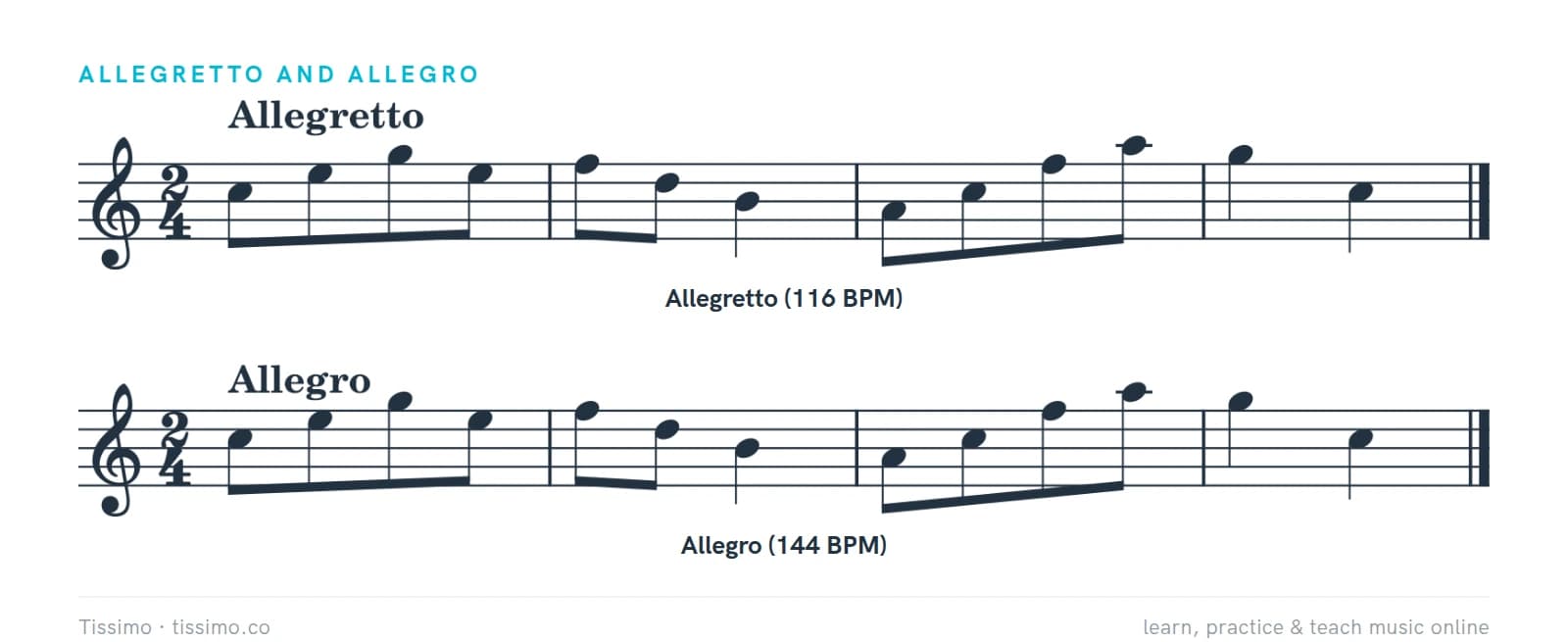
Allegretto is a tempo marking meaning moderately fast: a little slower and lighter than allegro. Many charts place it somewhere around 112 to 120 beats per minute, just below allegro and overlapping the top of moderato.
Allegretto is allegro with the diminutive ending -etto: "a little allegro". In tempo terms that means a little less fast, and usually lighter in character too. Charts often put it somewhere around 112 to 120 beats per minute, between moderato and allegro, though the ranges overlap.
Character
Allegretto music often feels graceful, light-footed or gently playful rather than brilliant. Think of a dance step rather than a race. The diminutive works the same way in larghetto (a little less slow than largo) and andantino (a little andante): it nudges a tempo toward the middle.
Allegretto in real music
- The second movement of Beethoven's Seventh Symphony is an Allegretto: steady, solemn and moving, far from light, which shows that the word sets a pace more than a mood.
- The finale of Mozart's Piano Sonata in C, K. 545, is a Rondo marked Allegretto.
- Beethoven's Eighth Symphony has a second movement marked Allegretto scherzando, a little fast and playful.
Playing allegretto
Keep the tempo comfortable enough that ornaments and short notes sound relaxed. If you are working hard to fit the notes in, you are playing allegro, or faster.
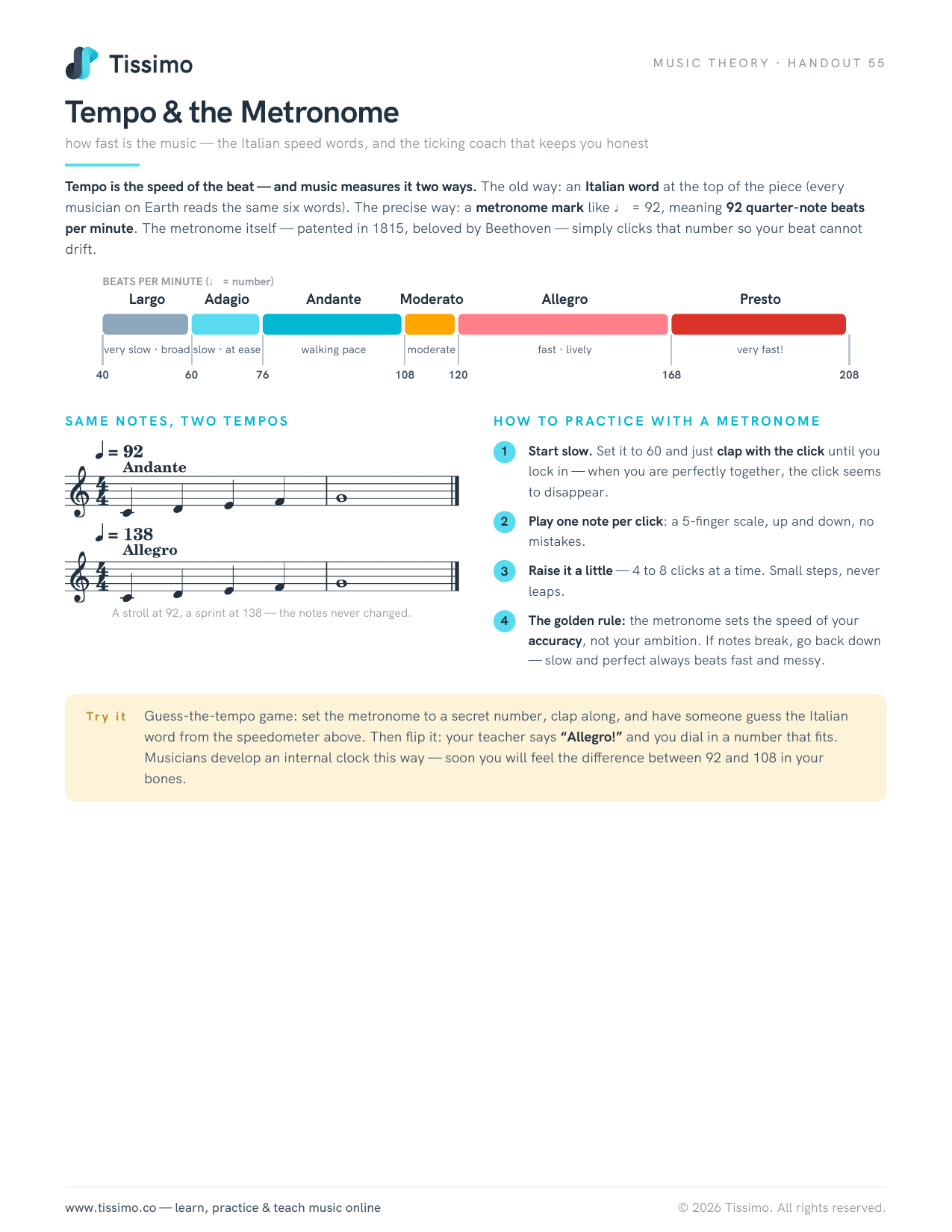
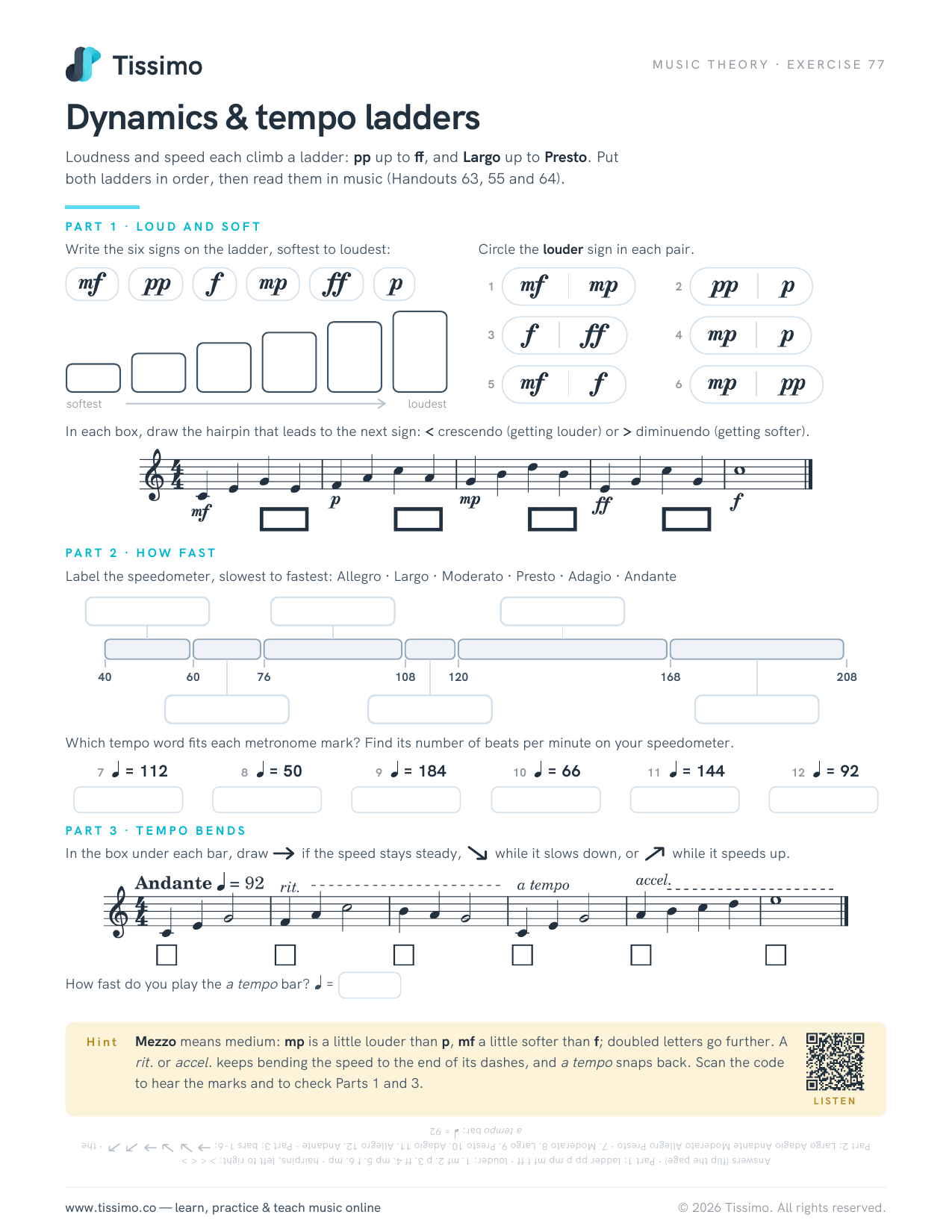
Allegretto is not one of the six words on the speedometer in Tempo & the Metronome; pencil it in just below Allegro, then practice ordering the main tempo words in Dynamics & Tempo Ladders.
Common questions
Is allegretto faster than allegro?
No, a little slower. The -etto ending makes allegro 'smaller', so allegretto is moderately fast and usually lighter in character.