Tempo Markings
BPM (Beats per Minute)
Written as BPM
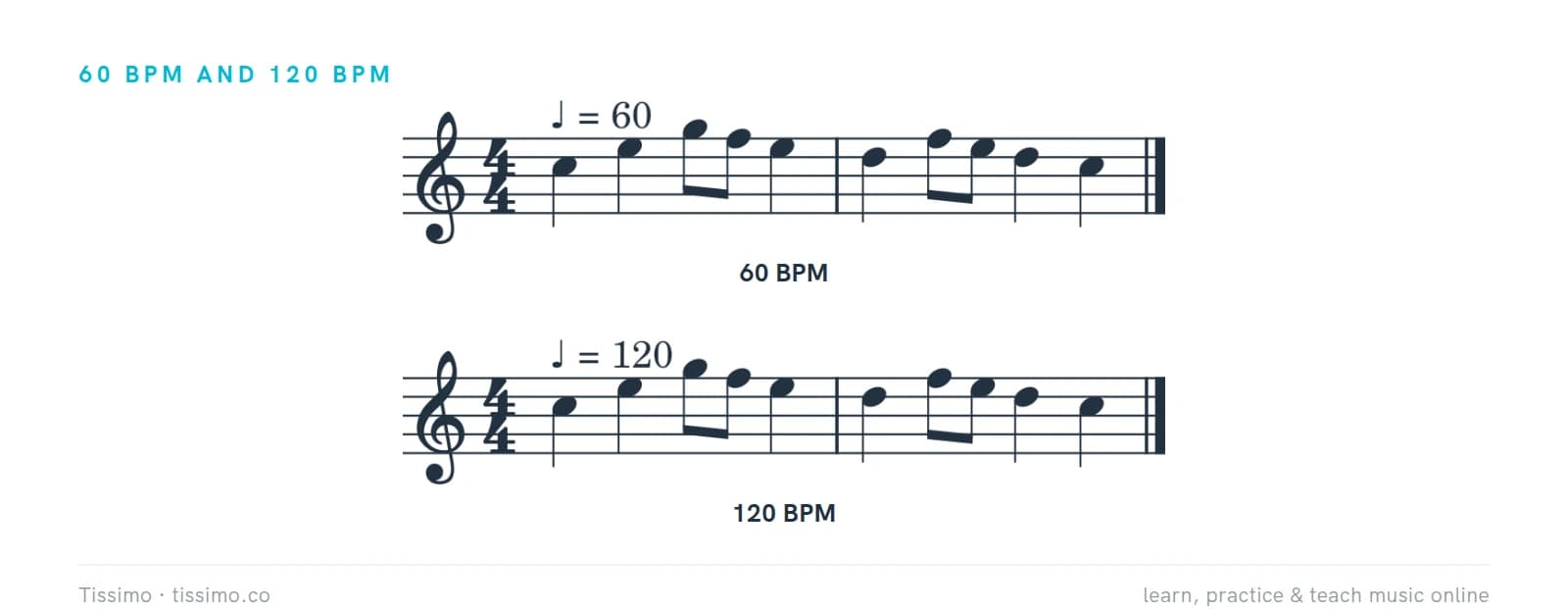
BPM, short for beats per minute, measures tempo as the number of beats in one minute. At 60 BPM each beat lasts one second; at 120 BPM each beat lasts half a second.
BPM stands for beats per minute. It is the number a metronome, a drum machine or a music app uses to describe tempo: set 60 BPM and you hear one click every second; set 120 and the clicks come twice as fast.
In printed music the same number appears as a metronome mark: ♩ = 120 means 120 quarter-note beats per minute. The older abbreviation M.M. (Maelzel's Metronome) in front of the mark means the same thing.
The math
One minute is 60 seconds, so:
- seconds per beat = 60 ÷ BPM
- milliseconds per beat = 60,000 ÷ BPM
At 120 BPM a quarter-note beat lasts 500 milliseconds, an eighth note 250 and a sixteenth note 125. At 90 BPM a beat lasts about 667 milliseconds. Producers use exactly this arithmetic to set delay and reverb times that line up with a song; the Tempo Math worksheet walks through it step by step.
Which note is the beat?
BPM counts beats, so it matters which note value is the beat. In 2/4, 3/4 and 4/4 it is usually the quarter note. In 6/8 the music is felt in two beats of a dotted quarter, so ♩. = 60 means 60 dotted quarters per minute, which is 180 eighth notes. In cut time the beat is the half note. A metronome mark shows its beat unit; a bare BPM figure on a recording or in a DAW usually counts quarter notes.
BPM in recorded and electronic music
In a DAW, the tempo setting is a BPM number, and the grid, loops, the click track and tempo-synced effects all follow it. Some styles are strongly associated with tempo ranges; house music, for example, often sits somewhere around 120 to 130 BPM. But a ballad and a dance track can share a BPM and still feel completely different, because the feel also depends on how the beat is subdivided and where the accents fall.
To connect BPM numbers with the Italian tempo words, see the speedometer in Tempo & the Metronome, then match six metronome marks to their words in Dynamics & Tempo Ladders.
Common questions
How do I find the BPM of a song?
Tap or clap along with the beat, count the taps for 15 seconds and multiply by four. Many metronome apps have a tap-tempo button that does the counting for you. Make sure you tap the main beat: tapping every eighth note doubles the number when the beat is a quarter note, but triples it when the beat is a dotted quarter.
Is BPM the same as tempo?
BPM is one way of measuring tempo. Tempo is the speed itself; BPM expresses it as a number. A tempo word such as andante describes the same thing without a number, and with a sense of character.
Practice it: free worksheets
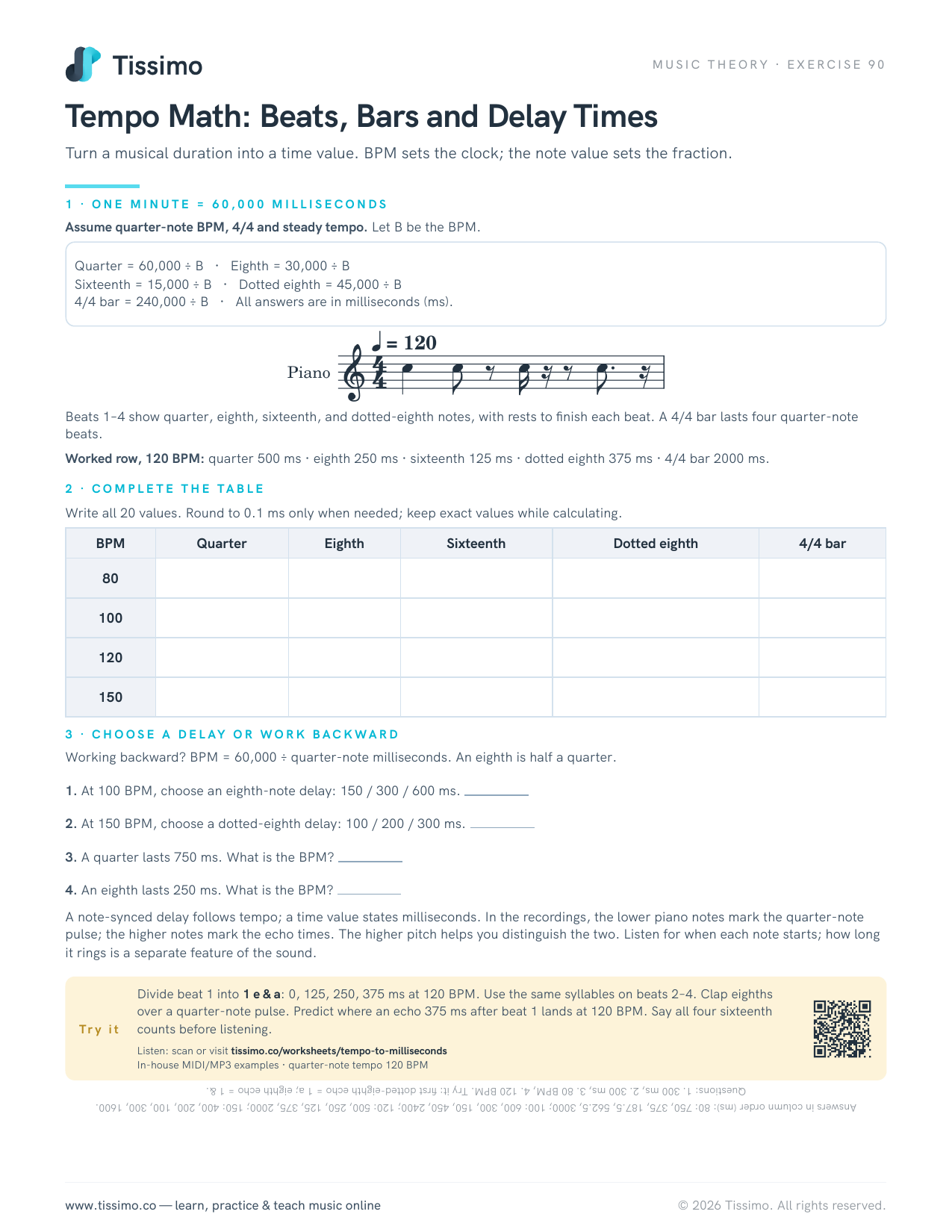 Tempo Math: Beats, Bars and Delay TimesTurn a musical duration into a time value. BPM sets the clock; the note value sets the fraction.
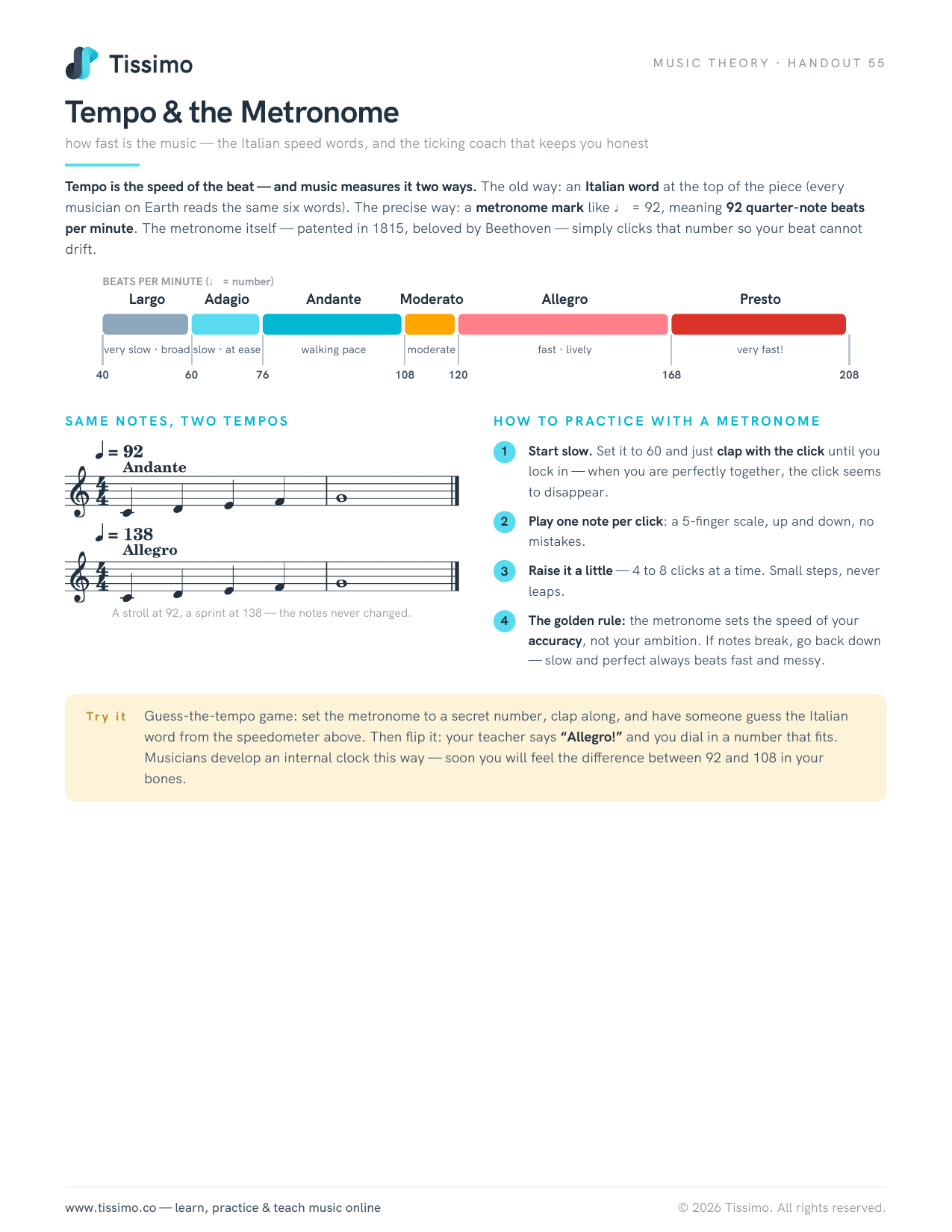 Tempo & the Metronomehow fast is the music — the Italian speed words, and the ticking coach that keeps you honest
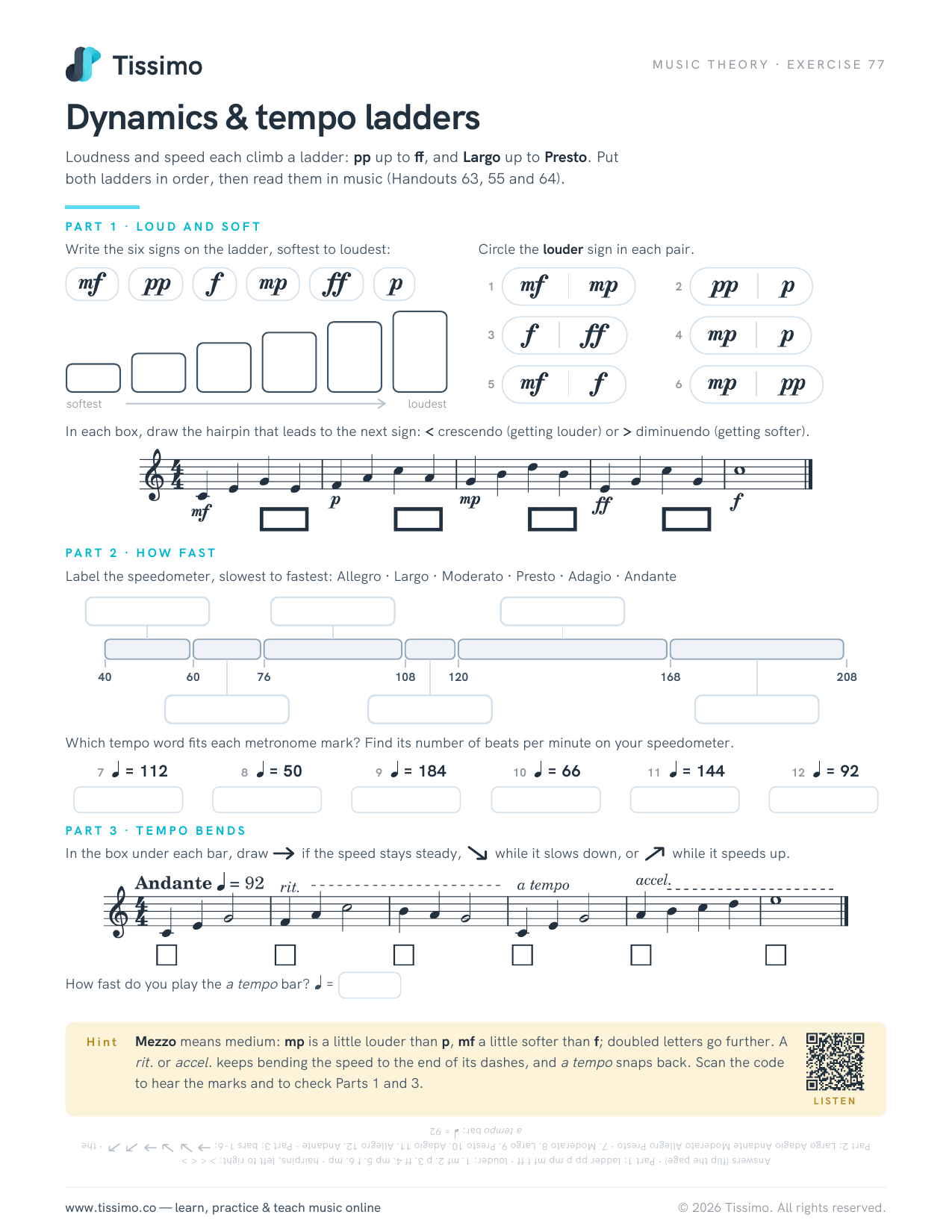 Dynamics & tempo laddersLoudness and speed each climb a ladder: pp up to ff, and Largo up to Presto. Put both ladders in order, then read them in music (Handouts 63, 55 and 64).