Rhythm & Meter
Backbeat
The backbeat is a strong accent on beats 2 and 4 of a 4/4 bar, usually played on the snare drum. It is at the heart of rock, pop, R&B, soul and much country music.
In 4/4 the natural accents fall on beats 1 and 3. A backbeat turns that around: the strongest hits come on beats 2 and 4. In a typical rock or pop drum part, the bass drum plays on 1 and 3, the snare drum cracks on 2 and 4, and the hi-hat keeps steady eighth notes on top. That snare on 2 and 4 is the backbeat, and it is one of the most recognizable sounds in popular music.
Where it comes from
The backbeat grew out of African American music. It was prominent in gospel, jump blues and rhythm and blues, and it became a defining feature of rock and roll in the 1950s. Today it underlies most rock, pop, R&B, soul and funk, and much country music.
A backbeat on the piano
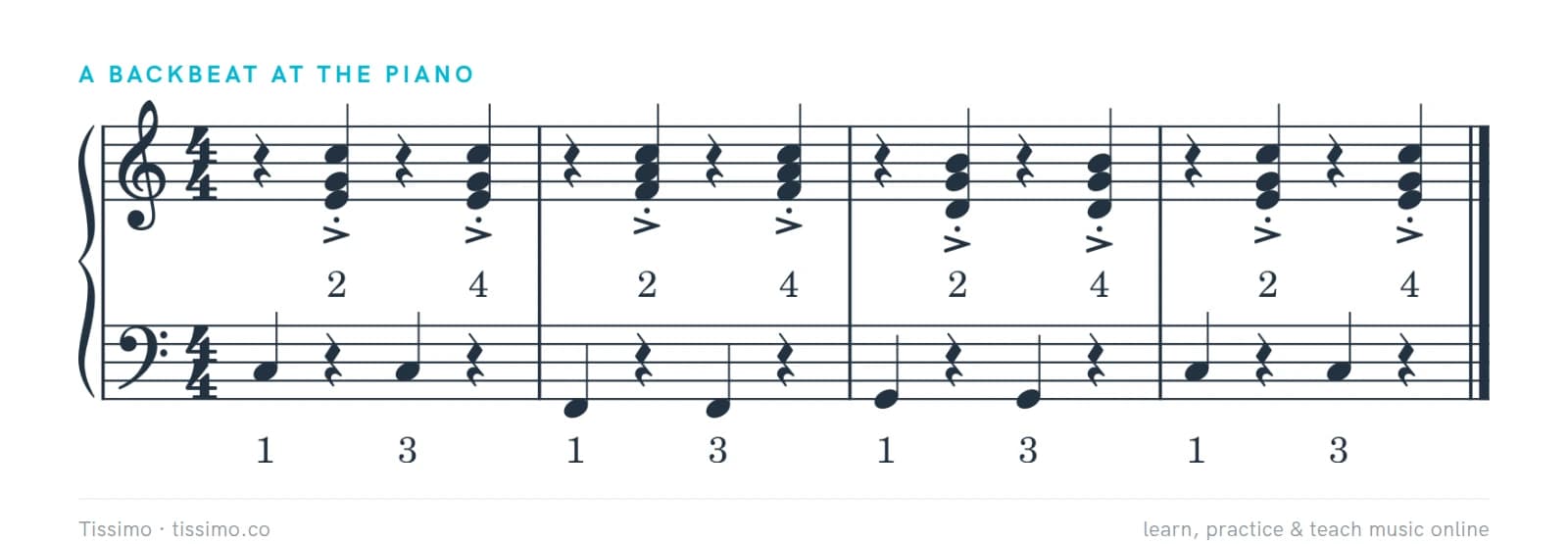
You can play a backbeat without drums. Put low bass notes on beats 1 and 3, like the bass drum, and short chords on beats 2 and 4, like the snare. Keep the chords crisp and a little louder. The Turn Chords into Grooves worksheet has several patterns built this way, and Drum Patterns: Sixteen Steps, Four Beats shows how the drum layers fit together.
Clapping on 2 and 4
In music with a backbeat, listeners who clap along usually clap on 2 and 4, joining the snare drum. Clapping on 1 and 3 feels more natural in marches, polkas and many folk styles. Neither is wrong in general, but in a song built on a backbeat, clapping on 2 and 4 locks in with the band. Jazz musicians feel 2 and 4 strongly too: in a swing groove the drummer's hi-hat usually closes on those beats.
Variations
- Half-time feel: the snare plays only on beat 3, so the music feels half as fast while the tempo stays the same.
- Four on the floor: the bass drum plays on all four beats, as in disco and much dance music, with the snare or claps still on 2 and 4.
Common questions
Why do people clap on 2 and 4?
In styles built on a backbeat, the snare drum hits beats 2 and 4, so clapping there joins the groove. In marches and many folk styles the weight is on 1 and 3 instead.
What is the difference between a downbeat and a backbeat?
The downbeat is beat 1, the start of the bar. The backbeat is the accent on beats 2 and 4, the weak beats of 4/4 that drummers make strong.
Practice it: free worksheets
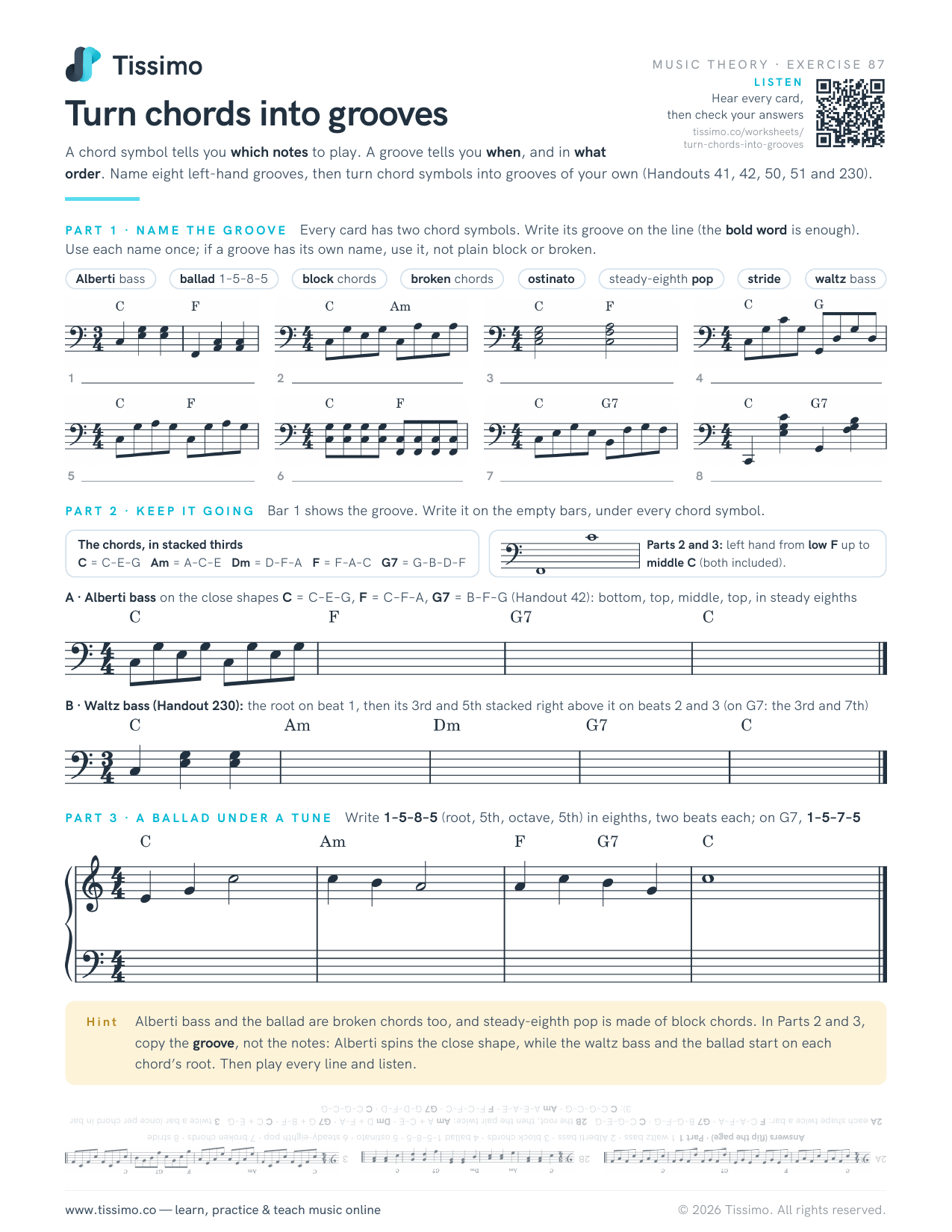 Turn chords into groovesA chord symbol tells you which notes to play. A groove tells you when, and in what order. Name eight left-hand grooves, then turn chord symbols into grooves of your own (Handouts 41, 42, 50, 51 and 230).
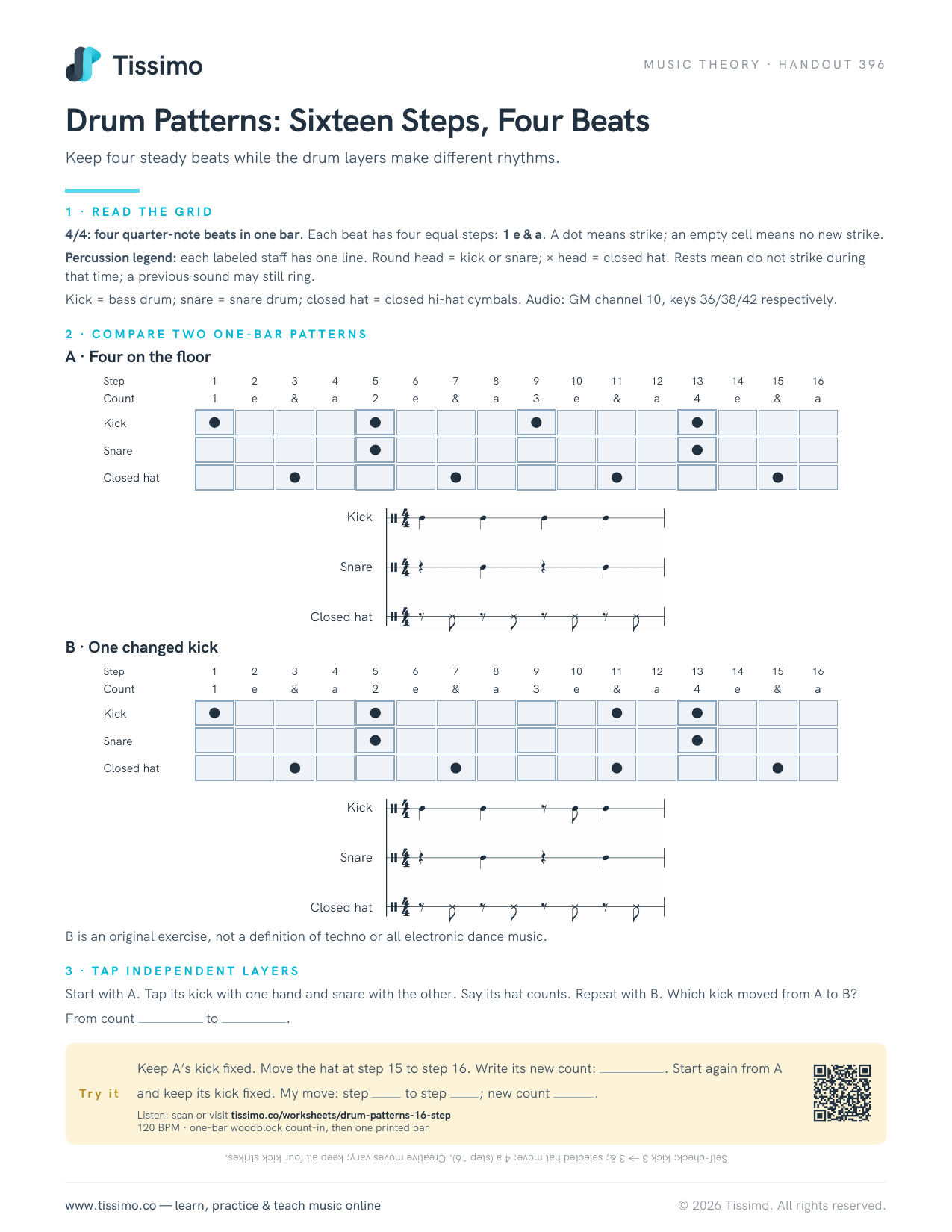 Drum Patterns: Sixteen Steps, Four BeatsKeep four steady beats while the drum layers make different rhythms.