Rhythm & Meter
Beat
The beat is the steady pulse you tap your foot to in music. Beats are evenly spaced, the meter groups them into bars, and the tempo is how fast they go.
The beat is the regular pulse that runs underneath a piece of music. It is what you tap your foot to, nod your head to, or march to. Beats are evenly spaced, like the ticking of a clock, and they keep going even when the melody holds a long note or stops for a rest.
Beat and rhythm
The beat and the rhythm are easy to mix up. The beat is steady; the rhythm is the pattern of notes on top of it. In the example below, the left hand plays nothing but the beat, one quarter note at a time, while the right-hand melody moves in longer and shorter notes above it.
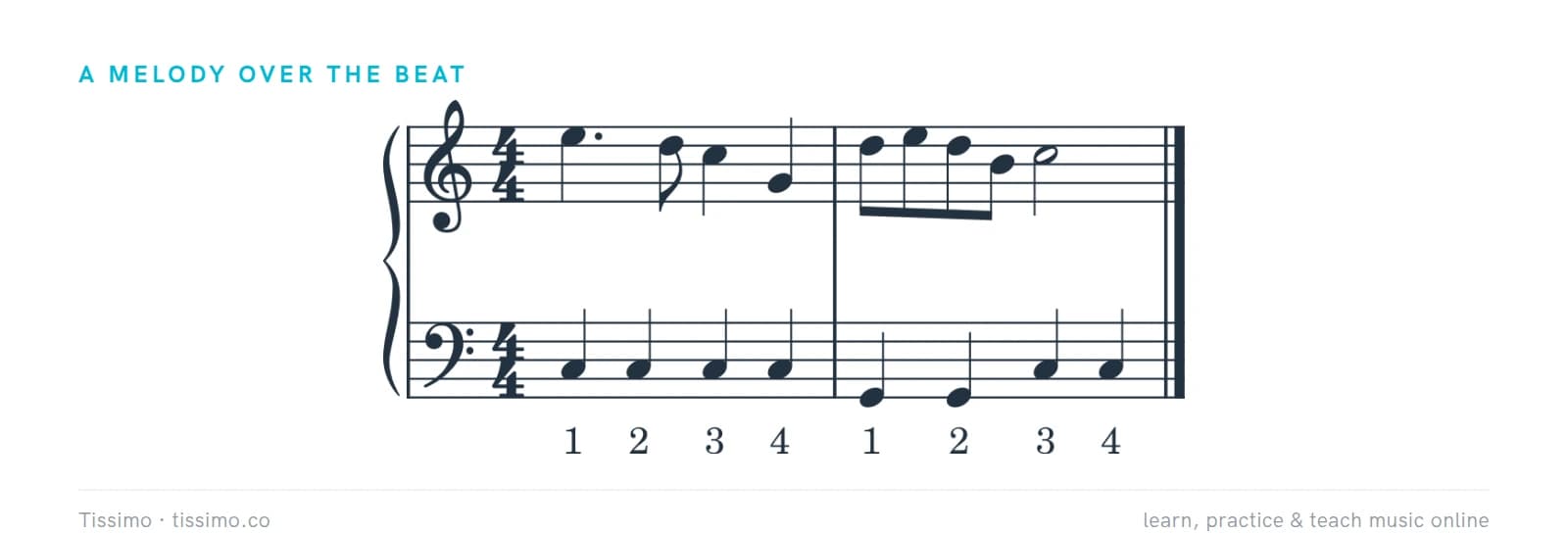
How the beat is shown on the page
The time signature tells you which note value gets the beat. In 2/4, 3/4 and 4/4 the beat is a quarter note. In cut time (2/2) it is a half note. In 6/8 the beat is a dotted quarter, made of three eighth notes (see compound meter). How fast the beats go is the tempo, often given as a number of beats per minute (BPM) for a metronome.
Strong and weak beats
Beats are not all equal. The meter groups them into a repeating pattern of strong and weak. In 4/4 the first beat of the bar, the downbeat, is the strongest, beat 3 is a little lighter, and beats 2 and 4 are weak. Much popular music turns that around and hits beats 2 and 4 on the snare drum, which is called the backbeat.
Keeping a steady beat
- Count the beats aloud, "1, 2, 3, 4", and keep counting through rests and held notes.
- Tap your foot or nod on each beat while you play.
- Practice with a metronome, then try the Keep the Pulse Through Silence worksheet, where the click drops out and you carry on alone.
- Divide each beat into smaller parts in your head (see subdivision). It makes the beat itself more even.
Common questions
How do you find the beat in a song?
Tap your foot along until it feels natural, then listen for the bass drum and the bass, which usually mark the beats. Count 1, 2, 3, 4 over your taps and notice where the music seems to start each new bar: that strong beat is beat 1.
Is the beat the same as the tempo?
No. The beat is the pulse itself; the tempo is how fast that pulse goes. A slow ballad and a fast dance tune both have a beat, at different speeds.
Practice it: free worksheets
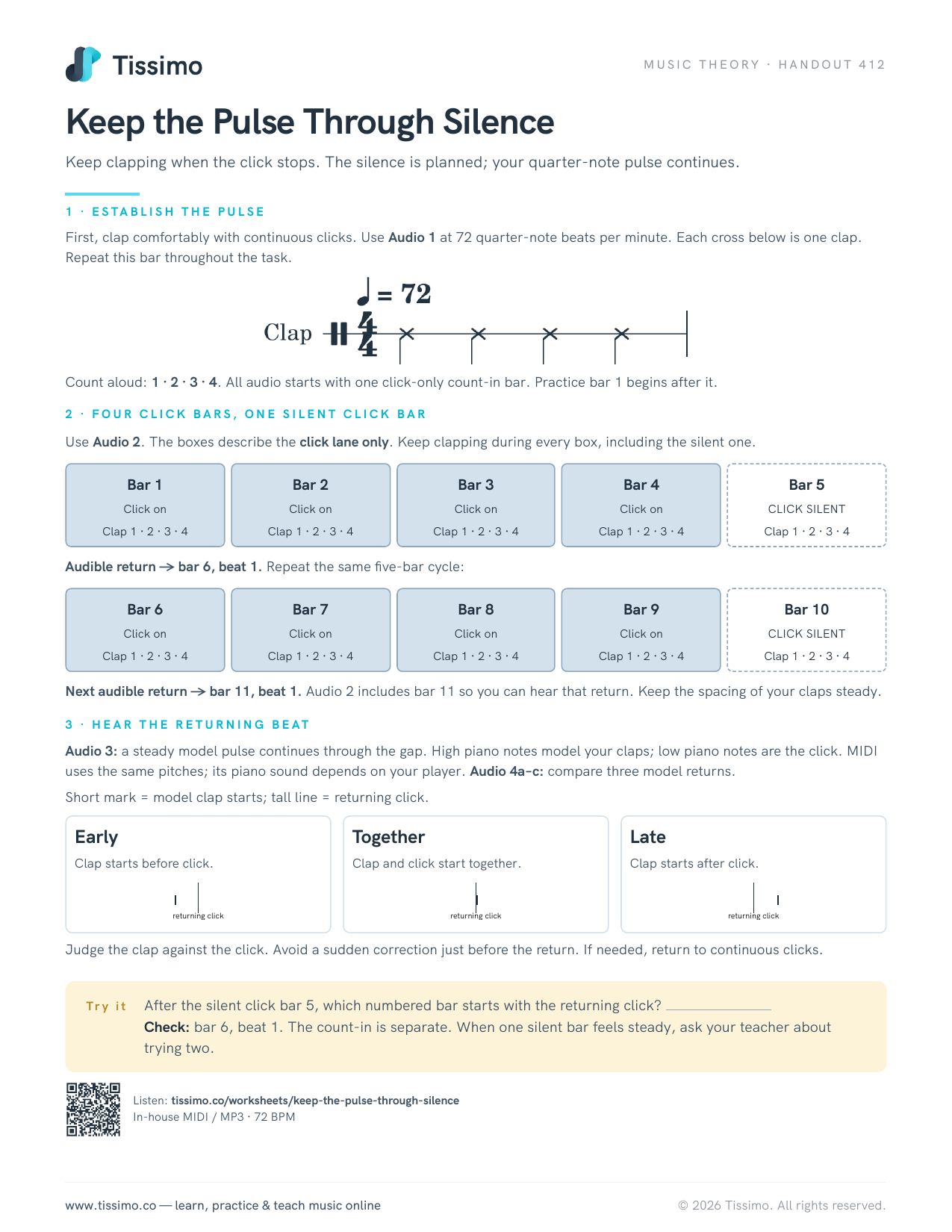 Keep the Pulse Through SilenceKeep clapping when the click stops. The silence is planned; your quarter-note pulse continues.
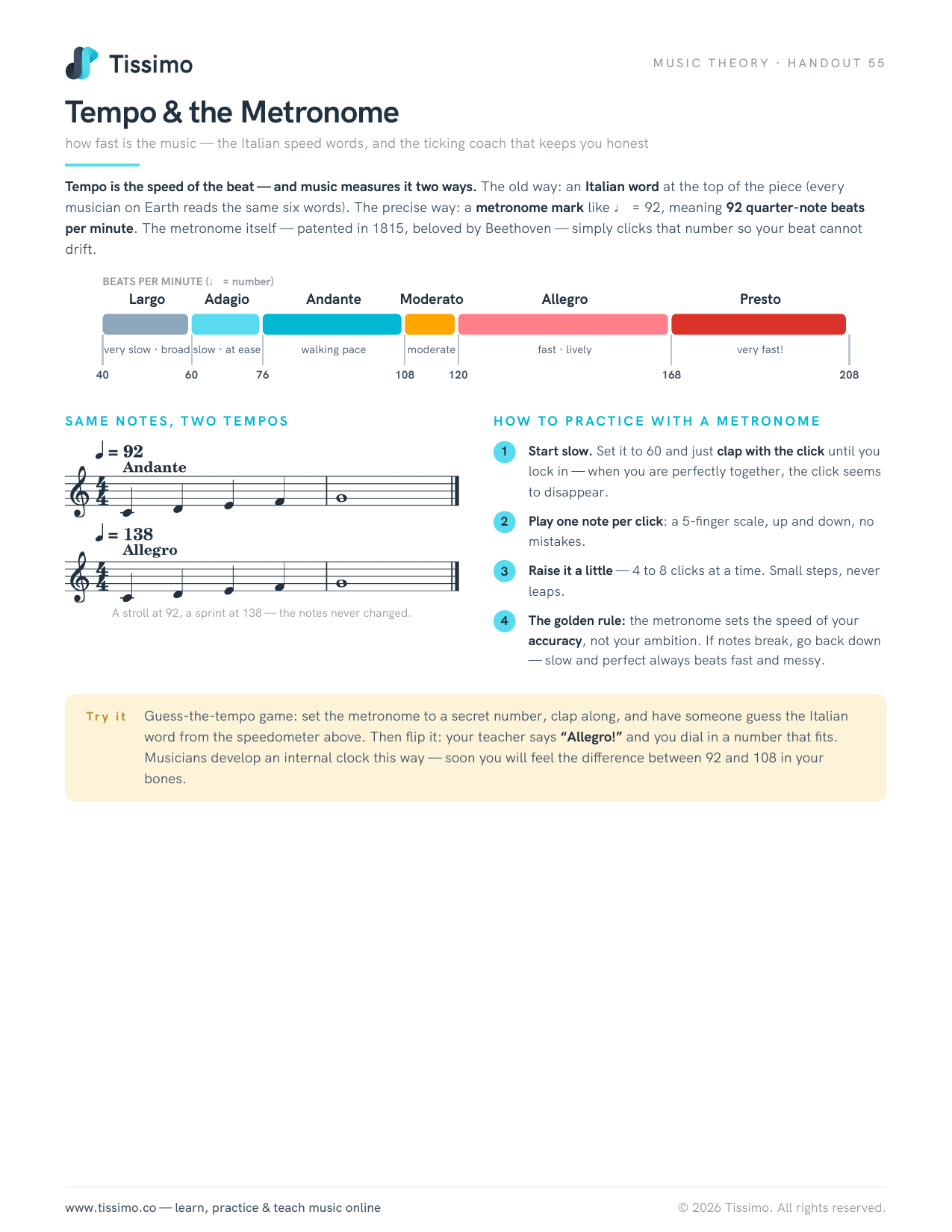 Tempo & the Metronomehow fast is the music — the Italian speed words, and the ticking coach that keeps you honest
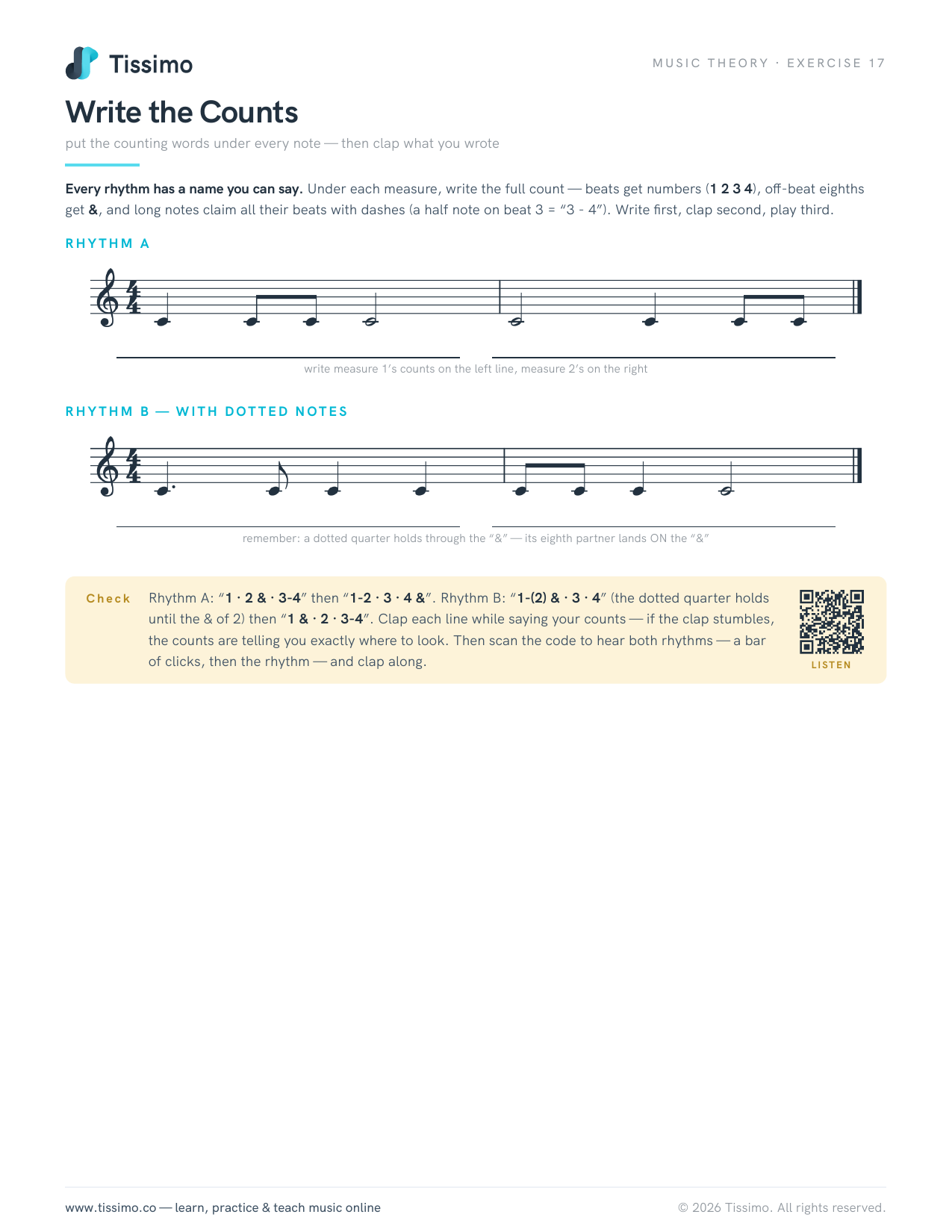 Write the Countsput the counting words under every note — then clap what you wrote
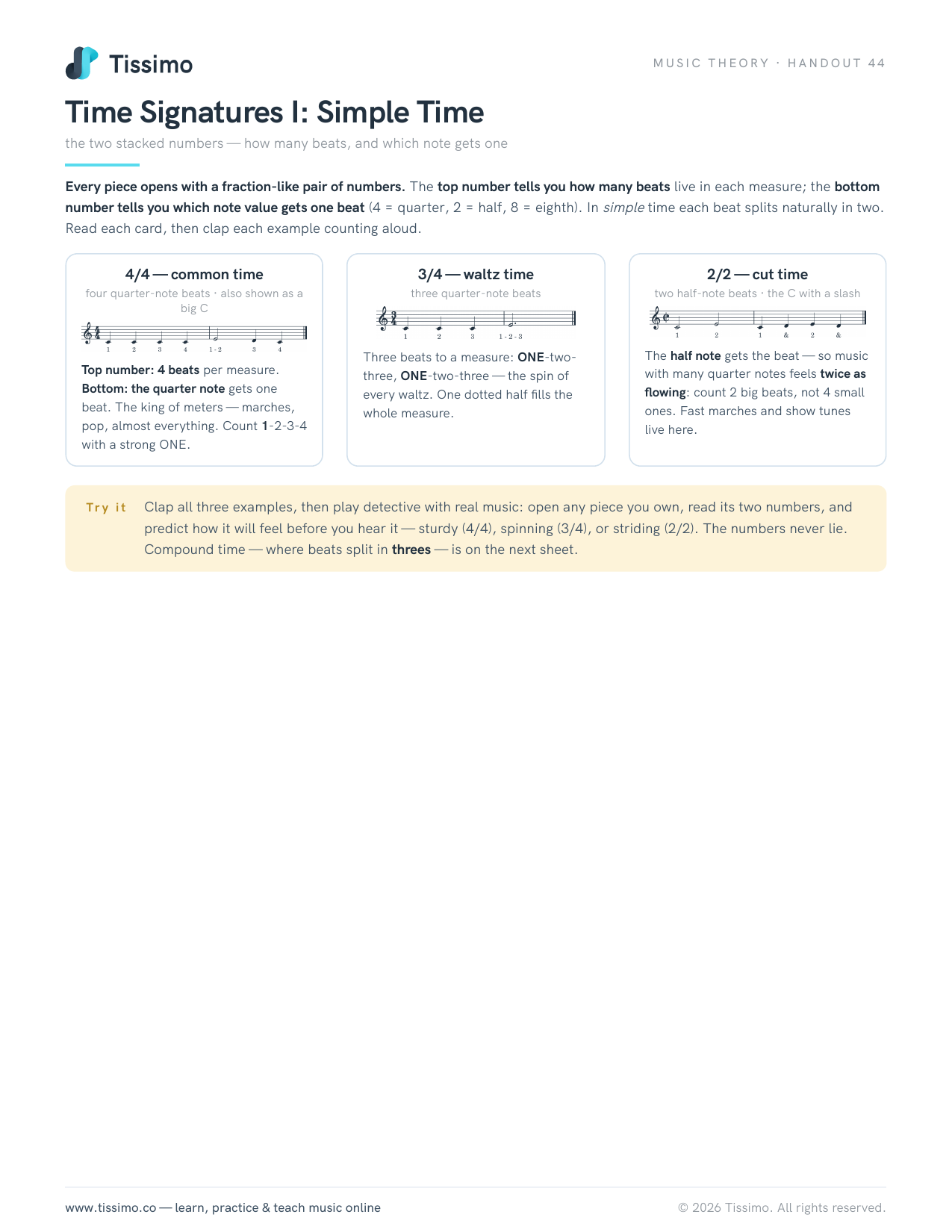 Time Signatures I: Simple Timethe two stacked numbers — how many beats, and which note gets one