Rhythm & Meter
Cut Time (Alla Breve)
Pronounced AH-lah BREH-vehWritten as 2/2
Cut time is 2/2 time: two half-note beats in each bar, written as a C with a vertical line through it. The notes look like 4/4, but you count and feel two beats instead of four.
Cut time is the meter 2/2: two beats in every bar, with a half note getting one beat. It is written as a C crossed by a vertical line, a sign that "cuts" common time in half. Its Italian name, alla breve, comes from older notation, where it told the performer to feel the beat on the breve, a longer note value than usual. In modern use it simply means: count in two.
Same notes, half the counts
A bar of cut time holds exactly as much as a bar of 4/4: four quarter notes, eight eighth notes or one whole note. What changes is how you count and feel it. Instead of four beats, you feel two, each one a half note long. Each quarter note is now half a beat, counted "1 &".
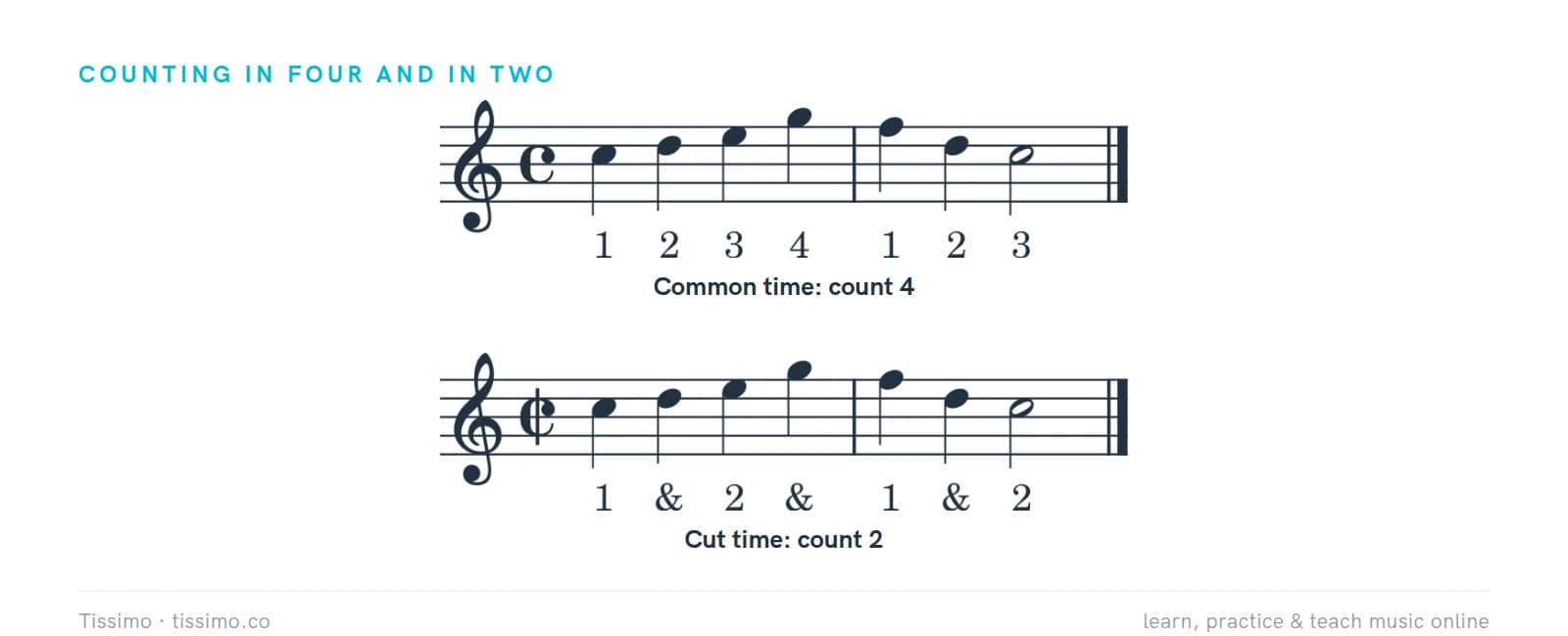
Why composers use it
Cut time often suits music that moves quickly. Counting four fast beats in each bar can feel busy and heavy; counting two makes the line lighter and more flowing. You will often find it in marches, show tunes and the fast movements of Classical sonatas and symphonies. It can also be slow: the tempo marking determines the speed, while cut time identifies two half-note beats per bar.
Counting cut time
- Count "1, 2" on the half notes.
- Count "1 & 2 &" when quarter notes appear: each quarter note is half a beat.
- Count "1 e & a 2 e & a" for eighth notes, if you need that much detail.
If you are new to cut time, it is fine to count in four at a slow practice tempo, then switch to two as the tempo comes up.
Cut time, 2/4 and 4/4
Cut time and 2/4 are both duple meters, with two beats per bar. The difference is the beat note: a half note in cut time, a quarter note in 2/4. Cut time and 4/4 look the same on the page; only the counting and the feel differ. Compare all three in Two Beats in a Bar: 2/4 & Cut Time, and practice reading in two with Count in Two.
Common questions
Is cut time the same as 2/2?
Yes. The cut-time sign, a C with a vertical line through it, means 2/2: two half-note beats in each bar.
How do you count cut time?
Count two beats per bar, one on each half note: "1, 2". Quarter notes fall on "1 & 2 &". At a slow practice tempo you can count in four, then switch to two as you speed up.
Practice it: free worksheets
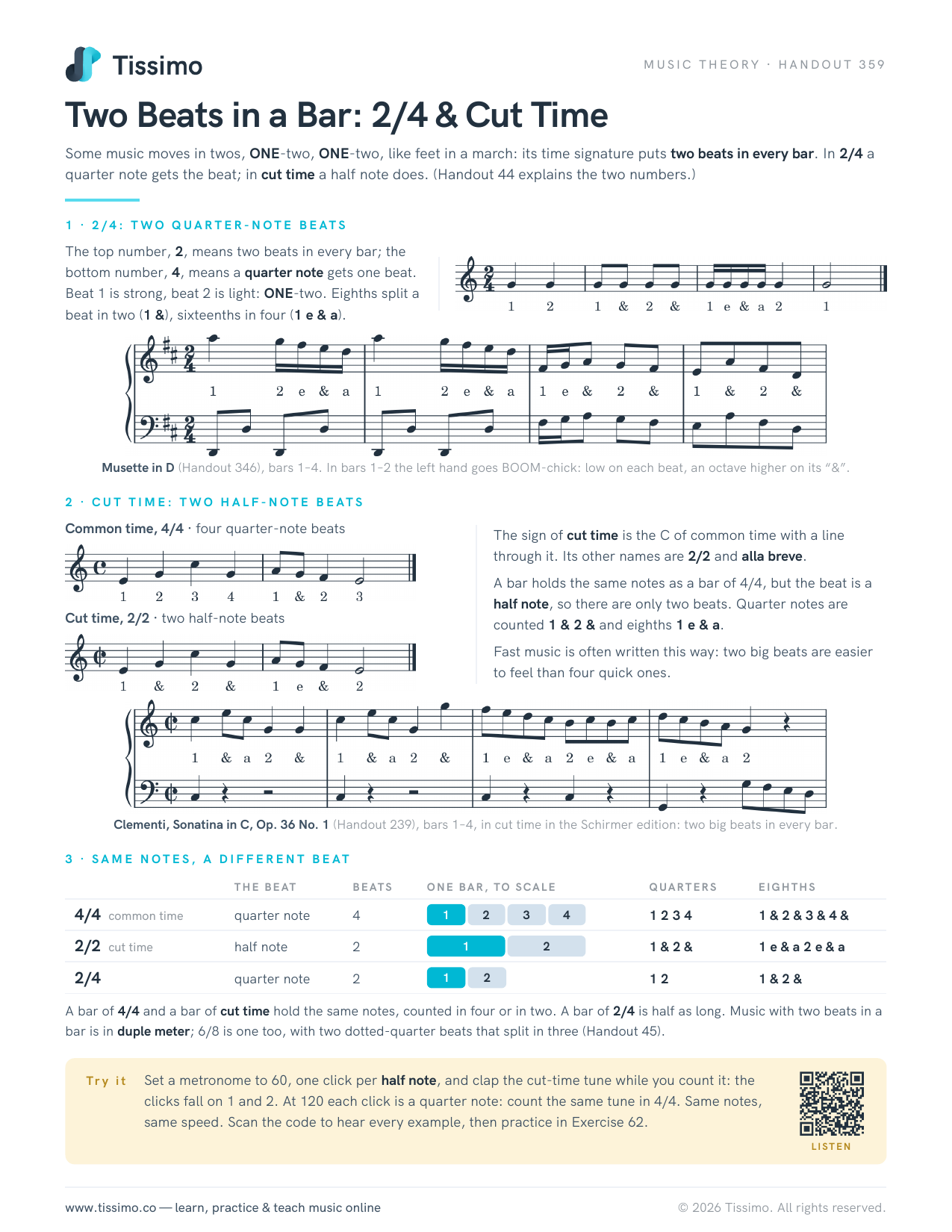 Two Beats in a Bar: 2/4 & Cut TimeSome music moves in twos, ONE-two, ONE-two, like feet in a march: its time signature puts two beats in every bar. In 2/4 a quarter note gets the beat; in cut time a half note does. (Handout 44 explains the two numbers.)
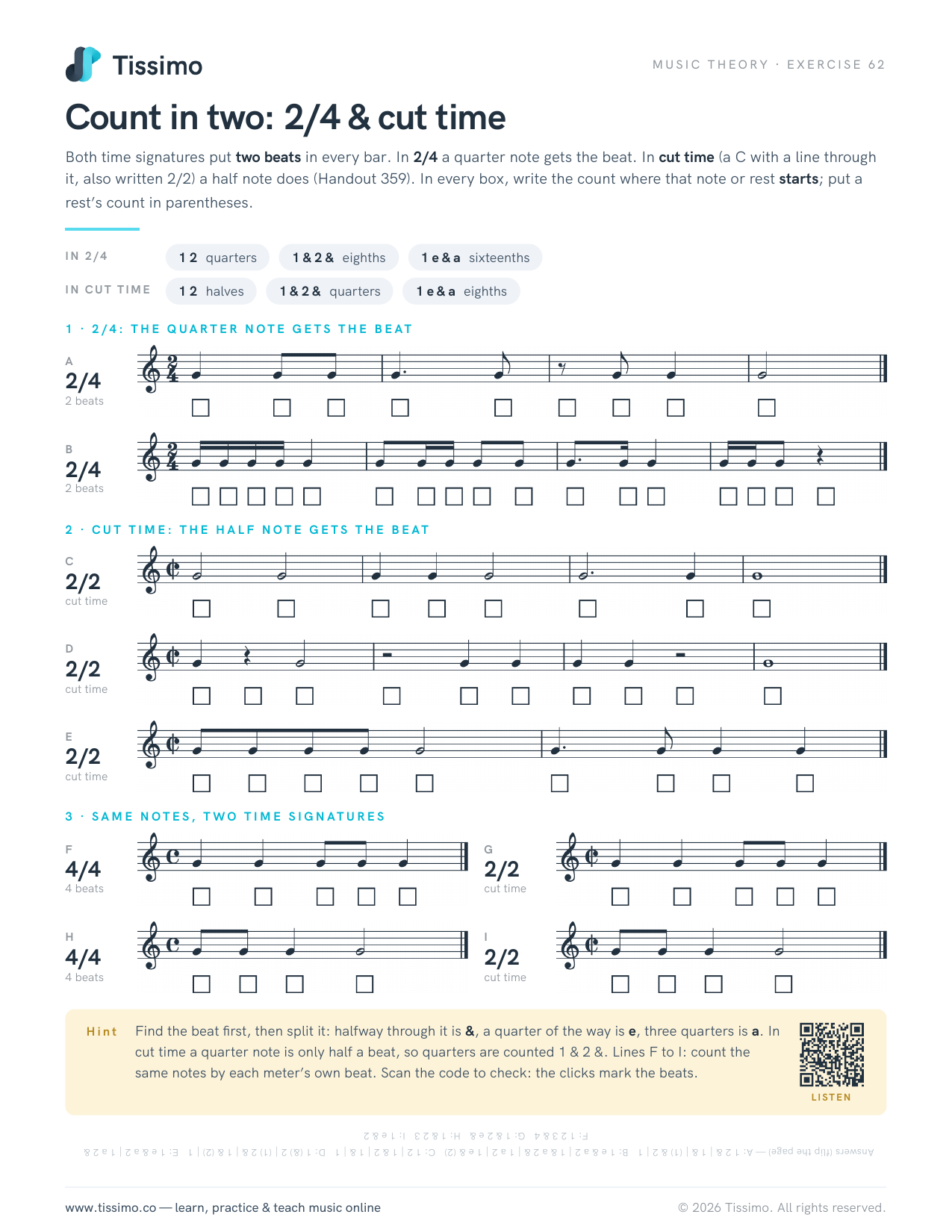 Count in two: 2/4 & cut timeBoth time signatures put two beats in every bar. In 2/4 a quarter note gets the beat. In cut time (a C with a line through it, also written 2/2) a half note does (Handout 359). In every box, write the count where that note or rest starts; put a rest’s count in parentheses.