Form & Structure
March
A march is a piece with a strong, steady beat in duple meter, originally written to keep soldiers in step. Marches usually use 2/4, 6/8 or cut time and are built from short sections called strains.
A march is music for walking together. Its first job was practical: to keep troops in step on parade. Its strong, regular beat and bold tunes made it popular far beyond the parade ground, at graduations, weddings, sports events and in the concert hall.
The sound of a march
- Duple meter: two strong beats per bar, LEFT-right, LEFT-right. Marches are usually written in 2/4, cut time (2/2) or 6/8, sometimes 4/4.
- A steady tempo: a parade march is typically played at about 120 beats per minute, close to the pace of marching feet.
- Crisp rhythms: dotted figures, accents and short, separated notes in the accompaniment.
- An oom-pah accompaniment: a bass note on the beat and a chord between, in band music played by tubas and horns.
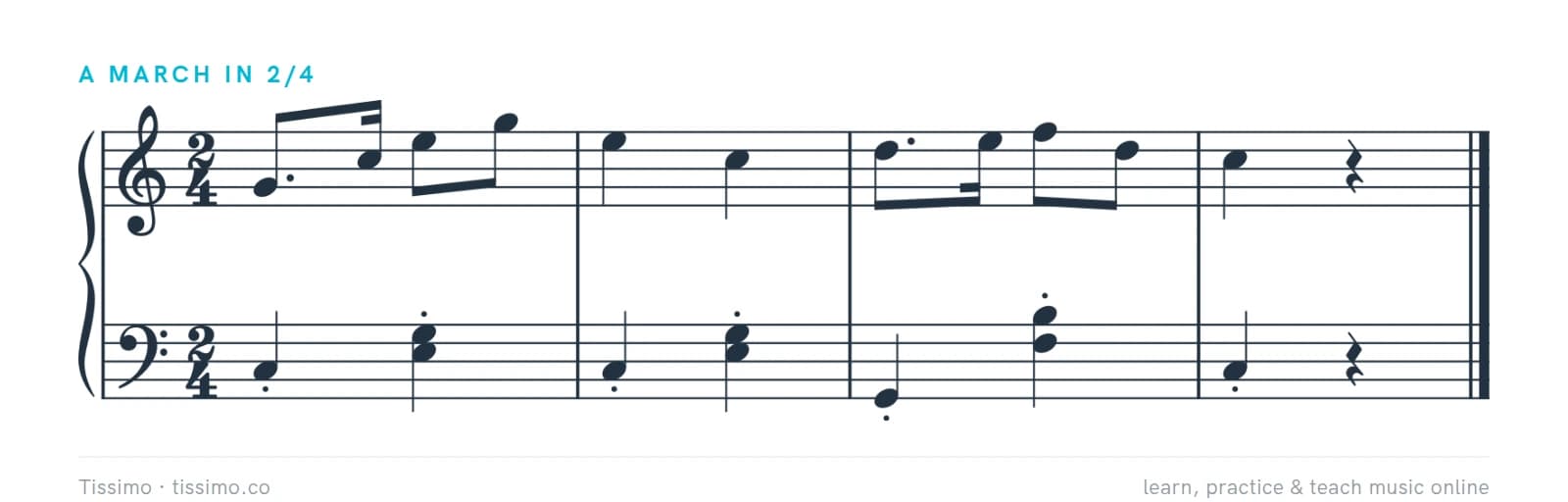
March form
Traditional marches are built from strains, sections usually 16 bars long, each with its own tune, most of them repeated. A typical American band march, for example, has an introduction, two strains in the home key, then a trio in the subdominant key (a key with one more flat), often with a softer, more lyrical melody. A noisy interlude between trio statements is sometimes called the breakstrain or dogfight. Ragtime borrowed this chain-of-strains plan from the march; the Inside The Entertainer study shows it in Joplin's rag.
Famous marches
- John Philip Sousa, the "March King," wrote "The Stars and Stripes Forever," the national march of the United States, along with "The Washington Post" and many others.
- Edward Elgar's Pomp and Circumstance March No. 1 is played at countless graduation ceremonies.
- Wedding marches: Mendelssohn's from his music for A Midsummer Night's Dream, and the "Bridal Chorus" from Wagner's Lohengrin.
- Funeral marches: the slow third movement of Chopin's Piano Sonata No. 2.
- Marches also appear inside larger works, such as operas, ballets, symphonies and film scores.
Playing a march
Keep the beat absolutely steady; rushing is the classic problem. Make the bass notes on the beats firm, keep the off-beat chords light and short, and give dotted rhythms a crisp, exact snap: the short note should be really short. The Two Beats in a Bar worksheet practices the 2/4 and cut-time feel.
Common questions
What time signature is a march?
Most marches are in duple meter: 2/4, cut time (2/2) or 6/8, with two strong beats per bar. Some are written in 4/4.
What is the trio of a march?
A contrasting section, usually in the subdominant key and often softer and more lyrical, that comes after the first strains. Rags and many marches share this plan.
Practice it: free worksheets
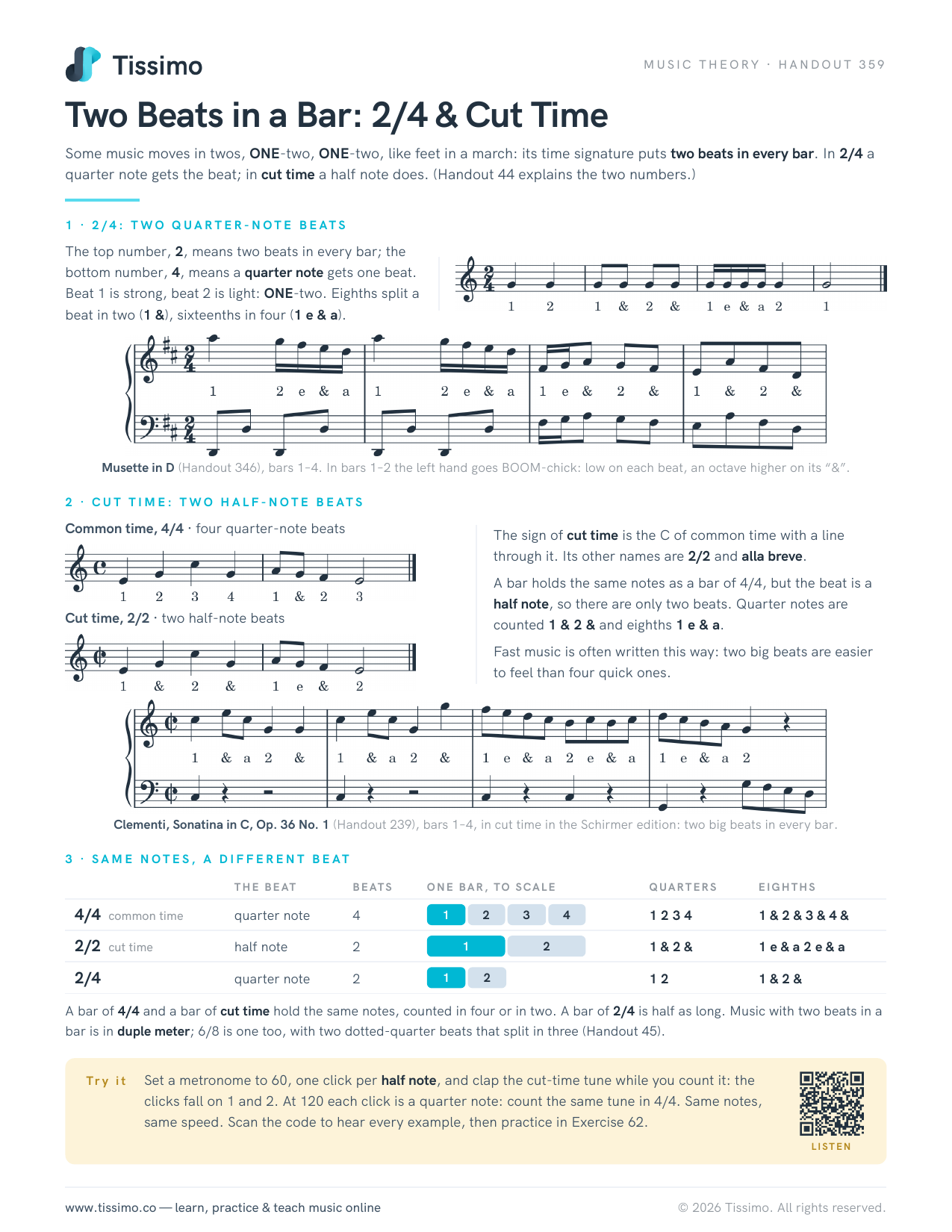 Two Beats in a Bar: 2/4 & Cut TimeSome music moves in twos, ONE-two, ONE-two, like feet in a march: its time signature puts two beats in every bar. In 2/4 a quarter note gets the beat; in cut time a half note does. (Handout 44 explains the two numbers.)
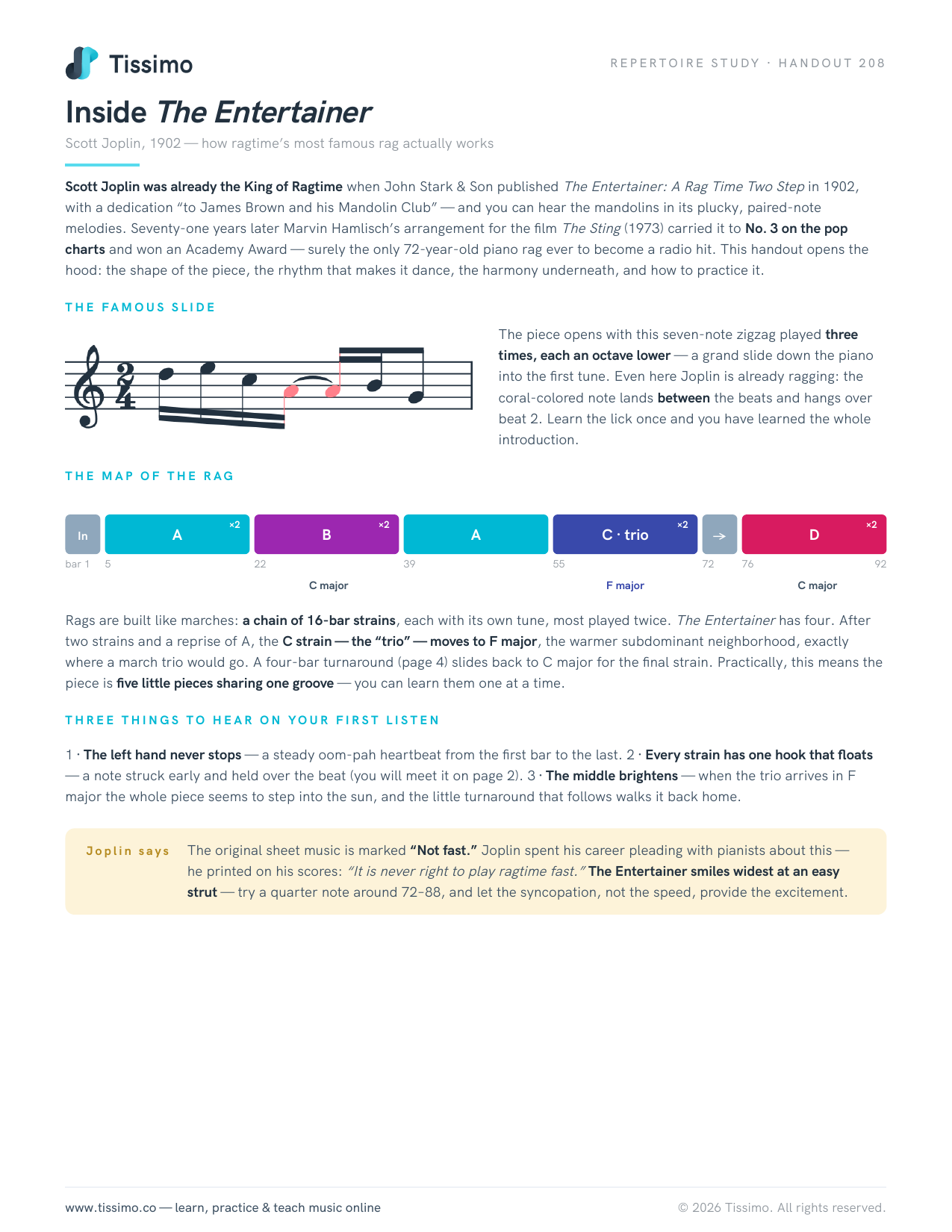 Inside The EntertainerScott Joplin, 1902 — how ragtime’s most famous rag actually works
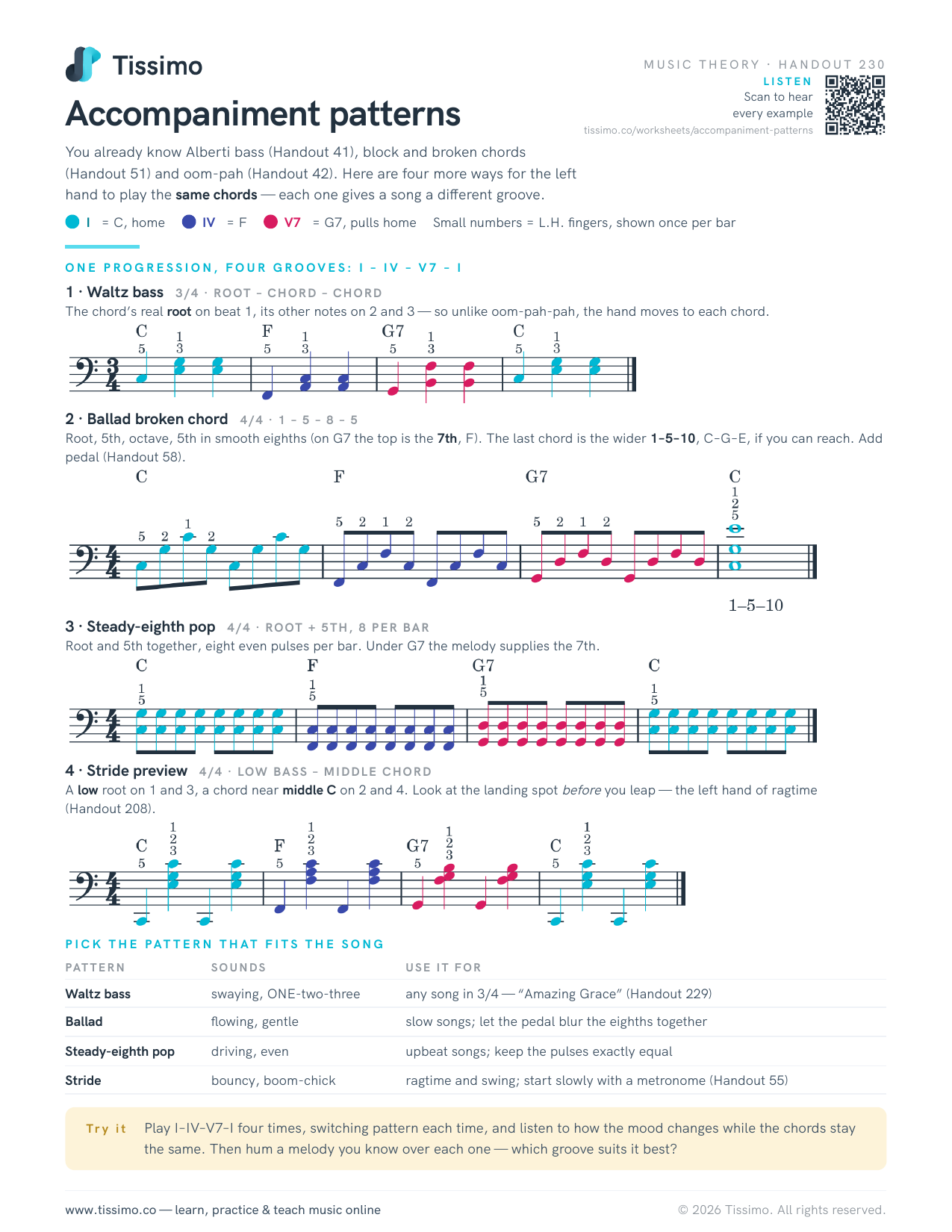 Accompaniment patternsYou already know Alberti bass (Handout 41), block and broken chords (Handout 51) and oom-pah (Handout 42). Here are four more ways for the left hand to play the same chords — each one gives a song a different groove.
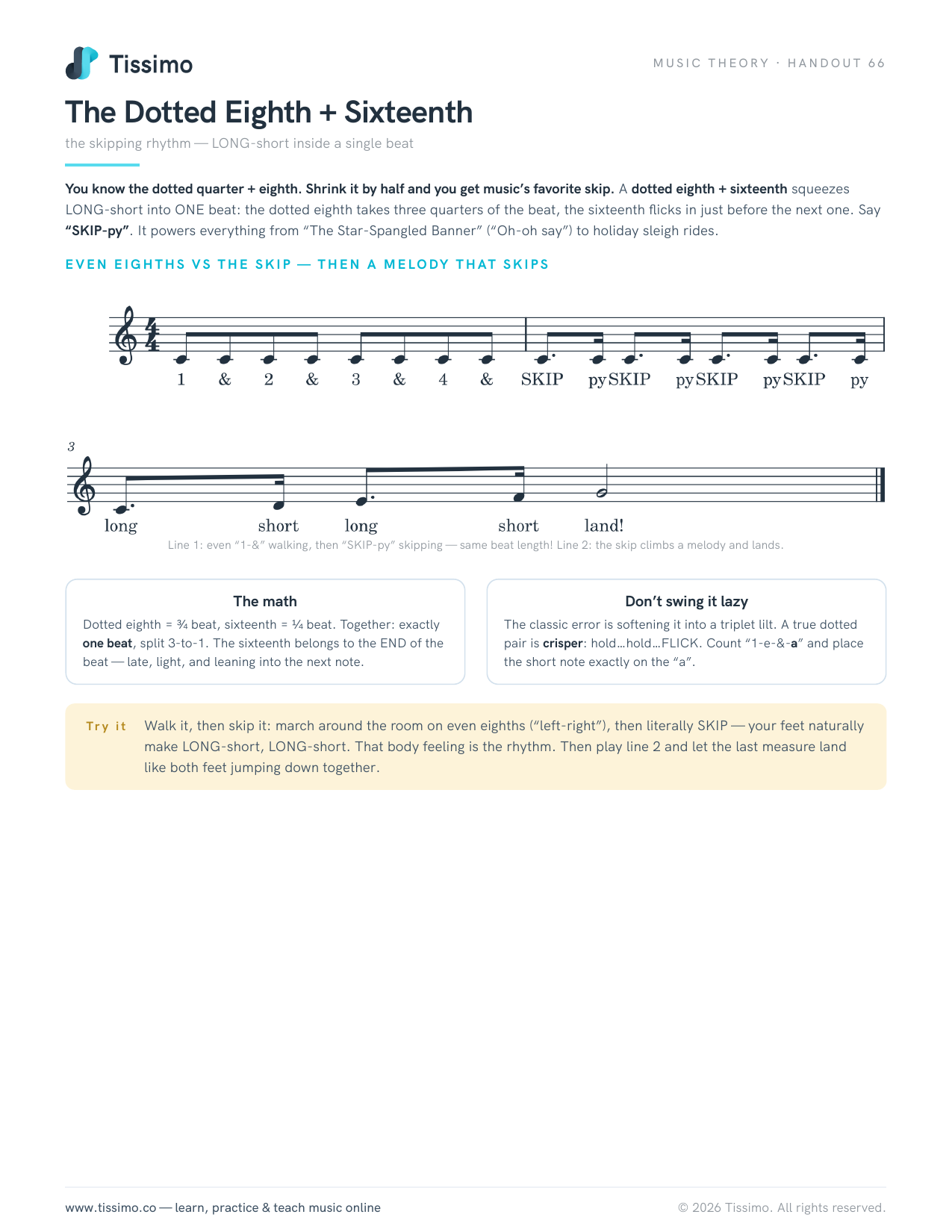 The Dotted Eighth + Sixteenththe skipping rhythm — LONG-short inside a single beat