Rhythm & Meter
Dotted Note
A dotted note has a small dot after its notehead, which makes it half again as long. A dotted half note lasts three beats in 4/4, and a dotted quarter lasts one and a half.
A dot written just to the right of a notehead makes the note longer by half of its own value. The rule is the same for every note value:
- dotted whole note = whole + half = 6 quarter-note beats
- dotted half note = half + quarter = 3 beats
- dotted quarter note = quarter + eighth = 1½ beats
- dotted eighth note = eighth + sixteenth = ¾ of a beat
The dot is a shorthand for a tie: a dotted half note sounds exactly like a half note tied to a quarter note, but it is quicker to write and read.
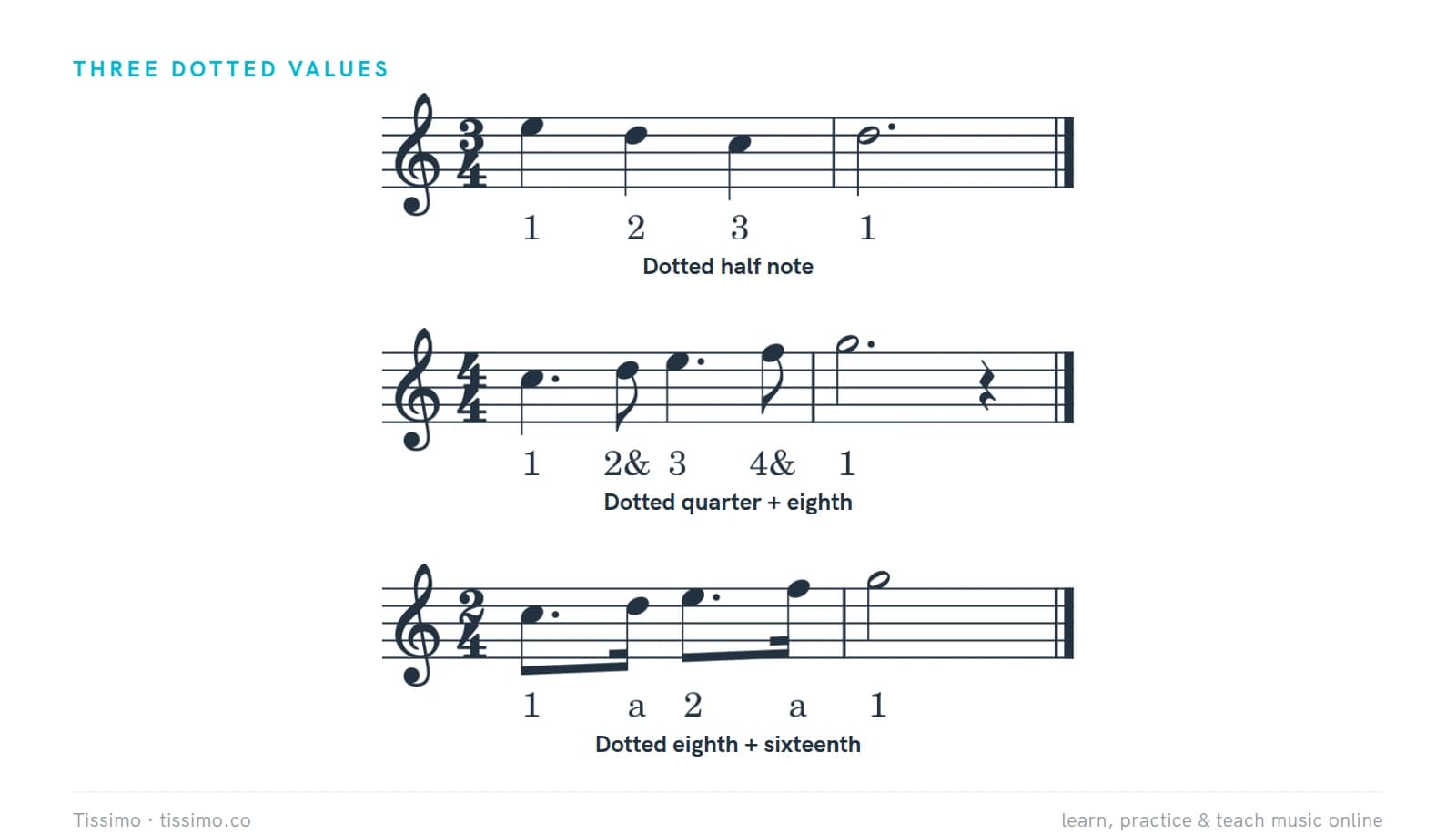
Dotted rhythms
A dotted note is very often followed by a short note that completes the beat, making a long-short pattern called a dotted rhythm:
- Dotted quarter + eighth: fills two beats in 4/4, counted "1 (2) &". It is one of the most common rhythms in melodies.
- Dotted eighth + sixteenth: fills one beat, counted "1 (e &) a". It gives marches and many dance tunes their crisp, skipping sound.
Count through the dot. With a dotted quarter on beat 1, say "1, 2" while it holds and play the eighth note on the "&" of 2.
Dots in compound meter
In 6/8, 9/8 and 12/8 the beat itself is a dotted note, usually a dotted quarter, and a dotted half note fills a whole bar of 6/8. See compound meter.
A dot after the note, or above it?
Do not confuse an augmentation dot with a staccato dot. The augmentation dot sits beside the notehead, to its right, and makes the note longer. A staccato dot sits above or below the notehead and makes the note short and detached. When a note sits on a line, its augmentation dot is usually moved up into the space above, so the line does not hide it.
Rests can be dotted too, with the same rule. Two dots make a double-dotted note.
Practice each dotted value with The Dotted Half Note, The Dotted Quarter Note and The Dotted Eighth + Sixteenth.
Common questions
How long is a dotted quarter note?
One and a half beats when the quarter note gets the beat: one beat for the quarter note plus half a beat for the dot. It lasts as long as three eighth notes.
What is the difference between a dot after a note and a dot above it?
A dot after the notehead (an augmentation dot) makes the note half again as long. A dot above or below the notehead is a staccato mark, which makes the note short and detached.
Practice it: free worksheets
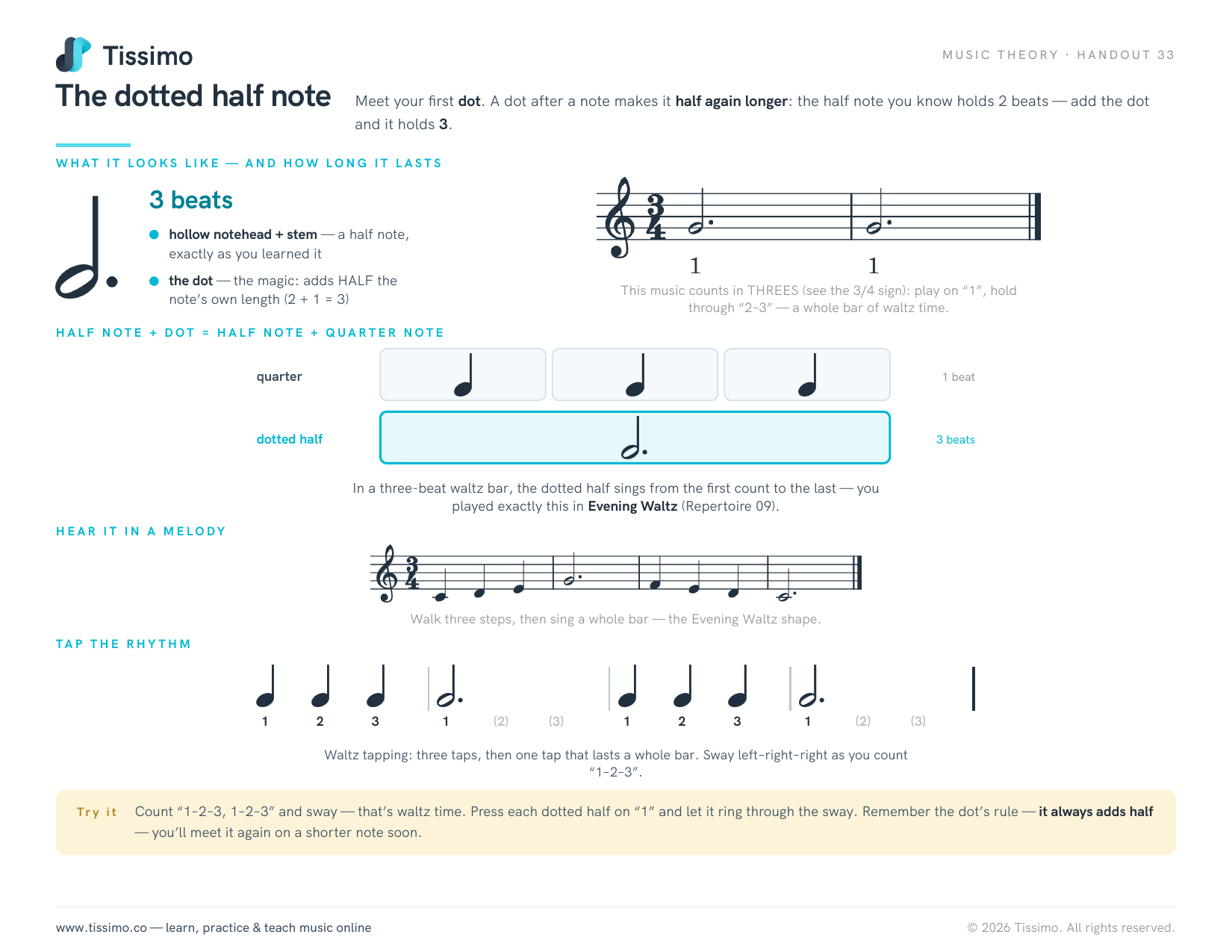 The dotted half noteMeet your first dot. A dot after a note makes it half again longer: the half note you know holds 2 beats — add the dot and it holds 3.
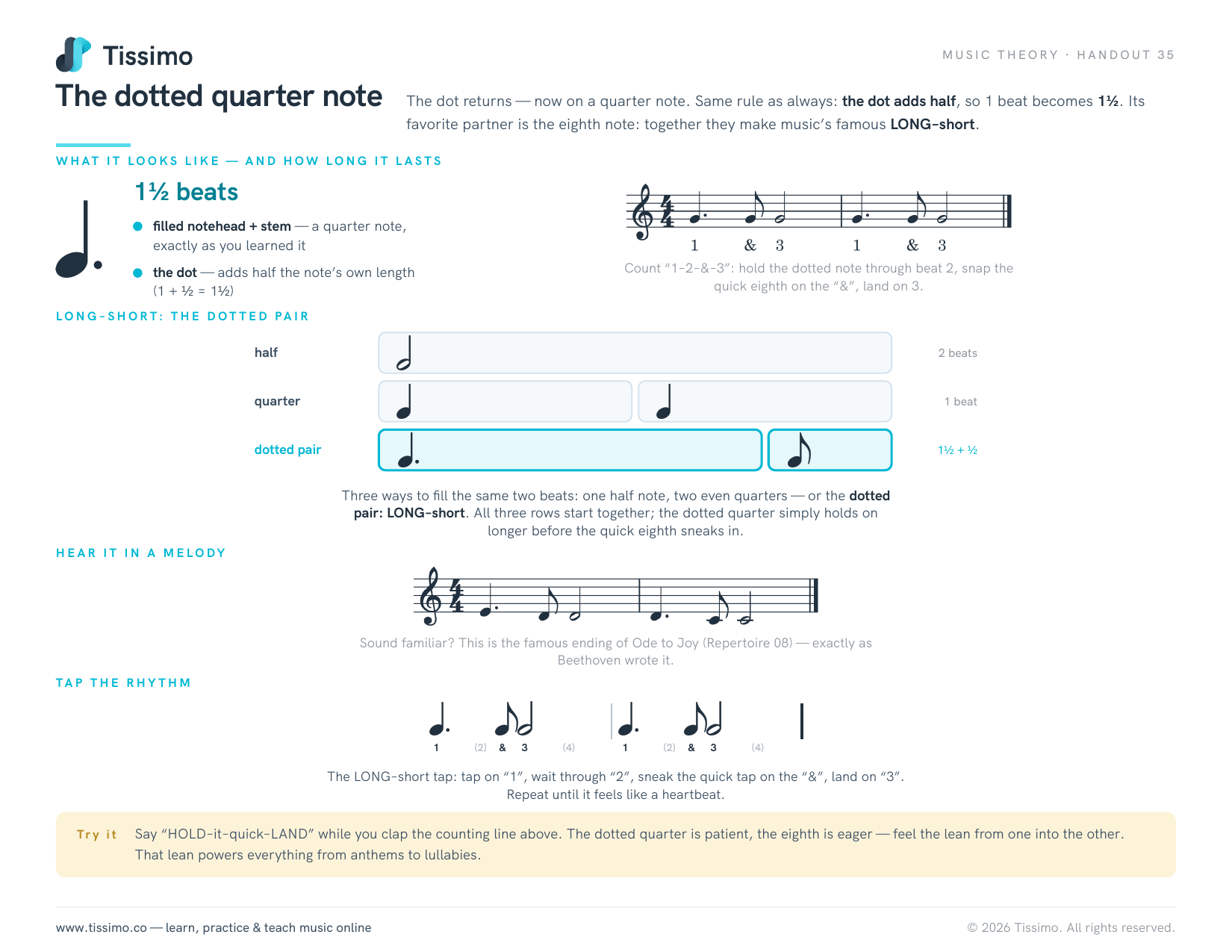 The dotted quarter noteThe dot returns — now on a quarter note. Same rule as always: the dot adds half, so 1 beat becomes 1½. Its favorite partner is the eighth note: together they make music’s famous LONG–short.
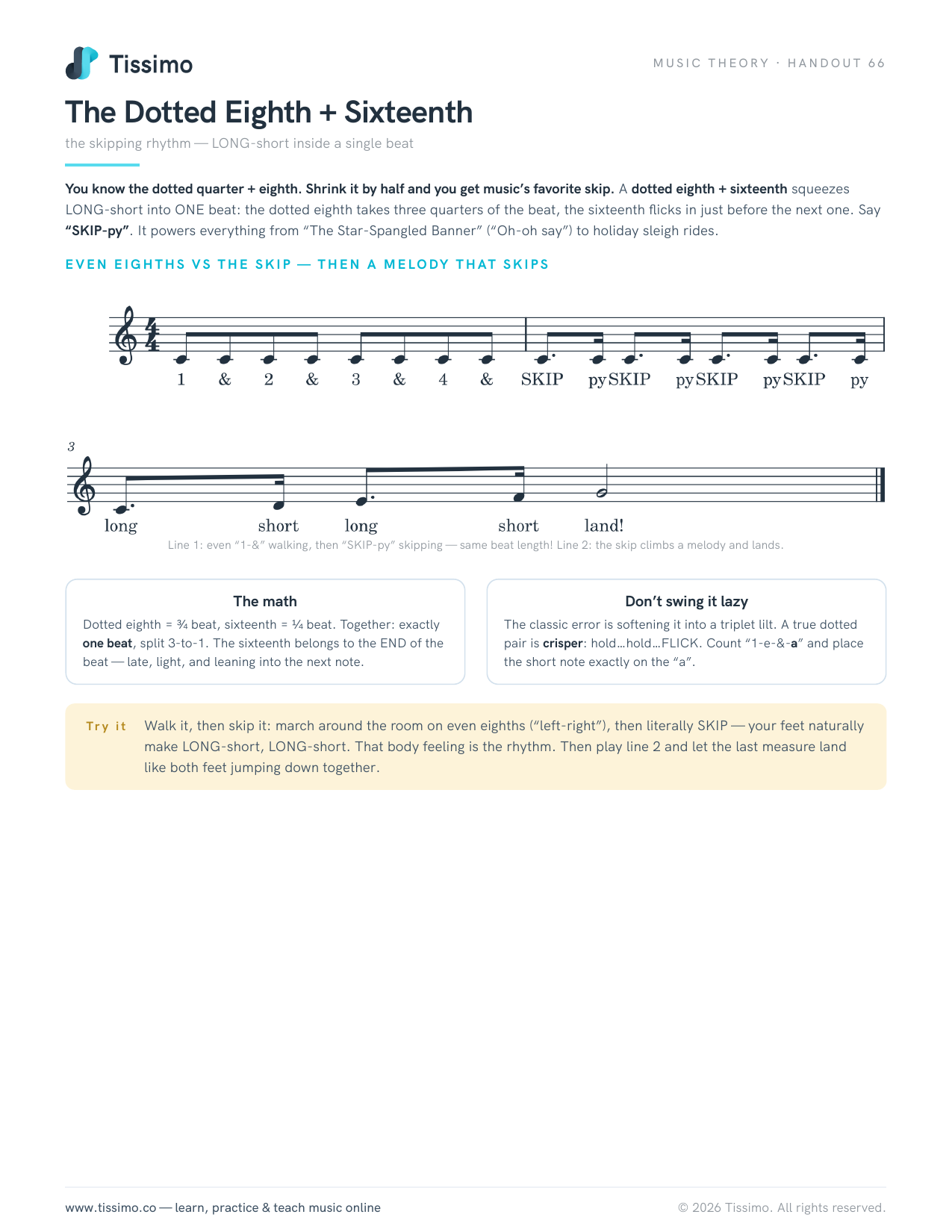 The Dotted Eighth + Sixteenththe skipping rhythm — LONG-short inside a single beat
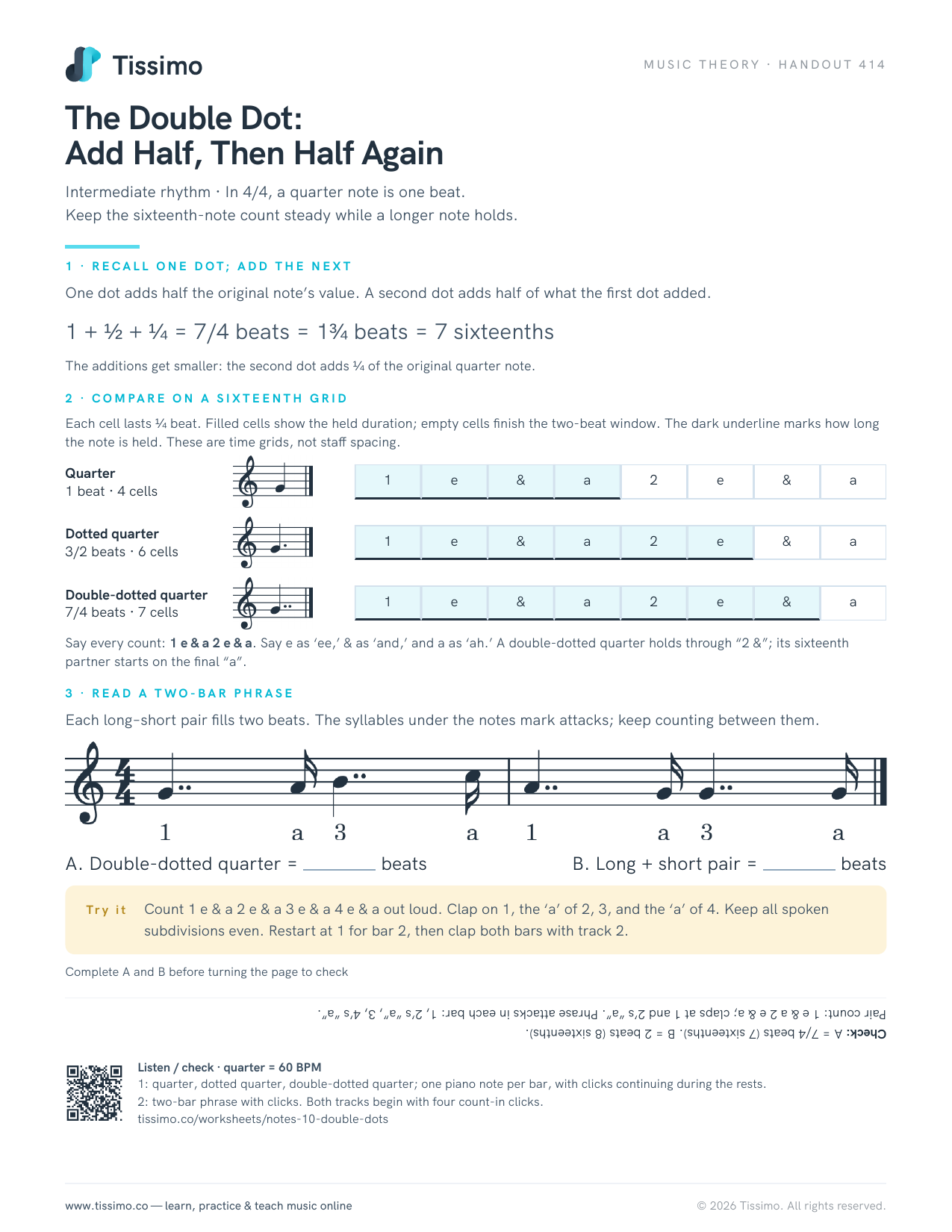 The Double Dot: Add Half, Then Half AgainIntermediate rhythm · In 4/4, a quarter note is one beat. Keep the sixteenth-note count steady while a longer note holds.