Rhythm & Meter
Rest
A rest is a symbol for a measured silence. Each note value has a matching rest, from the whole rest to the sixteenth rest and beyond, and you keep counting through a rest just as you would through a note.
A rest tells you to be silent for an exact length of time. Silence is part of the rhythm: a rest is counted just like a note, and the beat carries on through it. Each note value has a rest of the same length, with its own shape.
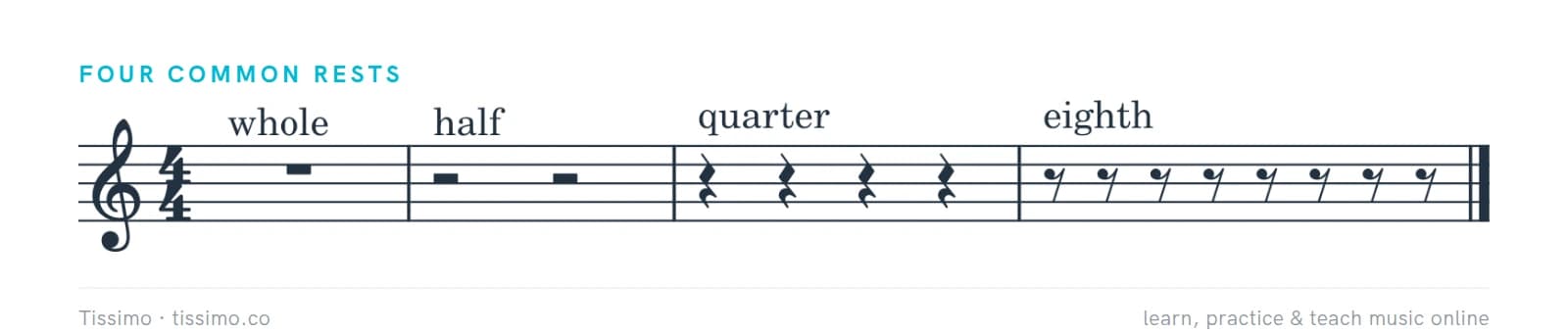
The rest family
- Whole rest: a small block hanging below the fourth line of the staff. Four beats in 4/4, and also used for any whole bar of silence.
- Half rest: a small block sitting on top of the middle line. Two beats in 4/4.
- Quarter rest: a zigzag shape. One beat.
- Eighth rest: a slanted stroke with one hook. Half a beat.
- Sixteenth rest: the same stroke with two hooks. A quarter of a beat.
Each extra hook halves the length again, just as each extra flag does on a note. A thirty-second rest has three hooks.
Counting through rests
The most common rhythm mistake is to stop counting when the sound stops. Keep the count going through every rest, out loud at first. In the example below you still say "2" and "4" in the first bar, even though nothing sounds on those beats.
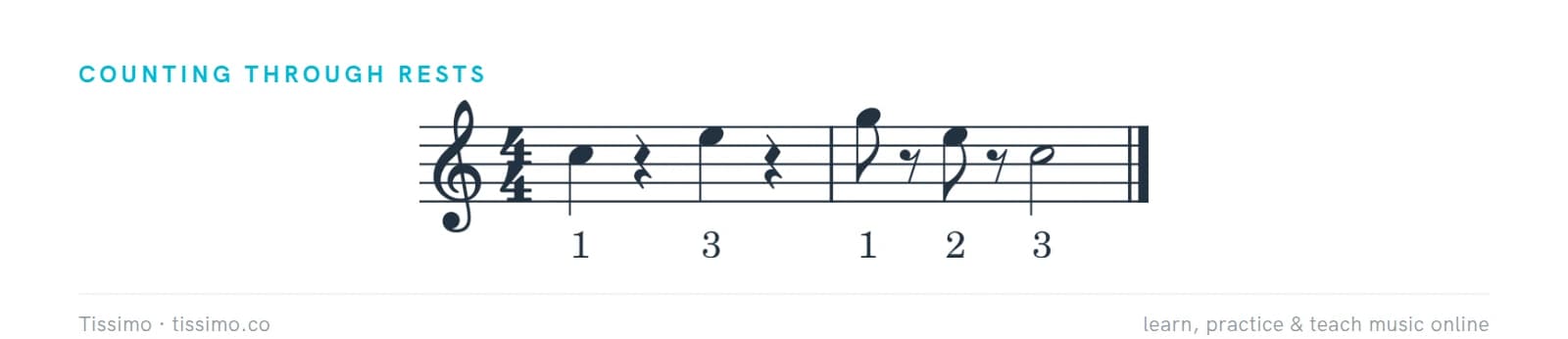
On the piano, release the notes of the voice that rests; another voice in the same hand may still need to sound. Follow the score and style when deciding whether the sustain pedal should preserve any resonance. Singers and wind players often use rests to breathe.
Dotted rests, bar rests and multi-bar rests
A dot after a rest adds half its value, as it does for a note: a dotted quarter rest lasts three eighth notes, or a beat and a half when the quarter note gets the beat. A whole rest alone in a bar means a full bar of silence in any common time signature. When an instrument is silent for many bars in a row, its part shows a multimeasure rest: a thick horizontal bar with the number of bars printed above it. A fermata over a rest asks for a held silence, longer than the rest's written value.
Learn the shapes with The Rests and The Rest Family, and practice keeping time through silence with Keep the Pulse Through Silence.
Common questions
Do you count rests?
Yes. A rest lasts an exact number of beats, so you keep counting through it, out loud at first. Many teachers write a rest's count in parentheses, like (3), to show that the beat is still there even though nothing sounds.
How do you tell a whole rest from a half rest?
Both are small blocks. The whole rest hangs down from the fourth line of the staff; the half rest sits on top of the middle line. One way to remember: the half rest looks like a hat, the whole rest like a hole.
Practice it: free worksheets
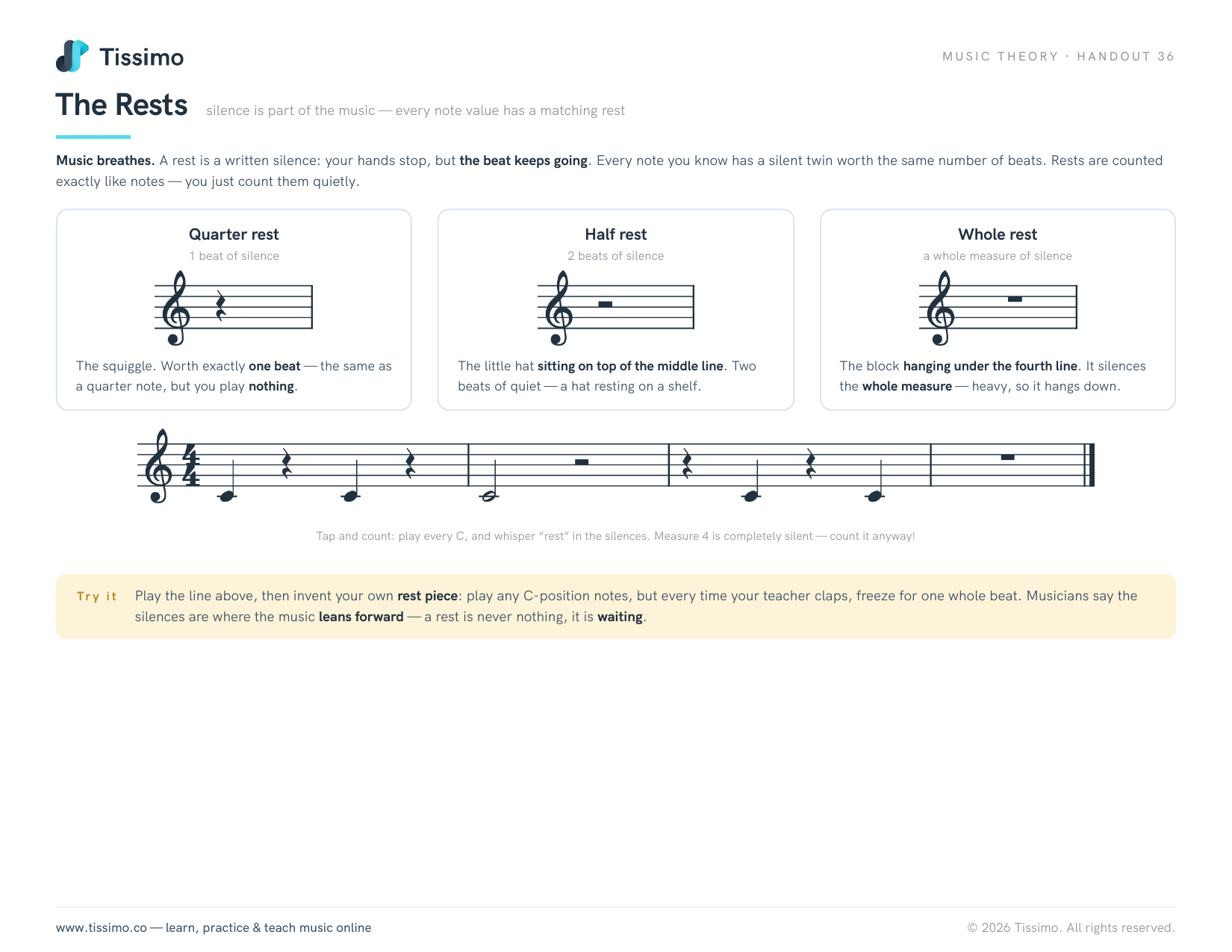 The Restssilence is part of the music — every note value has a matching rest
 The Rest Familyevery note has a silent twin — all five rests, whole to sixteenth
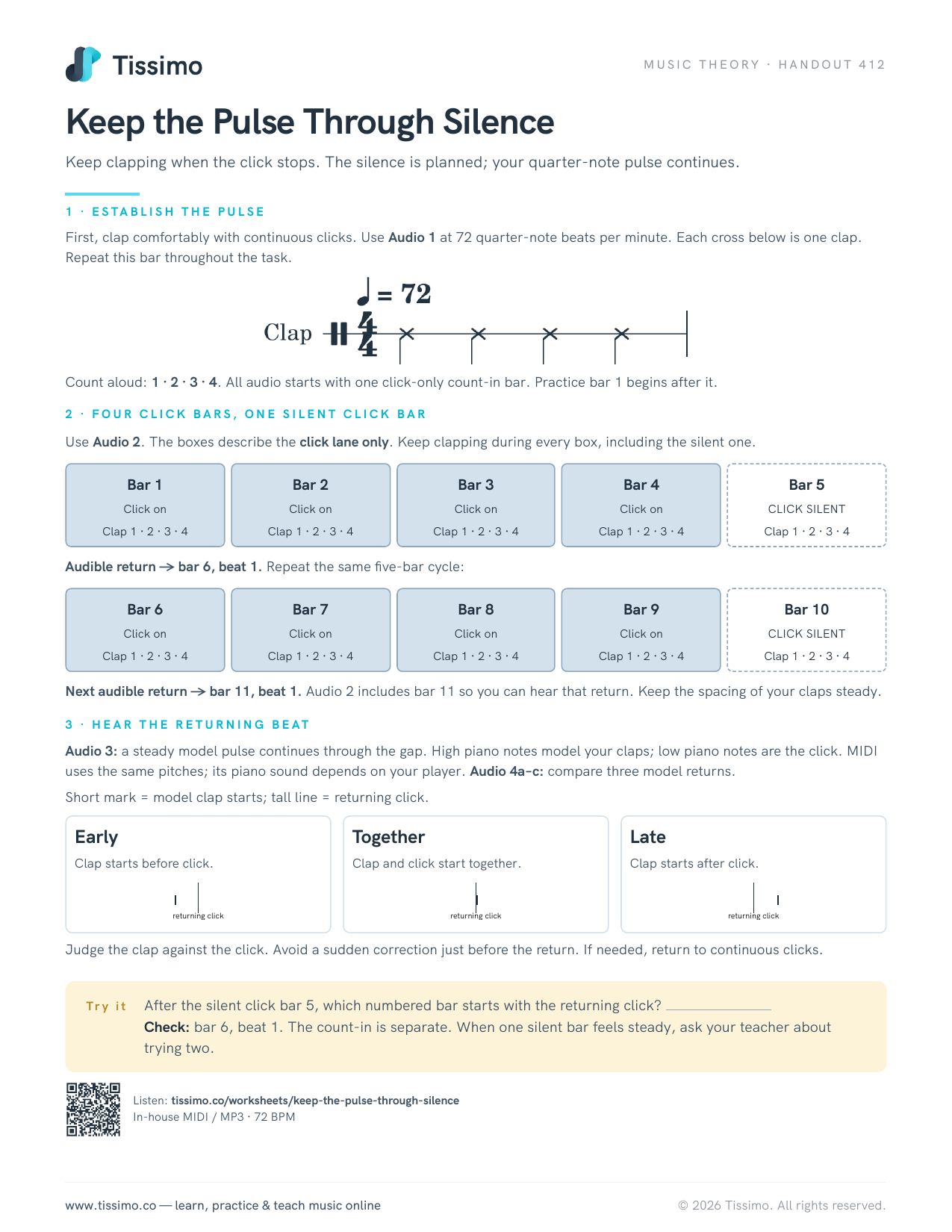 Keep the Pulse Through SilenceKeep clapping when the click stops. The silence is planned; your quarter-note pulse continues.
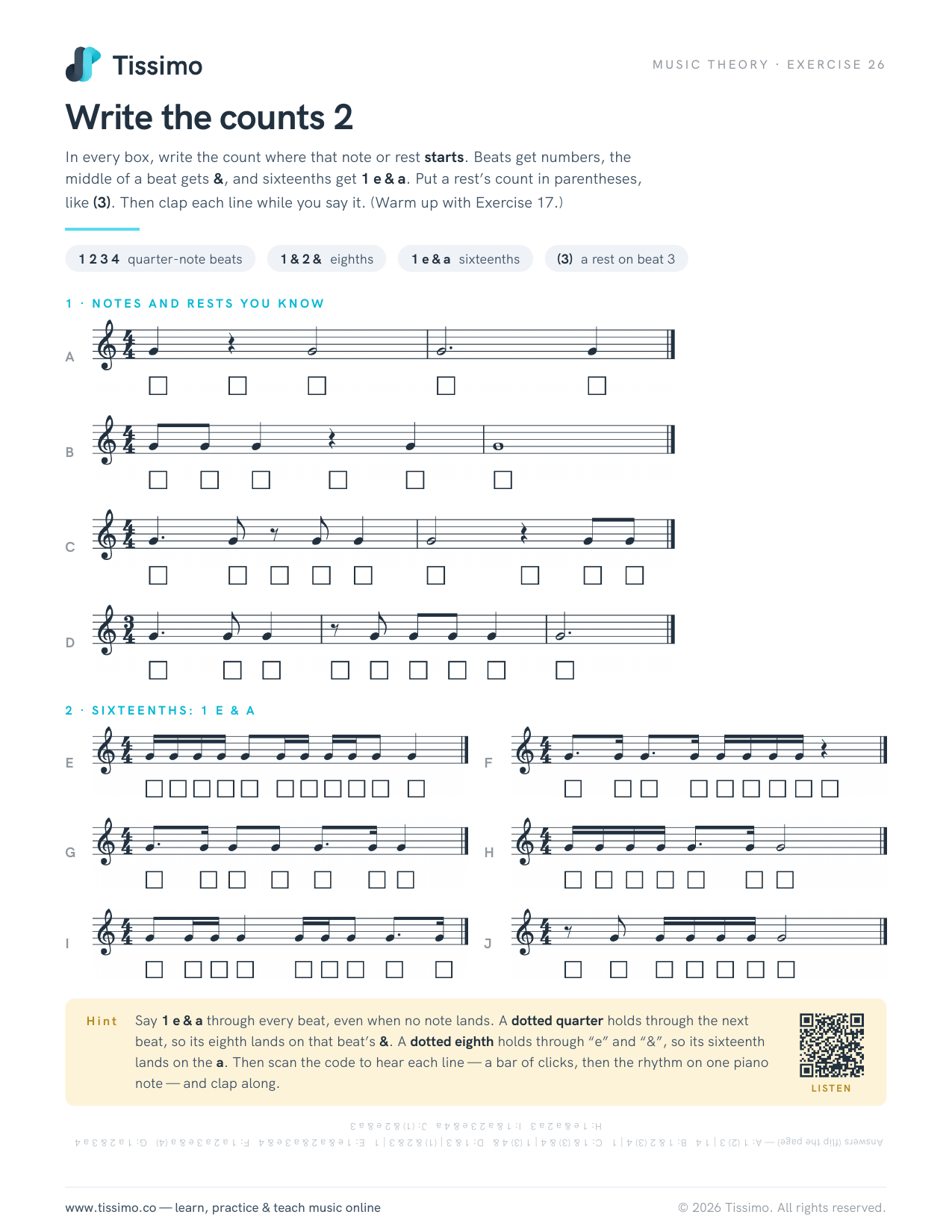 Write the counts 2In every box, write the count where that note or rest starts. Beats get numbers, the middle of a beat gets &, and sixteenths get 1 e & a. Put a rest’s count in parentheses, like (3). Then clap each line while you say it. (Warm up with Exercise 17.)