Rhythm & Meter
Eighth Rest
An eighth rest is a slanted stroke with one small hook at the top, a little like the number 7. It is half a beat of silence in 2/4, 3/4 and 4/4, the same length as an eighth note.
An eighth rest lasts as long as an eighth note: half a beat in 2/4, 3/4 and 4/4. It is drawn as a short diagonal stroke with a small round hook at its top, a little like a slanted number 7. In British English it is called a quaver rest.
The hooks tell the length
Shorter rests add more hooks, just as shorter notes add more flags:
- eighth rest: one hook (½ beat in 4/4)
- sixteenth rest: two hooks (¼ beat)
- thirty-second rest: three hooks (⅛ beat)
Playing off the beat
Eighth rests are how off-beat rhythms are written. A rest on the beat followed by an eighth note puts the sound on the "&", the upbeat half of the beat. In the example below, the left hand plays on every beat while the right hand rests on each beat and plays a chord on each "&". Off-beat accompaniments like this are heard in many styles, from polkas to ska and reggae.
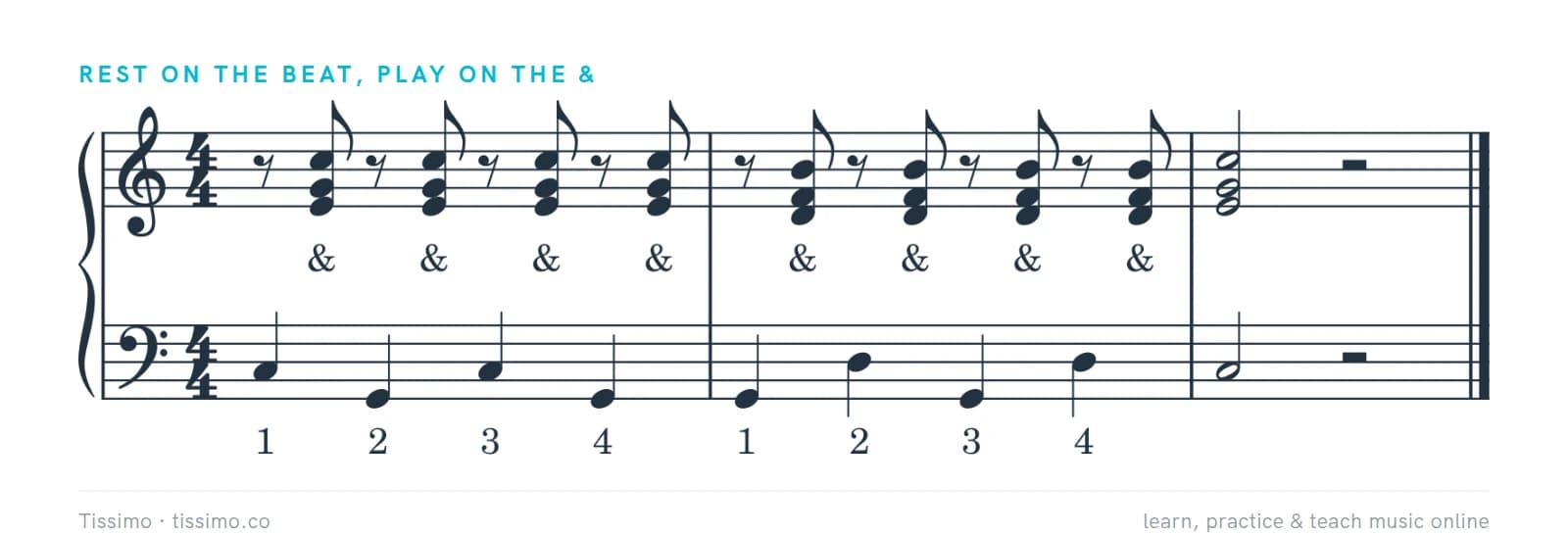
Counting eighth rests
Count in eighths: "1 & 2 & 3 & 4 &". Say the number on the rest and play on the "&". It helps to tap your foot on the numbers, so the rest is something you feel rather than skip. In compound meters such as 6/8, an eighth rest is one third of a beat.
Two eighth rests in a row on the same beat are normally combined into a single quarter rest when they fill the whole beat, which keeps the beat easy to see.
Learn the rest shapes in The Rests and The Rest Family, and review eighth notes in The Eighth Note.
Common questions
How long is an eighth rest?
Half a beat in 2/4, 3/4 and 4/4, the same as an eighth note. Two eighth rests equal one quarter rest.
What is the difference between an eighth rest and a quarter rest?
The eighth rest is a slanted stroke with one hook and lasts half a beat; the quarter rest is a zigzag and lasts a whole beat.
Practice it: free worksheets
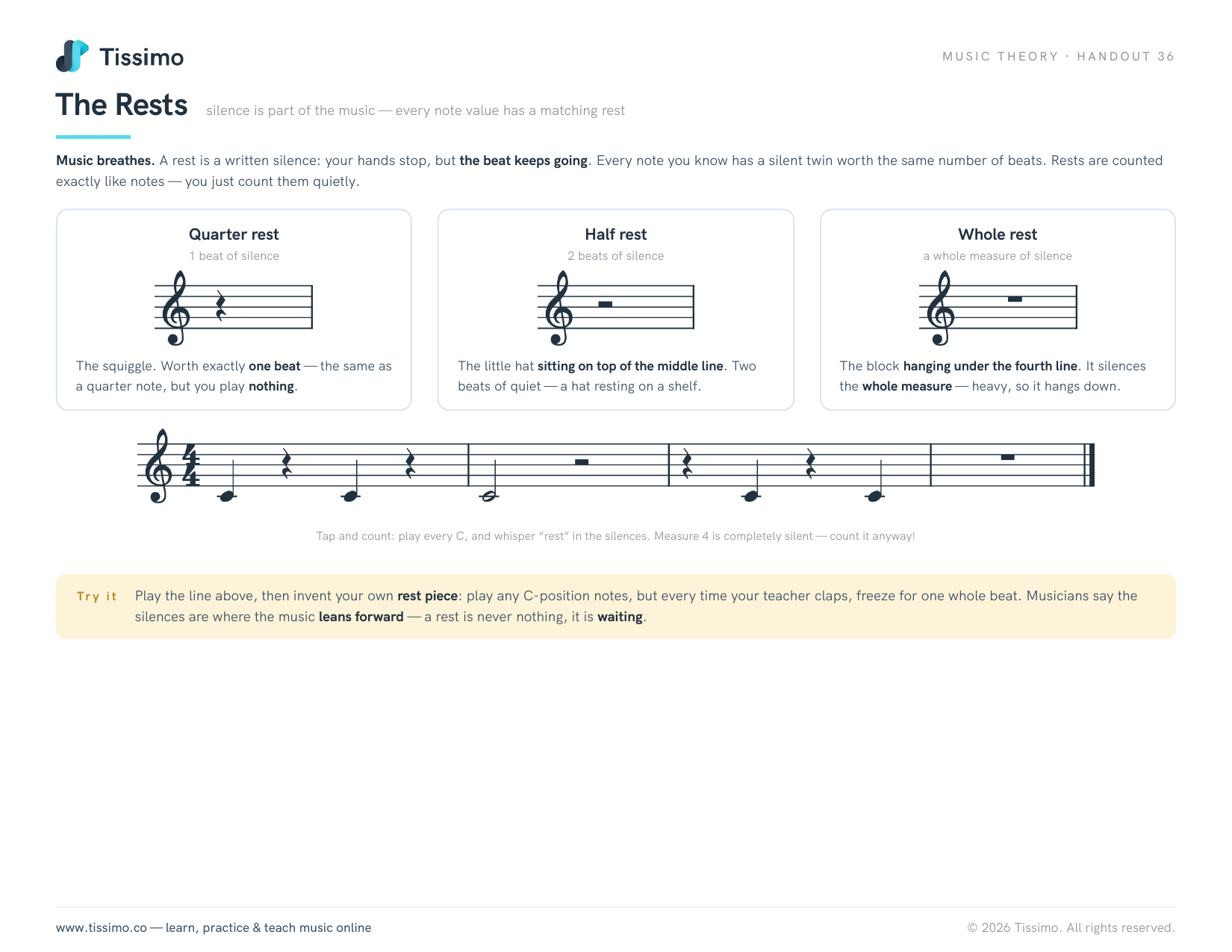 The Restssilence is part of the music — every note value has a matching rest
 The Rest Familyevery note has a silent twin — all five rests, whole to sixteenth
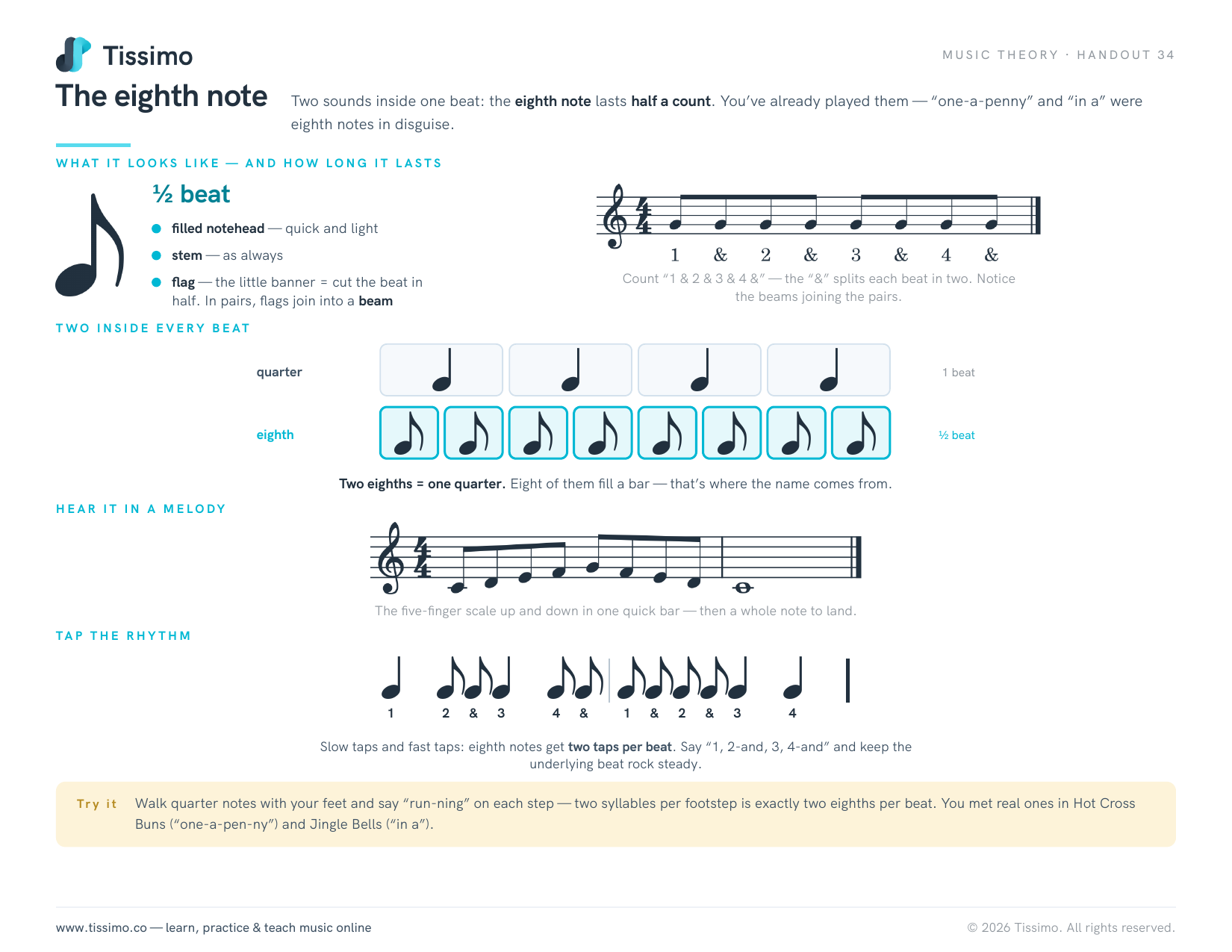 The eighth noteTwo sounds inside one beat: the eighth note lasts half a count. You’ve already played them — “one-a-penny” and “in a” were eighth notes in disguise.