Rhythm & Meter
Rhythm
Rhythm is the pattern of long and short sounds and silences in music, often organized around a beat. If pitch tells you which notes to play, rhythm tells you when.
Rhythm is the time side of music: when each sound starts, how long it lasts, and where the silences fall. If pitch tells you which notes to play, rhythm tells you when. You can often recognize a familiar song from its rhythm alone, clapped on a tabletop, which shows how much of a melody's character lives in its long and short notes.
Rhythm, beat and meter
These three words are related, but they are not interchangeable:
- The beat is the steady pulse underneath the music, the thing you tap your foot to.
- The meter groups those beats into a repeating pattern of strong and weak, such as ONE-two-three in a waltz.
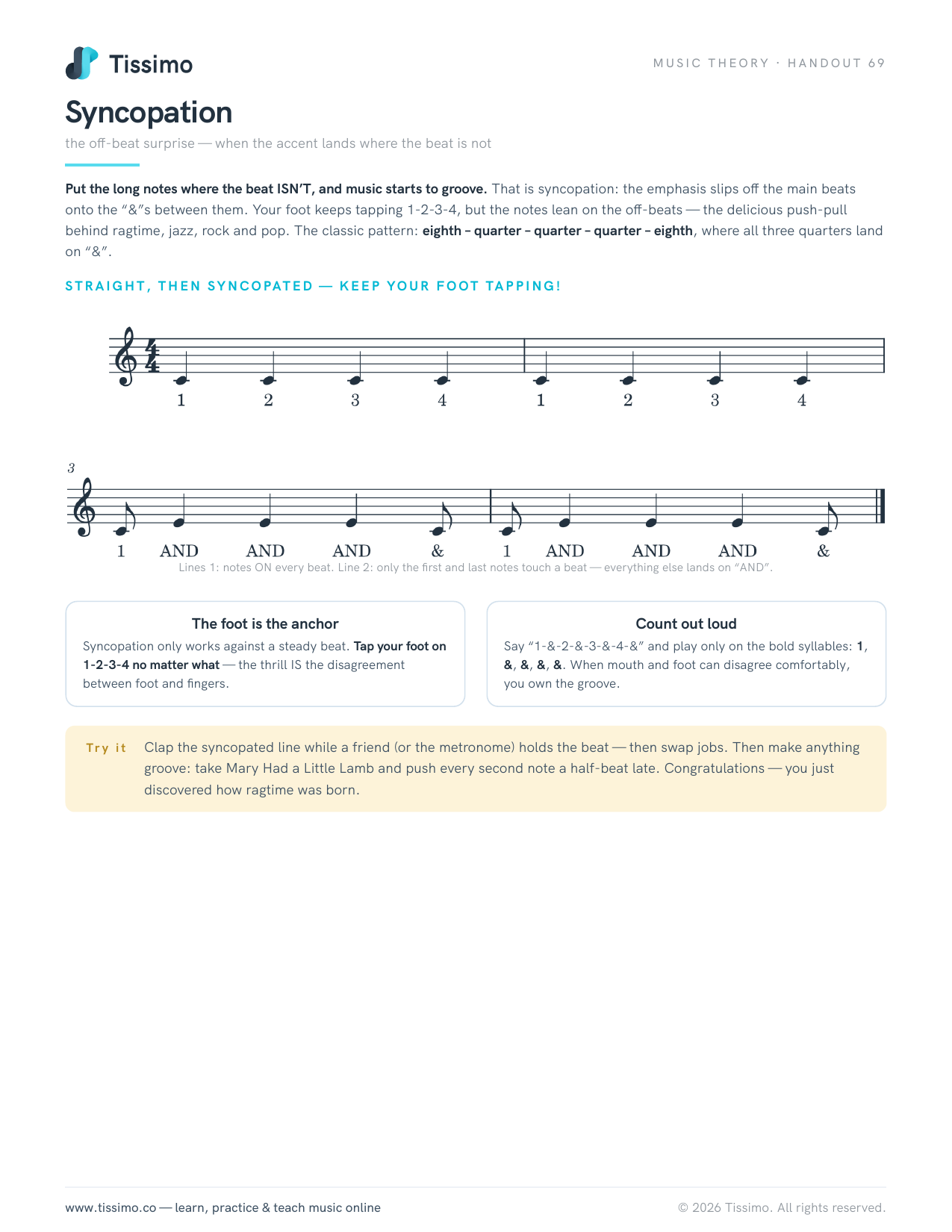
- Rhythm is the actual pattern of notes and rests. In metered music it can match the beat, divide it into smaller pieces, or deliberately pull against it, as in syncopation. Music in free rhythm can unfold without a regular beat or repeating meter.
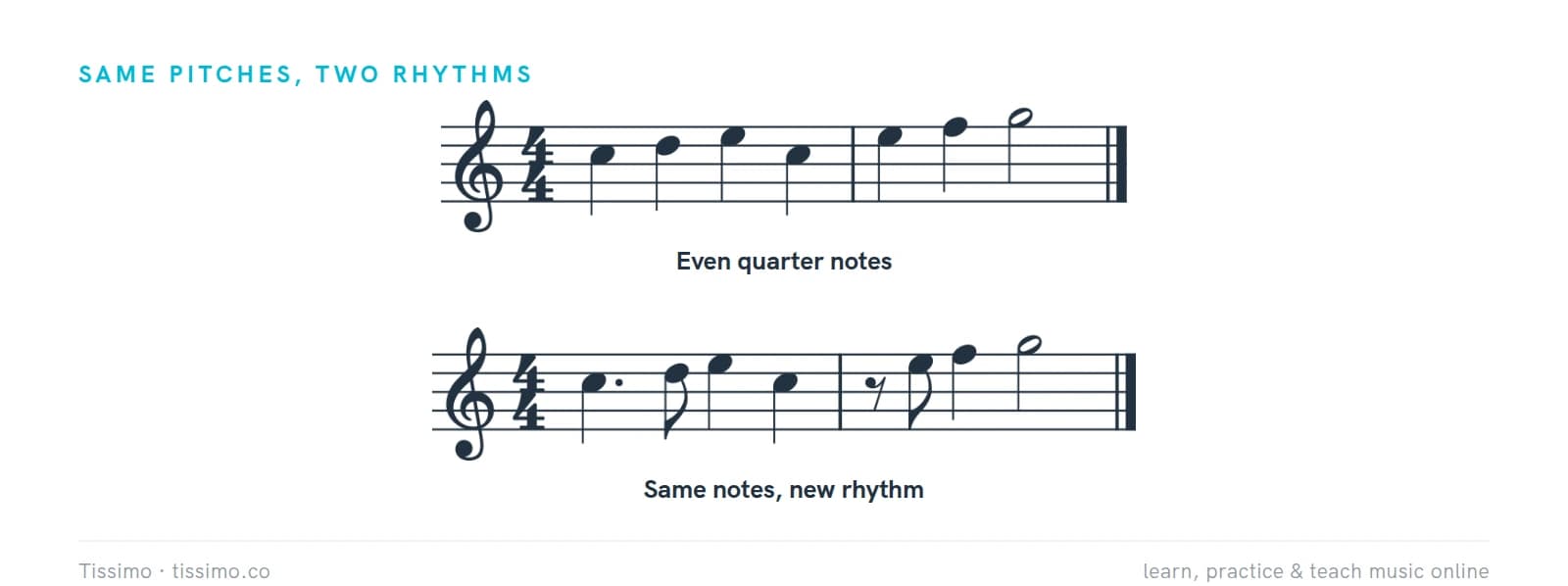
The two lines below use exactly the same pitches in the same order. Only the rhythm changes, and with it the whole character of the tune.
How rhythm is written
Written music shows rhythm with note values (whole, half, quarter, eighth and sixteenth notes) and their matching rests. A dot or a tie lengthens a note, and a triplet squeezes three notes into the time of two. The time signature at the start tells you how each bar is measured, and beams group short notes so you can see where each beat begins.
None of these symbols has a fixed length in seconds. A quarter note equals one beat only when the quarter note is the beat unit. Its duration depends on both the chosen beat unit and the tempo, so the same rhythm can be slow and stately or quick and bright.
Feeling rhythm, not just reading it
Reading a rhythm correctly is half the job. The other half is feeling it in your body, so that it comes out steady and alive. A few habits help:
- Count out loud while you play (see counting rhythm), and keep counting through rests and long notes.
- Clap or tap a new rhythm before you add the pitches.
- Practice with a metronome at a slow tempo, then speed up in small steps.
- Listen to how the parts of a band fit together into a groove.
You can practice hearing, clapping and writing rhythms with the Ear Training: Rhythm Dictation and Write the Counts worksheets.
Common questions
What is the difference between rhythm and beat?
The beat is the steady, even pulse of the music. Rhythm is the pattern of long and short notes played over it. A rhythm can line up with the beat, split it into smaller parts, or push against it.
What is the difference between rhythm and tempo?
Tempo is the speed of the beat, usually given in beats per minute. Rhythm is the pattern of durations. You can play the same rhythm at many tempos, and it is still the same rhythm.
Practice it: free worksheets
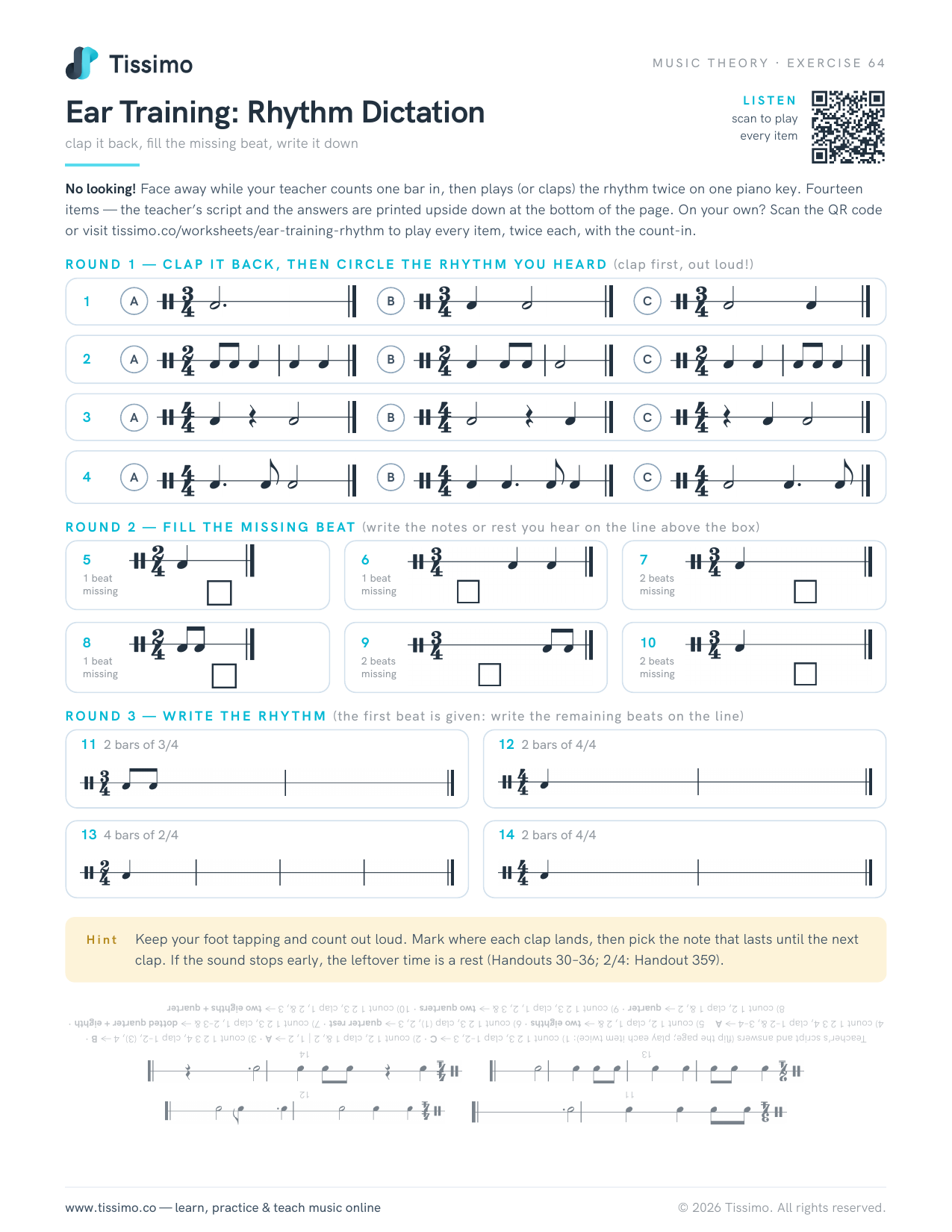 Ear Training: Rhythm Dictationclap it back, fill the missing beat, write it down
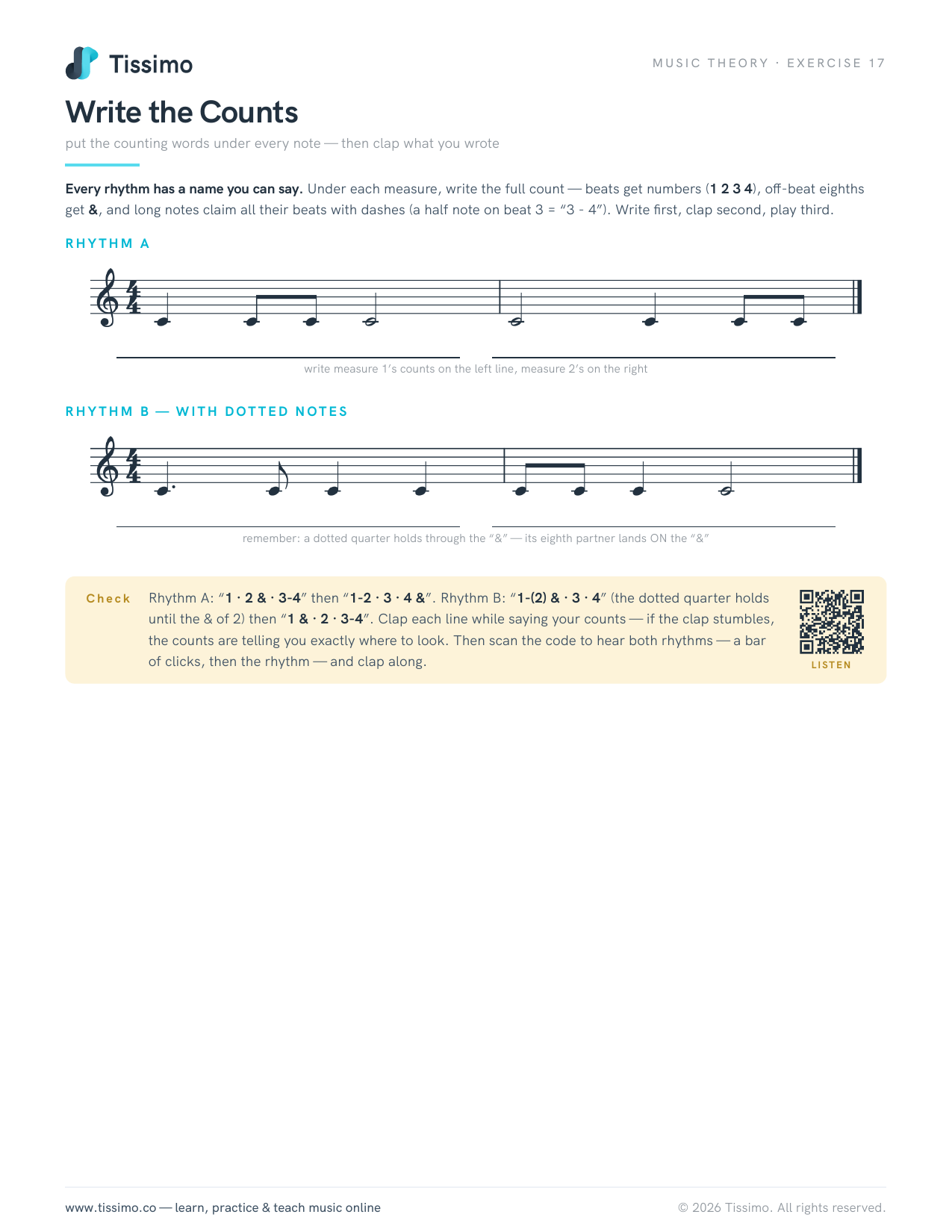 Write the Countsput the counting words under every note — then clap what you wrote
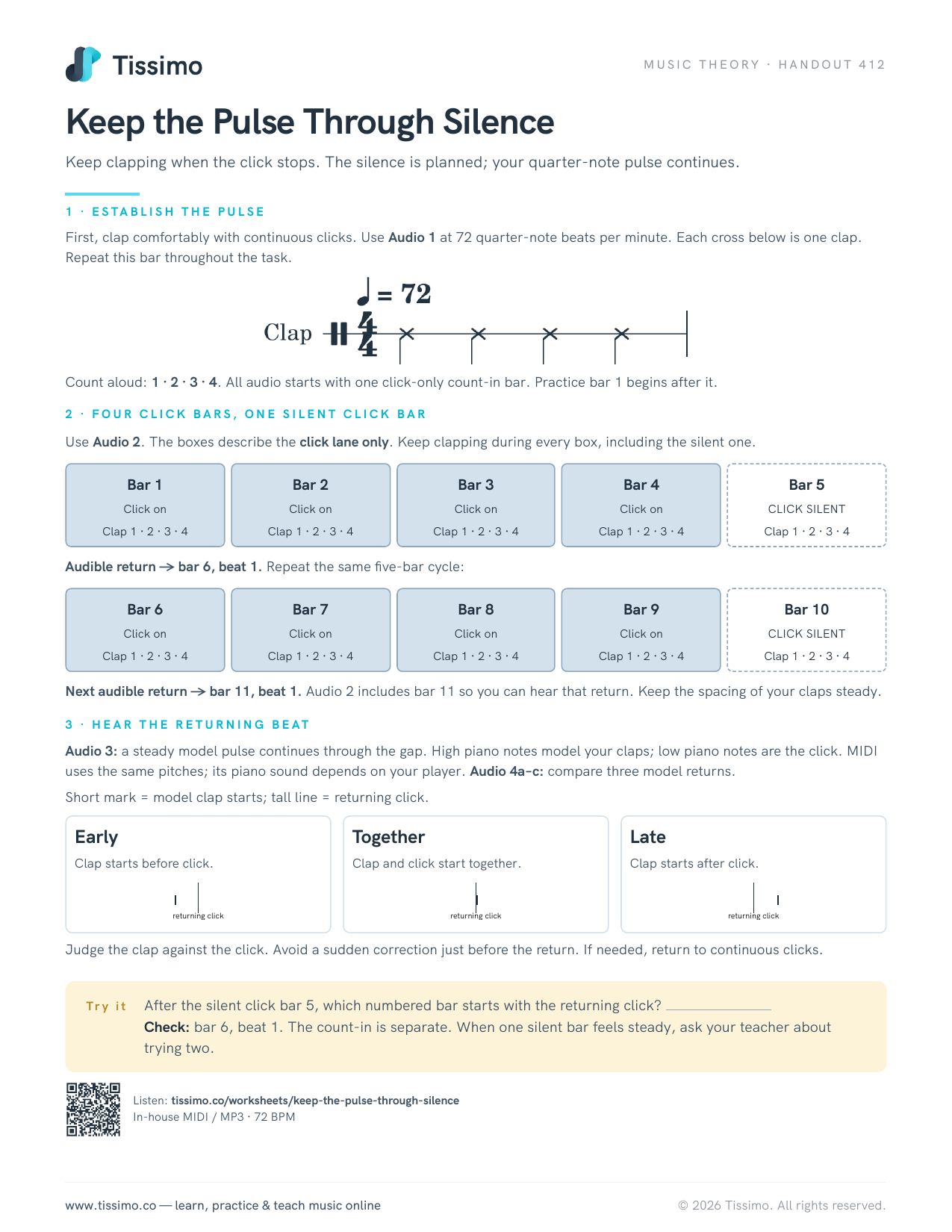 Keep the Pulse Through SilenceKeep clapping when the click stops. The silence is planned; your quarter-note pulse continues.
 Syncopationthe off-beat surprise — when the accent lands where the beat is not