Rhythm & Meter
Groove
A groove is the repeating rhythmic pattern and feel that a band or player locks into, built from how the drums, bass and other parts fit together. Musicians also use the word for the quality that makes music move you.
A groove is the rhythmic engine of a piece: a short pattern, often one or two bars long, repeated with small variations while the melody and harmony unfold above it. It is made from the parts that keep time together, usually the drums, the bass and a chord instrument such as guitar or piano, and from the way they fit. When those parts lock together so well that the music feels effortless and makes people want to move, musicians say it grooves, or that the band is "in the pocket".
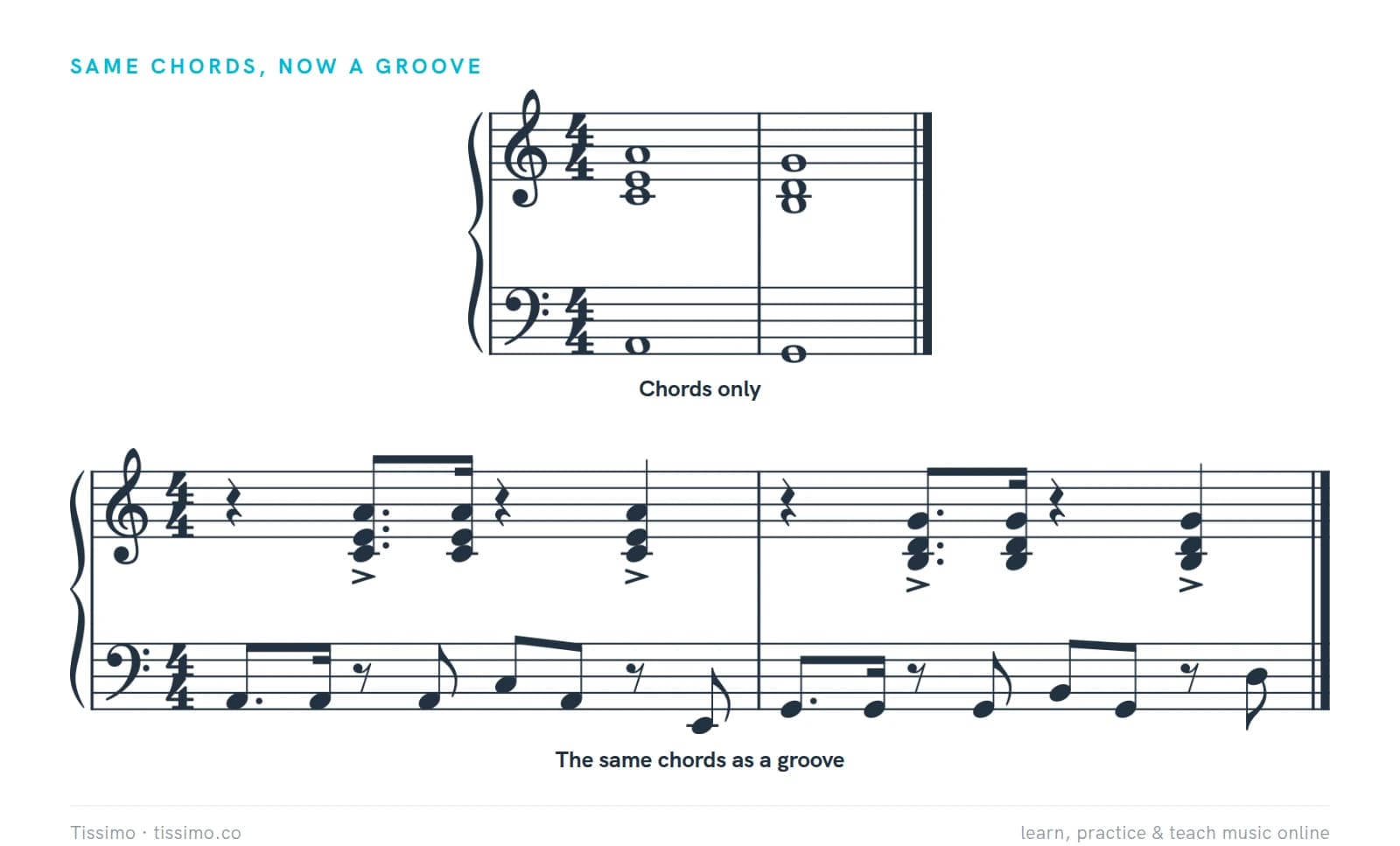
What makes a groove
- The pattern: which beats, and which parts of beats, each instrument plays. A backbeat on 2 and 4, a syncopated bass line, a repeated riff or a comping rhythm.
- The subdivision: straight or swung eighths, a sixteenth-note feel, a triplet shuffle. The same notes feel completely different in a swing groove and in a straight rock groove.
- Timing: playing a touch ahead of the beat ("on top") pushes the music forward; a touch behind ("laid back") relaxes it. These are tiny differences, felt more than measured.
- Dynamics and accents: which notes are strong and which are played very lightly.
Grooves by style
Many styles are defined partly by their groove: a rock beat, a funk groove, a bossa nova pattern, a reggae one-drop, a shuffle, a swing ride pattern. Learning a new style usually starts with learning its groove and playing it until it feels natural.
Practicing groove
- Loop a short pattern for several minutes and keep it steady and relaxed.
- Play with a metronome on 2 and 4, or with a drum loop, and listen to how your notes sit against it.
- Record yourself. Groove is easier to judge from the outside.
- Simplify. Often the strongest groove uses fewer notes, placed exactly.
At the piano, a groove usually comes from a left-hand pattern and a right-hand chord rhythm. Turn Chords into Grooves gives you eight to start with, and Drum Patterns: Sixteen Steps, Four Beats shows how drum layers build one.
Common questions
What does it mean to play in the pocket?
It means playing so steadily, and so well locked with the rest of the band, especially the drums and bass, that the groove feels effortless. Being in the pocket is about consistent time and feel more than about difficult notes.
What is the difference between rhythm and groove?
Rhythm is any pattern of durations. A groove is a repeating rhythmic pattern plus the feel with which a band plays it together, including timing, accents and subdivision.
Practice it: free worksheets
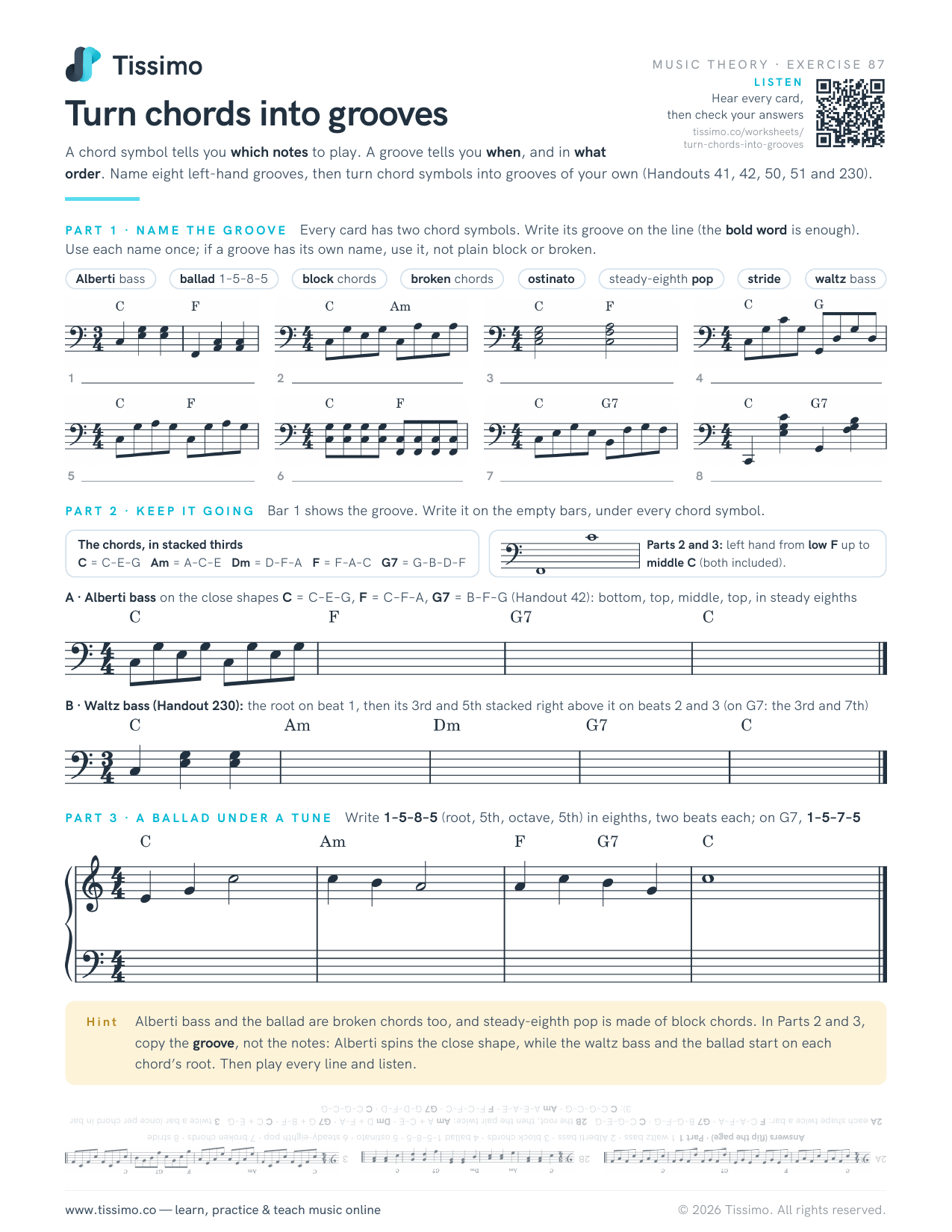 Turn chords into groovesA chord symbol tells you which notes to play. A groove tells you when, and in what order. Name eight left-hand grooves, then turn chord symbols into grooves of your own (Handouts 41, 42, 50, 51 and 230).
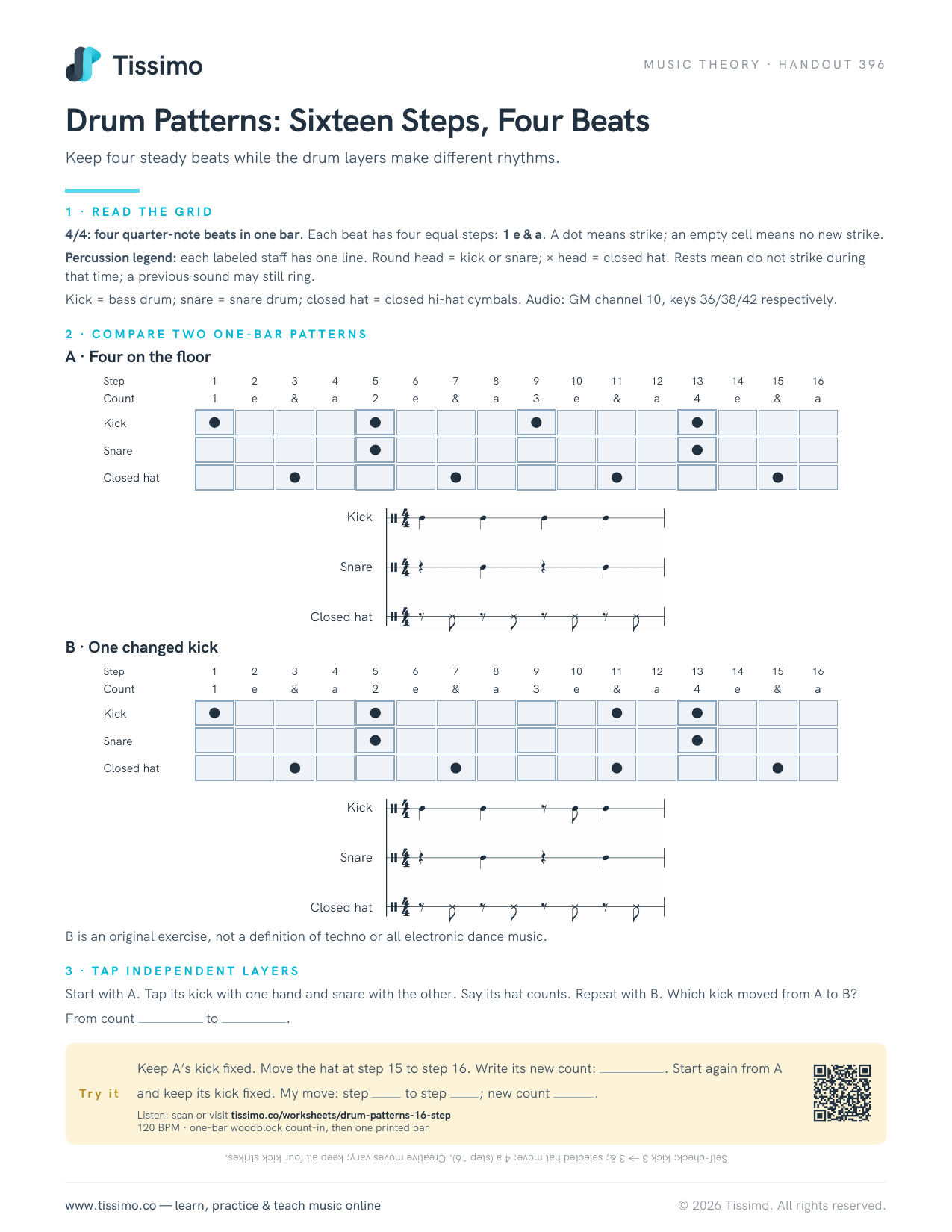 Drum Patterns: Sixteen Steps, Four BeatsKeep four steady beats while the drum layers make different rhythms.