Rhythm & Meter
Shuffle
A shuffle is a groove built on a constant long-short pattern of swung eighth notes, often played by the drums, bass and piano or guitar together. It drives a great deal of blues, boogie-woogie and early rock and roll.
A shuffle is a groove in which every beat is split long-short, using the same triplet-based division as swing: think "1-(trip)-let 2-(trip)-let", with the middle of each triplet left silent. What makes it a shuffle is how constant and emphatic that pattern is. The drummer plays it on the hi-hat, snare or ride cymbal, the bass or the piano's left hand often plays a matching pattern, and the whole band drives along on the same long-short rhythm.
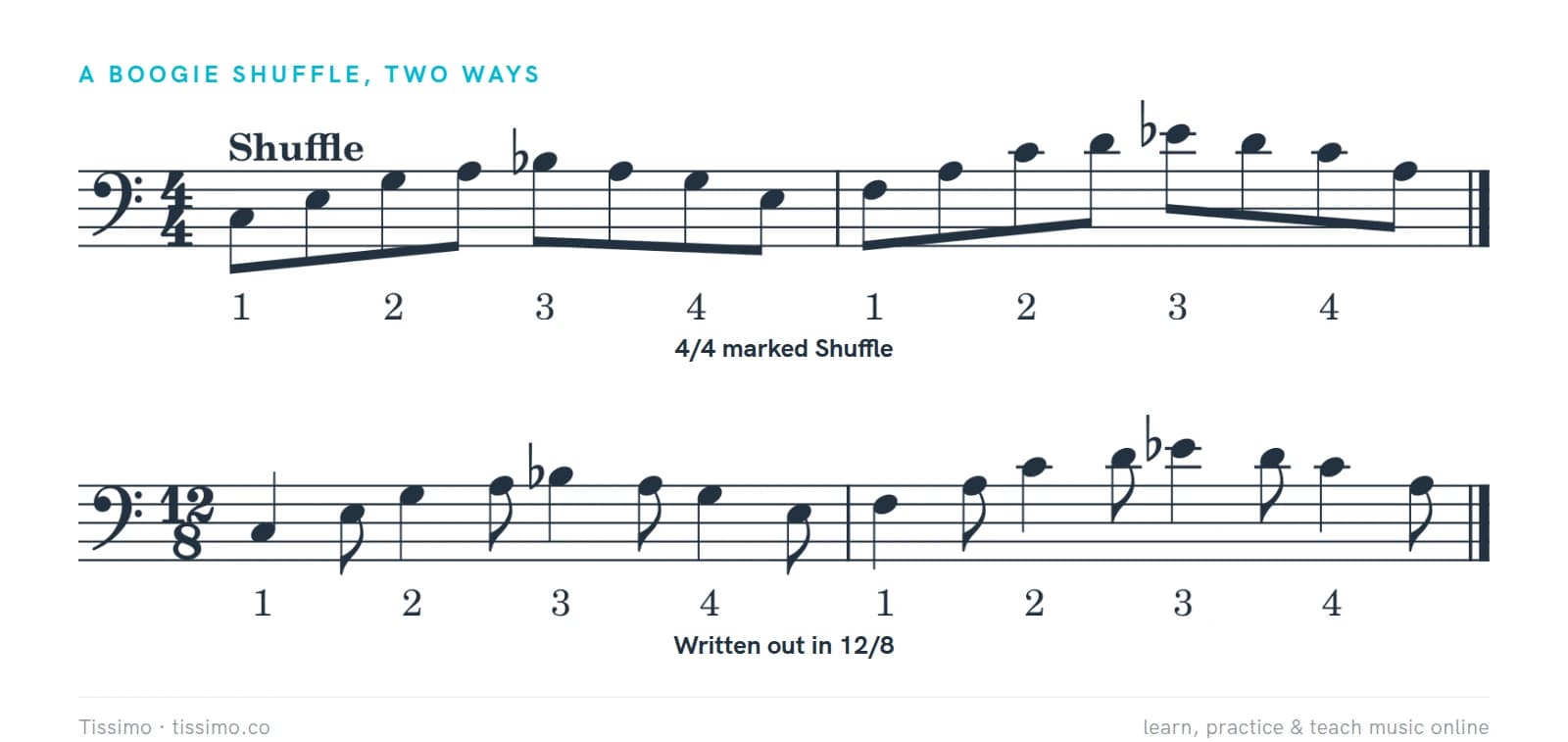
How a shuffle is written
There are two common ways:
- Straight eighth notes with a marking such as "Shuffle", "Swing" or a small triplet equation. You turn each pair into long-short as you play.
- 12/8 time, where each beat is three eighth notes and the long-short pattern is written exactly, as a quarter note followed by an eighth note.
Both versions in the example sound the same. The 12/8 version shows the rhythm precisely; the 4/4 version is quicker to read.
Where you hear it
Shuffles are everywhere in blues, especially over the twelve-bar blues, and in boogie-woogie piano, jump blues, early rock and roll, and plenty of country and rock since. Drummers distinguish several kinds, such as the half-time shuffle, but the long-short engine underneath is the same.
Shuffle or swing?
The two share the same basic rhythm, and musicians sometimes use the words loosely. In general, "swing" describes the lighter, more flexible feel of jazz, while "shuffle" names a groove where the long-short pattern is stated relentlessly, often by several instruments at once, over a strong backbeat.
Playing a shuffle
Count "1-trip-let 2-trip-let" and play on "1" and "let". Keep the short note light but exactly in time, and do not let the pattern drift toward even eighths or toward a jerky dotted rhythm. Practice the left-hand pattern in the example on its own, then add a simple right-hand chord on beats 2 and 4.
Swing Eighths and Ear Training: Swing or Straight? train the long-short feel, and Turn Chords into Grooves has more left-hand patterns.
Common questions
Is a shuffle the same as swing?
They use the same long-short division of the beat. "Shuffle" usually means a groove that plays that pattern constantly and heavily, as in blues and early rock and roll; "swing" is the lighter, more flexible feel of jazz.
Is a shuffle in 12/8?
It can be written either way: in 12/8 with quarter-eighth pairs, or in 4/4 with even eighth notes and a "Shuffle" or "Swing" marking. The sound is the same.
Practice it: free worksheets
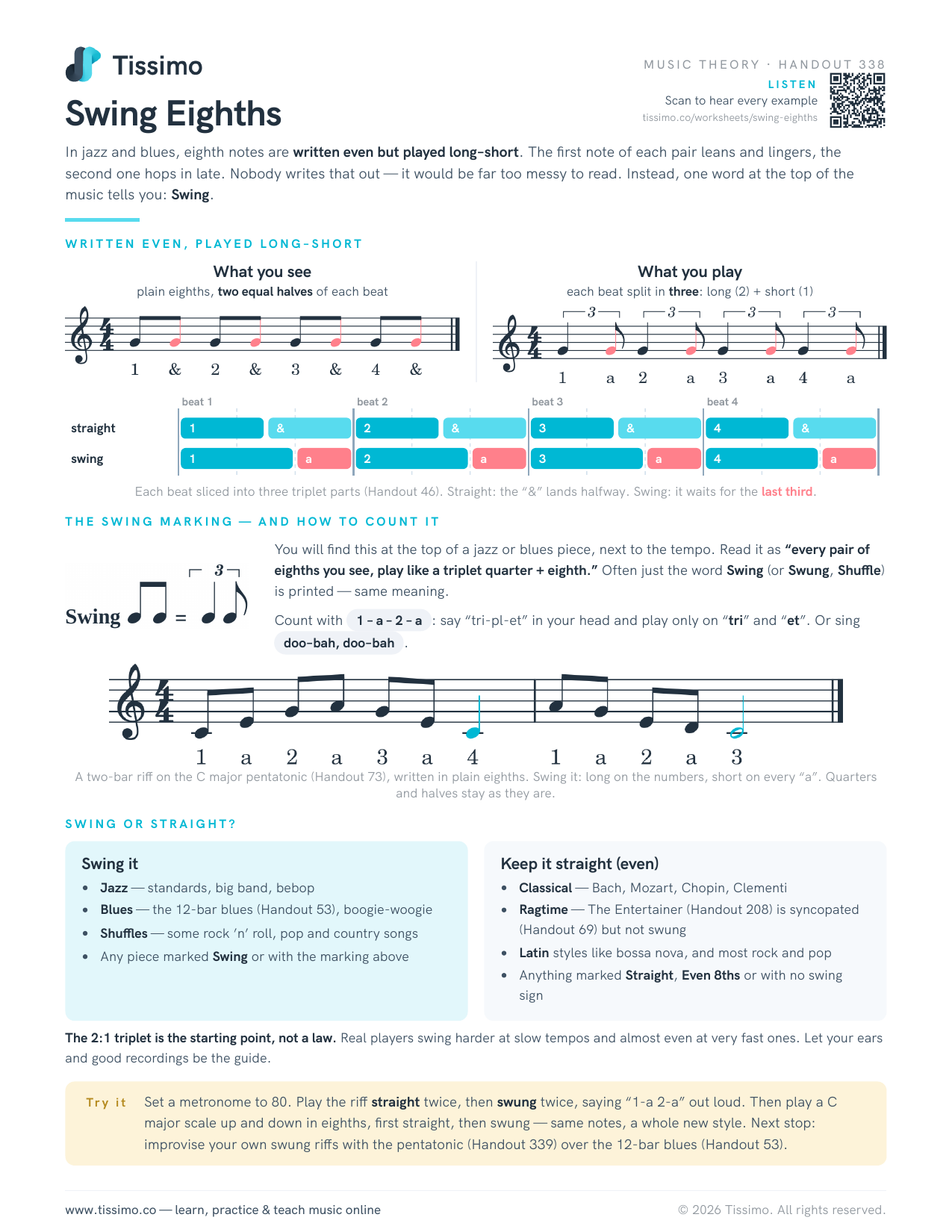 Swing EighthsIn jazz and blues, eighth notes are written even but played long–short. The first note of each pair leans and lingers, the second one hops in late. Nobody writes that out — it would be far too messy to read. Instead, one word at the top of the music tells you: Swing.
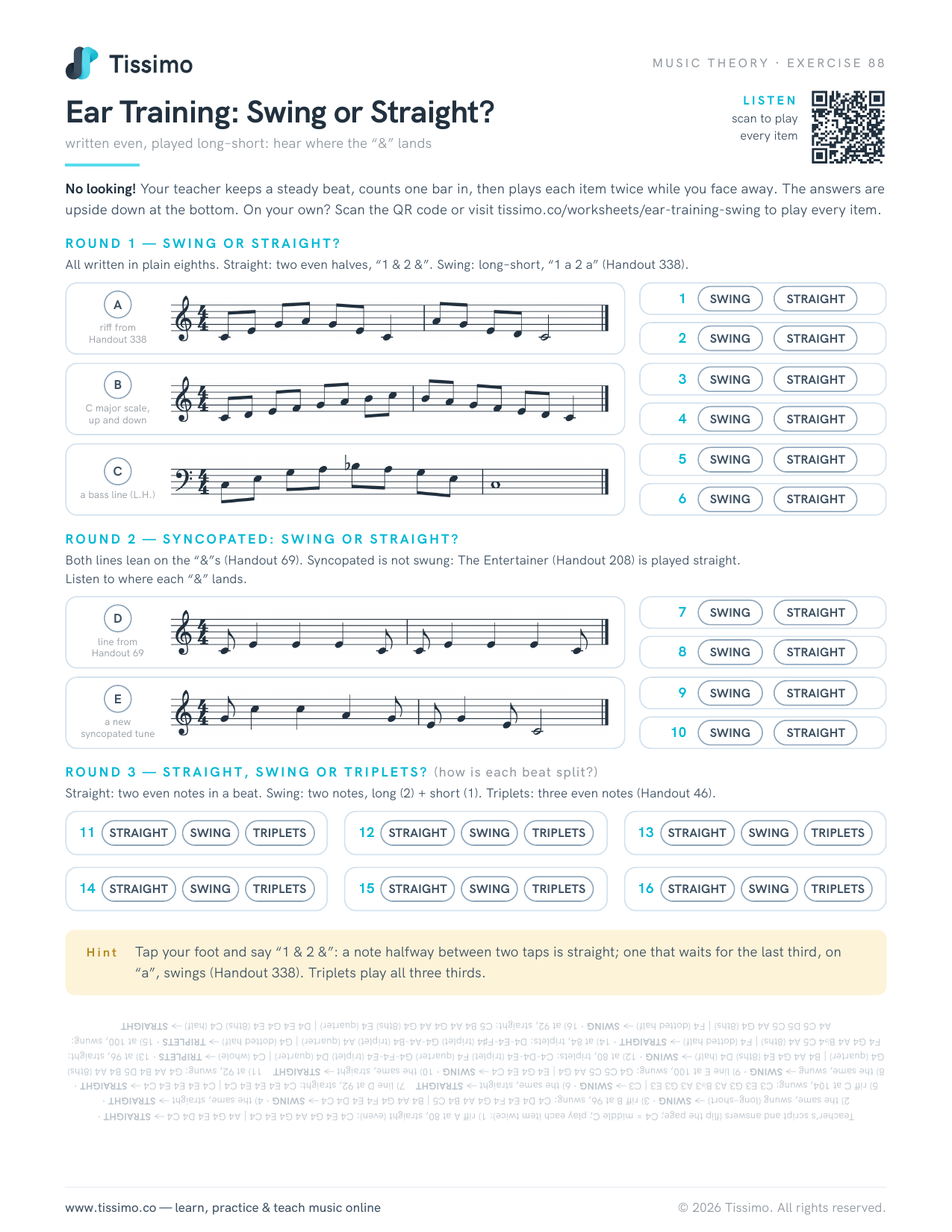 Ear Training: Swing or Straight?written even, played long–short: hear where the “&” lands
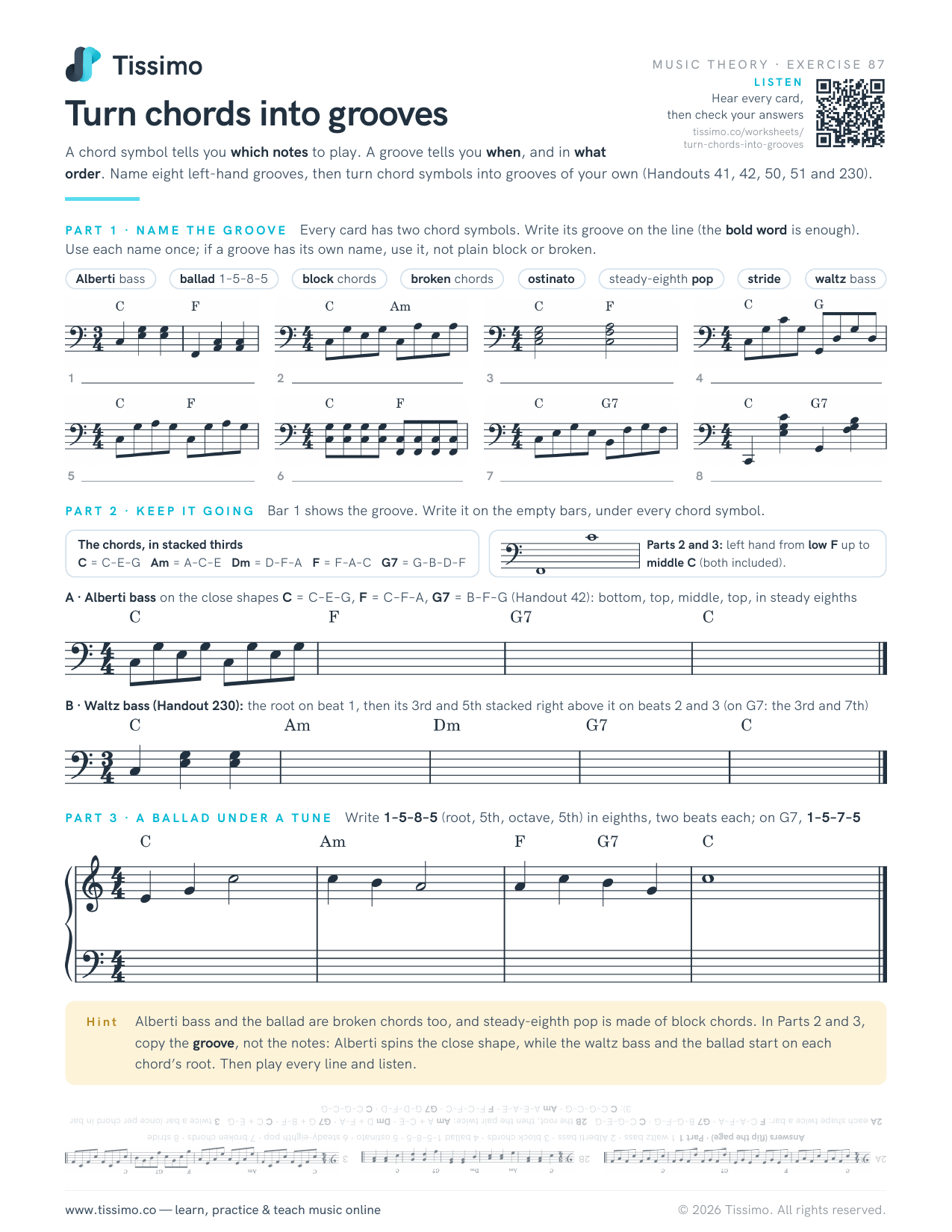 Turn chords into groovesA chord symbol tells you which notes to play. A groove tells you when, and in what order. Name eight left-hand grooves, then turn chord symbols into grooves of your own (Handouts 41, 42, 50, 51 and 230).