Styles, Genres & Eras
Blues
The blues is an African American musical tradition from the American South, known for blue notes, call-and-response phrasing and, very often, the twelve-bar blues chord progression.
The blues took shape in African American communities of the Deep South in the late 19th and early 20th centuries. Its roots include work songs, field hollers, spirituals and ballads. From there it became one of the most influential musical traditions in the world: jazz, R&B, rock, soul and much of pop grew directly from it.
Musical features
- Blue notes: pitches bent or lowered for expression, especially the flat third, flat fifth and flat seventh of the key. In C, that means E♭, G♭ and B♭, often sung or played against a major chord, a deliberate, expressive clash.
- The twelve-bar blues: a progression using I, IV and V (often all dominant seventh chords) over twelve bars, repeated for each verse. Eight-bar and sixteen-bar blues exist too.
- AAB lyrics: a line is sung, repeated (often over different chords), then answered by a rhyming third line.
- Call and response: the singer's phrase is answered by the guitar, harmonica or piano.
- Shuffle or swing rhythm: eighth notes played long–short.
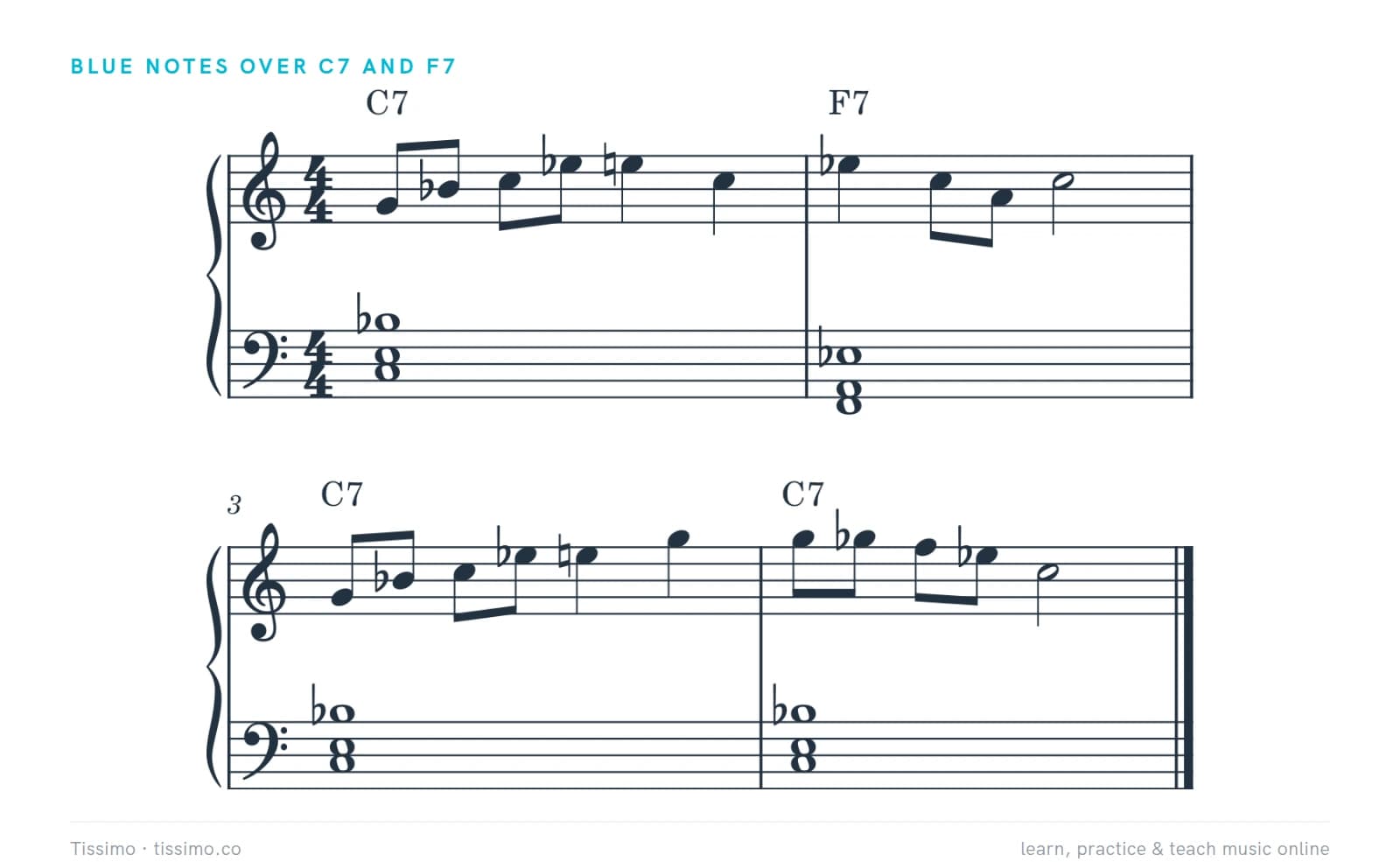
Styles and musicians
- Delta blues: solo singers with acoustic guitar from the Mississippi Delta, such as Charley Patton and Robert Johnson.
- Classic blues of the 1920s: singers such as Ma Rainey and Bessie Smith with jazz bands.
- Chicago blues: electric guitar, harmonica, bass and drums after World War II, led by Muddy Waters and Howlin' Wolf.
- B. B. King's singing guitar style shaped generations of guitarists.
W. C. Handy, often called the "Father of the Blues," published blues songs such as "The Memphis Blues" (1912) and "St. Louis Blues" (1914), bringing the style into sheet music.
Playing the blues
The blues is a perfect place to start improvising. Learn The 12-Bar Blues in C, then improvise with the blues scale from The Pentatonic & Blues Scales. Swing your eighths (Swing Eighths), leave space between phrases, and answer yourself, call and response.
Common questions
What are blue notes?
Expressive pitches, mainly the flat third, flat fifth and flat seventh of the key, that are sung or played against major harmony, often bent between two pitches. In C they are E♭, G♭ and B♭.
Where did the blues come from?
From African American communities in the Deep South of the United States in the late 1800s and early 1900s, growing out of work songs, field hollers and spirituals.
Practice it: free worksheets
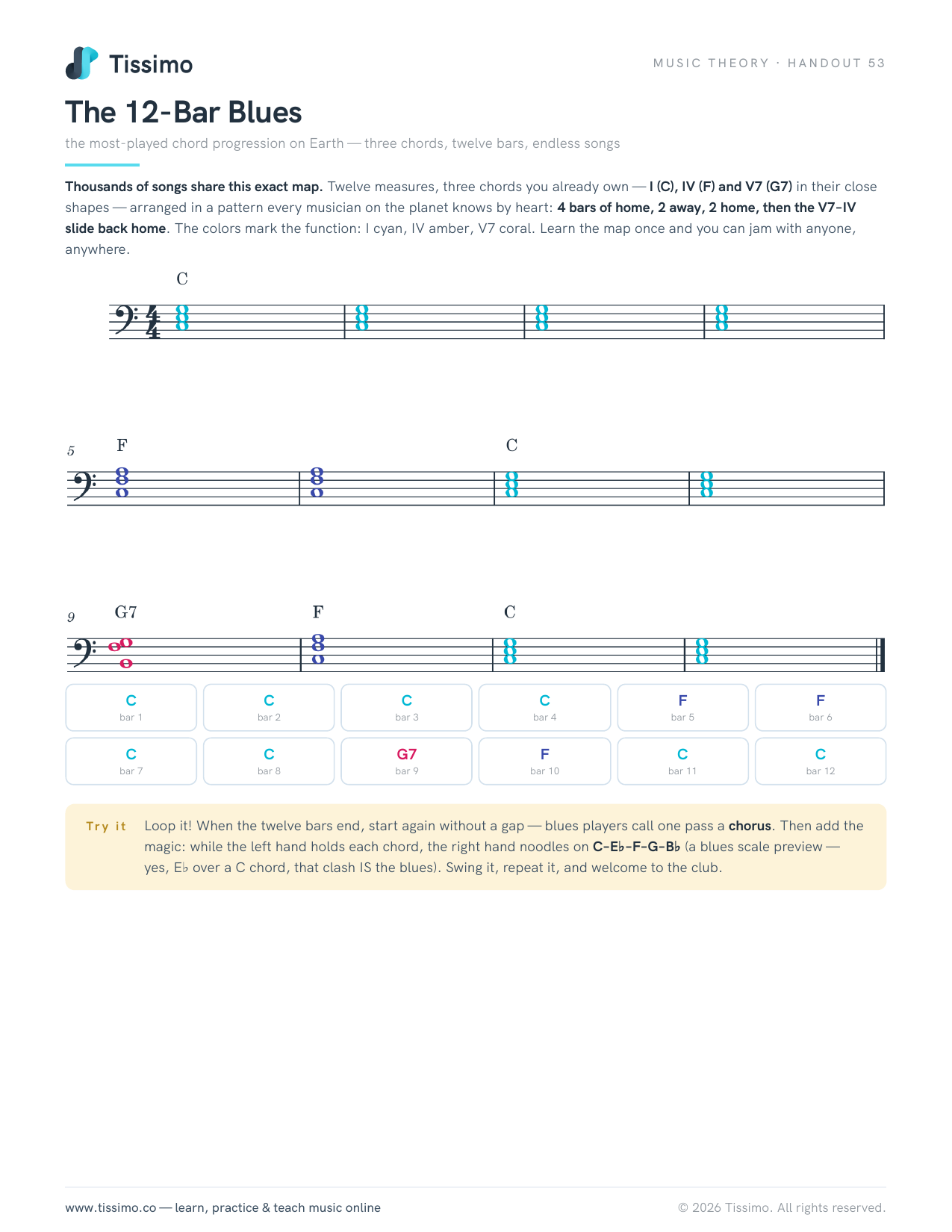 The 12-Bar Bluesone of the best-known chord progressions — three chords, twelve bars, endless songs
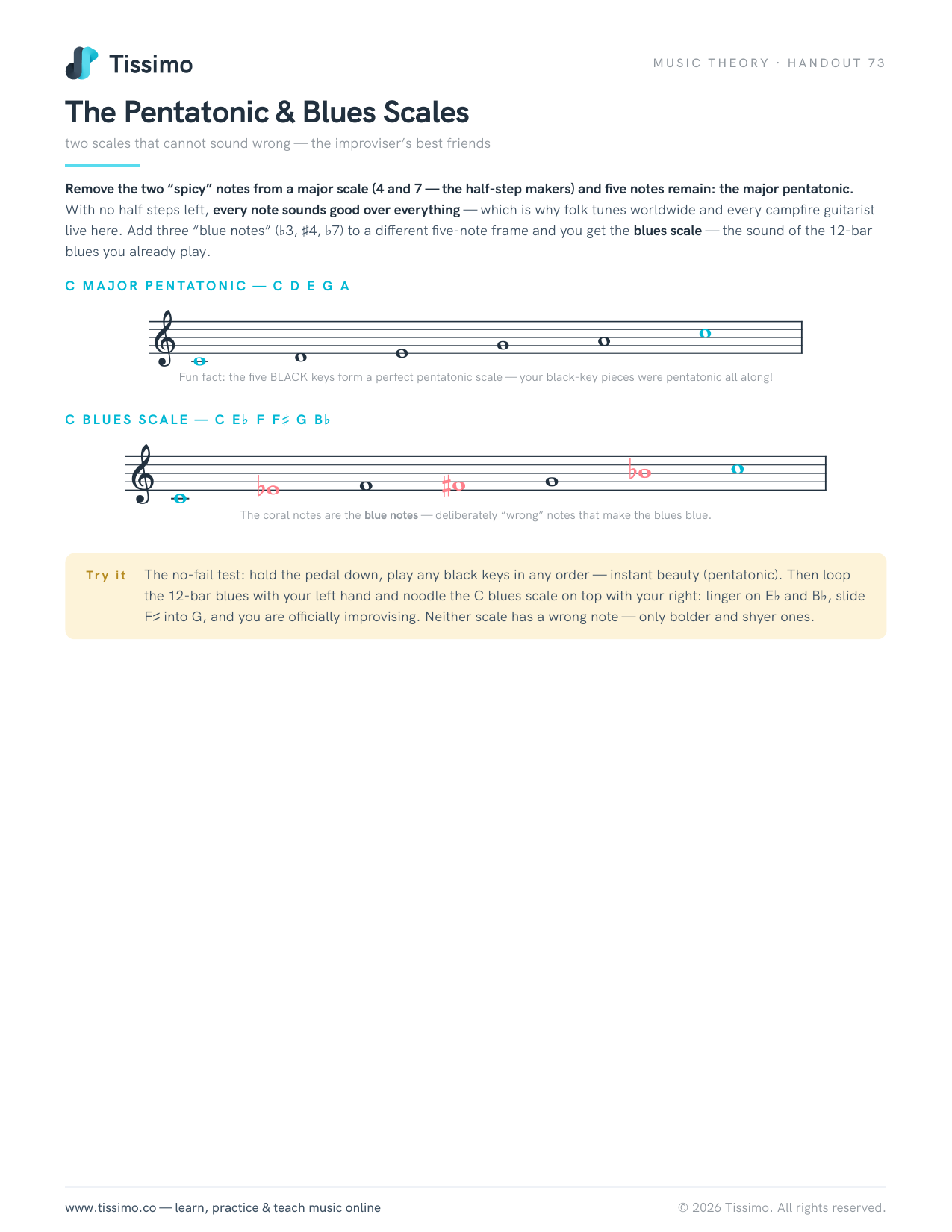 The Pentatonic & Blues Scalestwo scales that cannot sound wrong — the improviser’s best friends
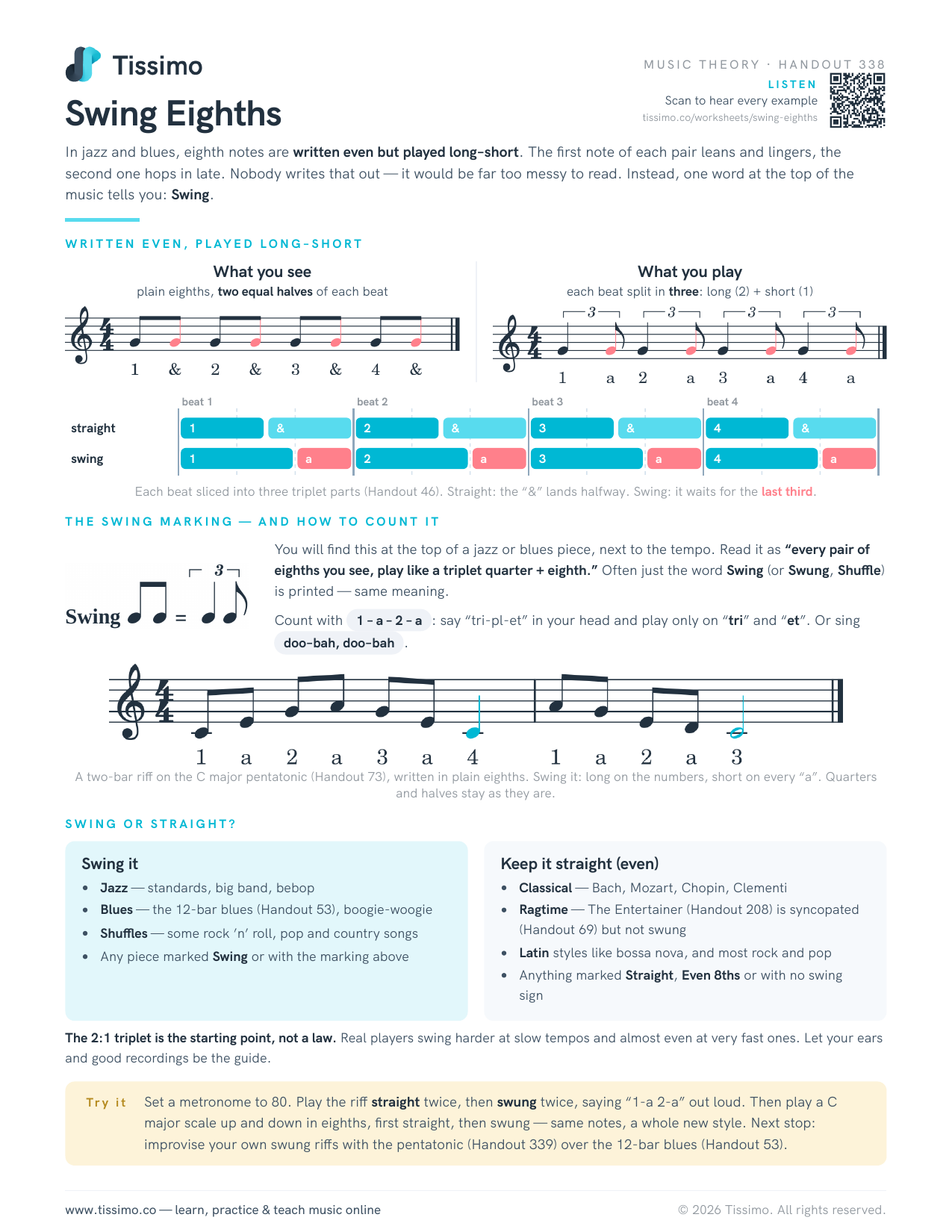 Swing EighthsIn jazz and blues, eighth notes are written even but played long–short. The first note of each pair leans and lingers, the second one hops in late. Nobody writes that out — it would be far too messy to read. Instead, one word at the top of the music tells you: Swing.
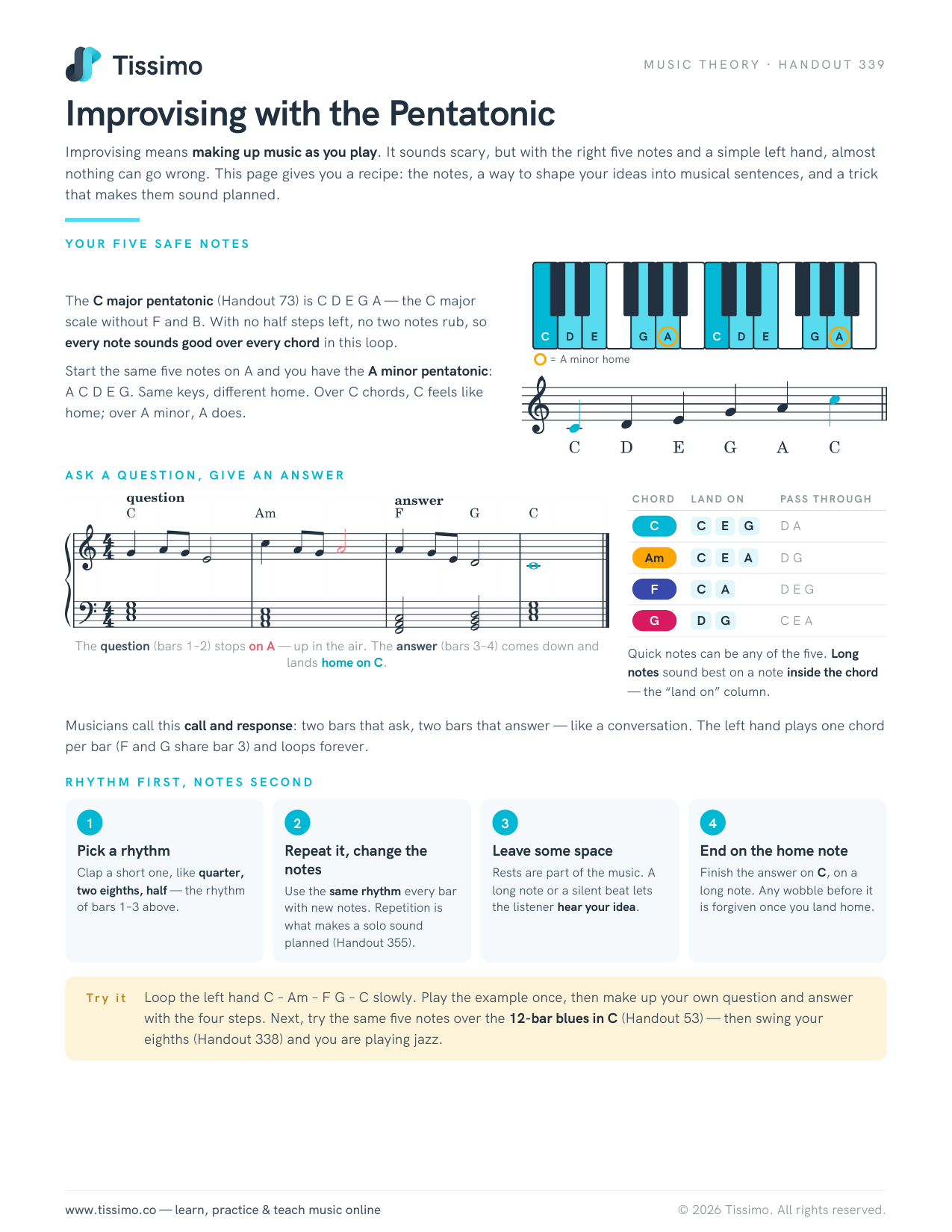 Improvising with the PentatonicImprovising means making up music as you play. It sounds scary, but with the right five notes and a simple left hand, almost nothing can go wrong. This page gives you a recipe: the notes, a way to shape your ideas into musical sentences, and a trick that makes them sound planned.
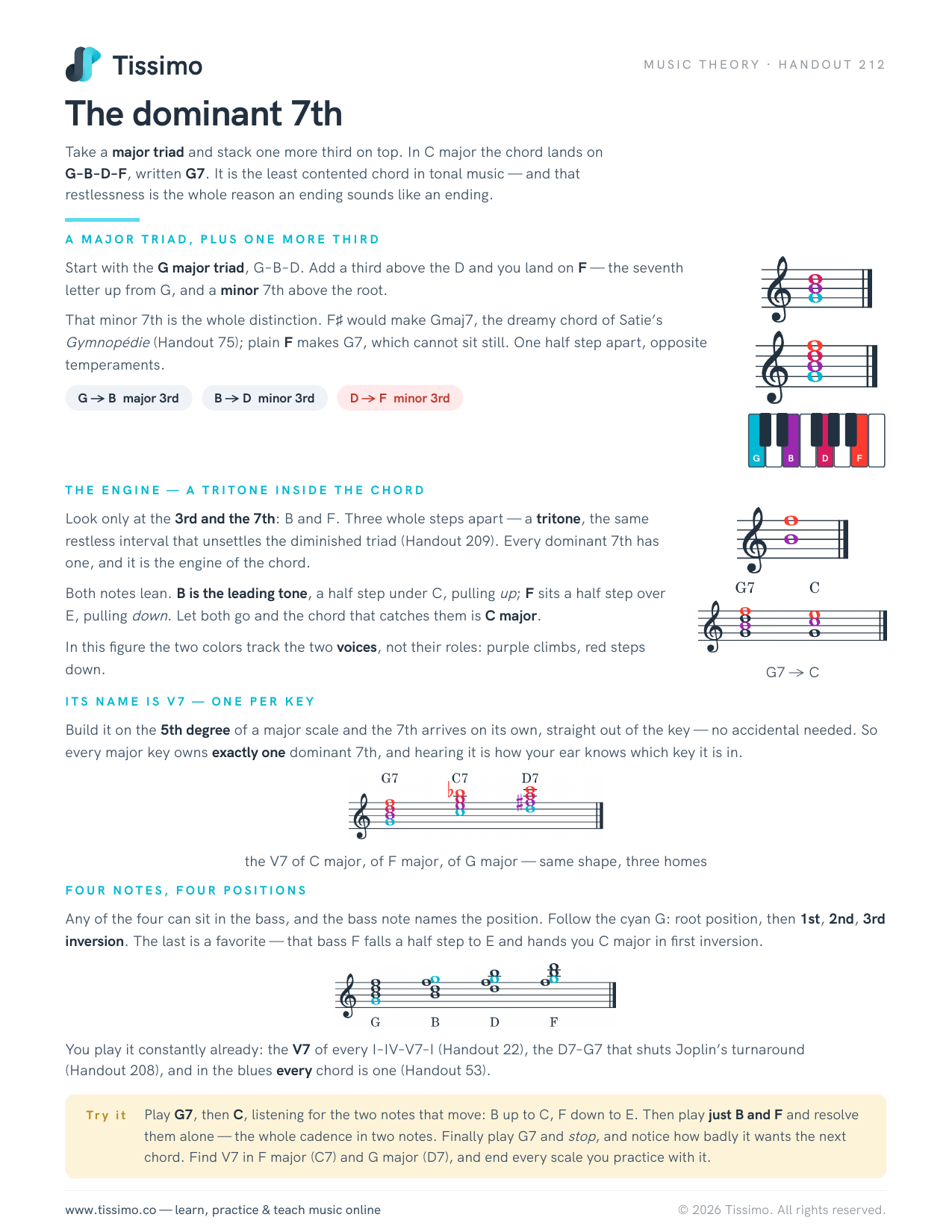 The dominant 7thTake a major triad and stack one more third on top. In C major the chord lands on G–B–D–F, written G7. It is the least contented chord in tonal music — and that restlessness is the whole reason an ending sounds like an ending.