Styles, Genres & Eras
Impressionism
Impressionism is a style of music, centered in France from about 1890 to 1920 and associated above all with Debussy and Ravel, that favors atmosphere and color over clear themes and functional harmony.
Impressionism in music is named after the French painters, Monet and others, whose works capture light and atmosphere rather than sharp outlines. The label was attached to the music of Claude Debussy and Maurice Ravel, among others, from roughly 1890 to 1920. Debussy himself disliked the term, but it is still the usual name for the style.
What it sounds like
Instead of strong themes and goal-directed harmony, impressionist music aims for mood, shimmer and suggestion:
- Chords used for their color, often not resolving as traditional harmony expects: seventh and ninth chords, added notes, chords built in fourths.
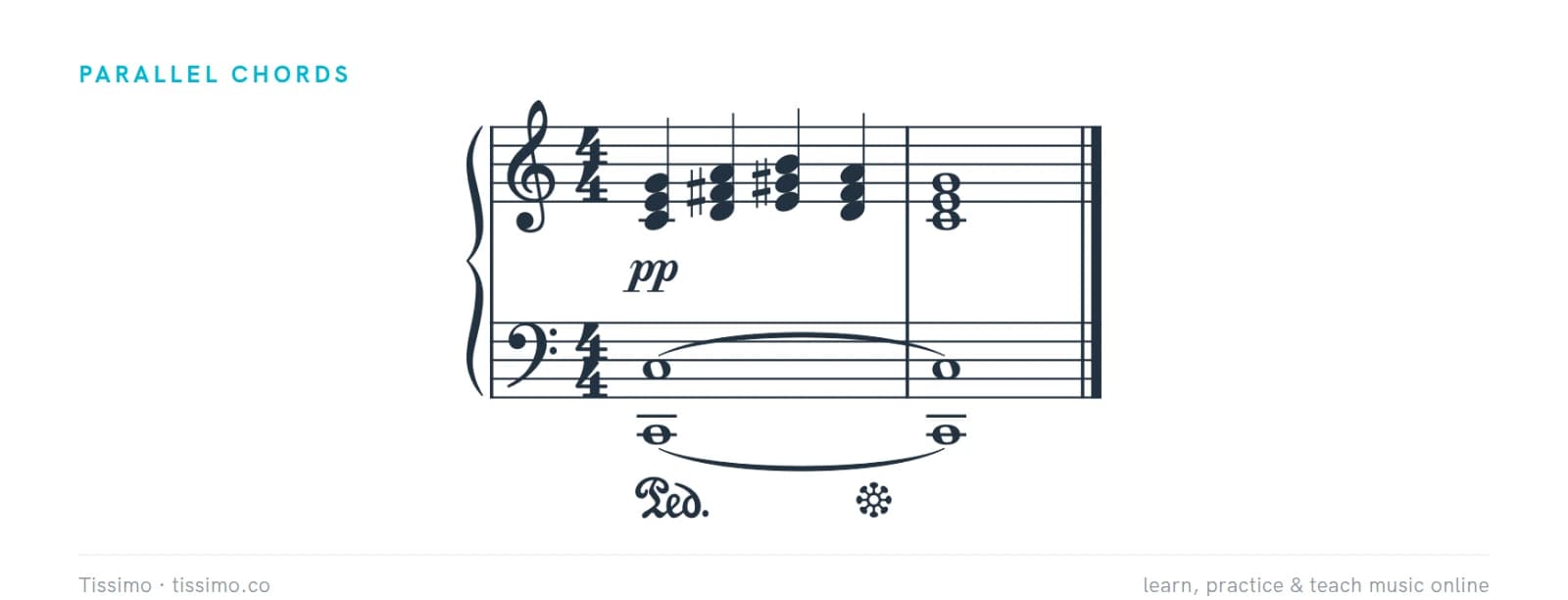
- Parallel chords that slide up and down together, a technique sometimes called planing.
- Scales beyond major and minor: the whole-tone scale, the pentatonic scale and the church modes.
- Blurred textures, created with the sustain pedal on the piano and with harp, muted strings and soft woodwind solos in the orchestra.
- Fluid rhythm, sometimes with little sense of a strong downbeat.
- Evocative titles: water, clouds, moonlight, gardens in the rain.
Key works
- Debussy: Prélude à l'après-midi d'un faune (1894), La mer, "Clair de lune" from the Suite bergamasque, and two books of Préludes for piano.
- Ravel: Jeux d'eau for piano and the ballet Daphnis et Chloé. Ravel's music is often more classically shaped than Debussy's, and he too was uncomfortable with the label.
Influences
Debussy heard a Javanese gamelan at the Paris Exposition of 1889, an experience often cited as an influence on his layered, bell-like textures. Erik Satie's spare, modal pieces, such as the Gymnopédies (1888), also pointed away from Romantic rhetoric; see The Chords of Gymnopédie No. 1.
Playing impressionist music
Listen for color rather than drama. Use the pedal generously but deliberately, play chords with an even, cushioned touch, and let the sound decay. The Modes and Pentatonic & Blues Scales worksheets cover some of the scales these composers used.
Common questions
Who are the main impressionist composers?
Claude Debussy and Maurice Ravel are the central figures. Others sometimes associated with the style include Lili Boulanger, Charles Griffes and Frederick Delius, and Erik Satie influenced it.
Why is it called impressionism?
The name was borrowed from French Impressionist painting, which captures light and atmosphere rather than sharp detail. Debussy himself disliked the label.
Practice it: free worksheets
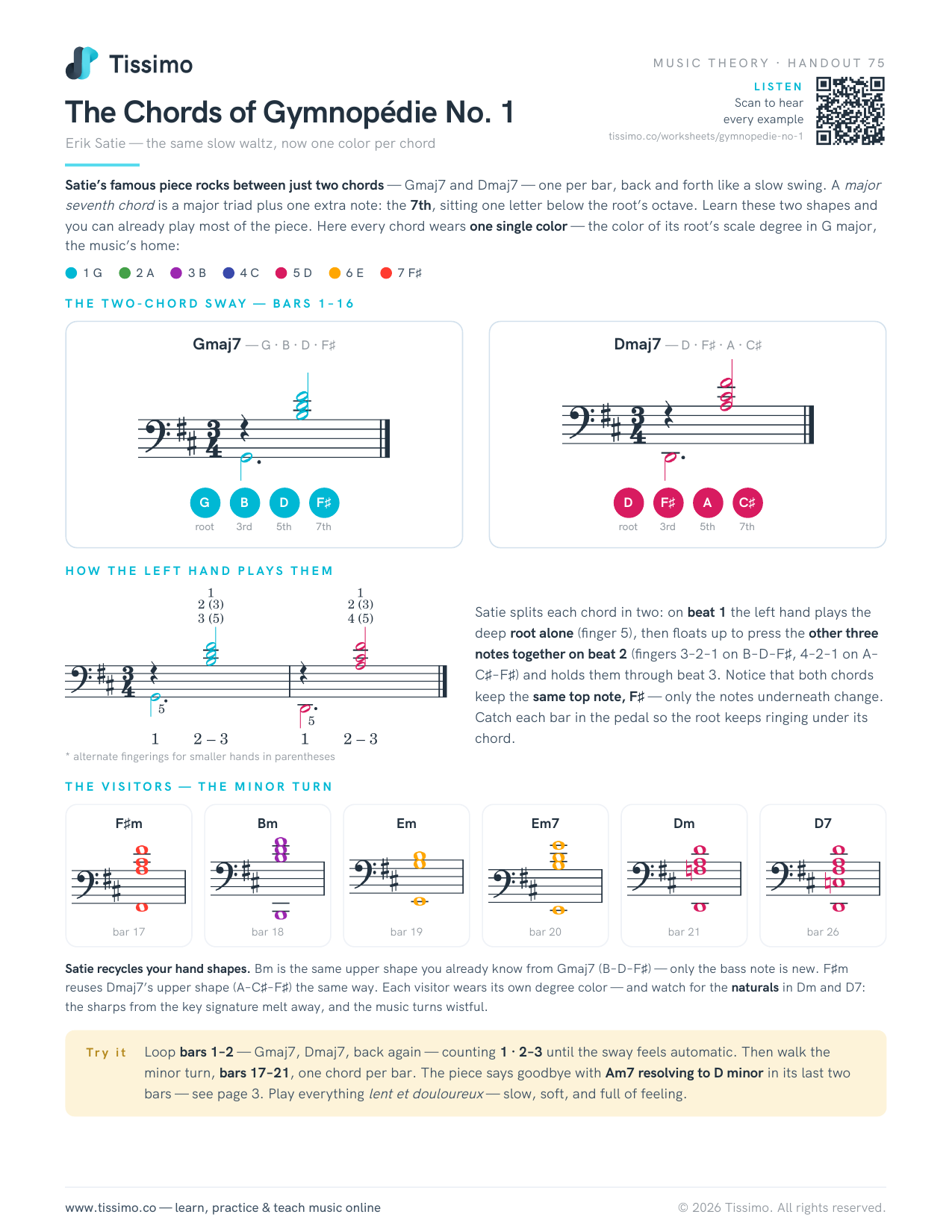 The Chords of Gymnopédie No. 1Erik Satie — the same slow waltz, now one color per chord
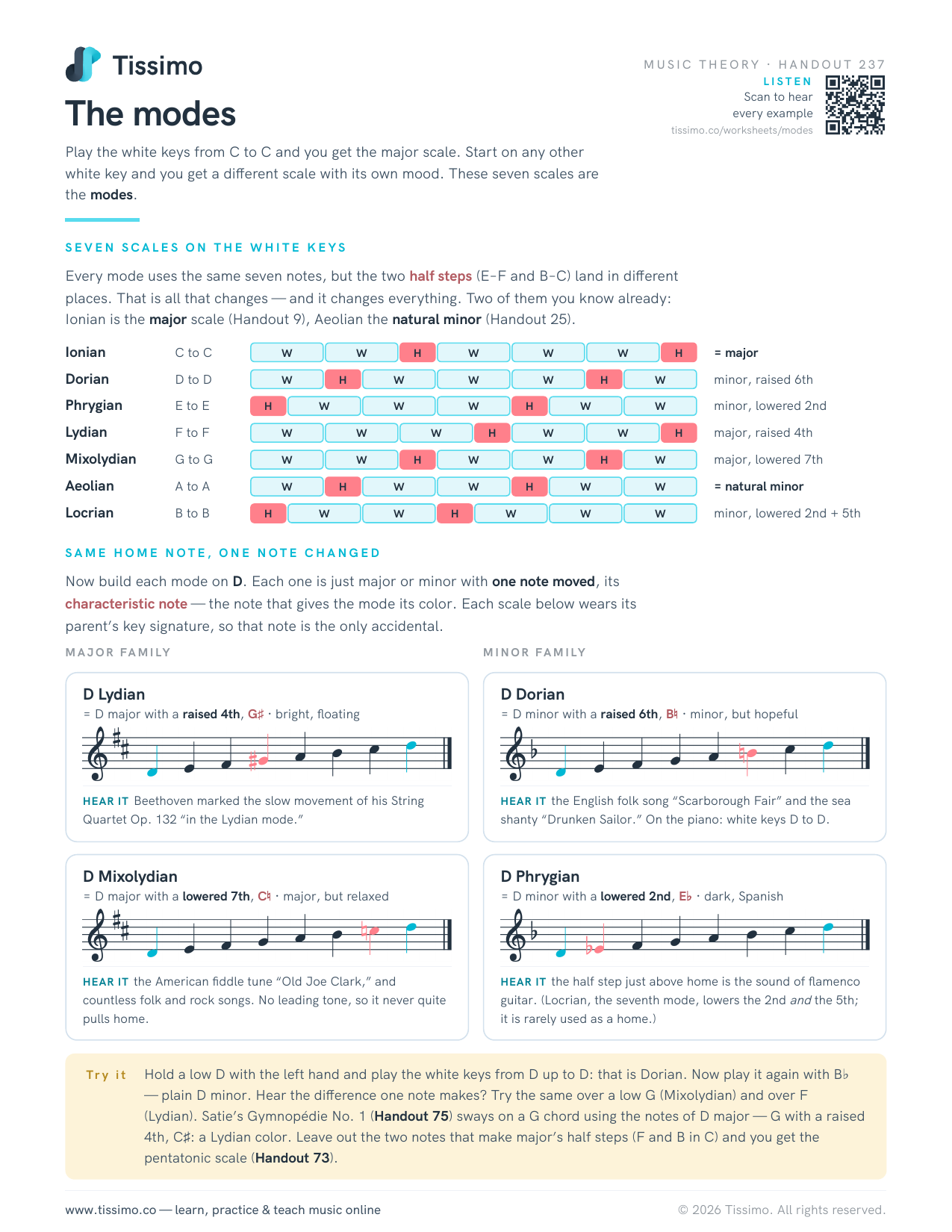 The modesPlay the white keys from C to C and you get the major scale. Start on any other white key and you get a different scale with its own mood. These seven scales are the modes.
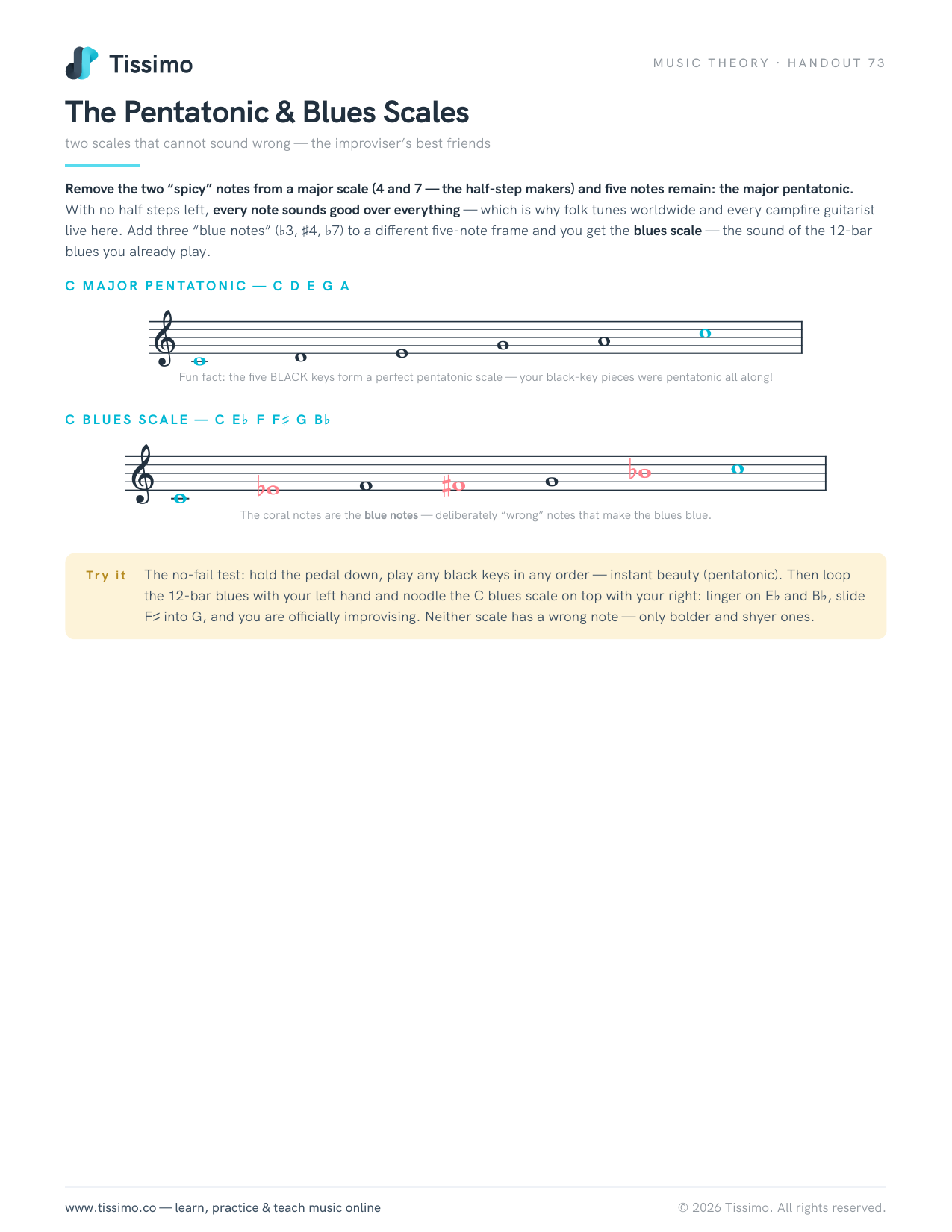 The Pentatonic & Blues Scalestwo scales that cannot sound wrong — the improviser’s best friends
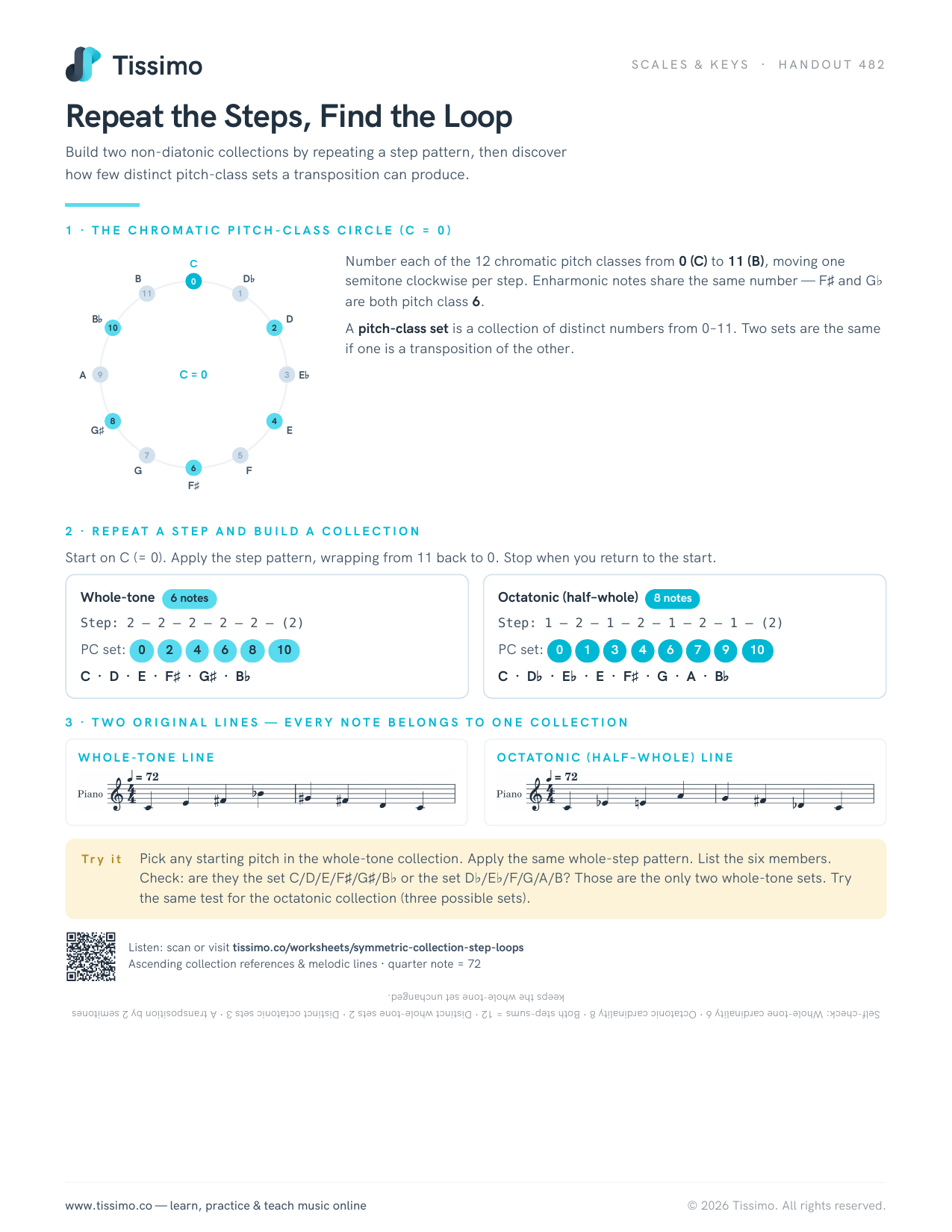 Repeat the Steps, Find the LoopBuild two non-diatonic collections by repeating a step pattern, then discover how few distinct pitch-class sets a transposition can produce.
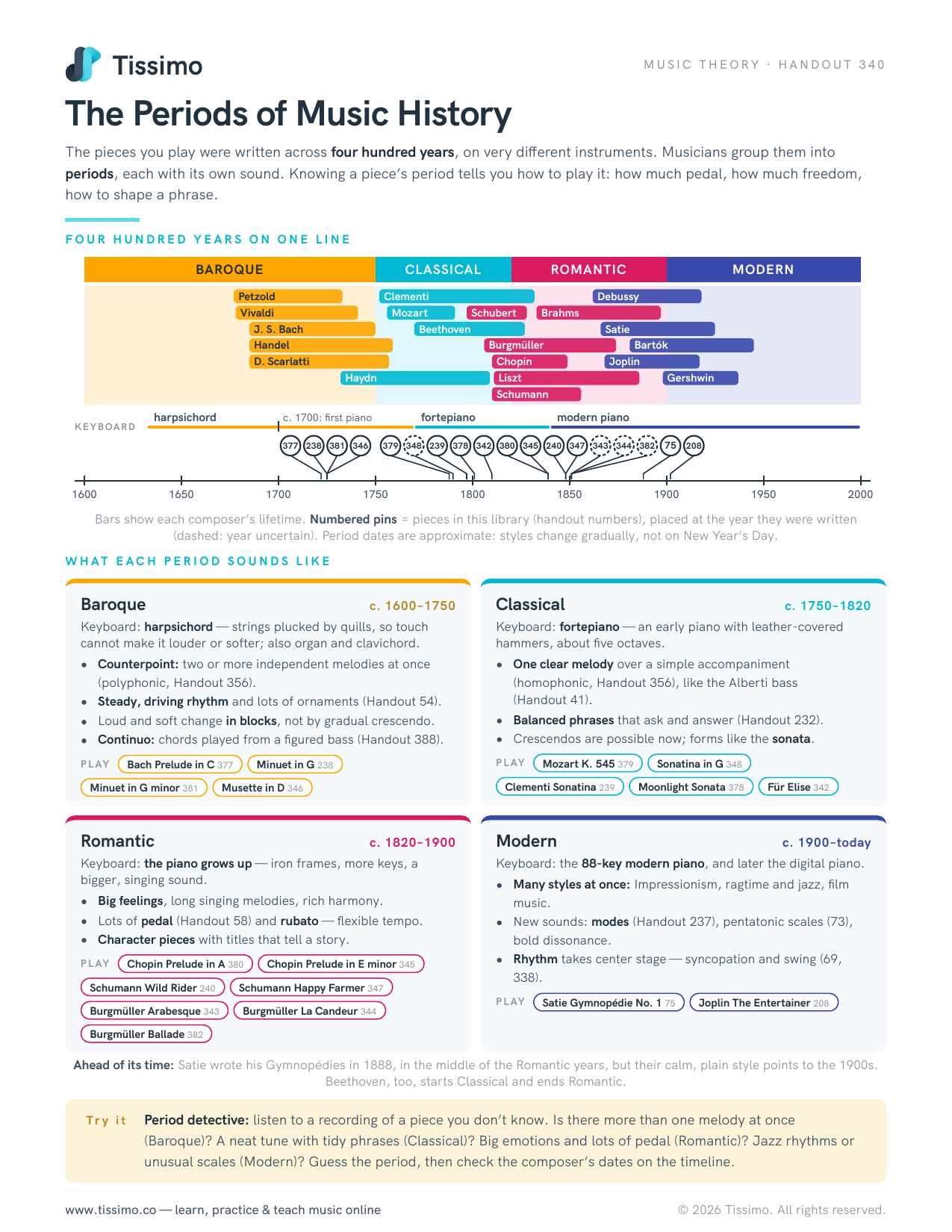 The Periods of Music HistoryThe pieces you play were written across four hundred years, on very different instruments. Musicians group them into periods, each with its own sound. Knowing a piece’s period tells you how to play it: how much pedal, how much freedom, how to shape a phrase.