Melody, Texture & Counterpoint
Imitation
Imitation is when one voice repeats a melodic idea just played by another voice, at the same or a different pitch, while the first voice continues with new material.
Imitation happens when one voice repeats a melodic idea that another voice has just played, while the first voice carries on with something new. The second voice imitates the first, at the same pitch or higher or lower, starting a little later. It is one of the main ways composers make polyphonic music hang together: the ear recognizes the idea each time it enters and can follow it from voice to voice.
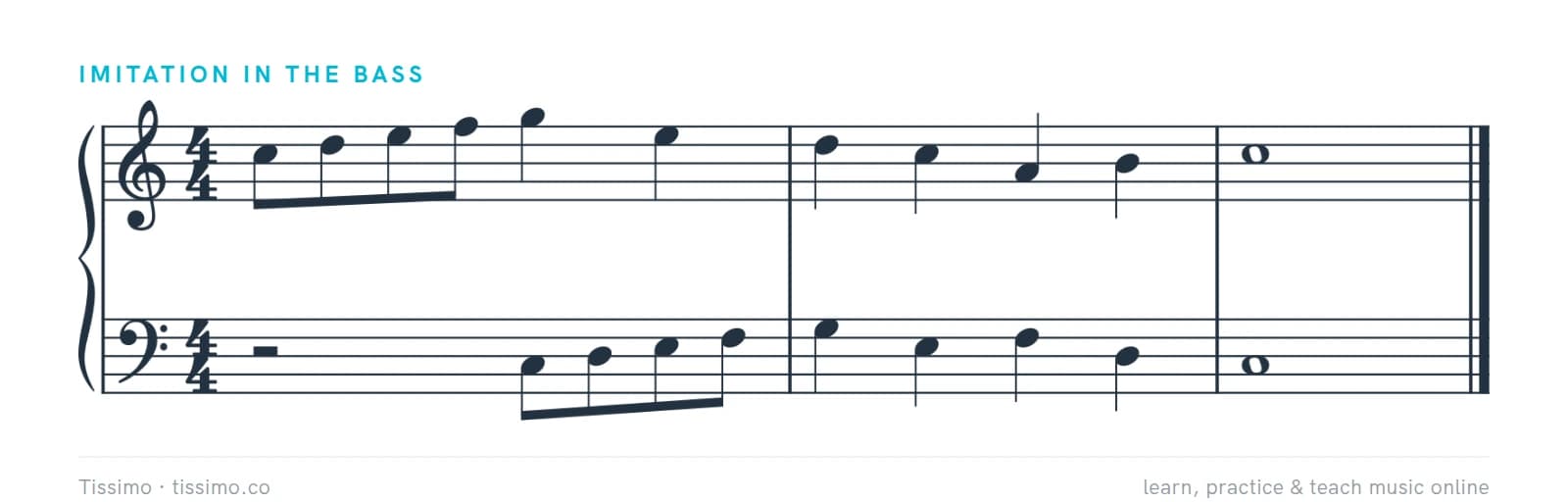
Strict and free imitation
- In strict imitation the second voice copies the whole line, note for note. When that continues through a whole passage or piece, the result is a canon.
- In free imitation the second voice copies only the beginning of the idea, often just its first few notes, and then goes its own way, as in the example.
Different kinds of imitation
Imitation can start on any pitch. Imitation at the octave and at the fifth (or fourth) is especially common, because the copy fits the key easily. The copy can also be transformed: turned upside down (inversion), in longer notes (augmentation) or in shorter notes (diminution).
Where you hear it
- Renaissance choral music: each new line of text often begins with a point of imitation, a short idea passed through all the voices one after another.
- Fugues: built on imitation of a theme called the subject.
- Inventions: many of J. S. Bach's two-part inventions open with one hand imitating the other.
- Popular music: backing vocals that echo the lead singer, or two guitars trading the same lick, are imitation too, closely related to call and response.
Hearing imitation
Learn the opening idea first, then listen for it entering in another voice, in another register. In the example, the opening run C–D–E–F–G comes back in the bass two beats later. Practice with One Melody, Two Entrances and Build a Canon: Copy, Overlap, Check.
Common questions
What is the difference between imitation and a canon?
A canon is strict imitation that continues: the follower copies the whole melody. Imitation in general may copy only the opening of an idea before the voice goes its own way.
Practice it: free worksheets
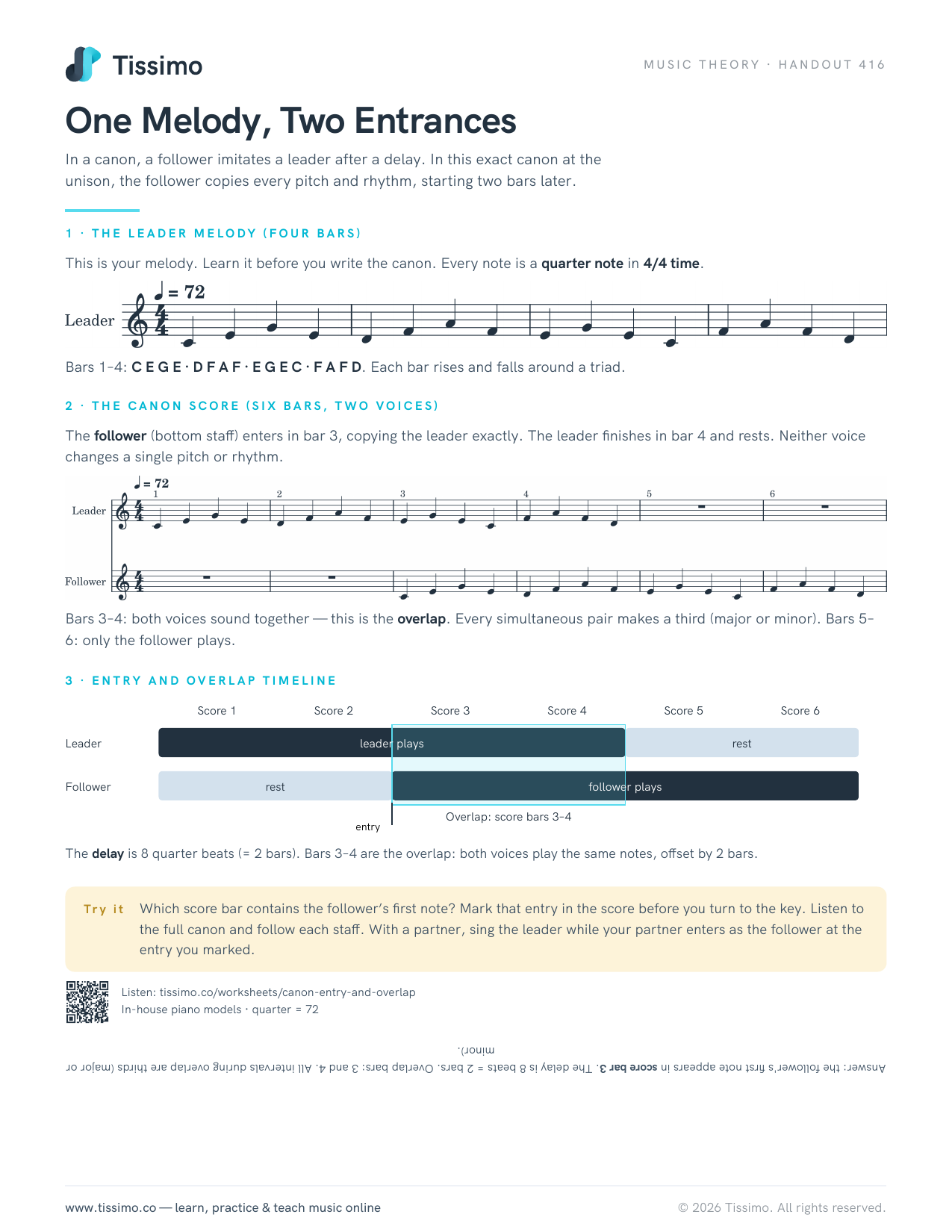 One Melody, Two EntrancesIn a canon, a follower imitates a leader after a delay. In this exact canon at the unison, the follower copies every pitch and rhythm, starting two bars later.
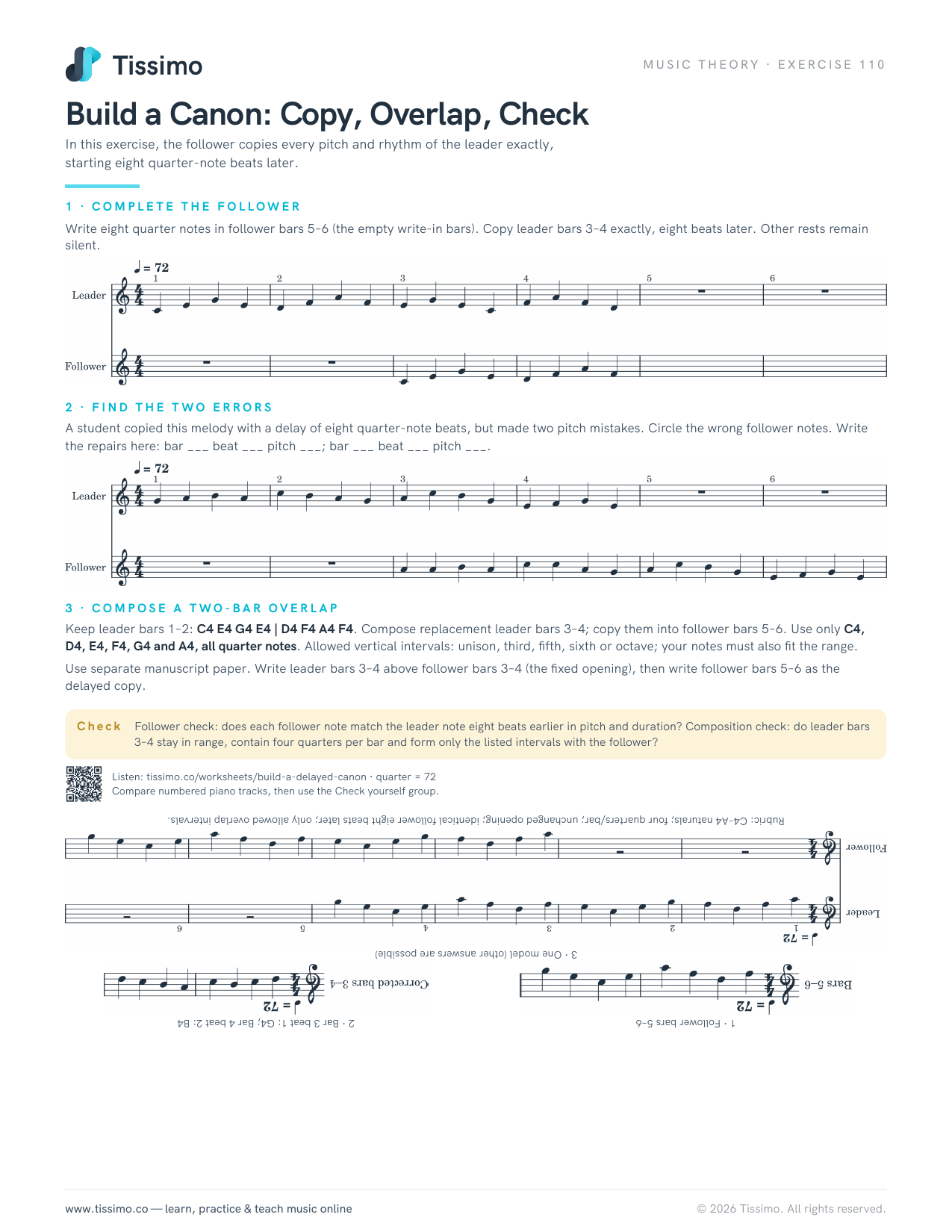 Build a Canon: Copy, Overlap, CheckIn this exercise, the follower copies every pitch and rhythm of the leader exactly, starting eight quarter-note beats later.
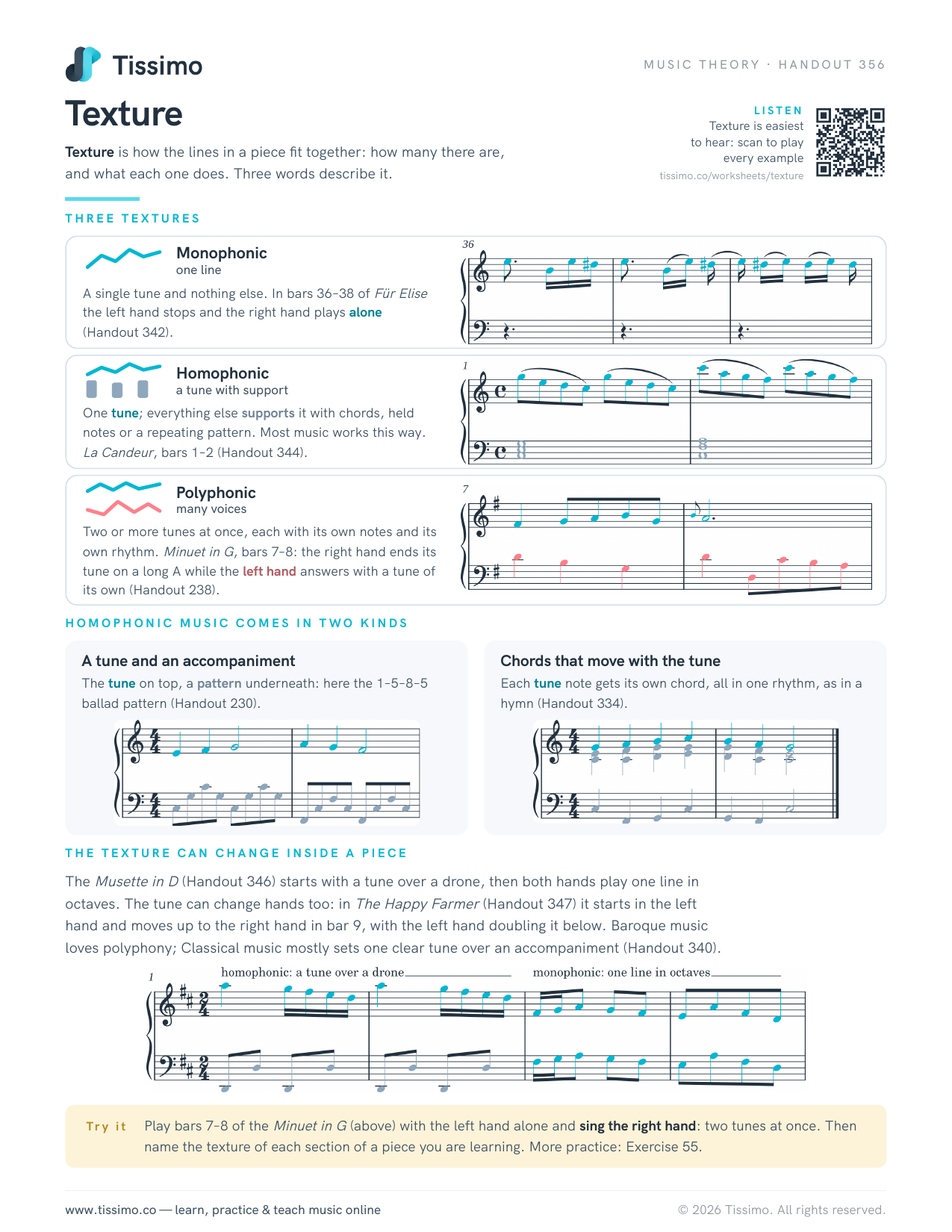 TextureTexture is how the lines in a piece fit together: how many there are, and what each one does. Three words describe it.