Chords & Harmony
ii–V–I Progression
The ii–V–I is a three-chord progression in which the supertonic chord moves to the dominant and then to the tonic, such as Dm7–G7–Cmaj7 in C major. It is one of the most common progressions in jazz.
The ii–V–I ("two-five-one") is a three-chord progression: the chord on the second degree of the key moves to the dominant, which resolves to the tonic. In C major, with sevenths added as jazz musicians usually play it, that is Dm7 – G7 – Cmaj7. Each root falls a fifth (D to G to C), the strongest root movement in tonal music, and the three chords play the three functions in order: predominant, dominant, tonic.
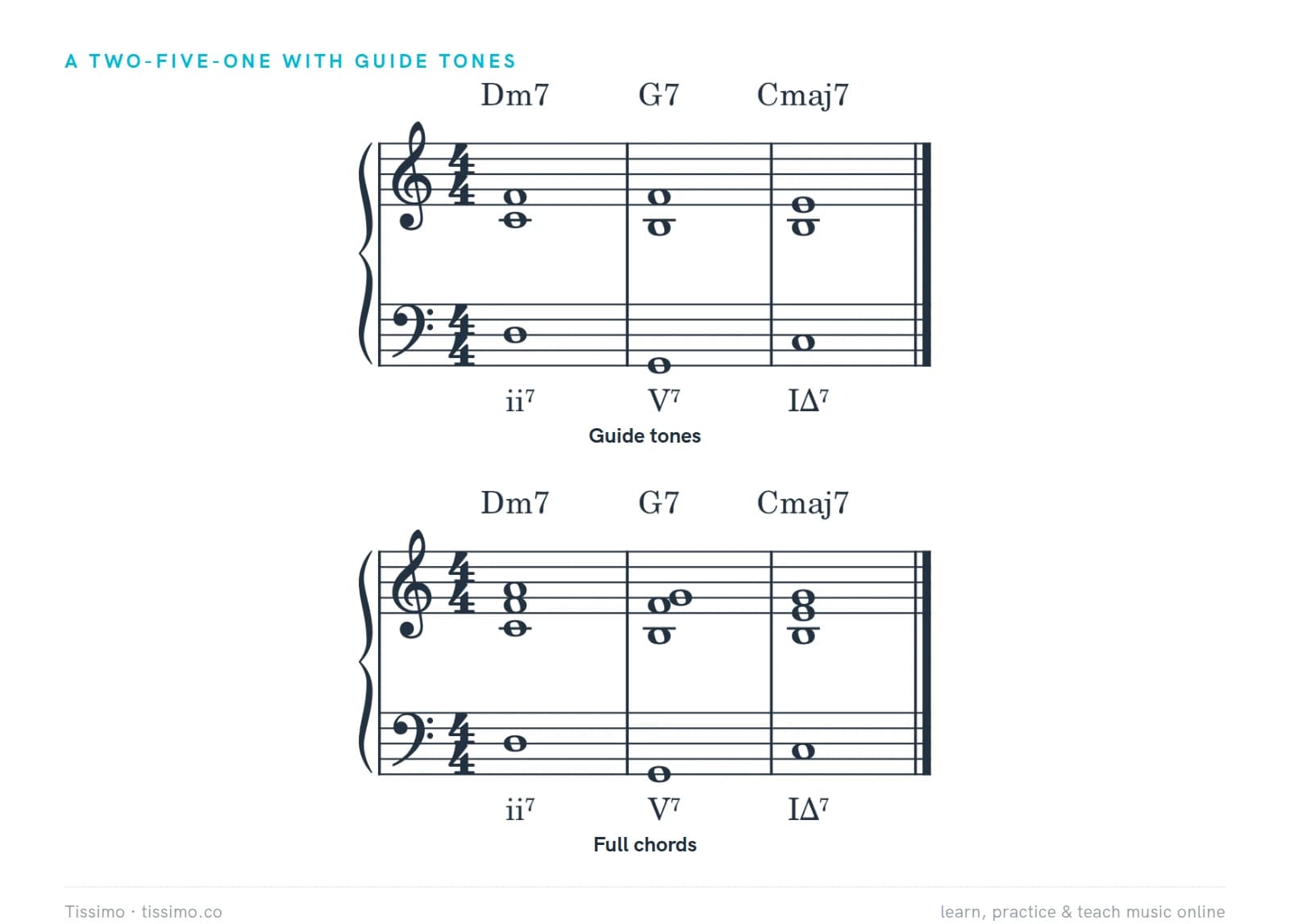
Guide tones
The third and the seventh of each chord, the guide tones, carry most of its identity, and in a ii–V–I they move very little:
- The seventh of Dm7 (C) falls a half step to become the third of G7 (B).
- The third of Dm7 (F) stays put and becomes the seventh of G7.
- The seventh of G7 (F) falls a half step to the third of Cmaj7 (E), while G7's third (B) stays put as the seventh of Cmaj7.
Pianists often play just these two notes over the bass (a voicing called a shell), and soloists aim melody notes at them so the chord changes can be heard in the line.
The minor ii–V–i
In a minor key the progression becomes iiø7 – V7 – i: in A minor, Bm7♭5 – E7 – Am (see half-diminished seventh chord). The ii chord is half-diminished, and the V7 takes the raised leading tone, G♯.
Where you hear it
Jazz standards are full of ii–V–I progressions, often several in a row in different keys, so jazz musicians practice the pattern in all twelve keys, usually moving around the circle of fifths. The same motion appears in classical music as ii6 – V7 – I at countless cadences, and in pop and soul ballads.
Practice with The ii–V–I in Every Key and Shell Voicings.
Common questions
Why is the ii–V–I so common in jazz?
Its roots fall by fifths, the strongest root motion in tonal harmony, and its guide tones move by half steps or not at all, so it sounds smooth and inevitable. Chaining several ii–V–Is lets a tune pass quickly through different keys.
What is the minor ii–V–i?
The minor-key version: a half-diminished ii chord, a dominant seventh V and a minor tonic. In A minor it is Bm7♭5 – E7 – Am.
Practice it: free worksheets
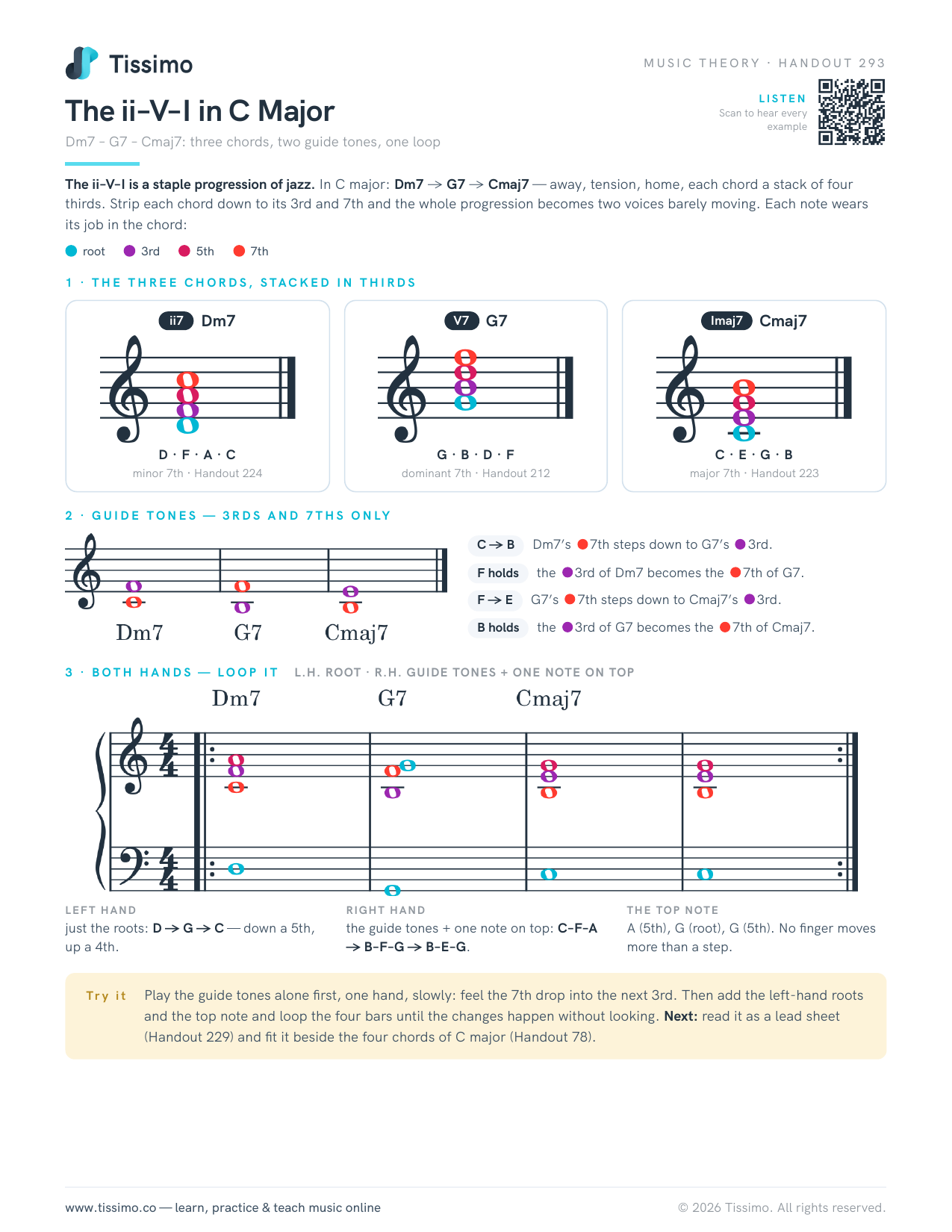 The ii–V–I in Every KeyThe most-played progression in jazz: three chords, two guide tones, one loop, in all 24 keys.
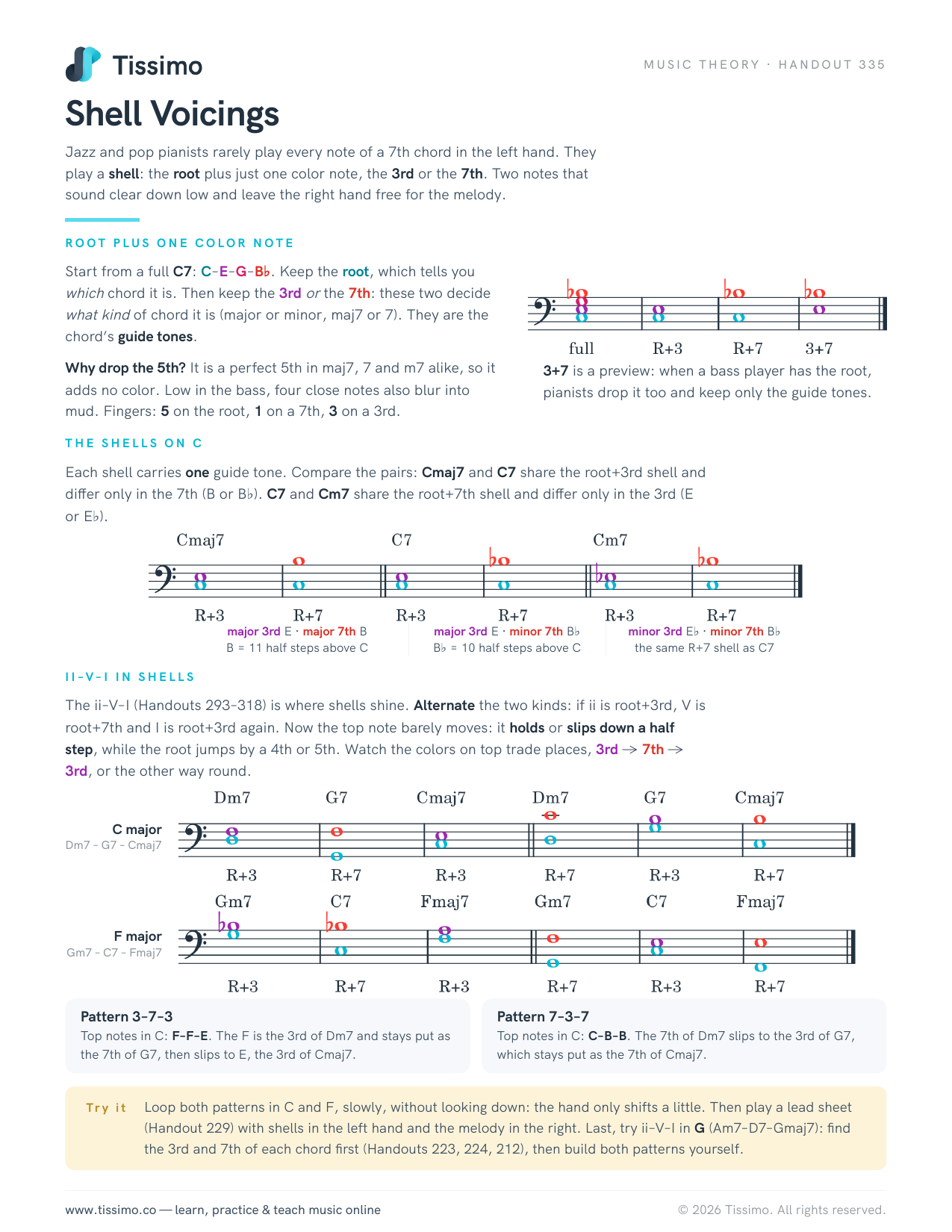 Shell VoicingsJazz and pop pianists rarely play every note of a 7th chord in the left hand. They play a shell: the root plus just one color note, the 3rd or the 7th. Two notes that sound clear down low and leave the right hand free for the melody.
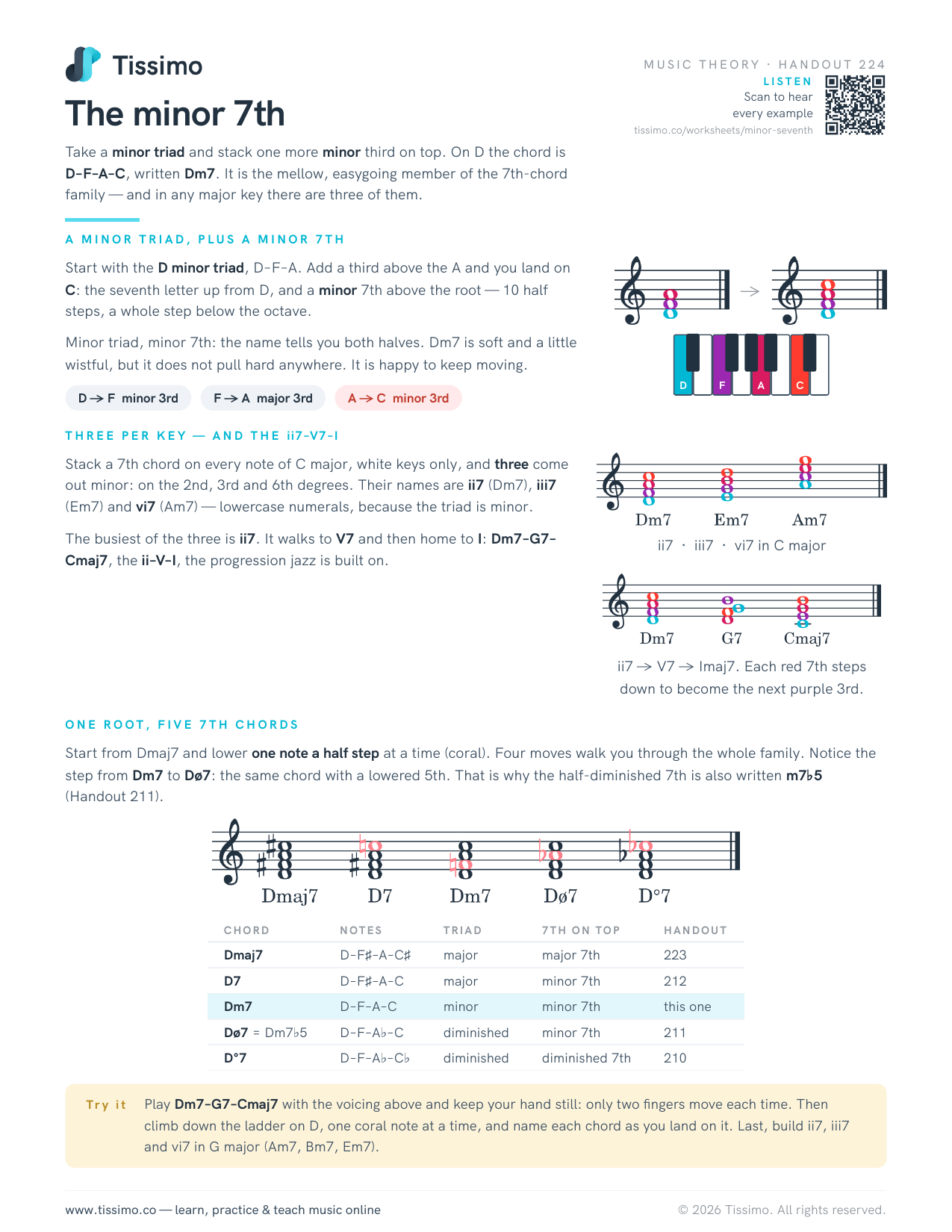 The minor 7thTake a minor triad and stack one more minor third on top. On D the chord is D–F–A–C, written Dm7. It is the mellow, easygoing member of the 7th-chord family — and in any major key there are three of them.
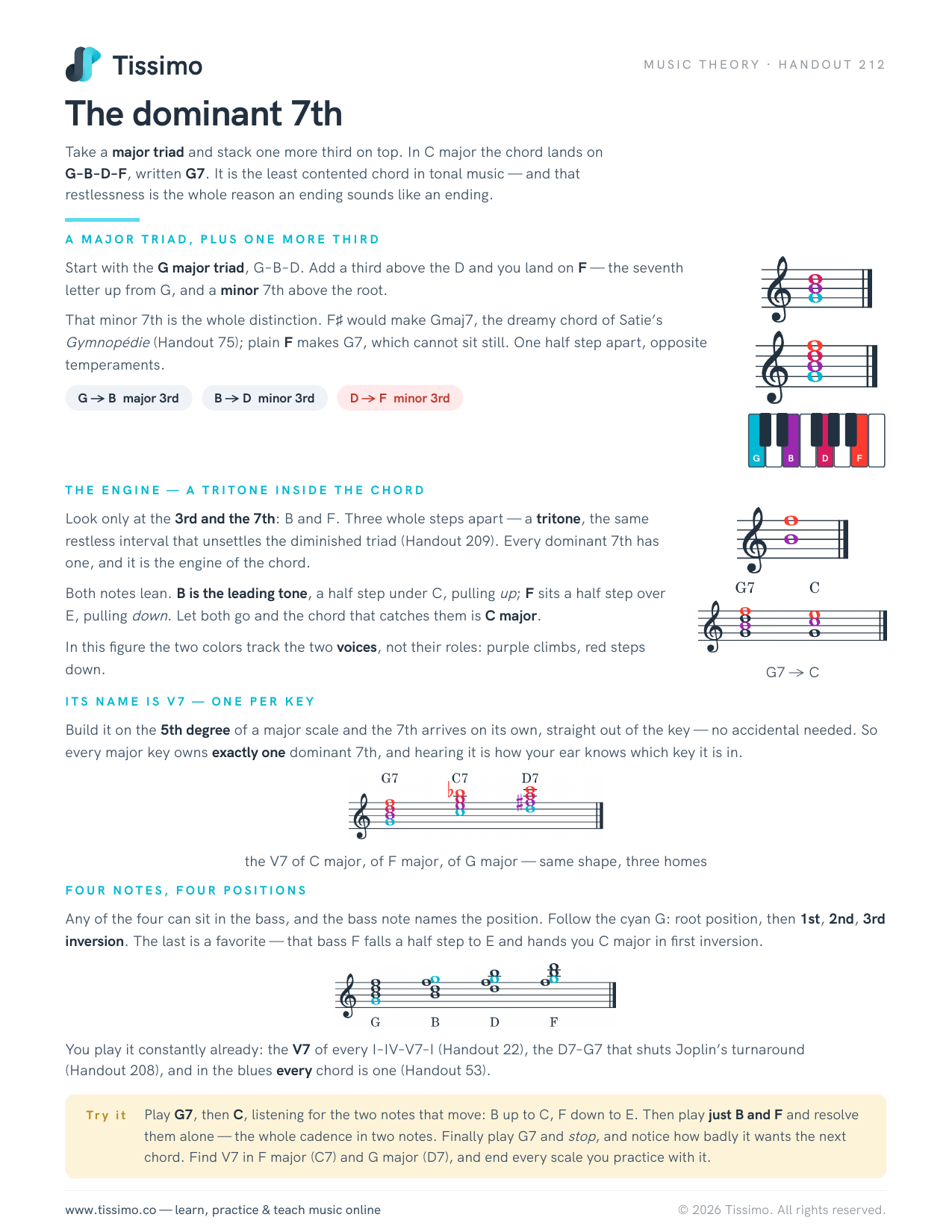 The dominant 7thTake a major triad and stack one more third on top. In C major the chord lands on G–B–D–F, written G7. It is the least contented chord in tonal music — and that restlessness is the whole reason an ending sounds like an ending.
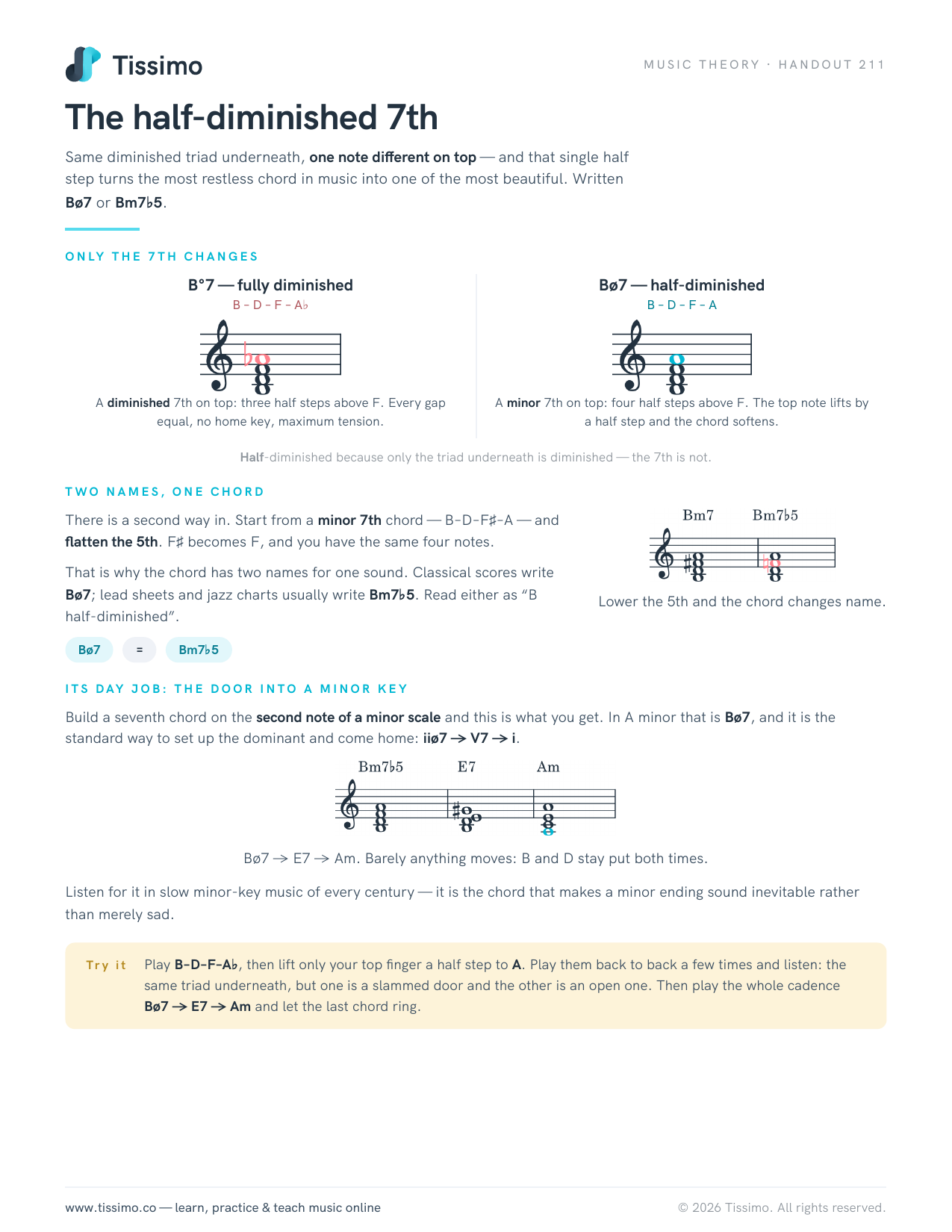 The half-diminished 7thSame diminished triad underneath, one note different on top — and that single half step turns the most restless chord in music into one of the most beautiful. Written Bø7 or Bm7♭5.