Melody, Texture & Counterpoint
Hook
A hook is the catchiest, most memorable part of a song, often a short phrase in the chorus that carries the title. It can be a melody, a riff, a rhythm, a lyric or a sound.
A hook is the part of a song that catches your ear and will not let go: the line you find yourself humming hours later. Most often it is a short melodic phrase in the chorus, frequently the one that carries the song's title. But a hook can also be an instrumental riff, a rhythm, a lyric, or even a distinctive sound.
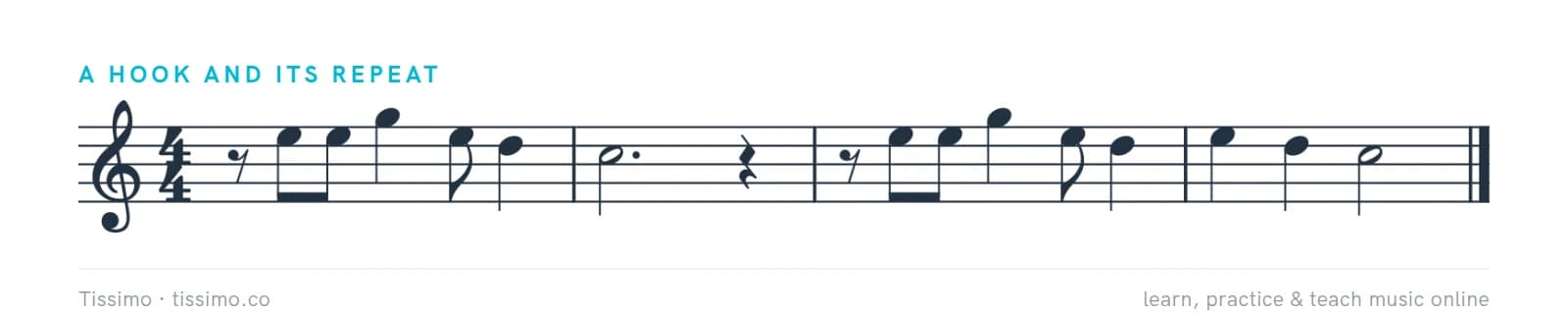
What makes a hook catchy
- Repetition. You hear it several times within the chorus and again in every chorus.
- Short and singable. A small range, mostly steps, short enough to sing in one breath.
- A distinctive rhythm. A syncopated start, like the off-beat entry in the example, often makes a line stick.
- Good placement. Hooks tend to sit at the start or end of the chorus, with the key word on a strong beat or a long note.
- Contrast. It stands out from the verse around it in register, rhythm or energy.
Kinds of hooks
- Melodic: a vocal line, as in the example.
- Lyrical: a phrase of words that sticks, often the title.
- Instrumental: a guitar or synth riff, or a horn line.
- Rhythmic: a beat or groove you recognize at once.
- Sound: a production idea, such as an unusual synth tone or vocal effect.
Hooks and song form
In verse–chorus form, the main hook usually lives in the chorus, and songwriters often tease it in the introduction or repeat it after the chorus so you hear it many times. The word belongs to pop and rock songwriting, but the idea is older: a memorable motif or theme does the same job in classical music.
Common questions
What is the difference between a hook and a chorus?
The chorus is a whole section of the song. The hook is its catchiest piece, often just one line, though a hook can also appear outside the chorus, for example as a riff in the introduction.