Melody, Texture & Counterpoint
Melody
A melody is a series of single notes heard one after another as a recognizable musical line: the tune you hum or sing. It combines pitch, the ups and downs, with rhythm, the longs and shorts.
A melody is a series of single notes that the ear hears as one line: the part of a song you hum in the shower, or the tune a violin sings over the orchestra. Every melody combines two things. Pitch gives it its ups and downs; rhythm gives it its longs and shorts. Change either one and the tune changes: play "Happy Birthday" with every note the same length and it is suddenly hard to recognize.
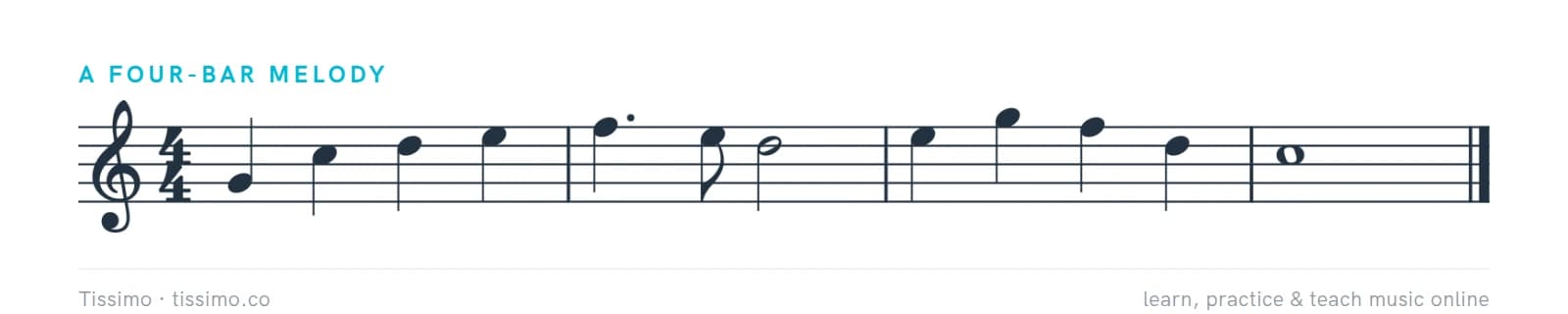
What makes a melody
- Contour: the overall shape, rising, falling, arching or waving. See melodic contour.
- Steps and leaps: most melodies move mainly by step, with occasional leaps for energy (conjunct and disjunct motion).
- A high point: many melodies build toward one peak, often about two-thirds of the way through, and then settle.
- Phrases: melodies breathe in musical sentences, usually two or four bars long, that end with a cadence. See phrase.
- Motifs: short ideas that come back, so the tune hangs together (motif).
- A home note: in most music, the melody feels most at rest on the tonic, the first note of the scale.
Melody and harmony
Melody is the horizontal side of music: notes one after another. Harmony is the vertical side: notes sounding together. In most songs the melody sits on top, and chords underneath support it. In polyphony several melodies run at once, each one important.
Listening for melody
Learning to hear and write down melodies is a core skill for every musician. Start by finding the home note, then trace the shape (up, down, step or leap), then fill in the exact notes. Tissimo's Melodic Dictation page walks through that plan, and Ear Training: Melodic Dictation gives you tunes to practice on. To see that a melody keeps its identity in any key, try Transpose the melody.
Common questions
What is the difference between melody and harmony?
Melody is notes one after another, a single line you can sing. Harmony is notes sounding at the same time, the chords that support the melody.
Practice it: free worksheets
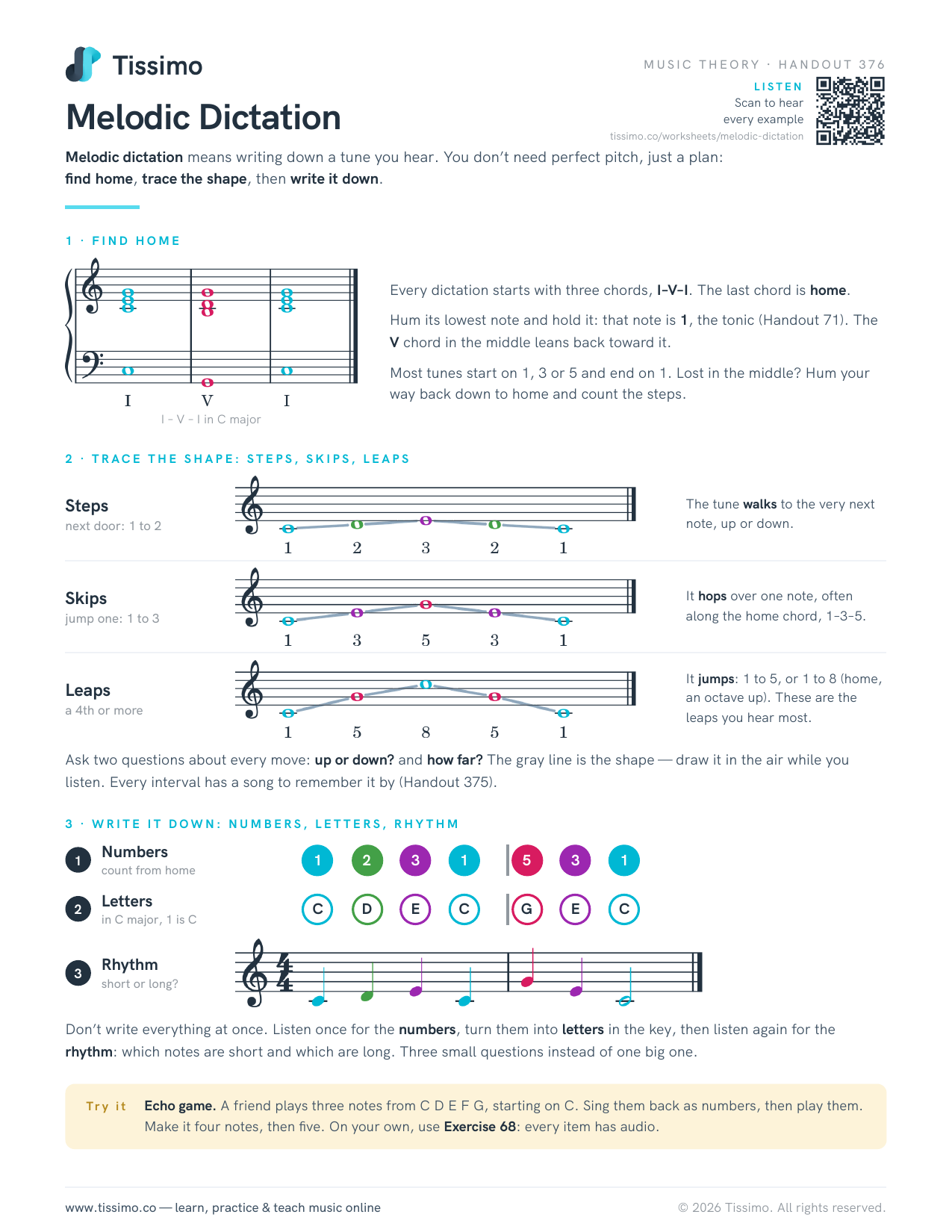 Melodic DictationMelodic dictation means writing down a tune you hear. You don’t need perfect pitch, just a plan: find home, trace the shape, then write it down.
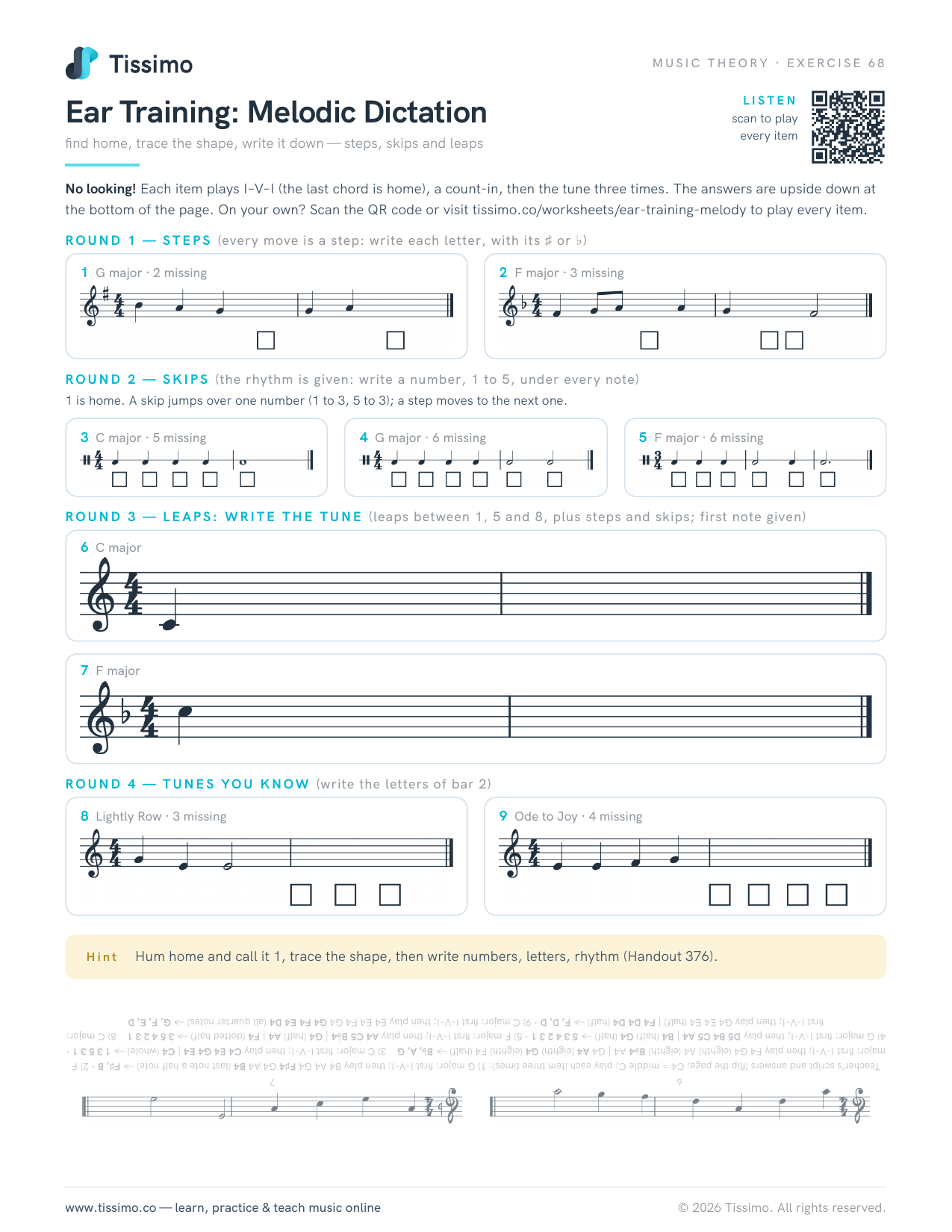 Ear Training: Melodic Dictationfind home, trace the shape, write it down — steps, skips and leaps
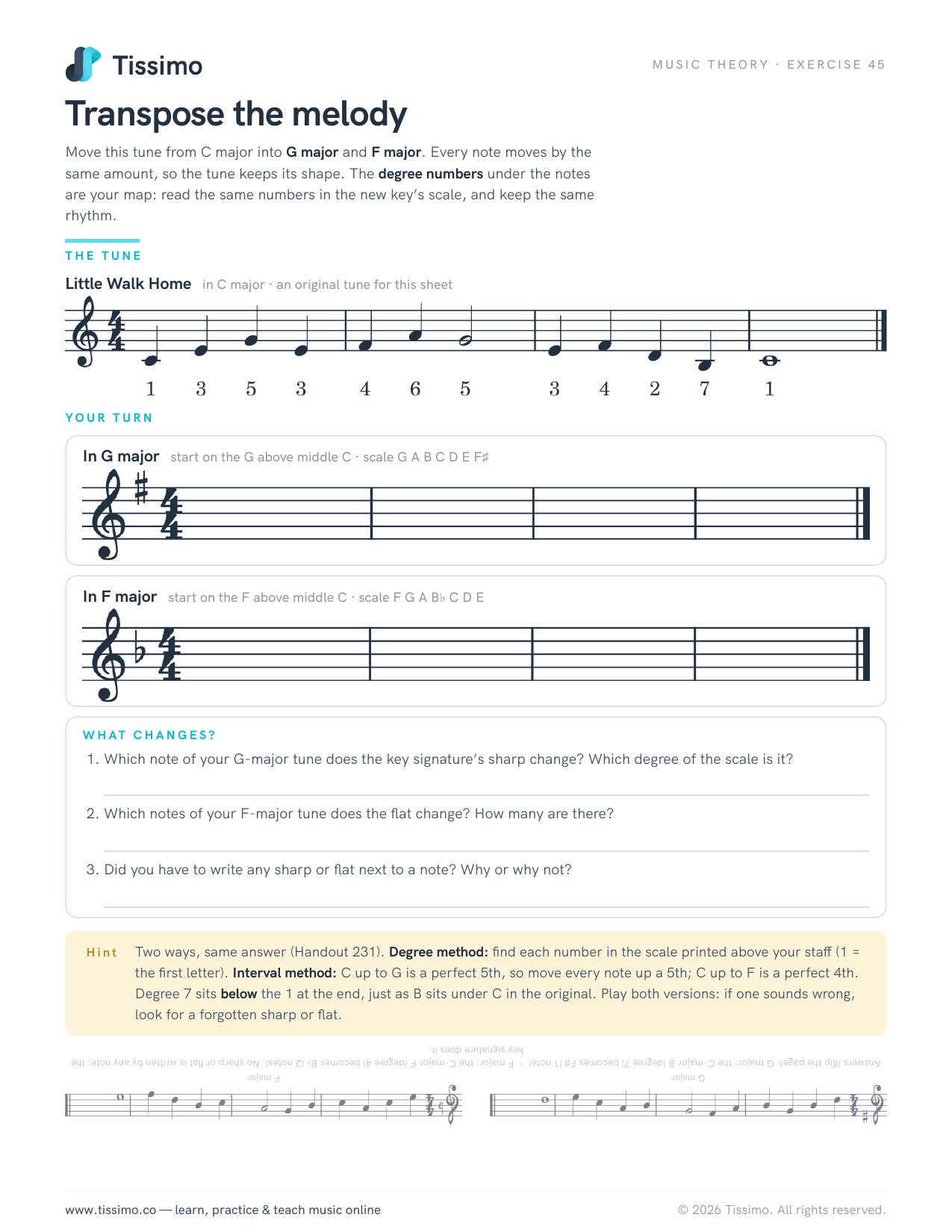 Transpose the melodyMove this tune from C major into G major and F major. Every note moves by the same amount, so the tune keeps its shape. The degree numbers under the notes are your map: read the same numbers in the new key’s scale, and keep the same rhythm.
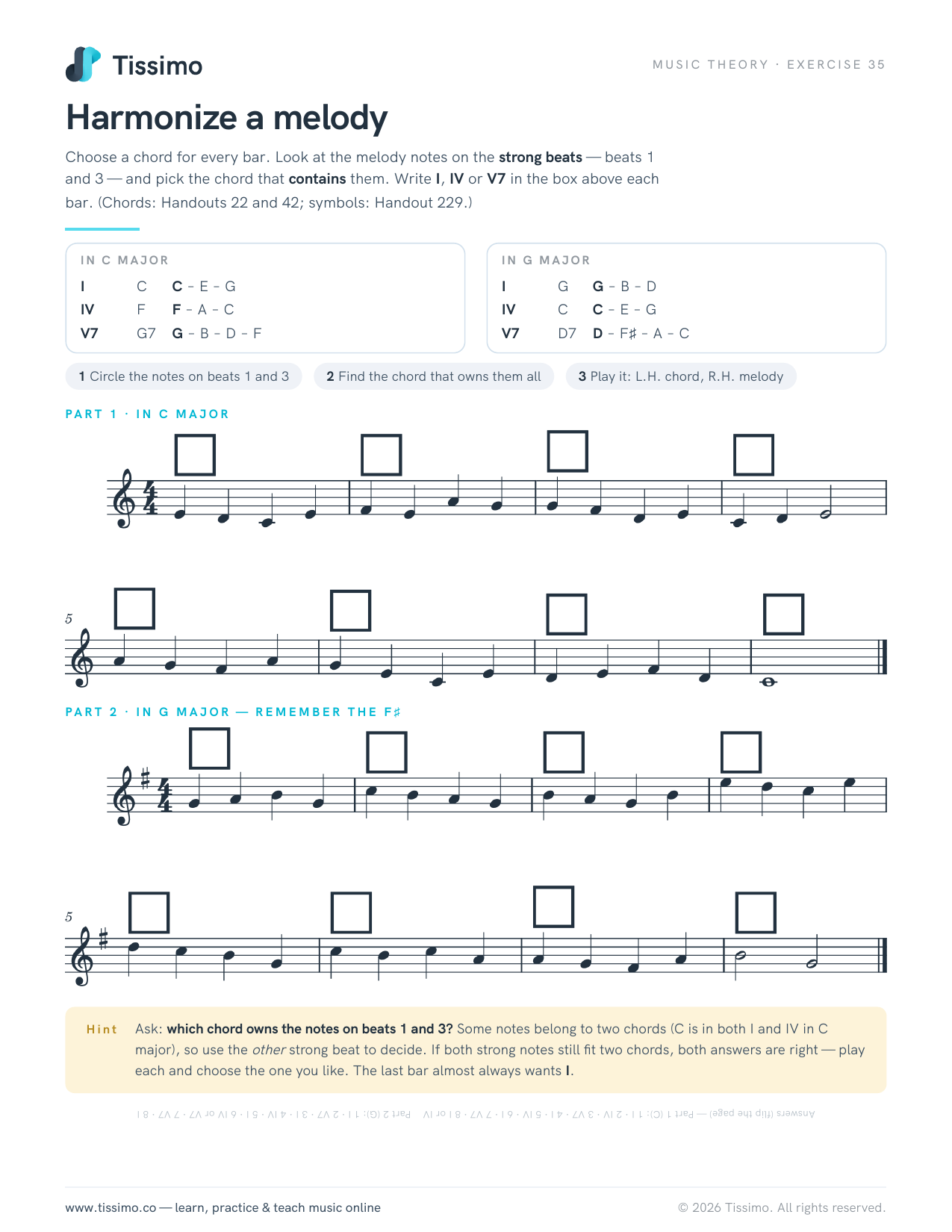 Harmonize a melodyChoose a chord for every bar. Look at the melody notes on the strong beats — beats 1 and 3 — and pick the chord that contains them. Write I, IV or V7 in the box above each bar. (Chords: Handouts 22 and 42; symbols: Handout 229; how to choose: Handout 358.) Next: Exercise 57 adds ii and vi.
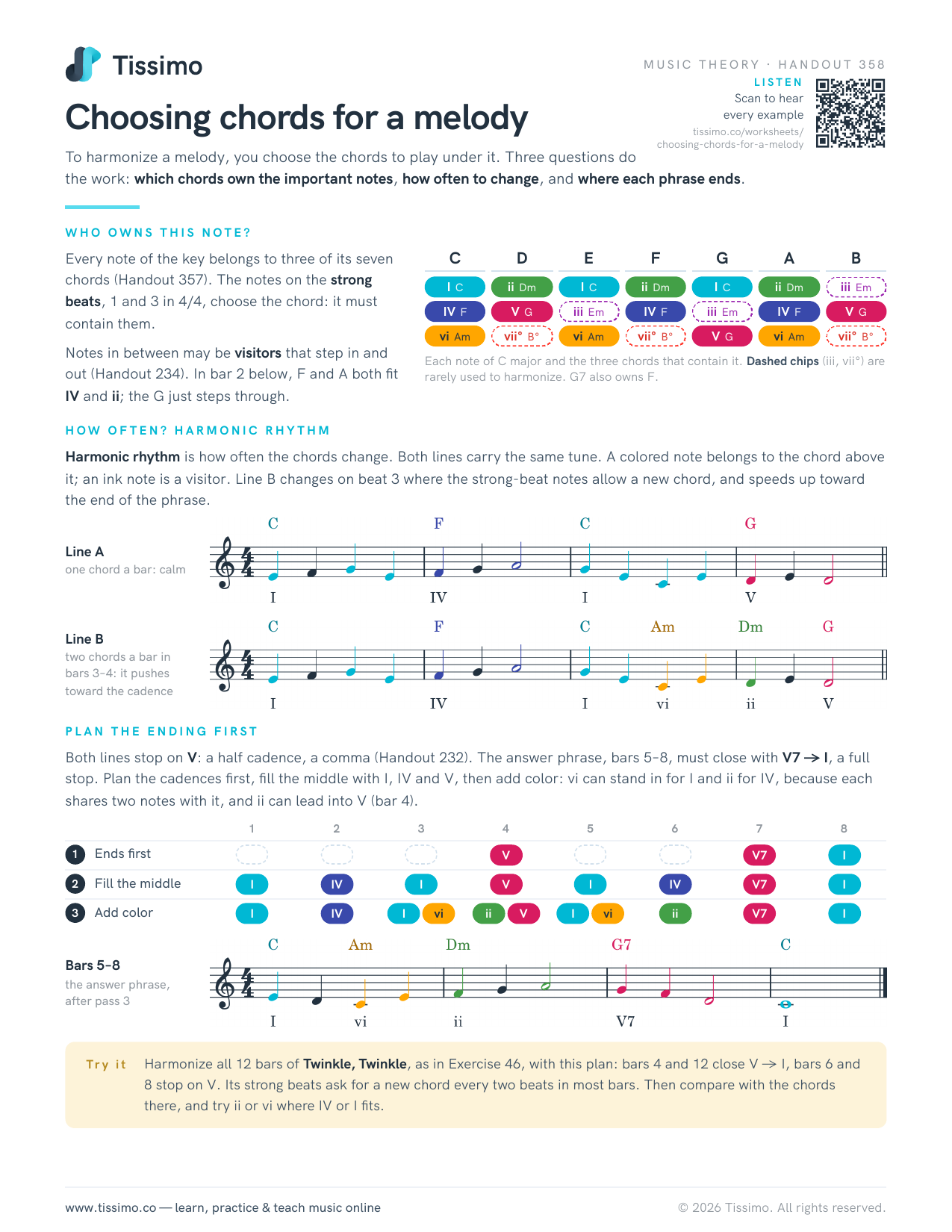 Choosing chords for a melodyTo harmonize a melody, you choose the chords to play under it. Three questions do the work: which chords own the important notes, how often to change, and where each phrase ends.