Melody, Texture & Counterpoint
Monophony
Pronounced muh-NOF-uh-nee
Monophony is a musical texture made of a single melodic line with no accompaniment, whether it is performed by one person or by many in unison or octaves.
Monophony is the simplest texture: a single melodic line with nothing accompanying it. There are no chords, no bass line and no second melody. One person singing alone, a solo flute, a tune whistled in the street: all are monophonic.
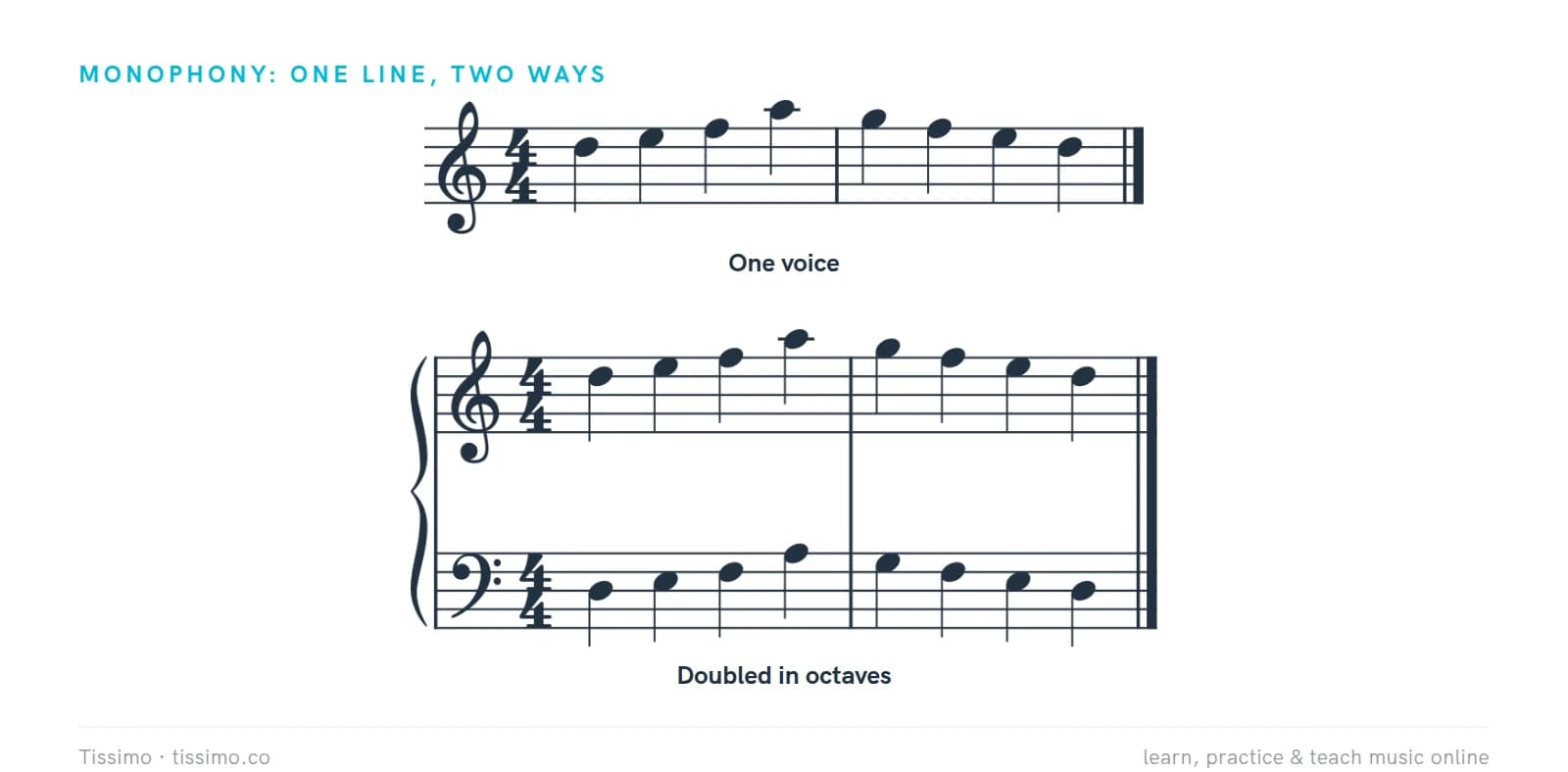
Many performers, still one line
Monophony is about the number of different lines, not the number of performers. A choir singing the same tune in unison is monophonic. So is a tune doubled at the octave, as when men and women sing a song together, because notes an octave apart sound like the same note in a different register. The second panel of the example doubles the tune two octaves lower: more sound, but still just one line.
Where you hear it
- Gregorian chant and other early church chant, sung in unison.
- Medieval songs, which were written down as single melodies; whether performers added instruments is still debated.
- Folk songs, lullabies and work songs sung without accompaniment.
- Solo instrumental music, such as a melody for unaccompanied flute or violin.
- The opening of many pieces, where one instrument plays alone before the others join.
Some solo pieces are trickier: a single line that leaps between registers can suggest two lines or a chord, as in many Baroque works for unaccompanied violin or cello. Musicians call this implied polyphony.
Not the same as mono sound
A monophonic synthesizer can play only one note at a time, which matches this meaning. But mono in audio, short for monaural, means sound recorded on one channel instead of two (stereo): a different idea entirely.
Practice telling textures apart with Name the texture and Ear Training: One Line, Tune with Chords, or Two Independent Lines?.
Common questions
Is a choir singing in unison monophonic?
Yes. However many people sing, if they all sing the same melody, in unison or in octaves, there is only one line, so the texture is monophonic.
Practice it: free worksheets
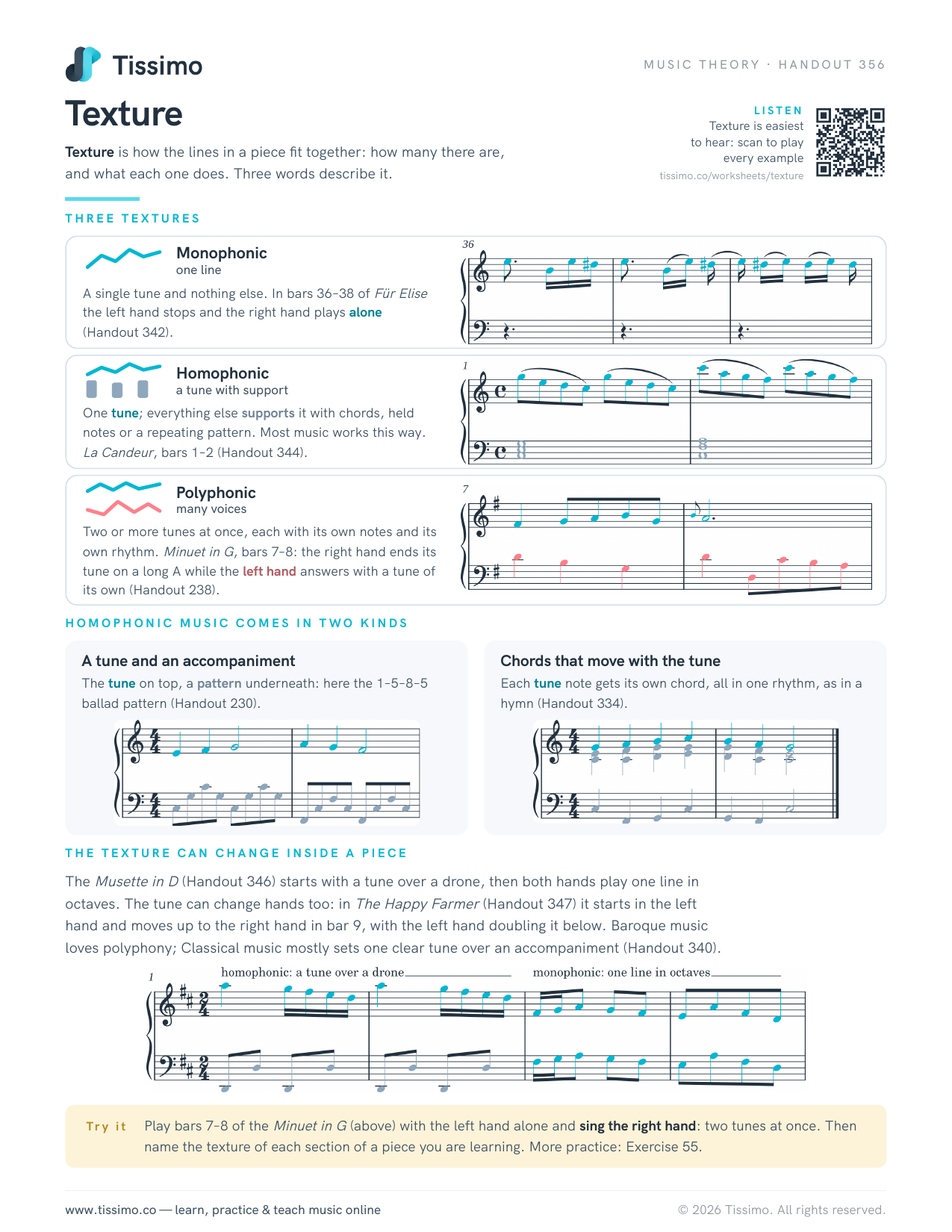 TextureTexture is how the lines in a piece fit together: how many there are, and what each one does. Three words describe it.
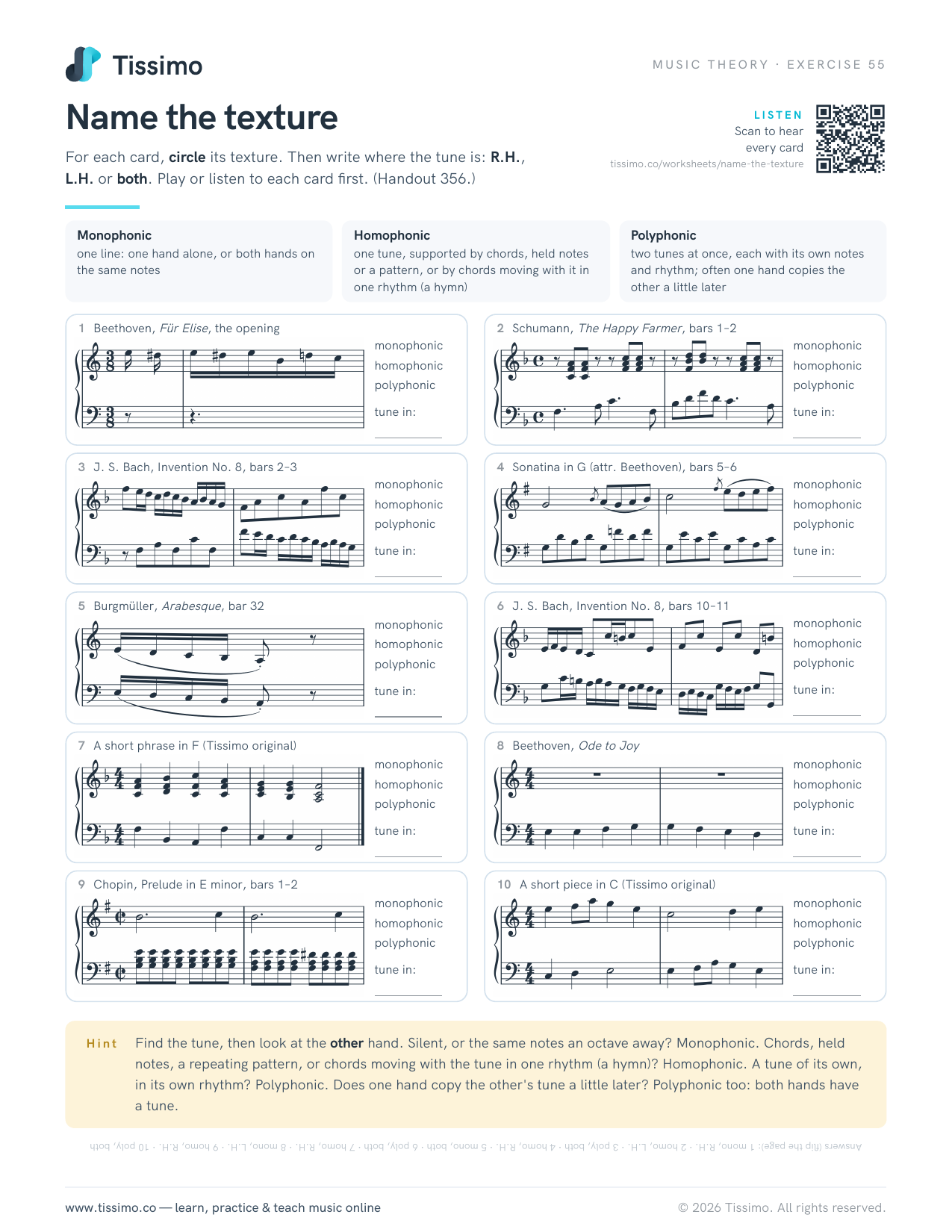 Name the textureFor each card, circle its texture. Then write where the tune is: R.H., L.H. or both. Play or listen to each card first. (Handout 356.)
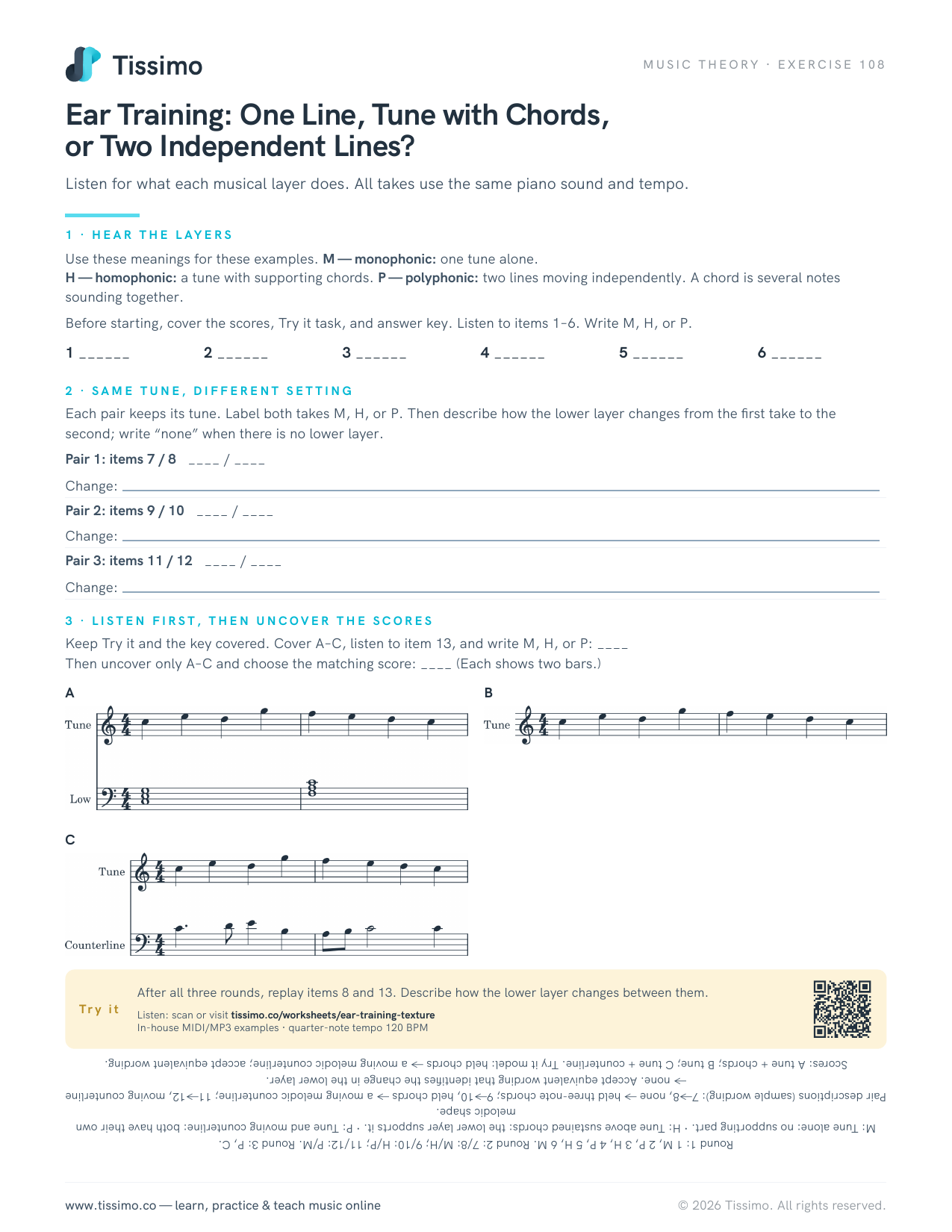 Ear Training: One Line, Tune with Chords, or Two Independent Lines?Listen for what each musical layer does. All takes use the same piano sound and tempo.