Melody, Texture & Counterpoint
Texture
Texture is how the layers of a piece fit together: how many lines sound at once and what each one does. The main types are monophony, homophony, polyphony and heterophony.
Texture is how the layers of a piece fit together: how many lines there are and what each one is doing. The word comes from fabric. A few threads make a thin cloth and many make a thick one, and the way they are woven gives the pattern. In music, the threads are melodies, chords, bass lines and rhythms.
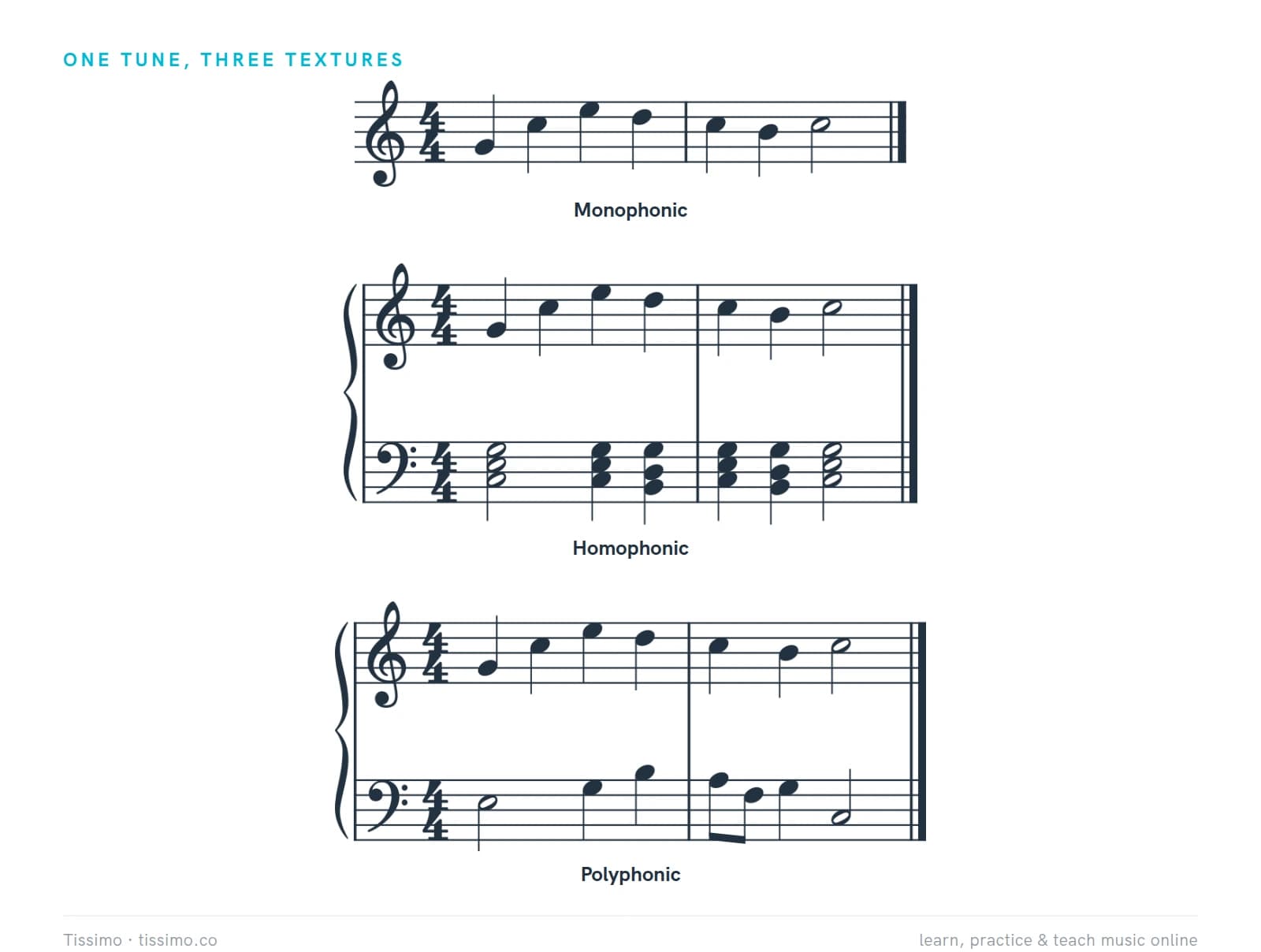
The main kinds of texture
- Monophony: one line alone, with no accompaniment, even if many people sing it together.
- Homophony: one main melody with accompaniment, or all the parts moving together in chords.
- Polyphony: two or more independent melodies at once, as in counterpoint and imitation.
- Heterophony: several slightly different versions of the same melody at once.
The example plays one tune in the first three textures, so you can hear the difference.
Other ways to describe texture
Beyond the four names, musicians talk about texture as:
- thick or thin: many parts, or few;
- dense or open: notes packed close together, or spread far apart;
- high or low: which register the parts sit in;
- where the melody is: on top, in the middle or in the bass.
Texture as a tool
Composers change texture to shape a piece. A song might open with a single voice, add a guitar, then the whole band for the chorus. A fugue starts with one line and grows to three or four. Producers think the same way when they bring layers in and out of a track: see Arrange a Dance Track in Eight-Bar Blocks.
Hearing texture
Ask three questions: How many things are happening at once? Is one of them clearly the tune? Do the parts move together or separately? Practice with Texture, Name the texture and Ear Training: One Line, Tune with Chords, or Two Independent Lines?.
Common questions
What are the four types of musical texture?
Monophony (one line), homophony (a melody with accompaniment, or parts moving together in chords), polyphony (several independent melodies) and heterophony (several versions of one melody at once).
What does thick or thin texture mean?
A thick texture has many parts or notes sounding at once; a thin texture has few. A solo flute is thin; a full orchestra playing chords is thick.
Practice it: free worksheets
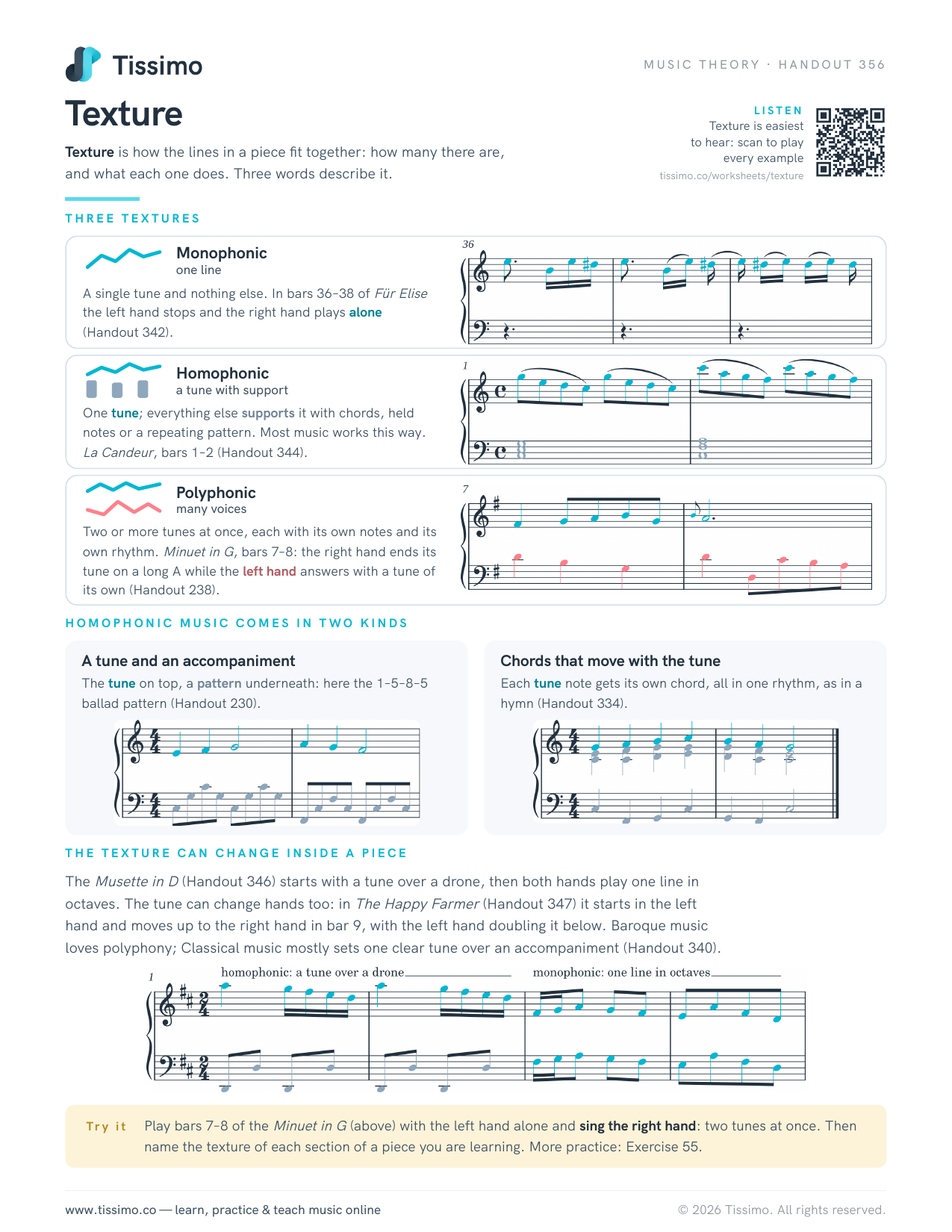 TextureTexture is how the lines in a piece fit together: how many there are, and what each one does. Three words describe it.
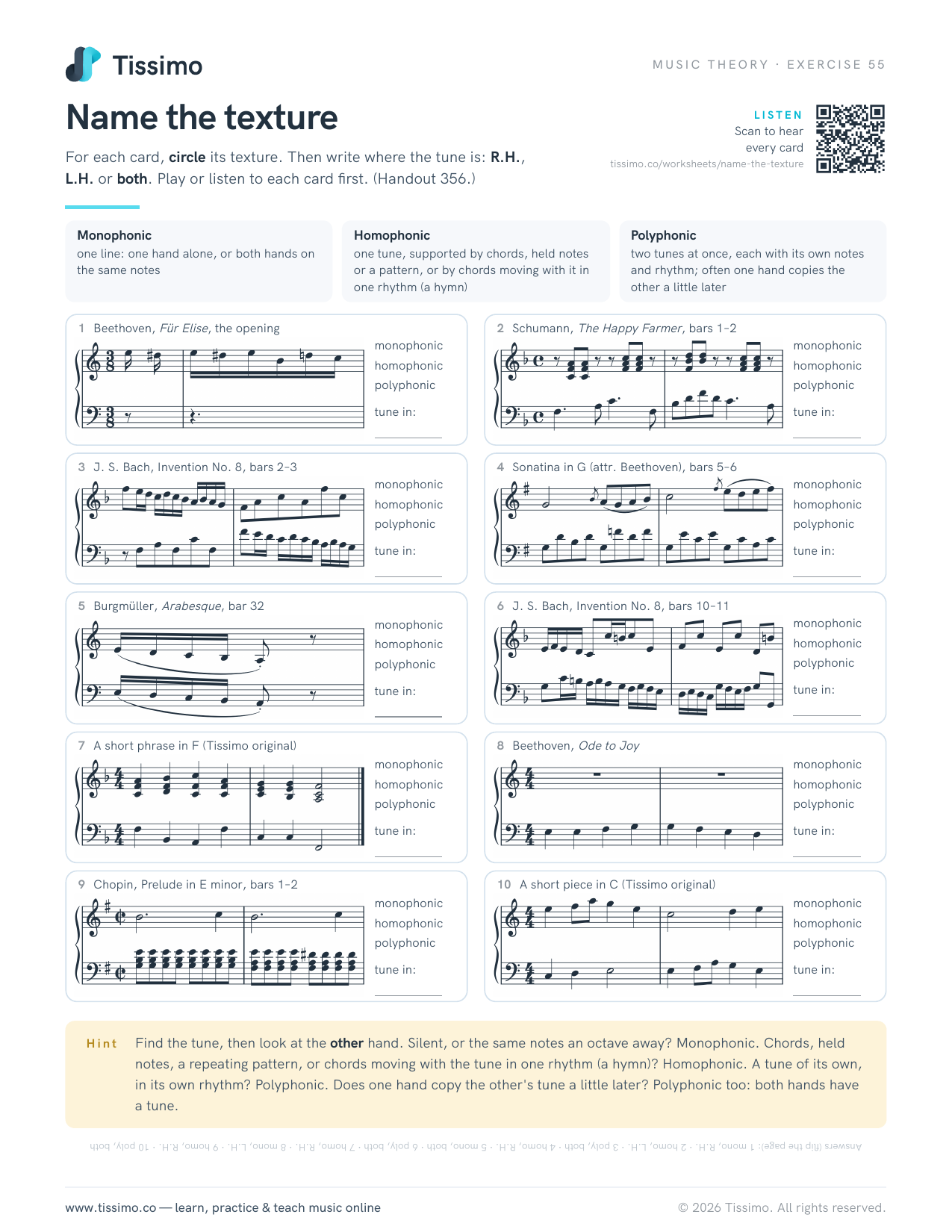 Name the textureFor each card, circle its texture. Then write where the tune is: R.H., L.H. or both. Play or listen to each card first. (Handout 356.)
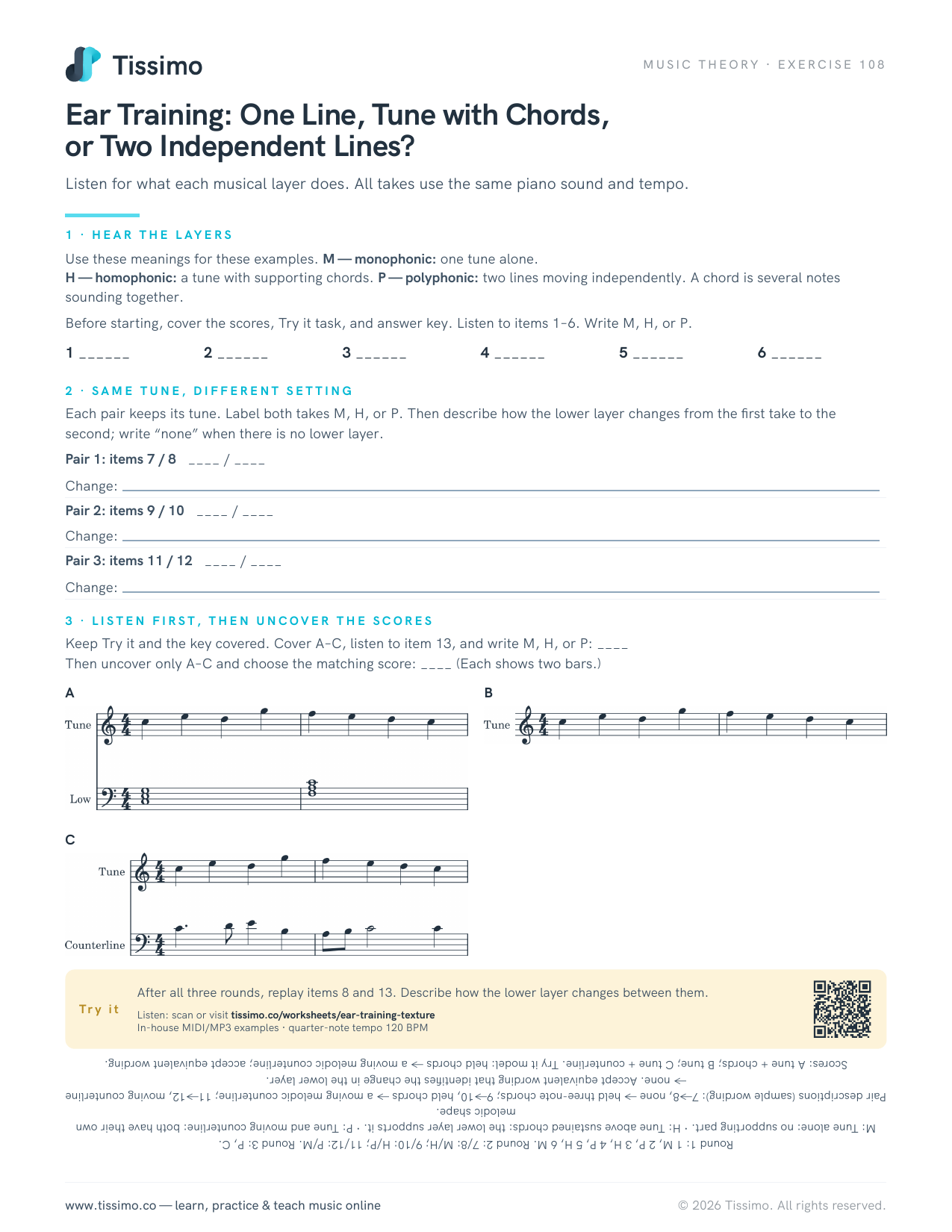 Ear Training: One Line, Tune with Chords, or Two Independent Lines?Listen for what each musical layer does. All takes use the same piano sound and tempo.
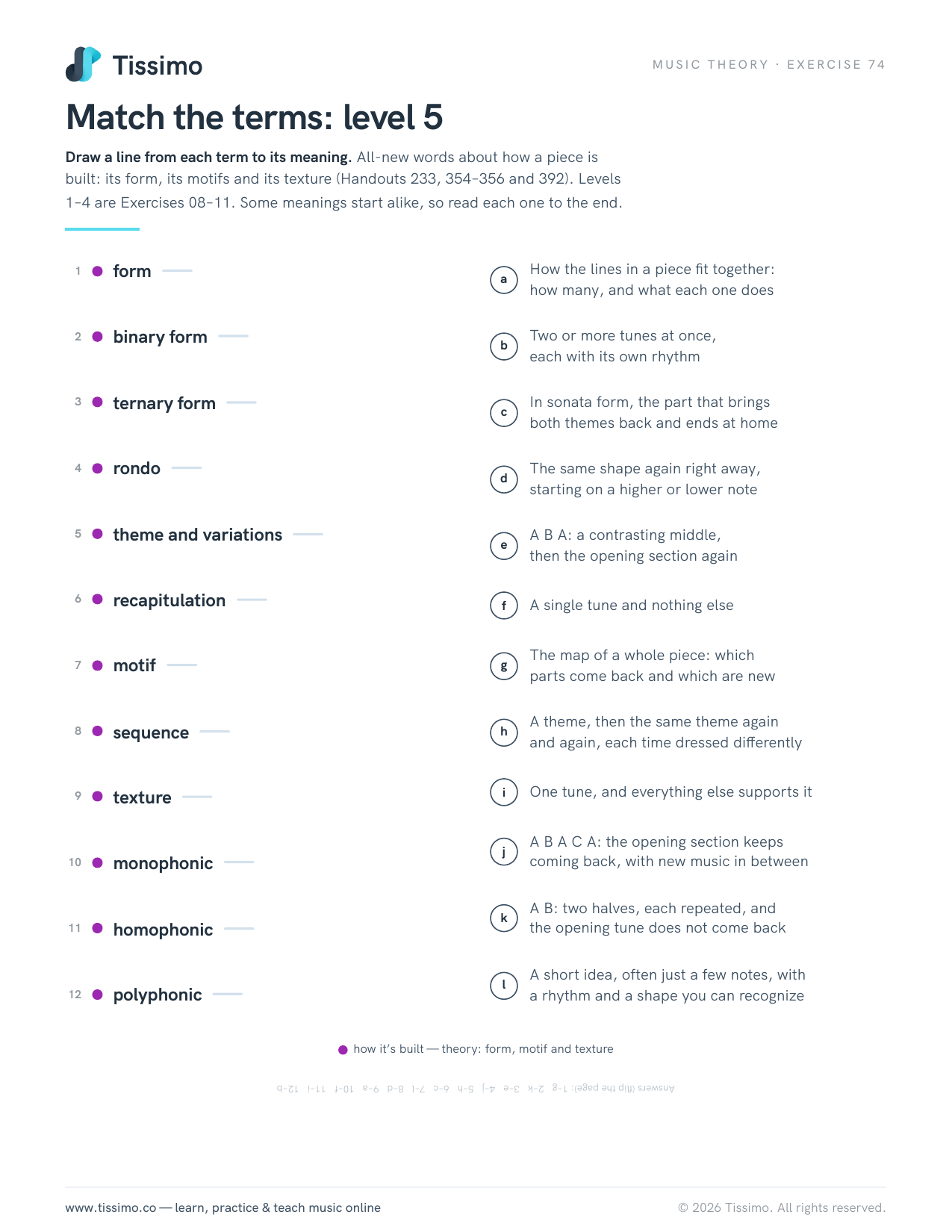 Match the terms: level 5Draw a line from each term to its meaning. All-new words about how a piece is built: its form, its motifs and its texture (Handouts 233, 354–356 and 392). Levels 1–4 are Exercises 08–11. Some meanings start alike, so read each one to the end.