Melody, Texture & Counterpoint
Polyphony
Pronounced puh-LIF-uh-nee
Polyphony is a texture of two or more independent melodies sounding at the same time, each with its own shape and rhythm, which together make harmony.
Polyphony is a texture made of two or more independent melodies sounding at once. Each line has its own shape and its own rhythm and could be sung on its own, yet together they make harmony. The craft of writing such lines is called counterpoint, and polyphonic music is often described as contrapuntal.
What makes lines independent
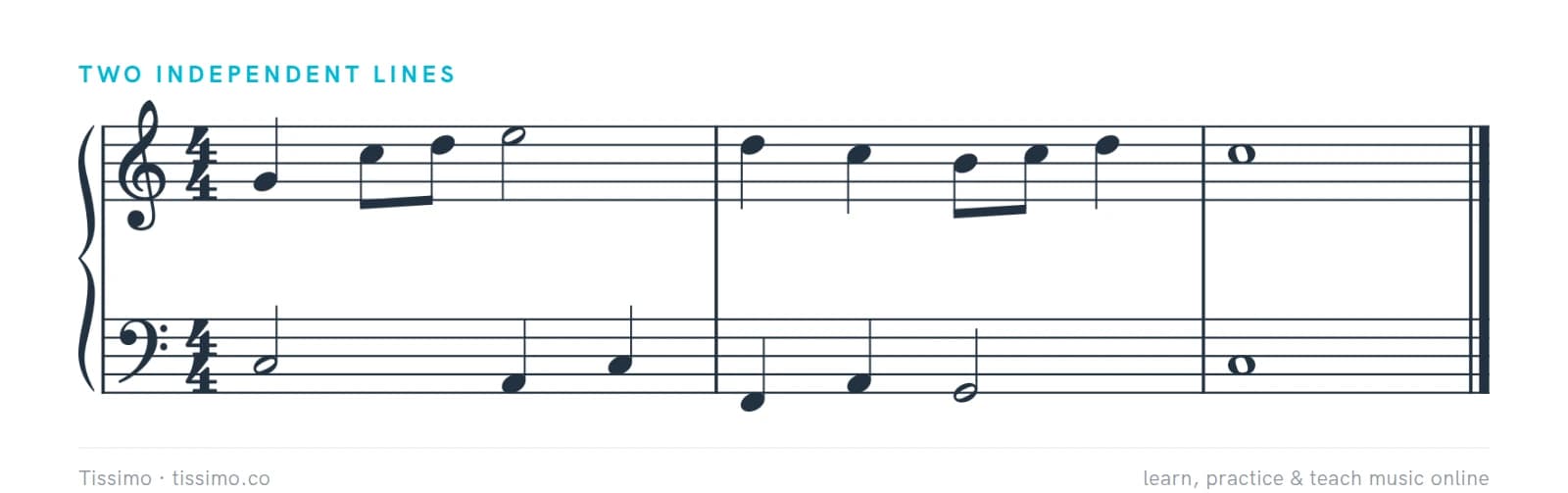
Look at the example. When the upper line holds a long E, the lower line moves; when the lower line holds a long G, the upper line moves. The two lines also move in different directions much of the time (contrary motion). Different rhythms and different contours are what let the ear follow two melodies at once.
Kinds of polyphony
- Imitative: the lines take turns with the same idea, entering one after another. Imitation, the canon and the fugue work this way, as do the points of imitation in Renaissance choral music.
- Non-imitative (free): the lines have different material, as in the example.
Polyphony through history
In medieval Europe, singers began adding new lines to chant; this practice grew into the rich vocal polyphony of the Renaissance, by composers such as Josquin des Prez and Palestrina, and is often said to have reached a high point in the fugues of J. S. Bach. Polyphony is not only a European art: early New Orleans jazz bands improvised several lines at once, and vocal traditions such as Georgian part-singing and the singing of the Aka people of Central Africa are richly polyphonic.
Playing polyphony
At the piano, polyphony asks for independent hands, and often independent fingers within one hand. Practice each line alone until you can sing it, then put them together slowly, listening to both. Shape each line as a melody of its own.
Polyphony on a synthesizer
In electronics, polyphony means how many notes an instrument can sound at once. A monophonic synth plays one note at a time; a polyphonic one can play chords.
Train your ear with Texture, Name the texture and One Melody, Two Entrances.
Common questions
What is the difference between polyphony and counterpoint?
Polyphony names the texture: several independent lines at once. Counterpoint names the craft and the rules of combining such lines. Polyphonic music is written with counterpoint.
What is an example of polyphonic music?
A round such as "Row, Row, Row Your Boat," a Bach fugue, a Renaissance motet, or a New Orleans jazz band improvising several lines at once.
Practice it: free worksheets
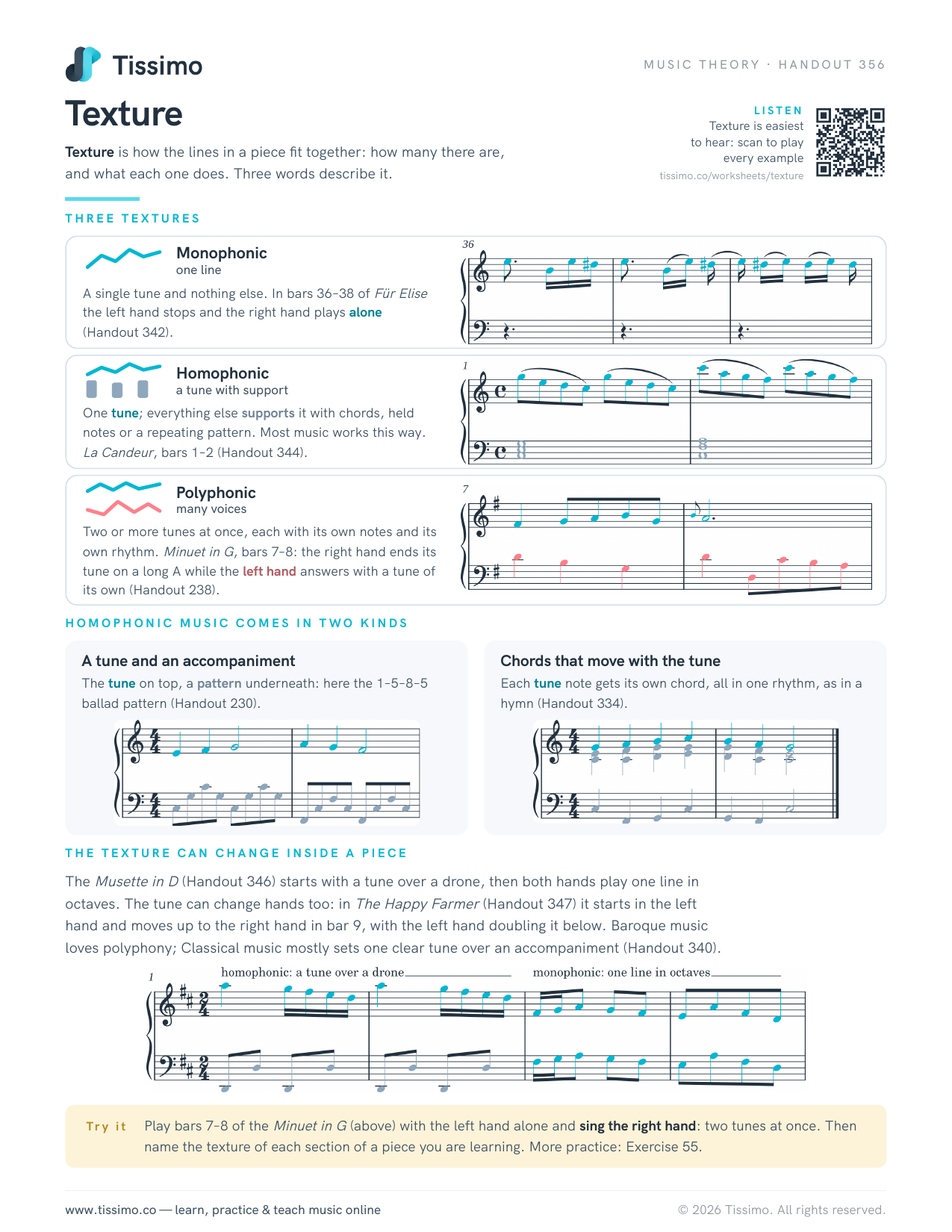 TextureTexture is how the lines in a piece fit together: how many there are, and what each one does. Three words describe it.
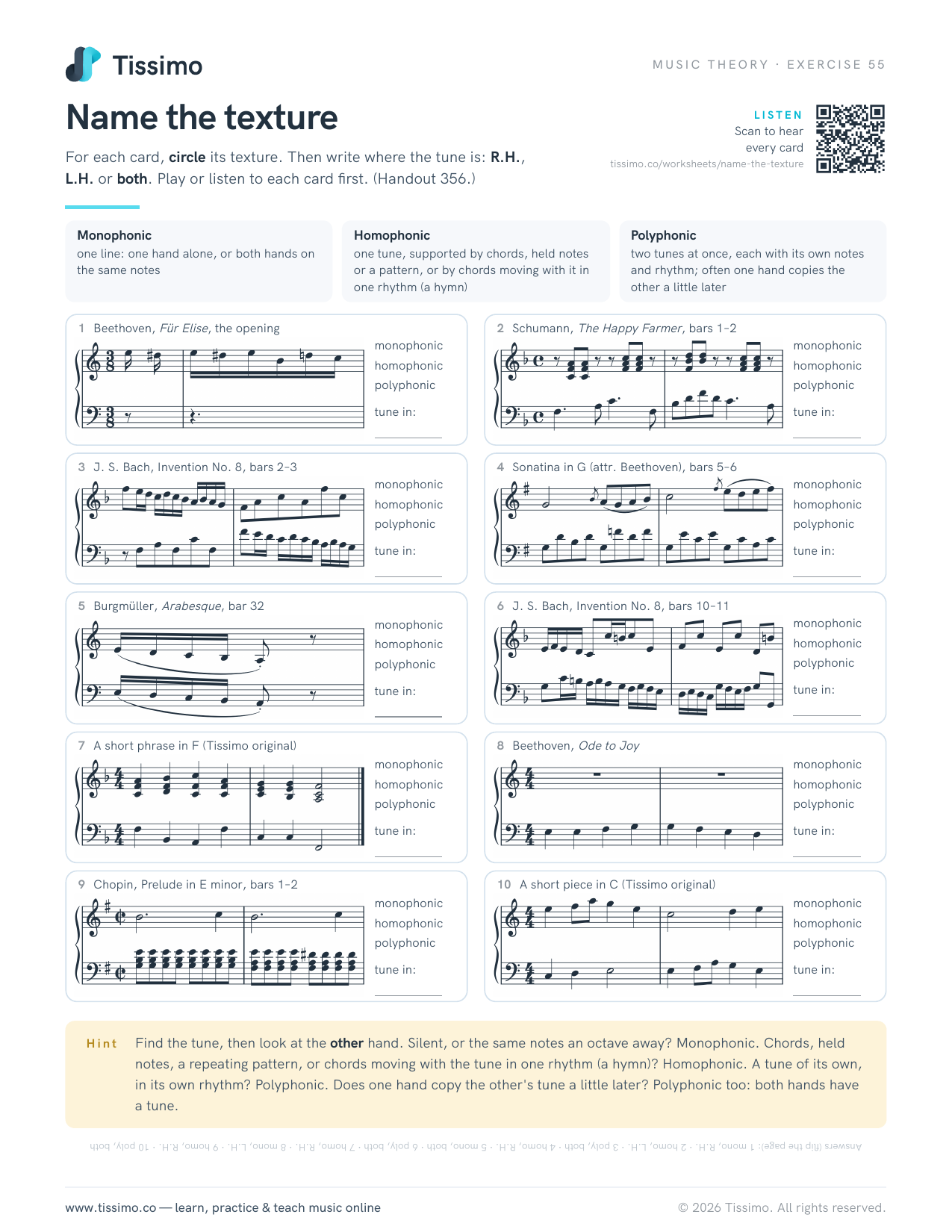 Name the textureFor each card, circle its texture. Then write where the tune is: R.H., L.H. or both. Play or listen to each card first. (Handout 356.)
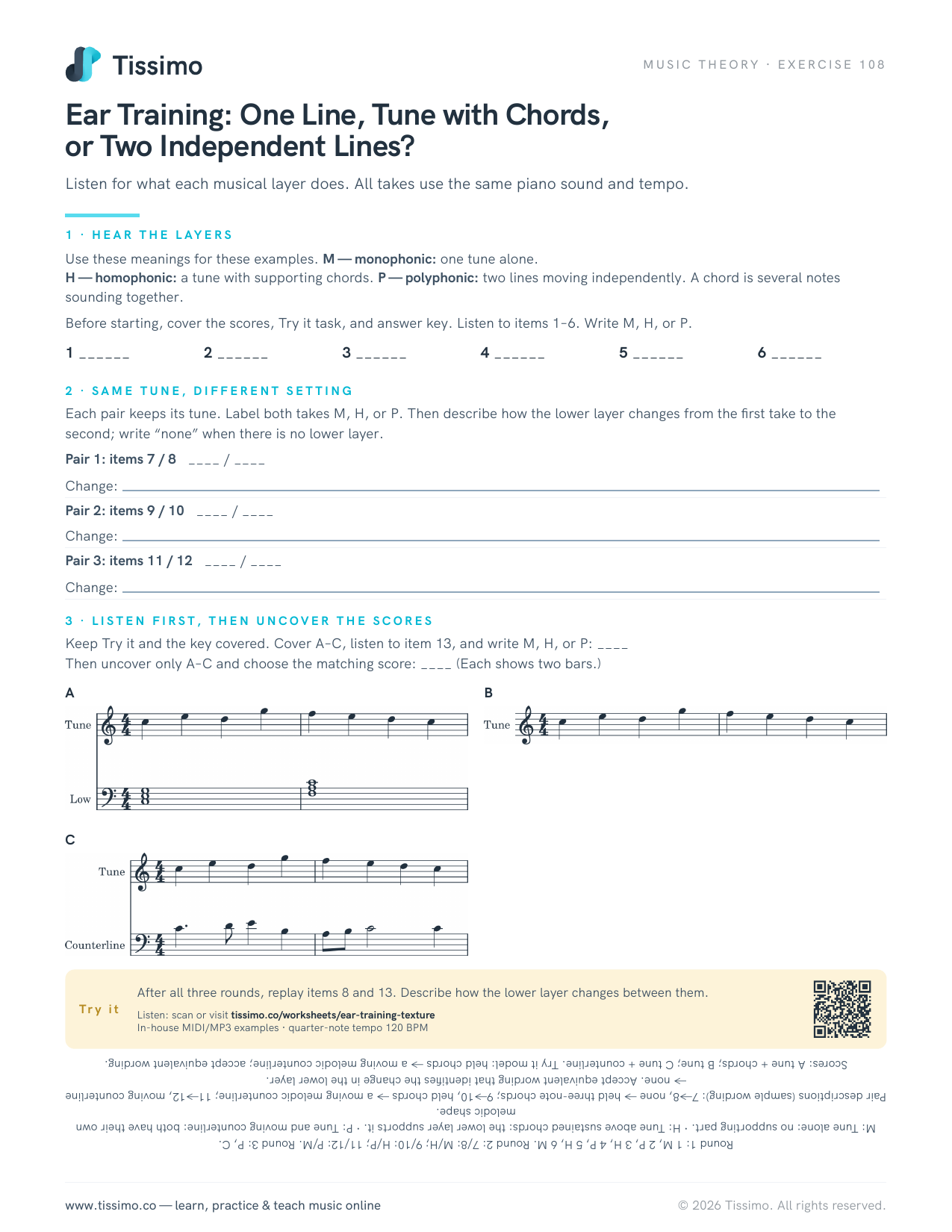 Ear Training: One Line, Tune with Chords, or Two Independent Lines?Listen for what each musical layer does. All takes use the same piano sound and tempo.
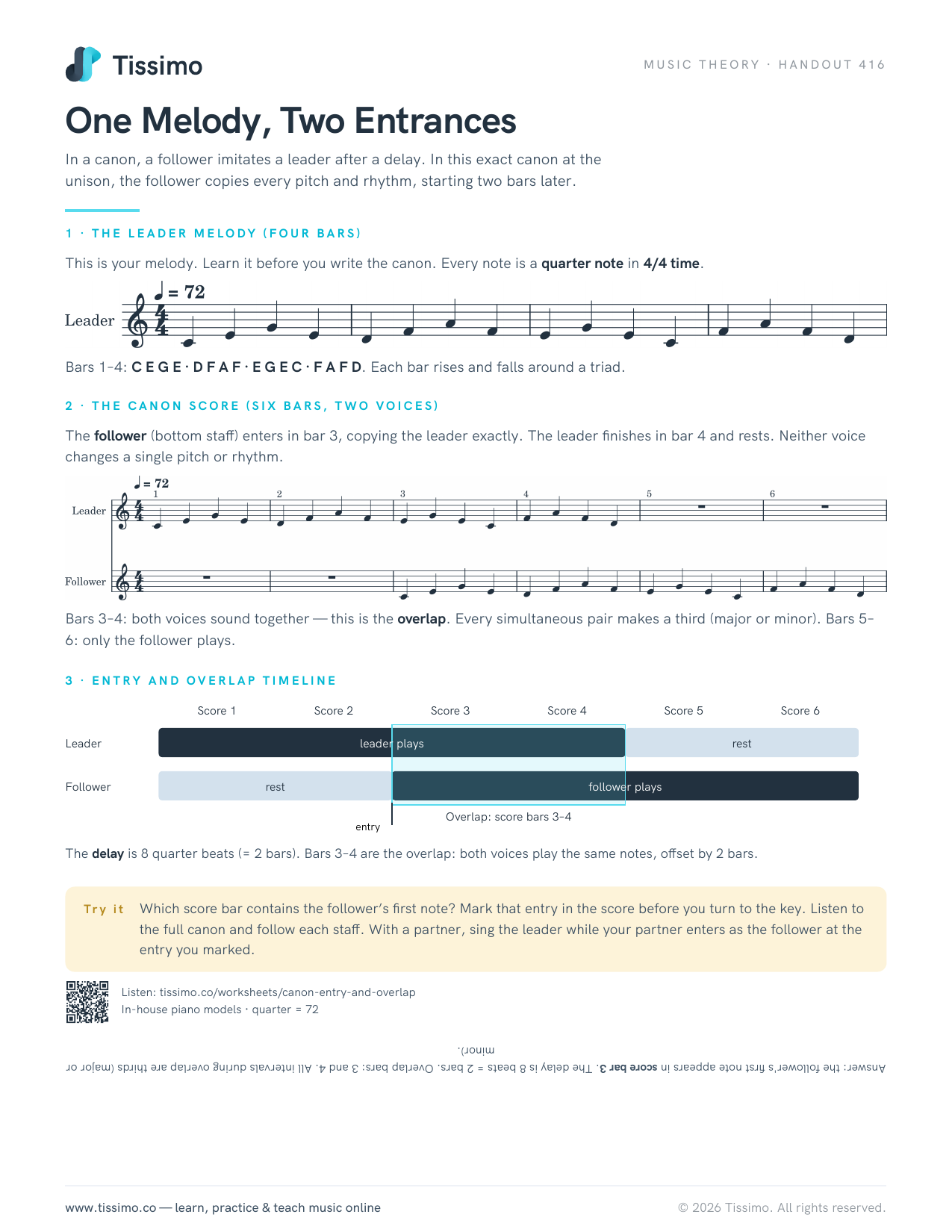 One Melody, Two EntrancesIn a canon, a follower imitates a leader after a delay. In this exact canon at the unison, the follower copies every pitch and rhythm, starting two bars later.
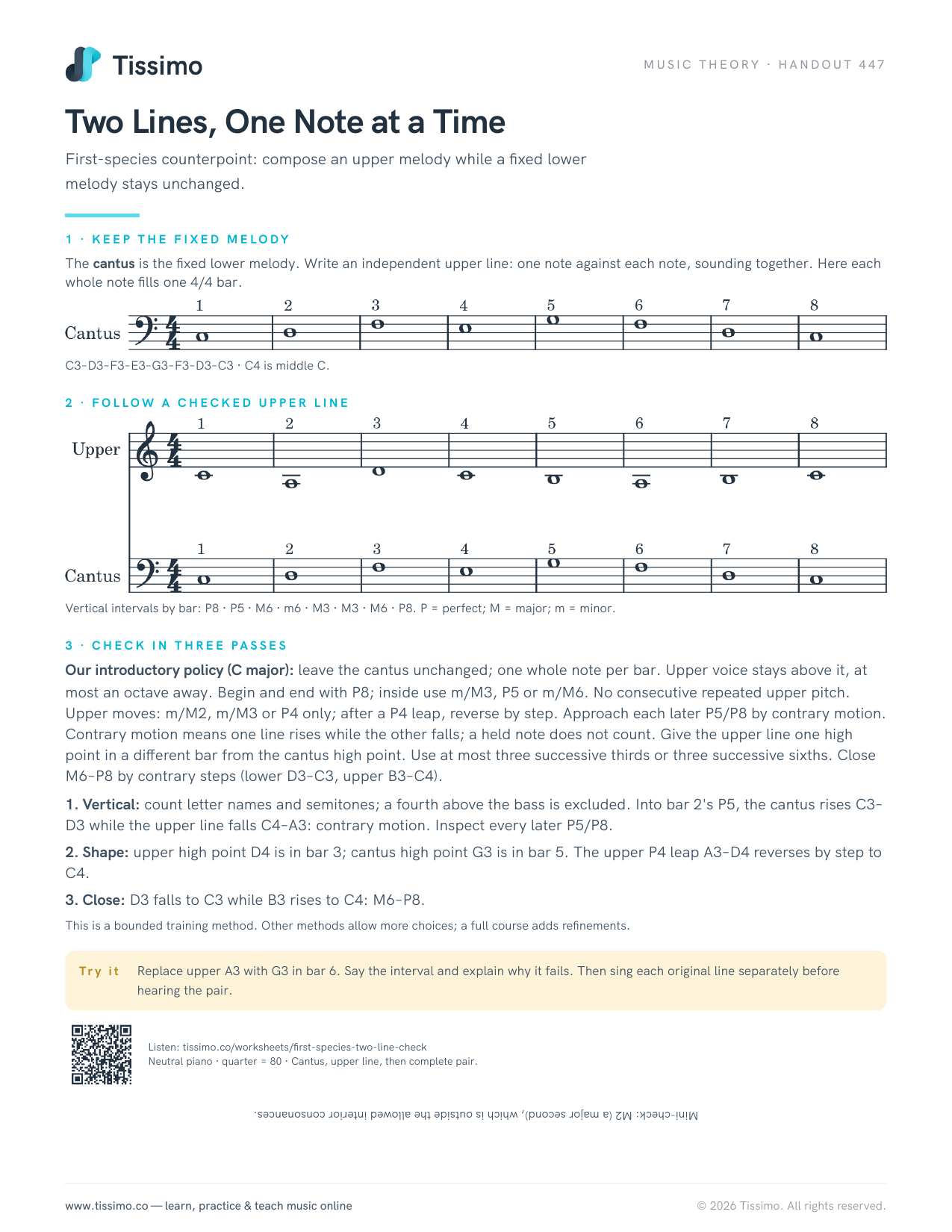 Two Lines, One Note at a TimeFirst-species counterpoint: compose an upper melody while a fixed lower melody stays unchanged.