Melody, Texture & Counterpoint
Conjunct and Disjunct Motion
Conjunct motion is a melody moving by step, to the next note up or down; disjunct motion is a melody moving by leaps larger than a step. Most melodies mix the two.
Melodies move in two basic ways. In conjunct motion they move by step: each note goes to its neighbor in the scale, a half step or a whole step away. In disjunct motion they move by leap: they jump over one or more notes of the scale. Most good melodies mix both, with steps doing most of the work and leaps adding energy and surprise.
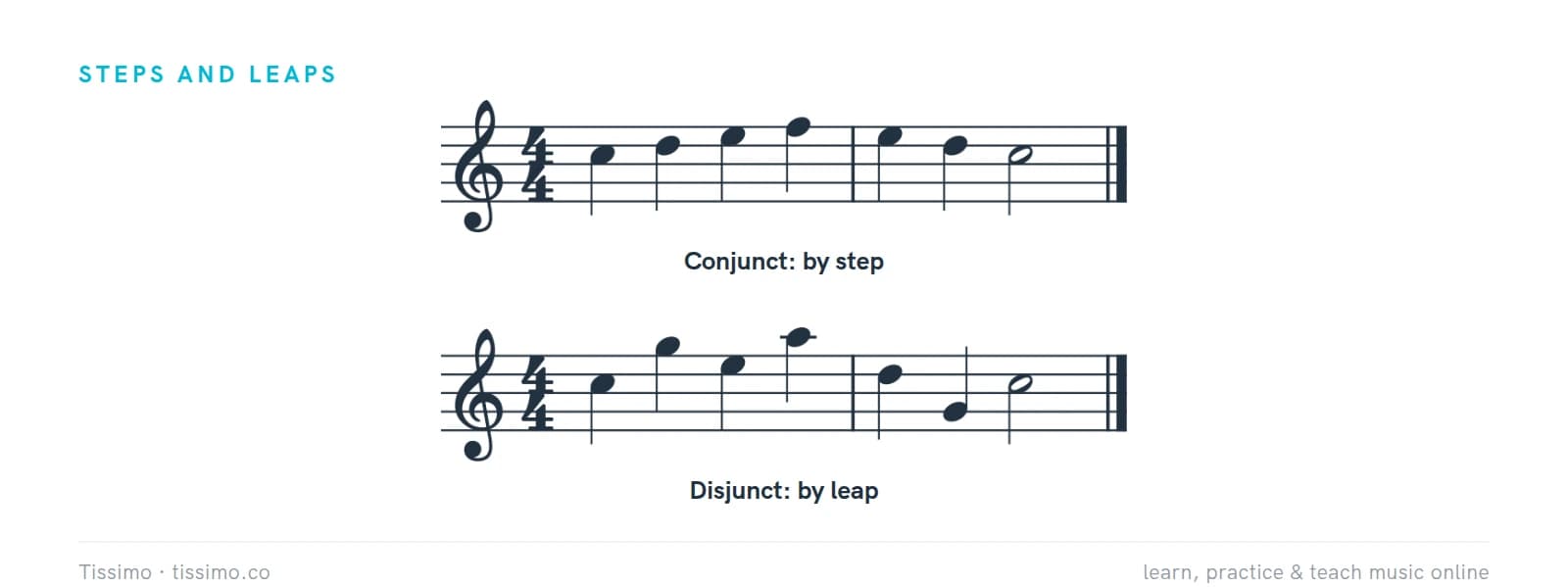
Steps, skips and leaps
On the staff, a step goes from a line to the next space or from a space to the next line. Anything bigger is disjunct. Some teachers split it further: a skip is a third, the smallest jump, and a leap is a fourth or more. Others call every jump a leap. Either way, the interval tells you how far the melody moves.
How they sound
- Conjunct melodies sound smooth, singable and calm. They are easy to sing because the voice moves only a little at a time. Hymns, lullabies and many folk songs move mostly by step.
- Disjunct melodies sound bold, energetic, sometimes angular or playful. Instrumental music, especially, can leap more freely than vocal music.
The leap and its recovery
Melodies often balance a big leap with steps in the opposite direction, filling in the gap the leap left. The disjunct panel is made only of jumps, so it keeps just the change of direction: the leap up from C to G turns back down, by a skip, to E. This "leap, then step back" habit appears in melodies of almost every style, and it is a good rule of thumb when you write your own.
Why it matters for reading and ear training
Recognizing steps and leaps at a glance is the fastest way to sight-read: you read the direction and size of each move instead of naming every note. For ear training, "Did it step or leap?" is the first question to ask. Practice with Intervals: steps & skips and Ear Training: Melodic Dictation.
Common questions
Is a third a step or a leap?
It is not a step: a step is a second (a half step or whole step). Many teachers call a third a skip and keep leap for a fourth or more; others call any jump a leap.
Practice it: free worksheets
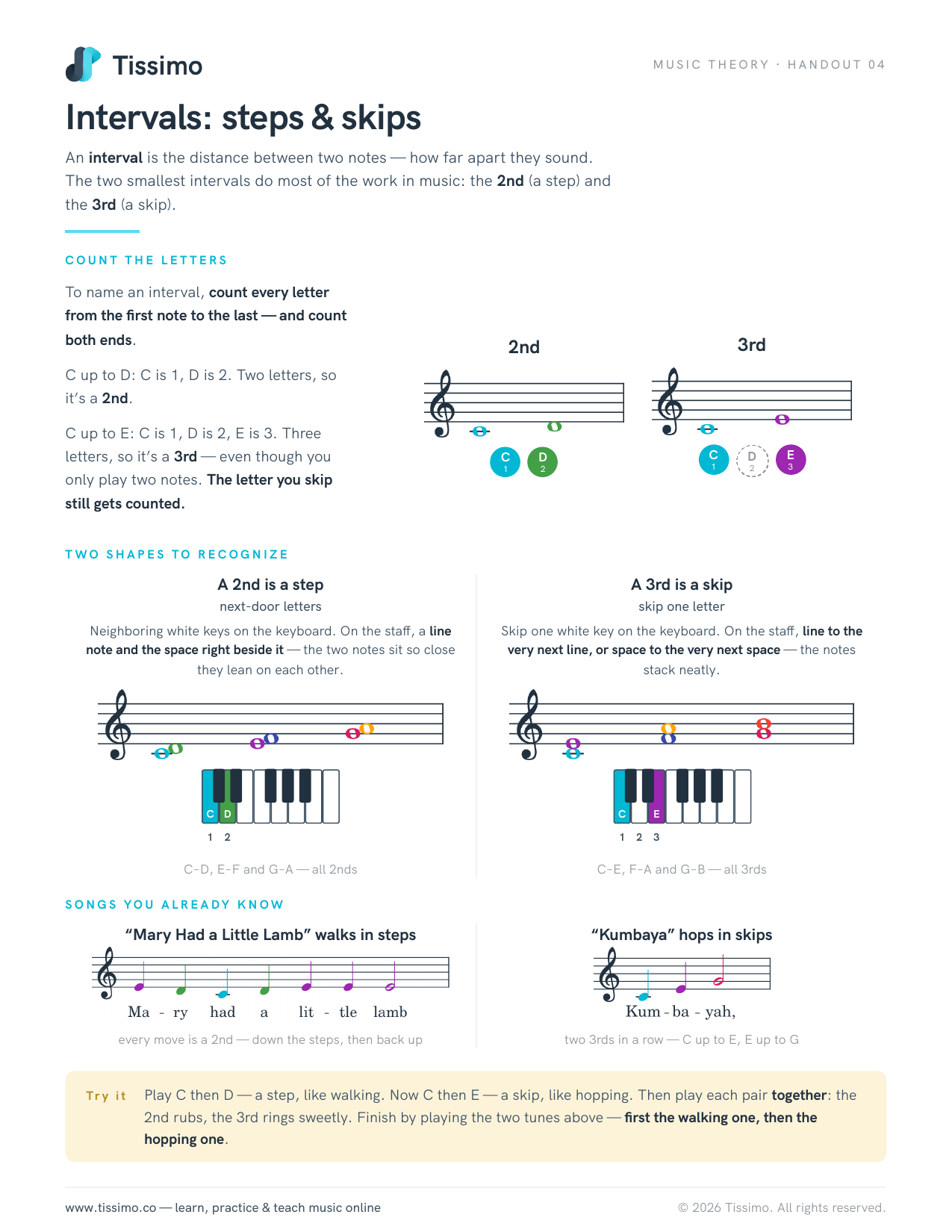 Intervals: steps & skipsAn interval is the distance between two notes — how far apart they sound. Two common melodic movements are the 2nd (a step) and the 3rd (a skip).
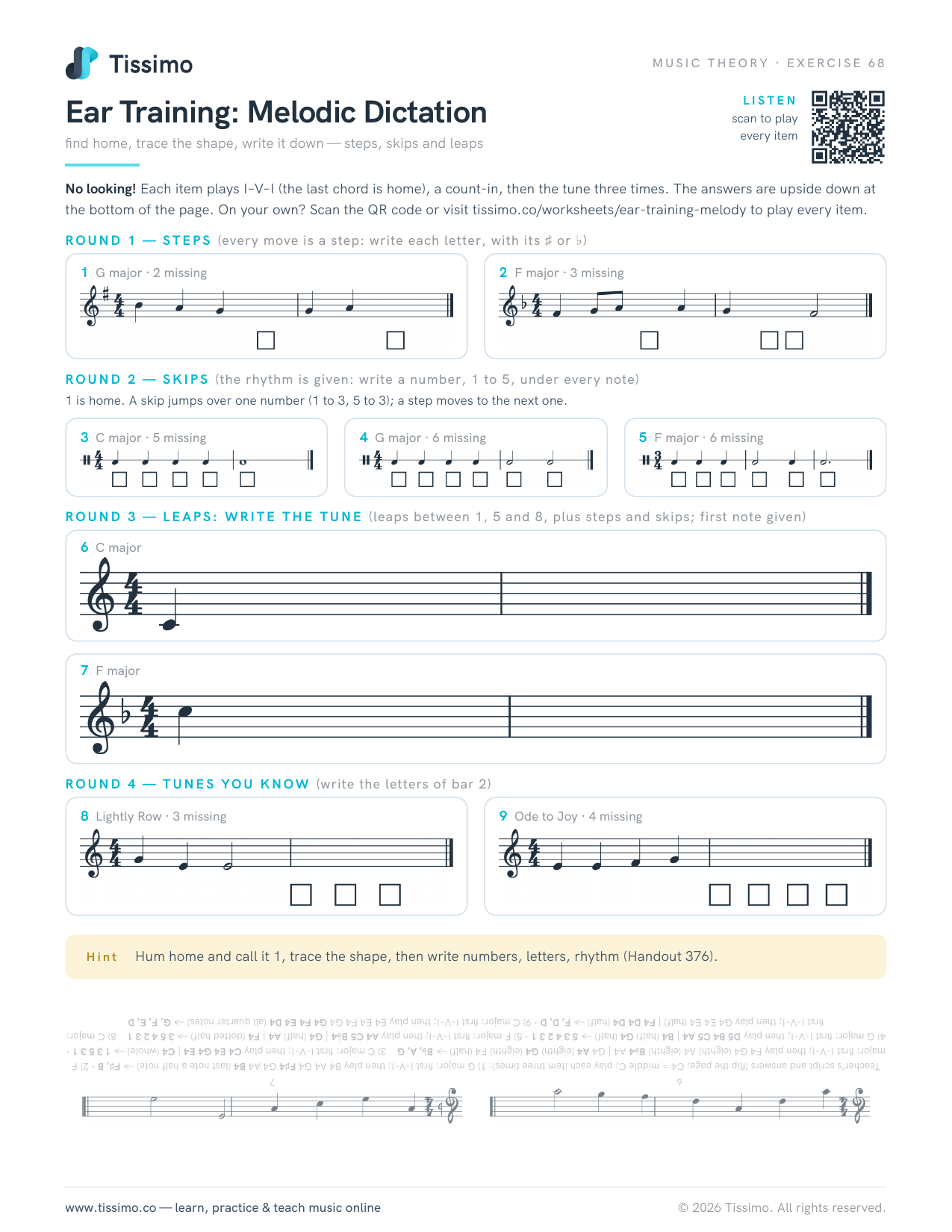 Ear Training: Melodic Dictationfind home, trace the shape, write it down — steps, skips and leaps
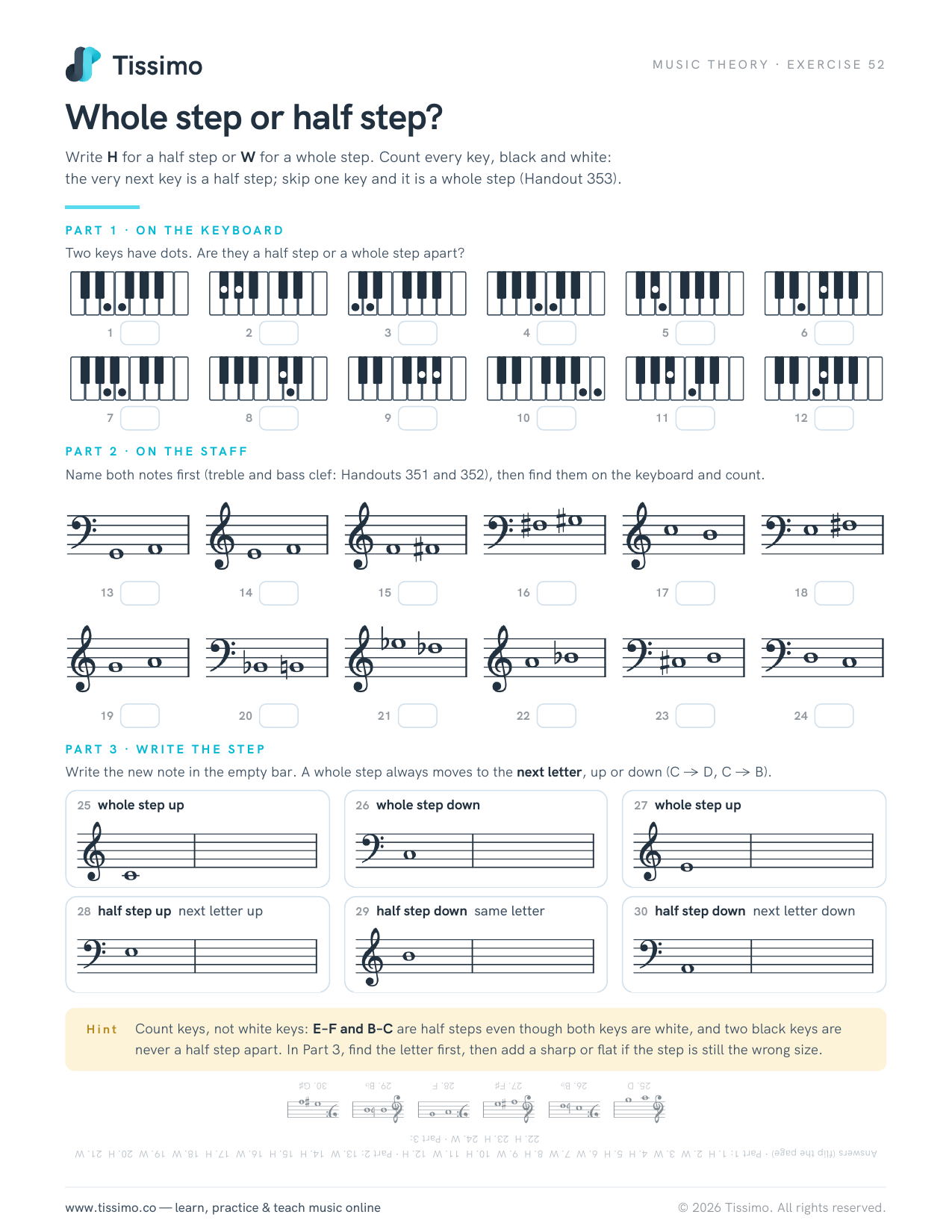 Whole step or half step?Write H for a half step or W for a whole step. Count every key, black and white: the very next key is a half step; skip one key and it is a whole step (Handout 353).
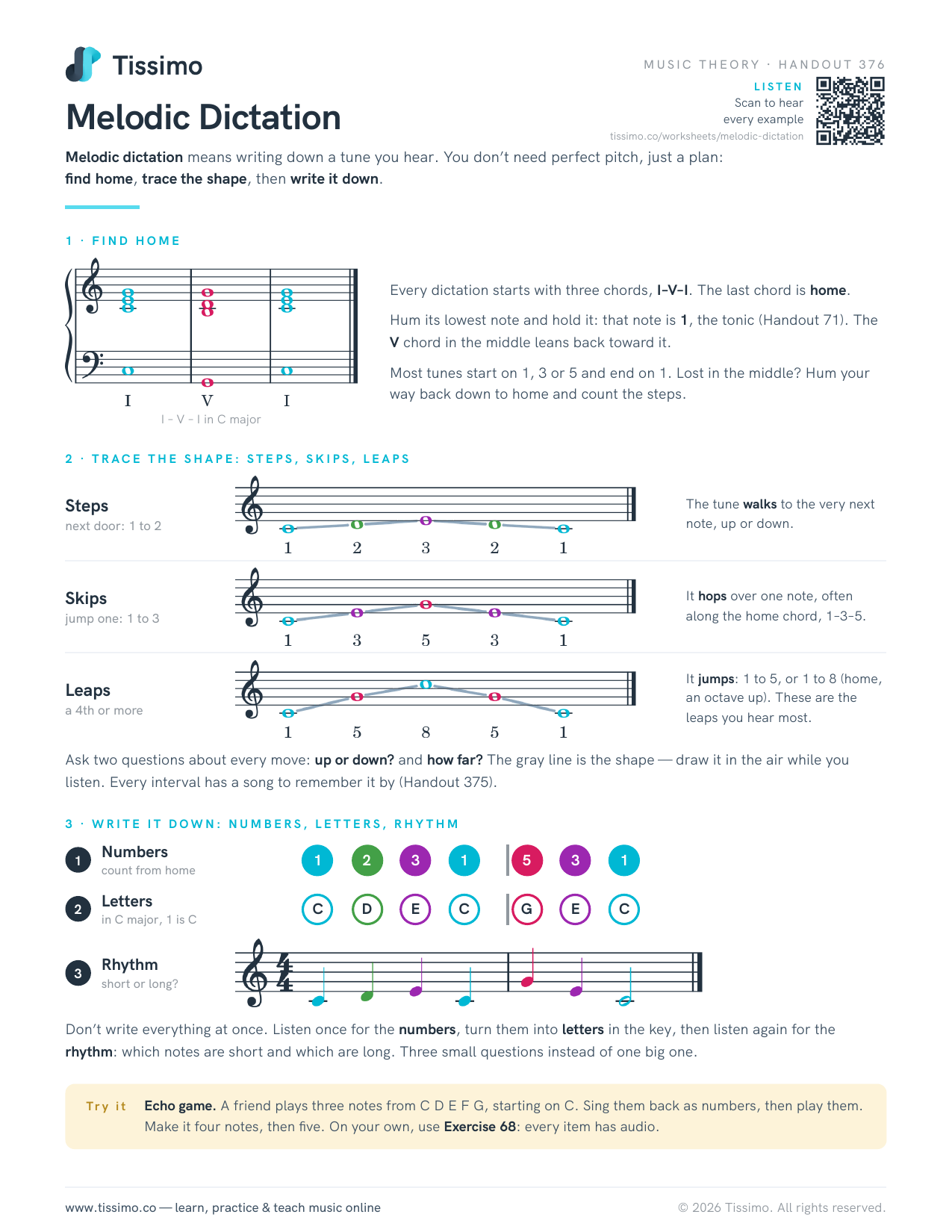 Melodic DictationMelodic dictation means writing down a tune you hear. You don’t need perfect pitch, just a plan: find home, trace the shape, then write it down.