Melody, Texture & Counterpoint
Theme
A theme is a main musical idea of a piece, usually a complete melody or phrase, that the music is built around and returns to, often in changed forms.
A theme is a main musical idea of a piece: usually a complete, recognizable melody, a phrase or a period long, that the rest of the music grows from or returns to. If someone asks "How does that piece go?", the tune you hum is probably its theme.
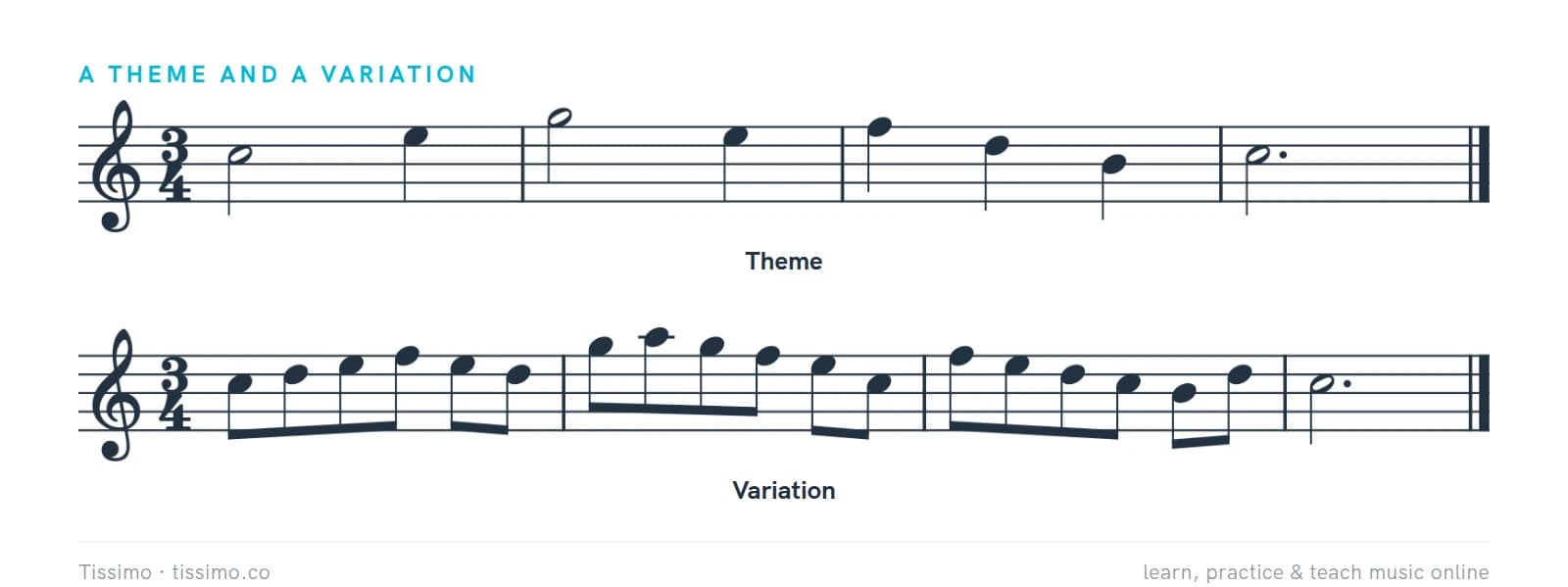
How themes are used
- Theme and variations: the theme is stated plainly, then repeated many times with changes of rhythm, harmony, key, texture or character, as in the example's decorated version. You can still hear the theme because its main notes stay in place.
- Sonata form: the exposition presents a first theme in the home key and a second theme in a new key; the development works with them, and the recapitulation brings them back.
- Fugue: the theme is called the subject, and it enters in one voice after another.
- Opera and film: a short theme tied to a character or idea, a leitmotif, comes back whenever that character appears.
Theme, motif and melody
The three words overlap. A motif is a small cell of a few notes; a theme is a larger, complete idea, usually built from motifs. Most themes are melodies, but not every melody is a theme: a theme is a melody that plays a structural role, coming back and being worked on.
Hearing a theme
When you listen to a longer piece, try to memorize its opening theme in the first minute. Then listen for its return: in the same key, in a new key, decorated, in the bass, or broken into pieces. Following the theme is the easiest way to follow the form. The Sonata Detective exercise traces two themes through a model sonata form plan.
Common questions
What is the difference between a theme and a motif?
A motif is a short idea of a few notes. A theme is a complete melodic idea, usually at least a phrase long, that acts as a main subject of a piece.
Practice it: free worksheets
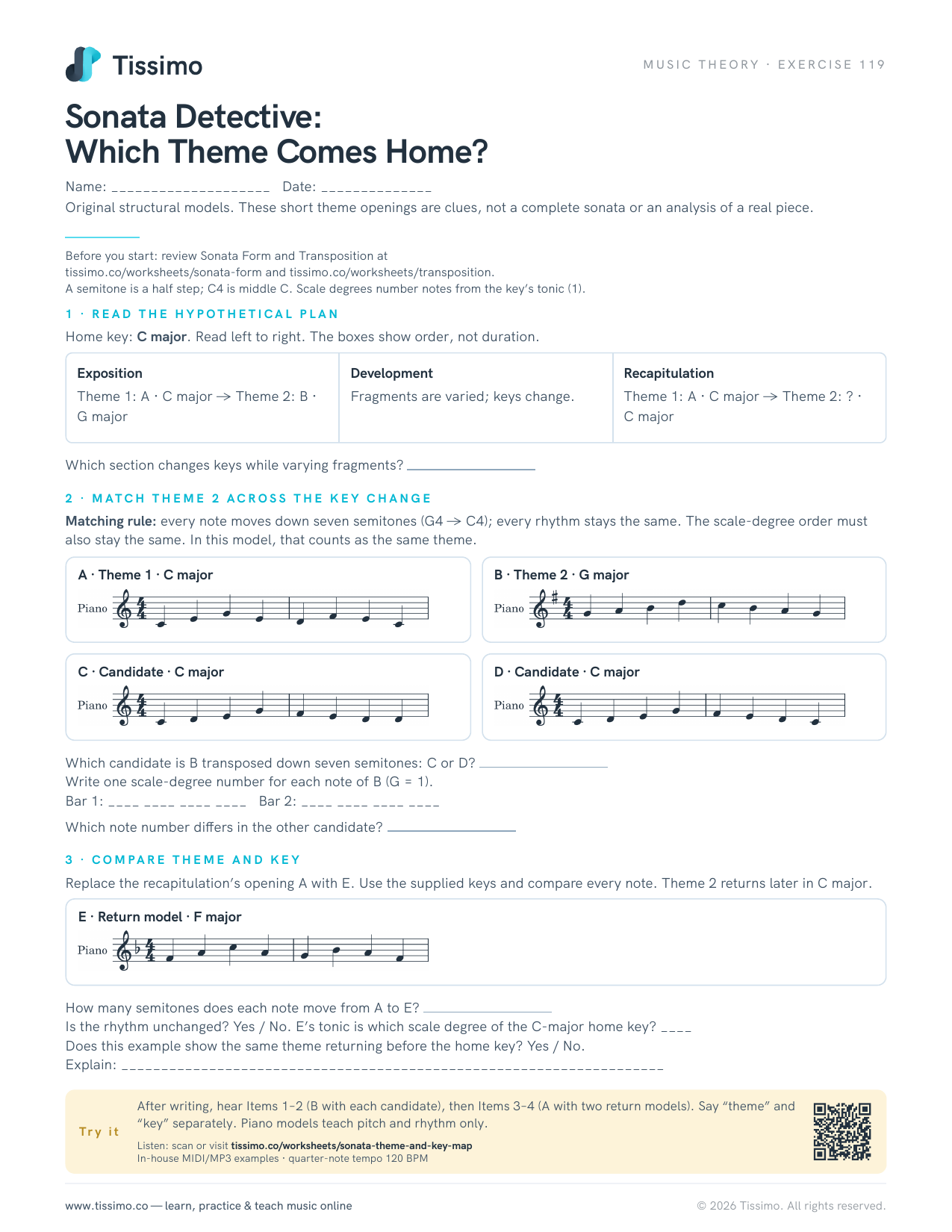 Sonata Detective: Which Theme Comes Home?Name: ____________________ Date: ______________ Original structural models. These short theme openings are clues, not a complete sonata or an analysis of a real piece.
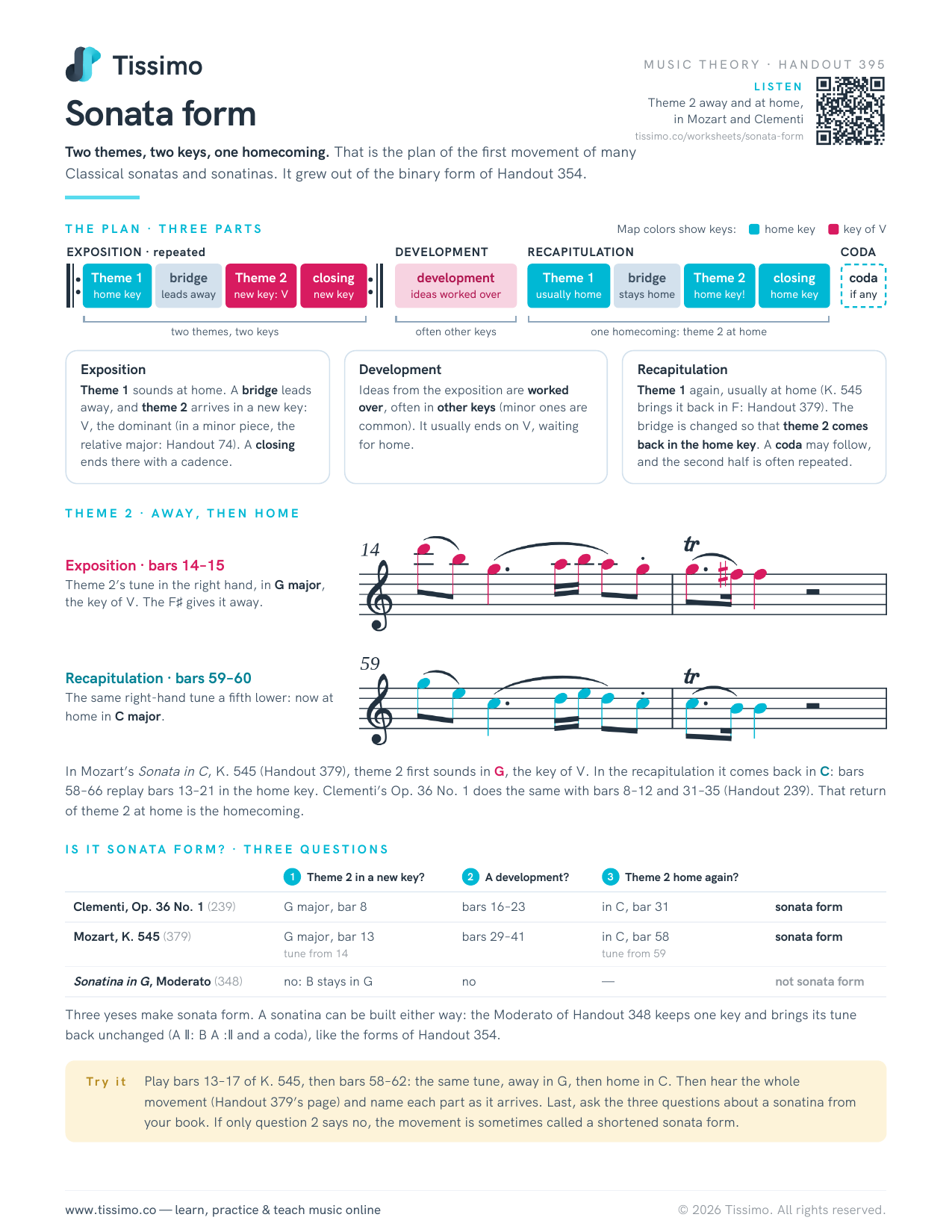 Sonata formTwo themes, two keys, one homecoming. That is the plan of the first movement of many Classical sonatas and sonatinas. It grew out of the binary form of Handout 354.
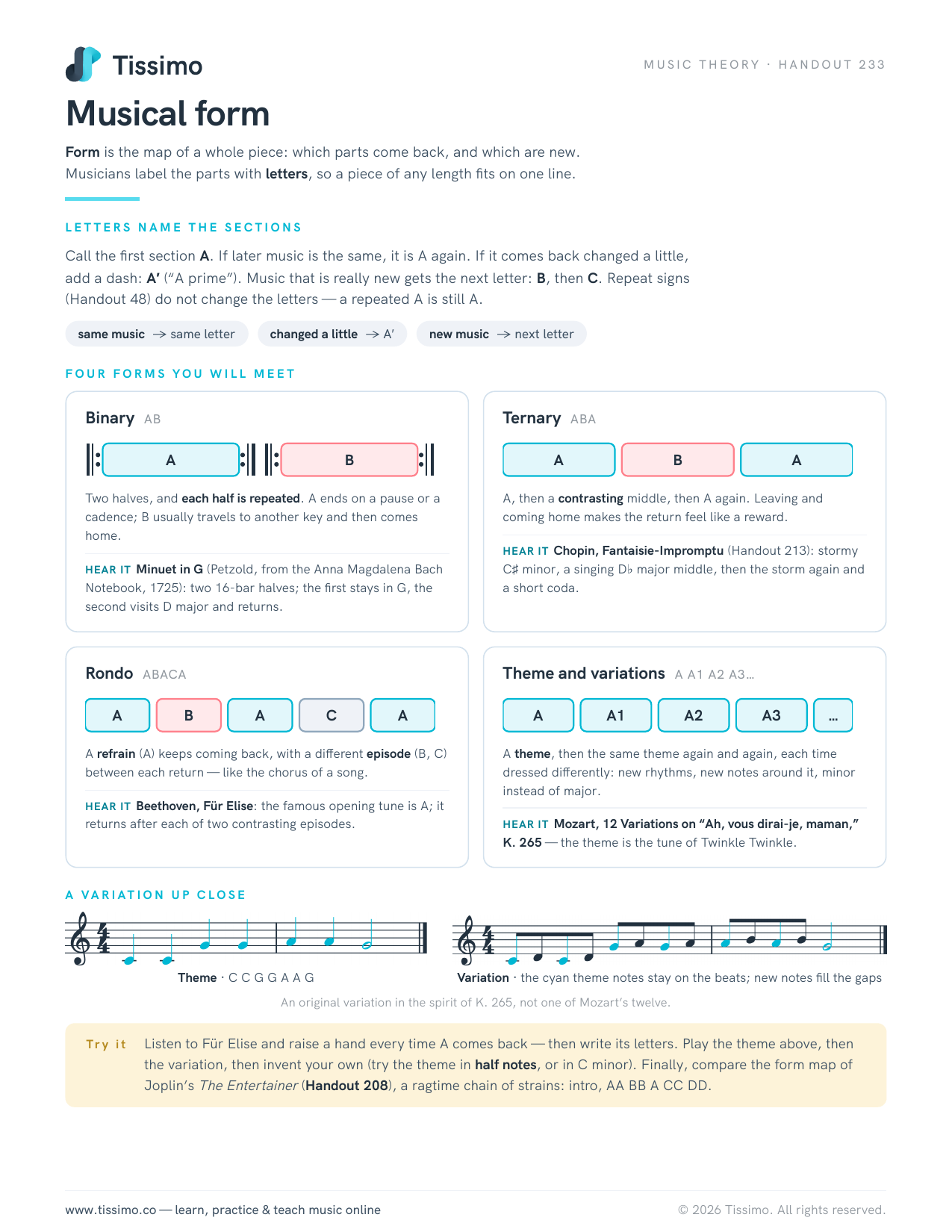 Musical formForm is the map of a whole piece: which parts come back, and which are new. Musicians label the parts with letters, so a piece of any length fits on one line.
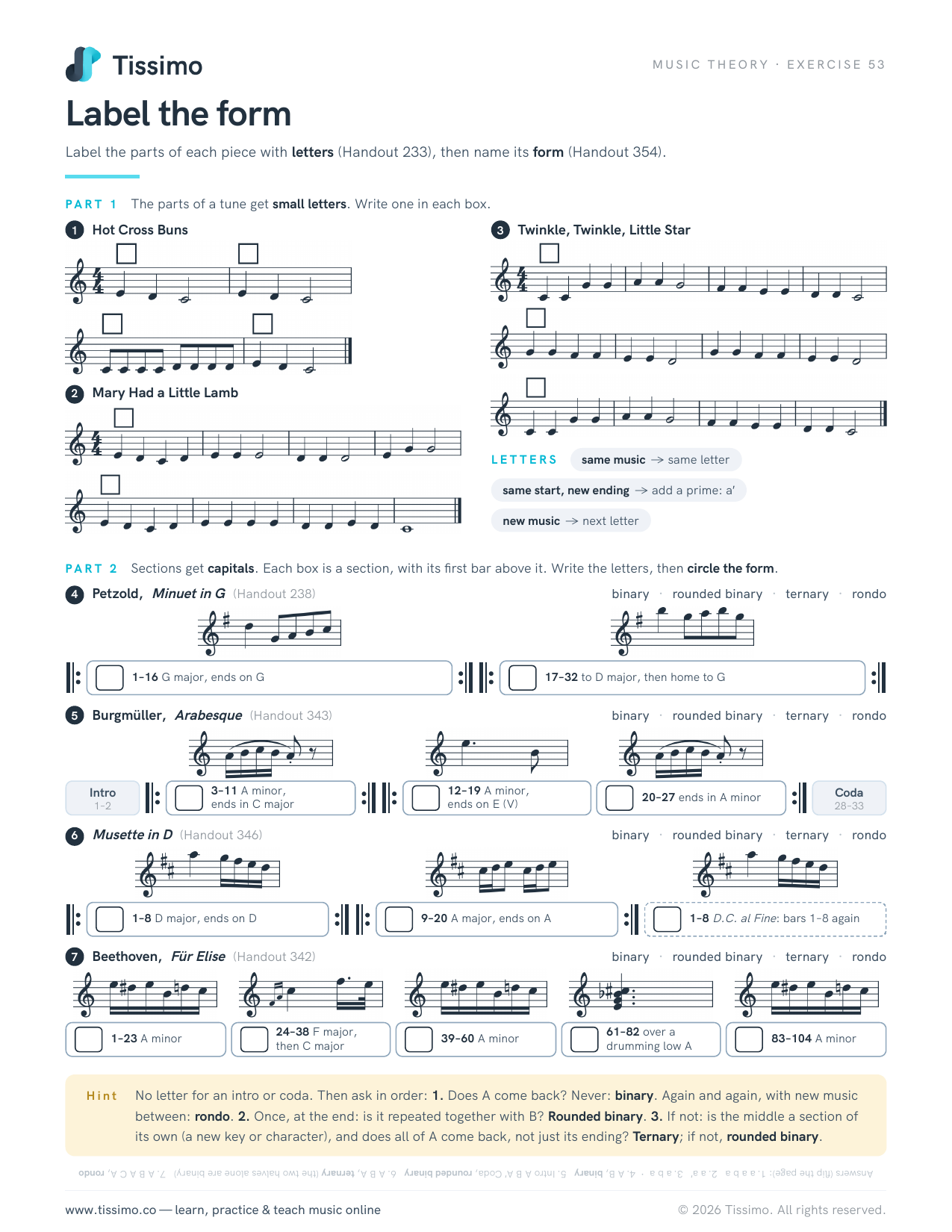 Label the formLabel the parts of each piece with letters (Handout 233), then name its form (Handout 354).