Form & Structure
Exposition
The exposition is the first main section of a sonata-form movement, where the main themes are presented: the first in the home key, the second in a contrasting key. In a fugue, the exposition is the opening entries of the subject.
The exposition is where a sonata form movement presents its material. Think of it as the opening act: you meet the main themes, and the music moves from the home key to a second key, setting up the tension the rest of the movement will resolve.
What happens in a sonata-form exposition
- First theme (or first theme group) in the home key (tonic). It is often bold and clearly rhythmic, but there is no rule about character.
- Transition, also called the bridge: energetic passagework that modulates to the new key, often stopping on the new key's dominant.
- Second theme (or second theme group) in the new key. In a major-key movement this is usually the dominant; in a minor-key movement it is usually the relative major. The second theme often contrasts in character, for example more lyrical, but the change of key is the essential point.
- Closing section (or codetta): one or more cadences that confirm the new key and round off the exposition.
In Classical sonatas and symphonies the exposition is usually marked with a repeat sign, so you play it twice. Whether to take that repeat is a performance choice that musicians still debate, especially in long Romantic movements.
How to spot it in a score
- Look for the first repeat sign: in many Classical movements it marks the end of the exposition.
- Find where new sharps, flats or naturals settle in: that is the second key arriving. In a C major movement, a steady stream of F♯s tells you the music has moved to G major.
- Listen for the strong cadence in the new key just before the repeat.
In Clementi's Sonatina in C, Op. 36 No. 1, the exposition is only 15 bars long and the second theme arrives in G major at bar 8. The Clementi Sonatina and Sonata form worksheets mark each part.
Exposition in a fugue
The word has a second meaning. In a fugue, the exposition is the opening section in which each voice enters in turn with the subject (or its answer in the dominant). Once every voice has entered, the exposition is over and the fugue continues with episodes and further entries.
In a concerto
Classical concertos often have a double exposition: the orchestra plays through the main themes first, usually staying in the home key, and then the soloist enters with a second exposition that makes the move to the new key.
Common questions
What happens in the exposition of sonata form?
The first theme is stated in the home key, a transition modulates, the second theme appears in a new key (usually the dominant, or the relative major in a minor key), and closing material confirms that key. The exposition is often repeated.
Why is the exposition repeated?
In Classical style the repeat gives listeners a second hearing of the themes before the development transforms them. It continues the tradition of binary form, in which both halves were repeated.
Practice it: free worksheets
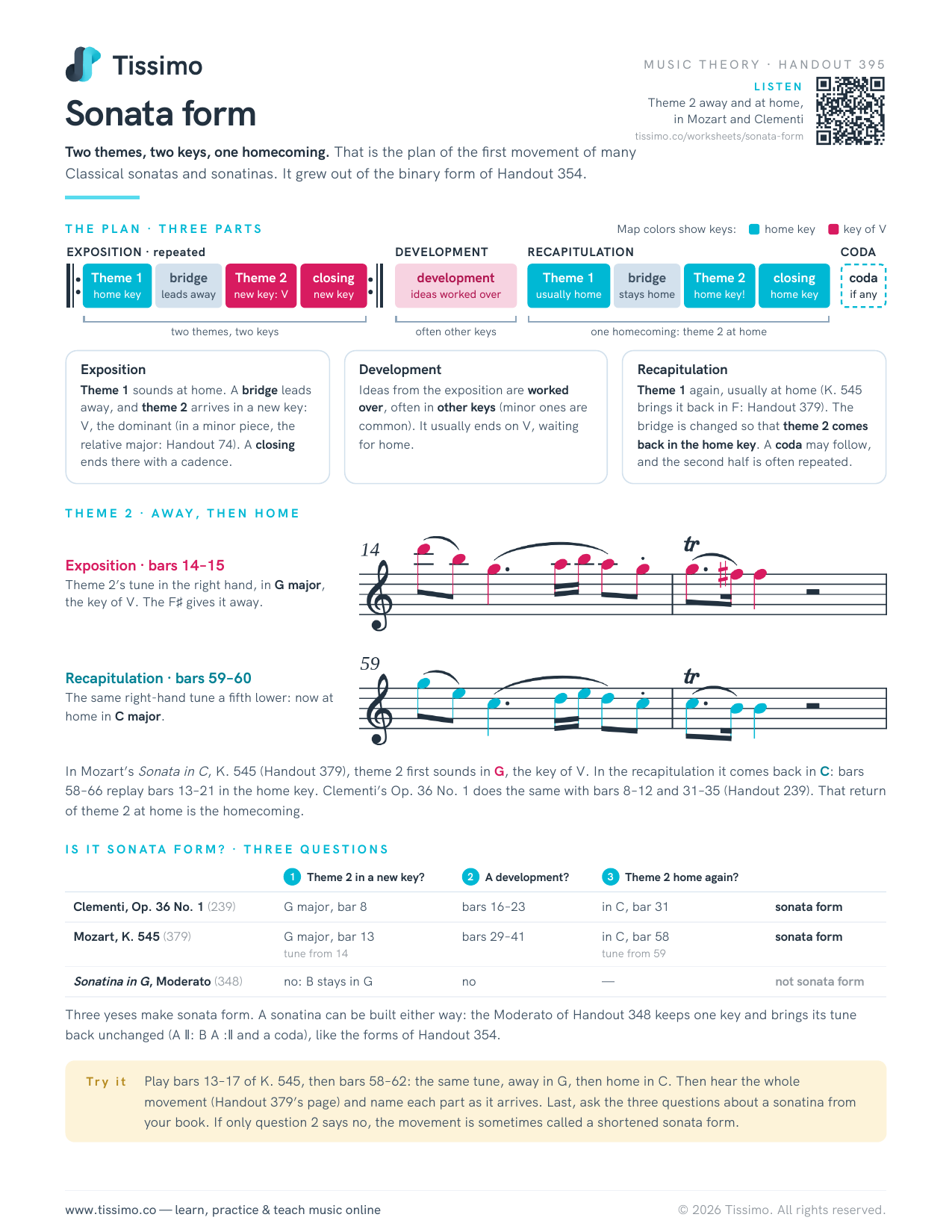 Sonata formTwo themes, two keys, one homecoming. That is the plan of the first movement of many Classical sonatas and sonatinas. It grew out of the binary form of Handout 354.
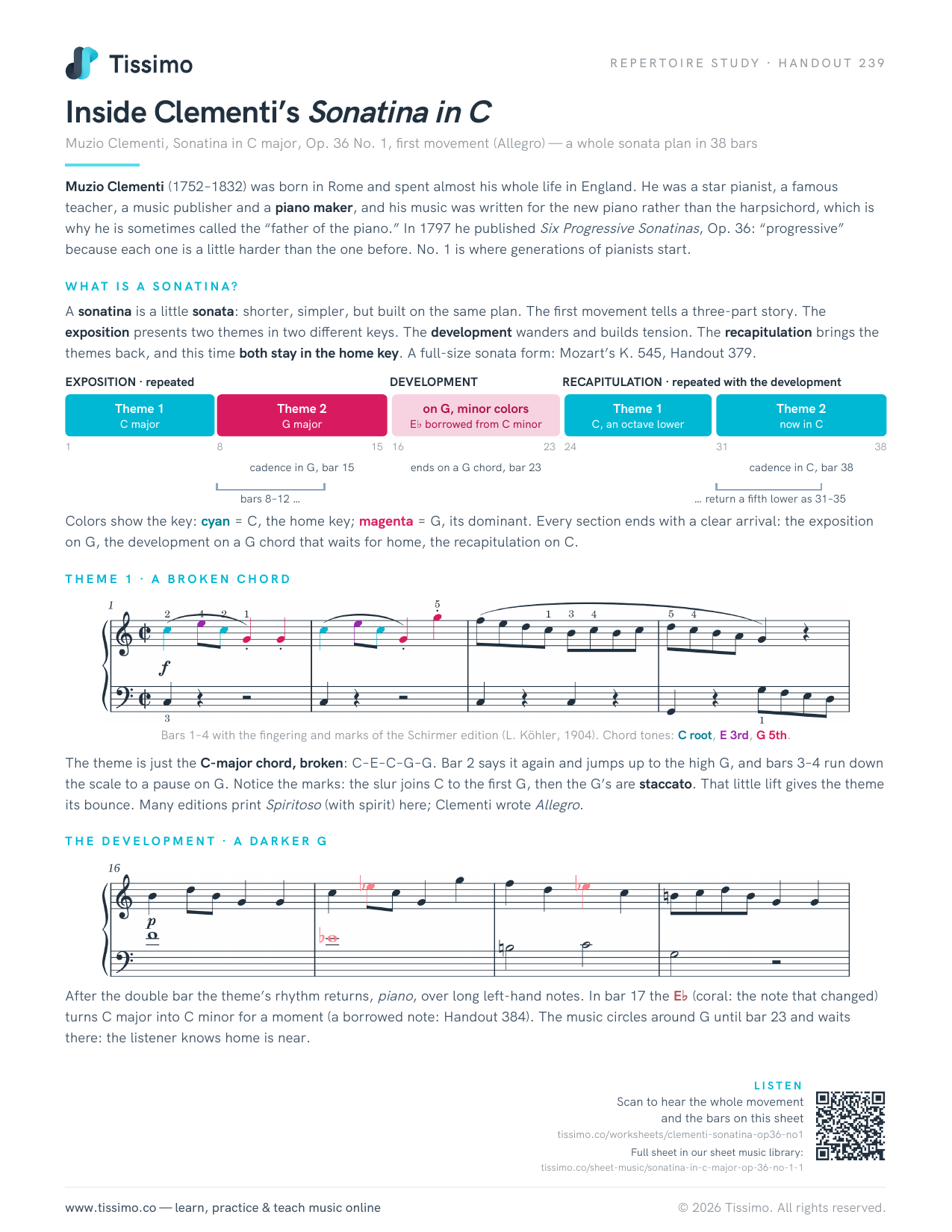 Inside Clementi’s Sonatina in CMuzio Clementi, Sonatina in C major, Op. 36 No. 1, first movement (Allegro) — a whole sonata plan in 38 bars
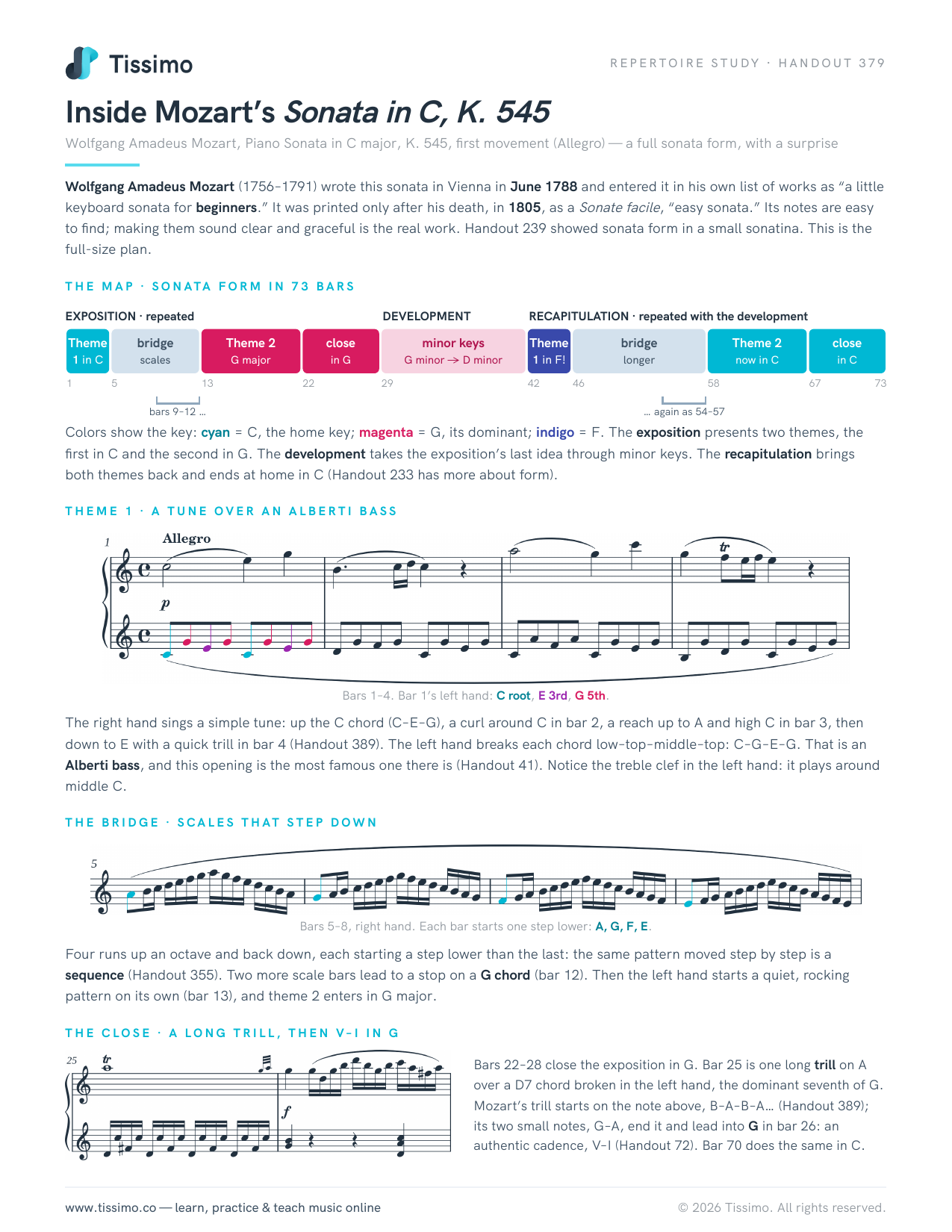 Inside Mozart’s Sonata in C, K. 545Wolfgang Amadeus Mozart, Piano Sonata in C major, K. 545, first movement (Allegro) — a full sonata form, with a surprise