Form & Structure
Rondo Form
Pronounced RON-doh
Rondo form is a musical form in which a main theme, the refrain (A), keeps returning in the home key, with contrasting sections called episodes in between: ABACA or ABACABA.
In a rondo, one tune keeps coming back. The main theme, called the refrain (A), opens the piece in the home key. Between its returns come contrasting episodes (B, C…), each with new material, often in a new key. The effect is a bit like the chorus of a song: however far the episodes wander, the refrain brings you home.
The word comes from the French rondeau, the name of a refrain form in French poetry and music.
Common outlines
- Five-part rondo: A – B – A – C – A
- Seven-part rondo: A – B – A – C – A – B – A
- Sonata-rondo: A – B – A – C – A – B – A, where the first B is in a new key, the C section works like a development, and the final B returns in the home key, as in a recapitulation.
Composers often shorten or decorate the refrain on its later returns, add short linking passages (transitions) that lead back to it, and finish with a coda.
How to recognize a rondo
- The refrain returns at least twice after the opening, usually in the home key.
- The episodes contrast with the refrain and with each other (C is not just B again), except in the seven-part plan, where B comes back near the end.
- The refrain is usually the most memorable, tuneful part of the piece.
If the opening returns only once, the piece is more likely ternary (ABA). If it never returns, look at binary form.
Where you will find it
- Classical finales. Many last movements of sonatas, concertos and symphonies by Haydn, Mozart and Beethoven are rondos or sonata-rondos. A cheerful, quick refrain makes a good ending.
- Beethoven's Für Elise is a compact five-part rondo: the famous opening tune is the refrain, and it comes back after each of two contrasting episodes. The Für Elise study maps it bar by bar.
- French Baroque harpsichord music, where pieces titled rondeau alternate a refrain with sections called couplets.
Common questions
What is the pattern of a rondo?
The basic pattern is ABACA: a refrain (A) that returns between contrasting episodes (B, C). Longer rondos follow ABACABA, and the sonata-rondo combines that plan with features of sonata form.
Is Für Elise a rondo?
Yes. Beethoven's Für Elise is usually analyzed as a five-part rondo, A B A C A: its famous opening theme returns after each of two contrasting episodes.
Practice it: free worksheets
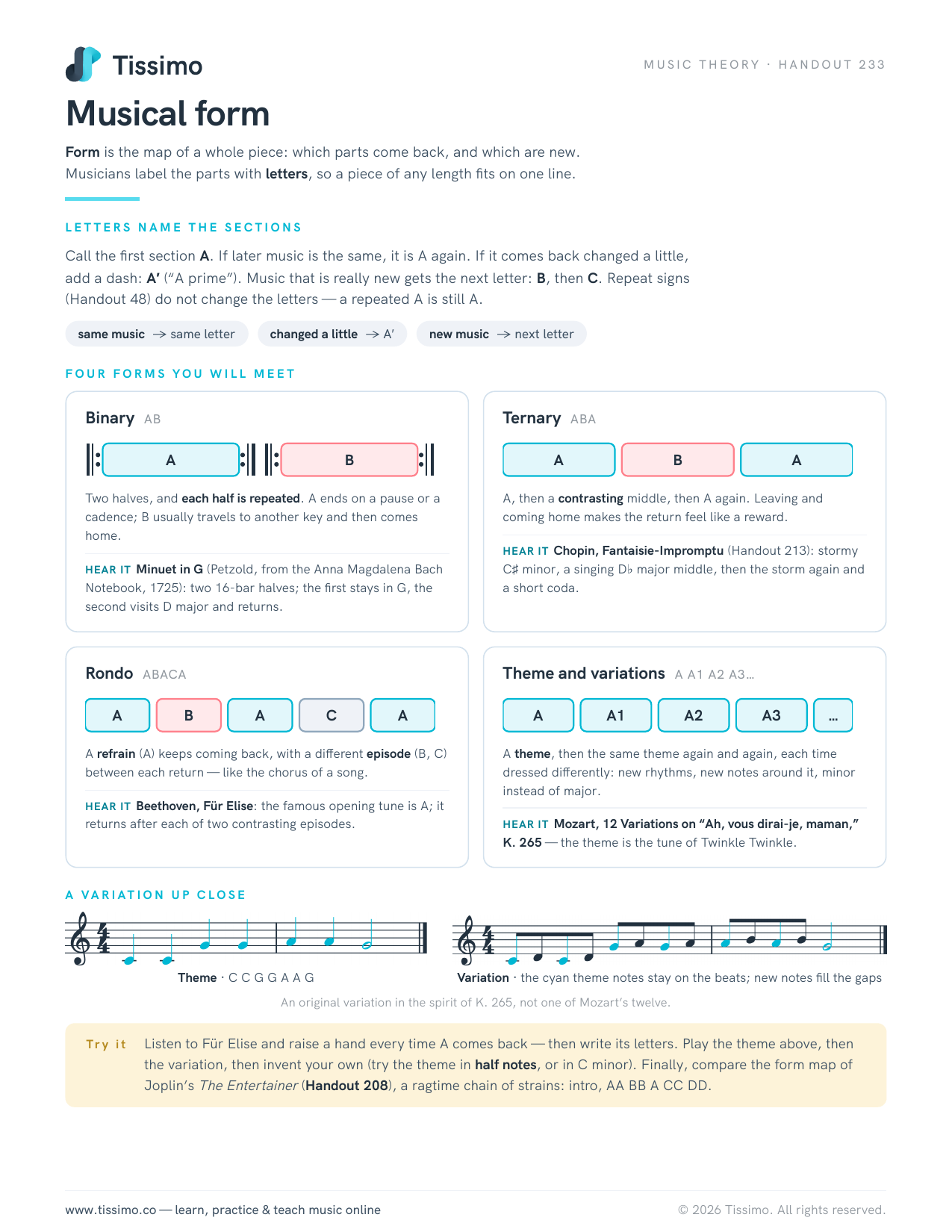 Musical formForm is the map of a whole piece: which parts come back, and which are new. Musicians label the parts with letters, so a piece of any length fits on one line.
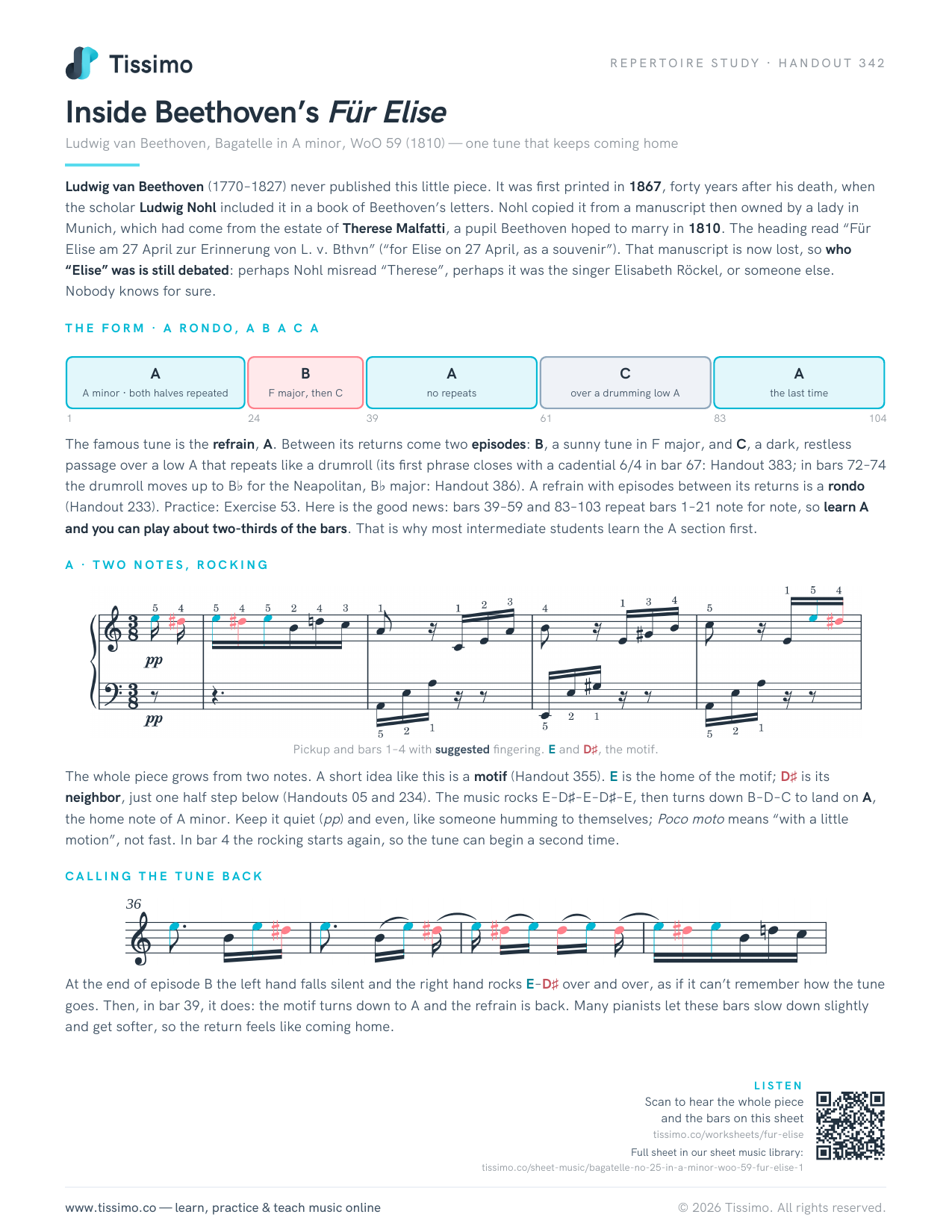 Inside Beethoven’s Für EliseLudwig van Beethoven, Bagatelle in A minor, WoO 59 (1810) — one tune that keeps coming home
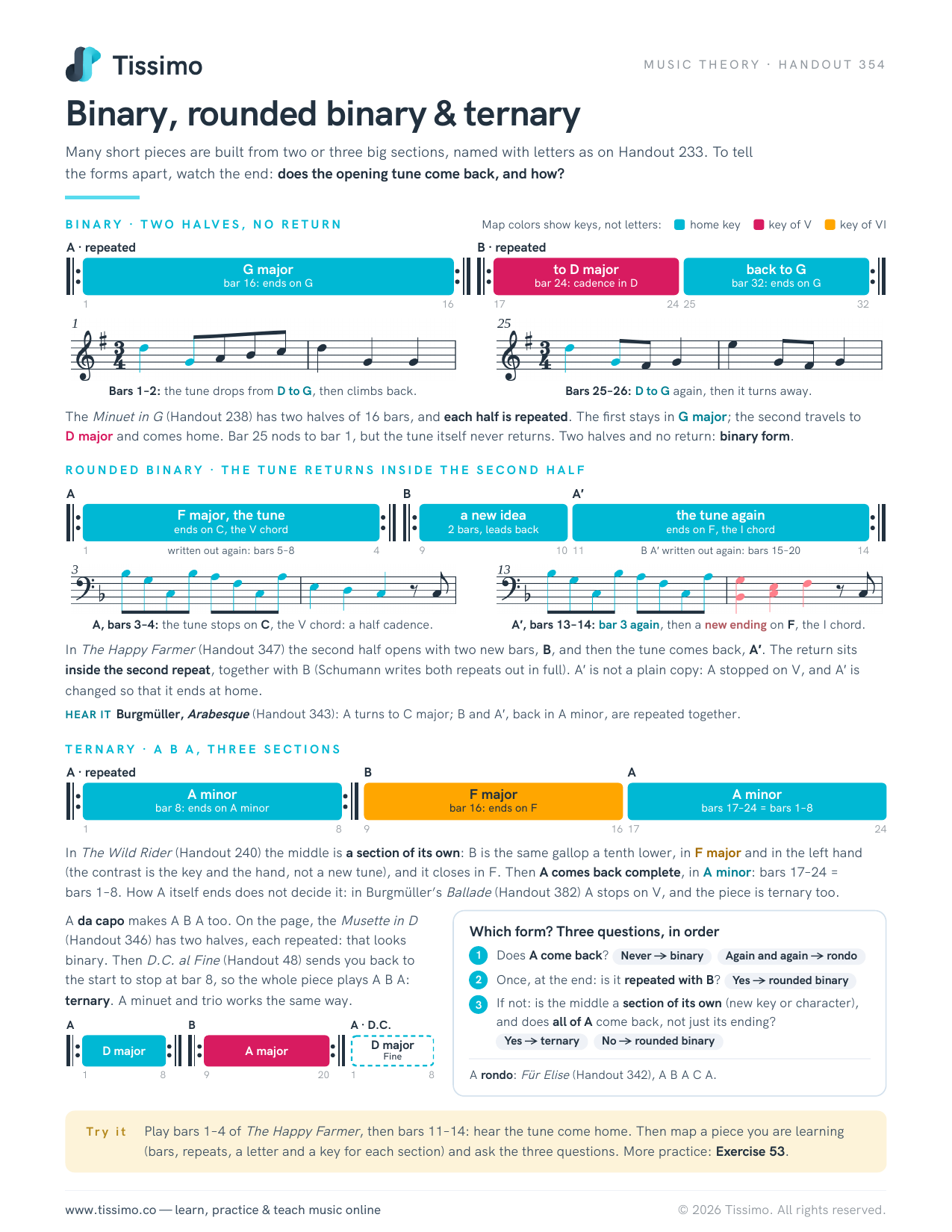 Binary, rounded binary & ternaryMany short pieces are built from two or three big sections, named with letters as on Handout 233. To tell the forms apart, watch the end: does the opening tune come back, and how?