Scales, Keys & Modes
Tonic
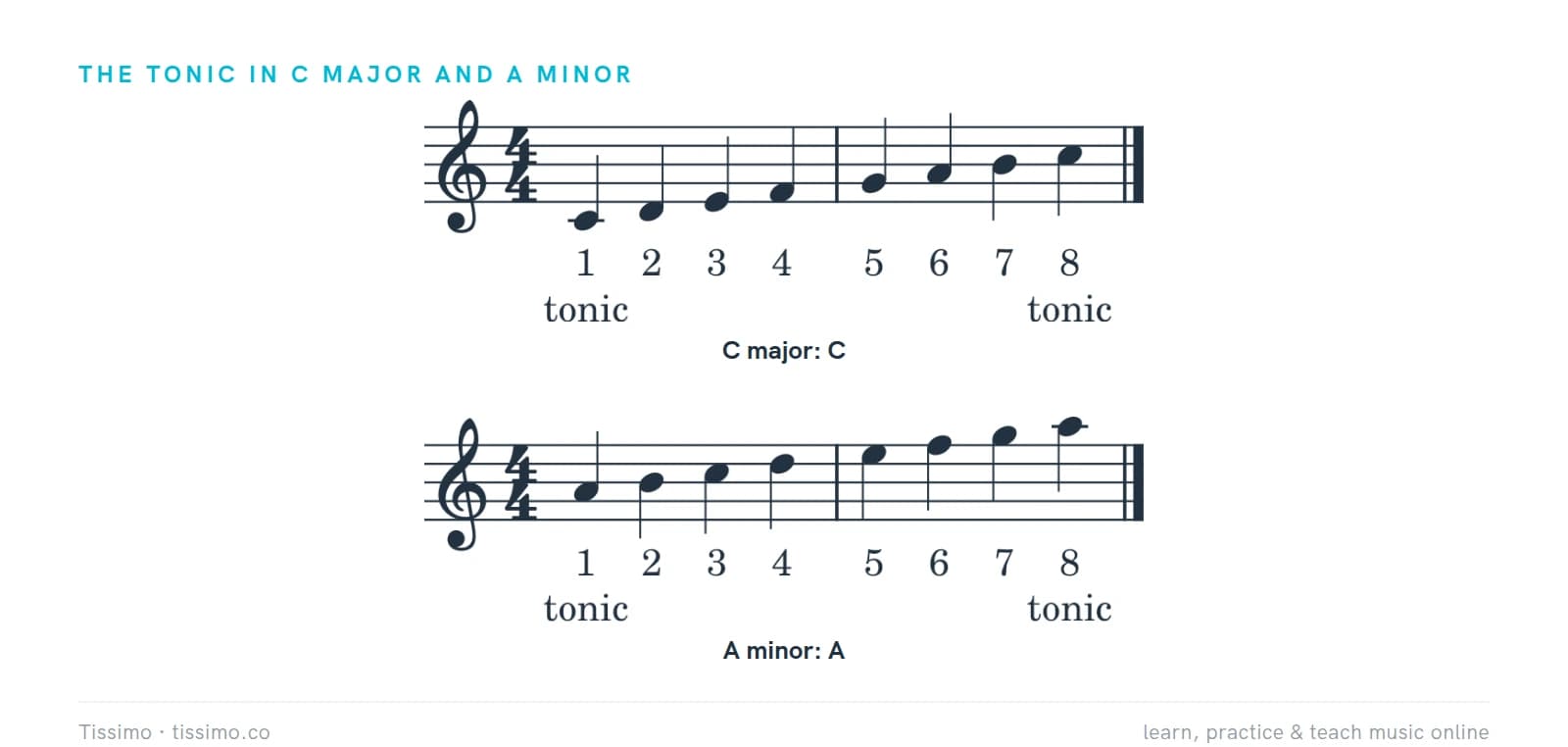
The tonic is the first degree of a scale and the home note of a key: C in C major, A in A minor. Music tends to feel finished when it comes to rest on the tonic or the tonic chord.
The tonic is scale degree 1, the note a key is named after and the one the music treats as home. In C major the tonic is C; in A minor it is A. Sing do in movable-do solfège and you are singing the tonic of a major key.
Why it feels like home
The other notes in the key all relate to the tonic. The dominant (degree 5) and the leading tone (degree 7) pull toward it; the subdominant leads away from it and back. A melody that ends on the tonic sounds finished. Stop on another degree and it sounds as if the sentence has not ended.
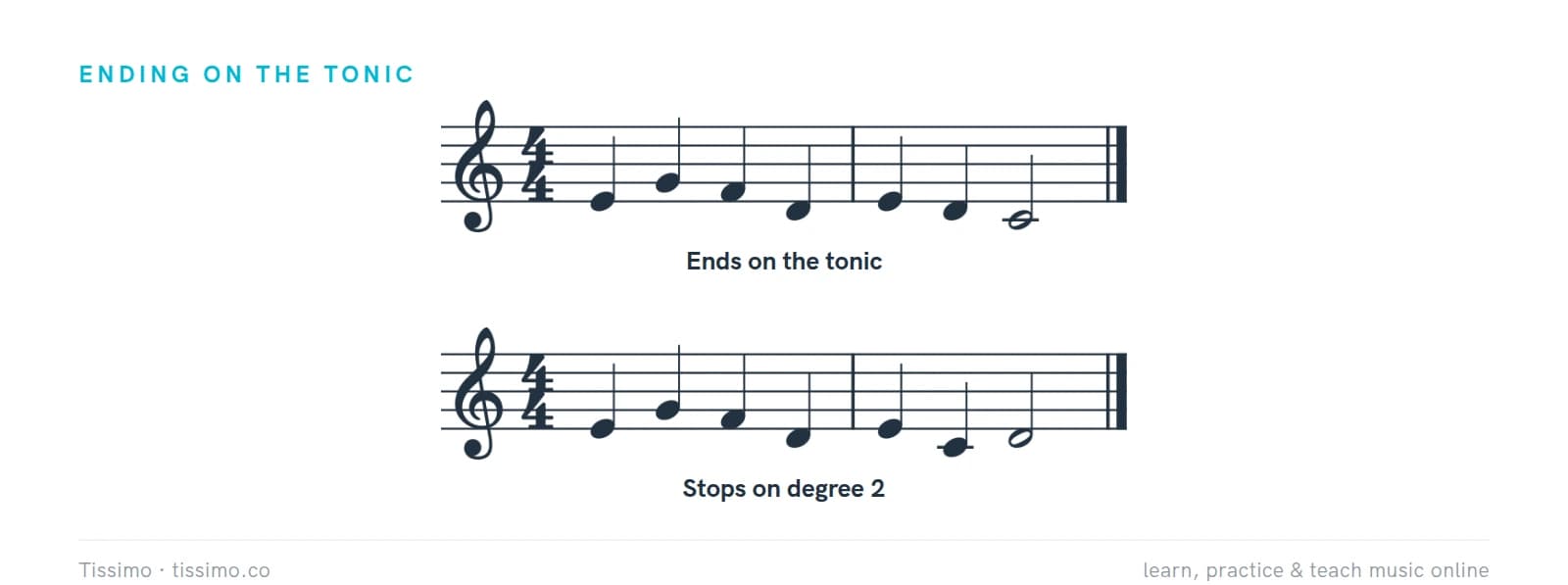
You can test this with almost any song you know: sing it and stop one note before the end. The urge to sing that last note is the pull of the tonic.
The tonic chord
The triad built on the tonic is the tonic chord: C E G in C major (written I), A C E in A minor (written i). Most pieces begin and end with it, and an authentic cadence, the dominant chord moving to the tonic chord, is the strongest way to close a phrase. Musicians also speak of tonic function, the role of rest and stability; chords that share notes with the tonic chord, such as vi (A minor in C major), can stand in for it, which is what happens in a deceptive cadence.
Tonic and key are not the same thing
The tonic is a single note; the key is the whole system around it, including its scale and its major or minor quality. C major and C minor share a tonic but are different keys, called parallel keys. In modal music the tonic is often called the final or simply the home note: D is the tonic of D Dorian even though its notes are those of C major.
Finding the tonic
In written music, check the last note of the melody and the last chord, then the key signature. By ear, hum the note that feels most like a resting point. Tonic & dominant: home and away and Scale Degree Names take you further.
Common questions
What is the tonic in music?
The first note of a scale and the home note of its key: C in C major, A in A minor. Melodies and chord progressions tend to come to rest on it.
Is the tonic the same as the root?
Not quite. The root is the note a chord is built on; the tonic is the home note of the key. They coincide only in the tonic chord: in C major, C is both the tonic and the root of the C chord, but G is the root of the G chord.
Practice it: free worksheets
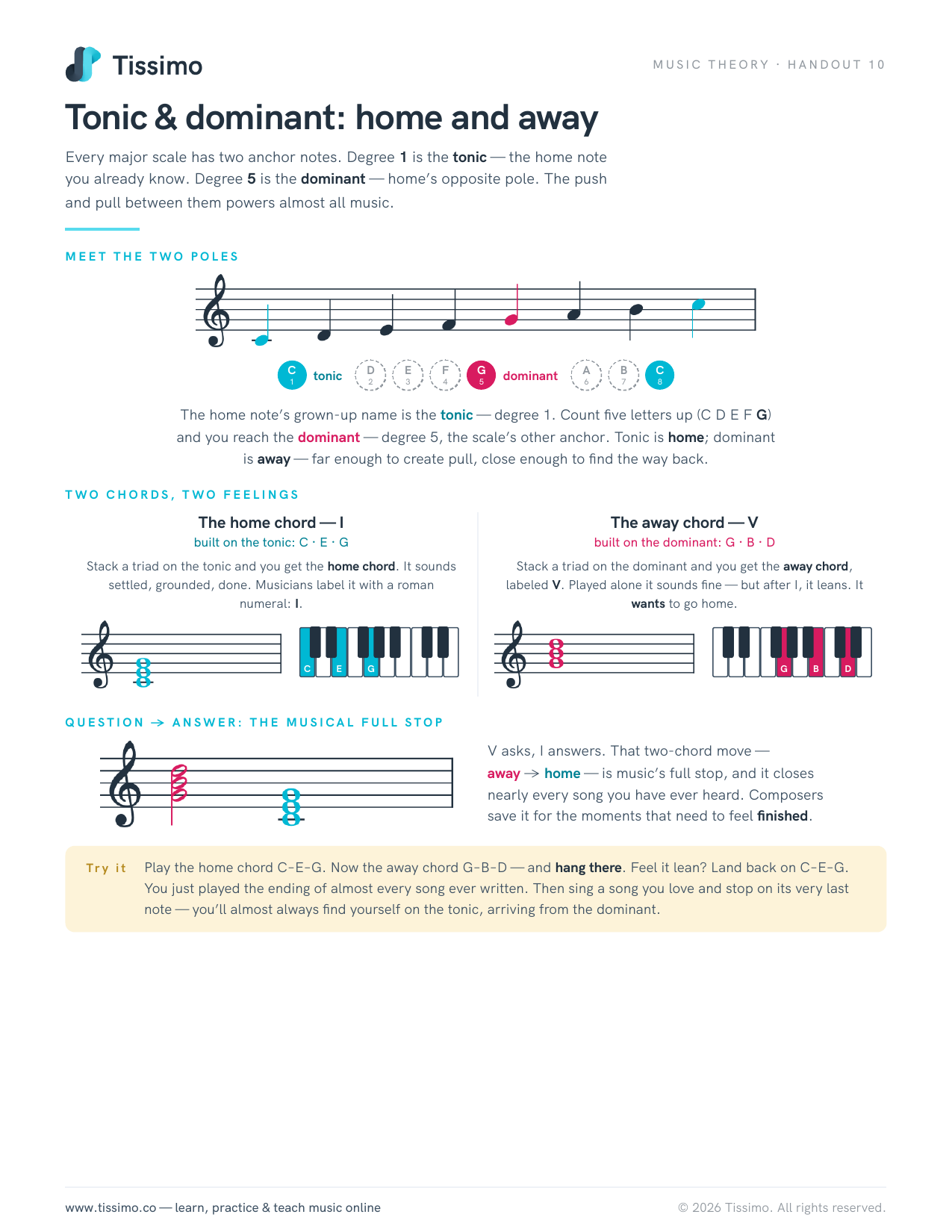 Tonic & dominant: home and awayEvery major scale has two anchor notes. Degree 1 is the tonic — the home note you already know. Degree 5 is the dominant — home’s opposite pole. The push and pull between them powers almost all music.
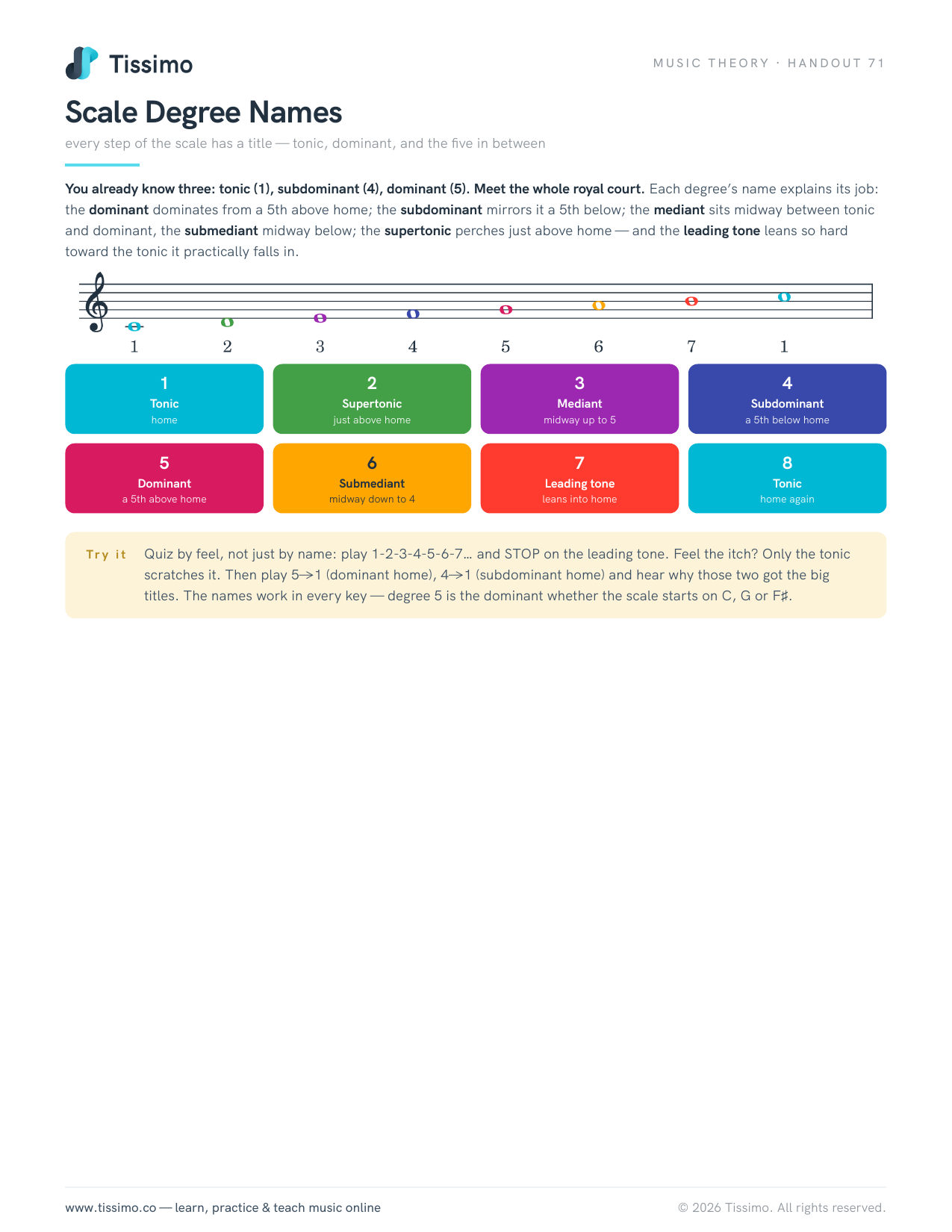 Scale Degree Namesevery step of the scale has a title — tonic, dominant, and the five in between
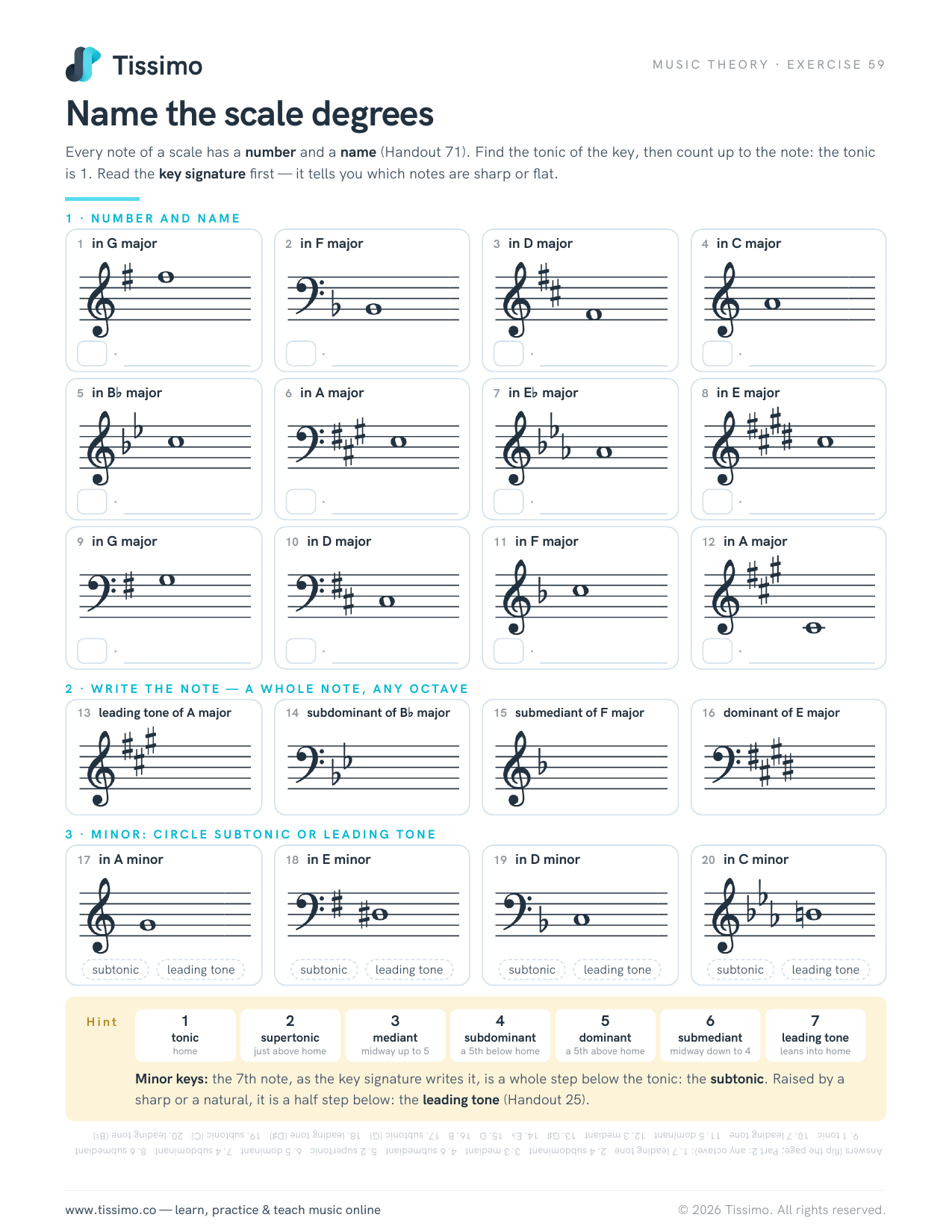 Name the scale degreesEvery note of a scale has a number and a name (Handout 71). Find the tonic of the key, then count up to the note: the tonic is 1. Read the key signature first — it tells you which notes are sharp or flat.
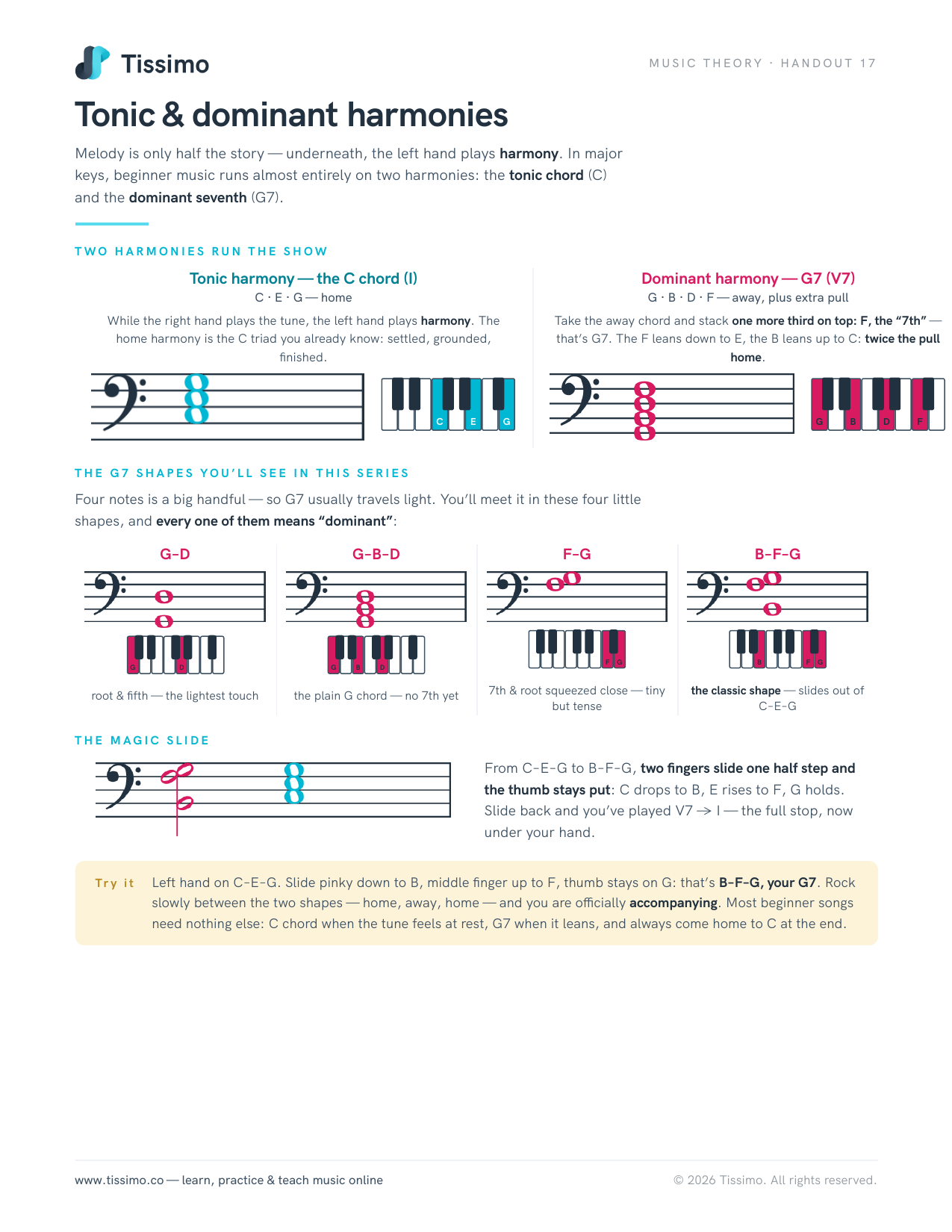 Tonic & dominant harmoniesMelody is only half the story — underneath, the left hand plays harmony. In major keys, beginner music runs almost entirely on two harmonies: the tonic chord (C) and the dominant seventh (G7).
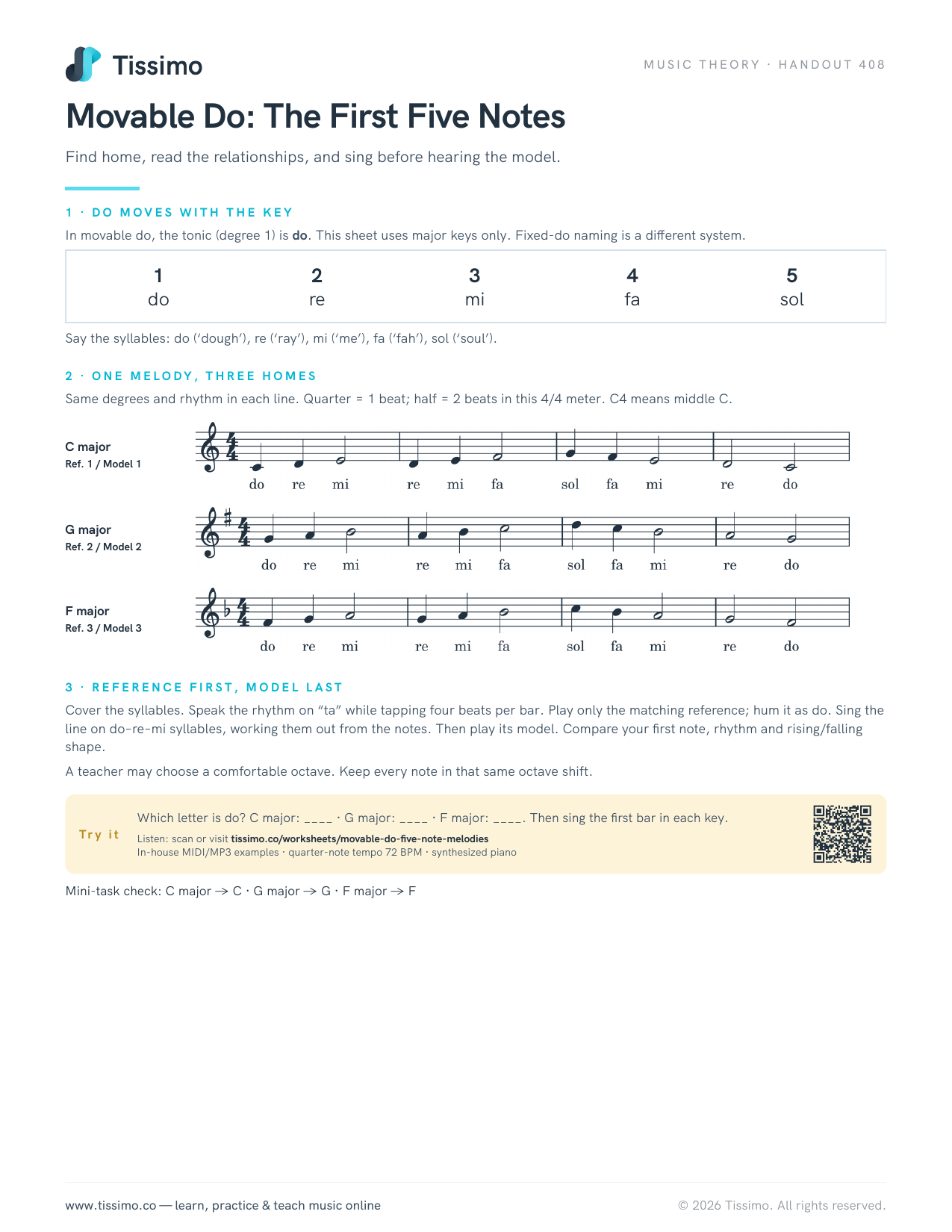 Movable Do: The First Five NotesFind home, read the relationships, and sing before hearing the model.