Scales, Keys & Modes
Scale Degree
A scale degree is the position of a note within a scale, numbered from 1 (the tonic) to 7. Each degree also has a name, such as tonic, dominant or leading tone, that describes its role in the key.
A scale degree tells you where a note sits in its scale, counting up from the tonic. In C major, C is degree 1, D is 2, E is 3, and so on up to B, degree 7; the next C is degree 1 again (sometimes labeled 8). Scale degrees describe a note's role in the key rather than its letter name, so they work the same way in every key.
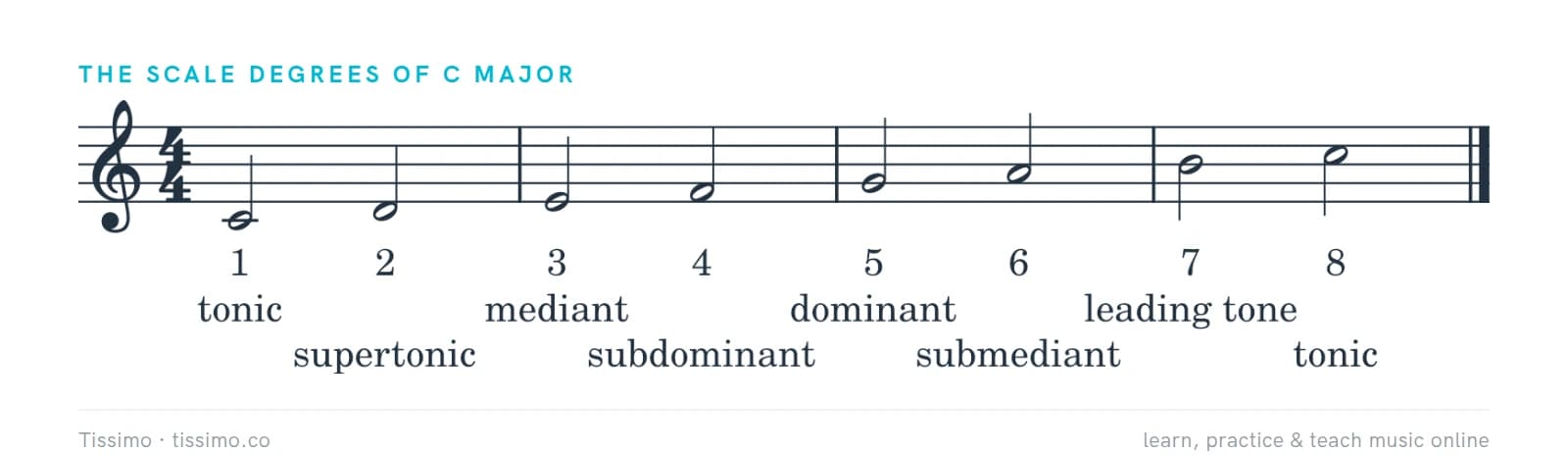
The numbers and the names
Each degree has a traditional name:
- Tonic: home
- Supertonic: just above the tonic
- Mediant: halfway from the tonic up to the dominant
- Subdominant: a fifth below the tonic, the "lower dominant"
- Dominant: a fifth above the tonic
- Submediant: halfway from the tonic down to the subdominant
- Leading tone (a half step below the tonic) or subtonic (a whole step below)
In theory books you will often see the numbers with a small caret (^) above them, to show that they mean scale degrees and not intervals or chords. In movable-do solfège, the degrees of a major key are do, re, mi, fa, sol, la, ti.
Degrees in a minor key
Minor keys use the same names and numbers. In A minor, A is 1, B is 2, C is 3 and so on. The 7th degree is the one that changes: in natural minor it is G, the subtonic; raised to G♯, as minor keys usually do at cadences, it becomes the leading tone. Some musicians number minor keys against major instead (1 2 ♭3 4 5 ♭6 ♭7), especially in jazz and pop. Both systems are common, so check which one a book is using.
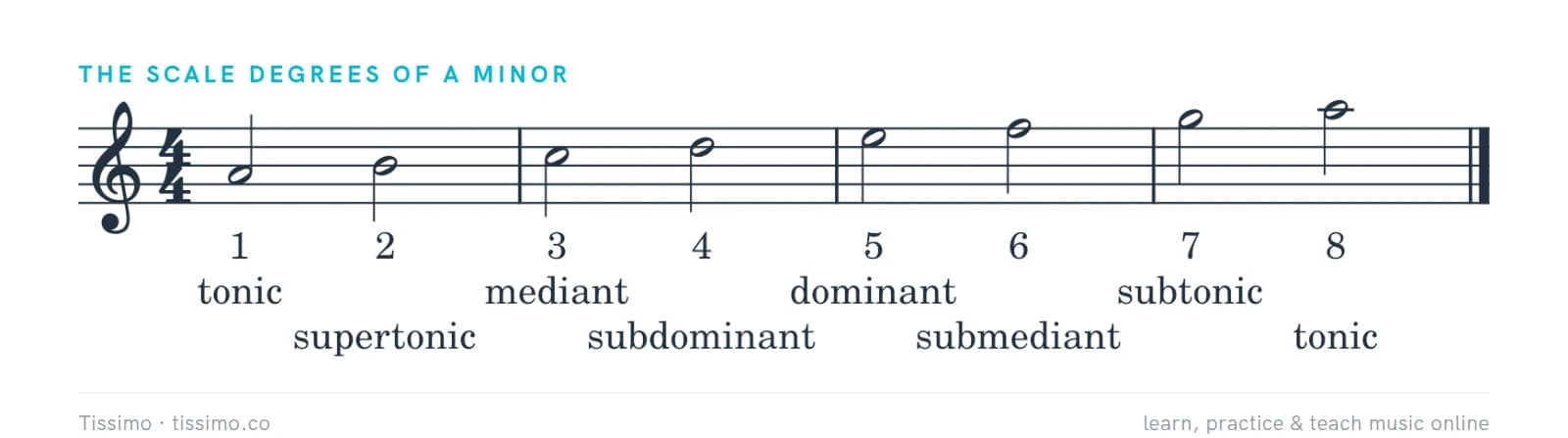
Why think in degrees?
Degrees let you see the same pattern in any key. A melody that goes 3–2–1 ends the same way whether it is E D C in C major or B A G in G major. Chords work the same way: the Roman numerals I, IV and V name the chords built on degrees 1, 4 and 5. That makes degrees the key to transposition, to ear training (hearing "that note was the 5th" rather than "that note was G") and to understanding harmonic function.
Common questions
What are the scale degree names in order?
Tonic, supertonic, mediant, subdominant, dominant, submediant, and leading tone (or subtonic, when the 7th is a whole step below the tonic).
What does the caret over a number mean in music theory?
A caret (^) over a number marks it as a scale degree: 5 with a caret means the 5th degree of the key, as opposed to the interval of a fifth or the V chord.
Practice it: free worksheets
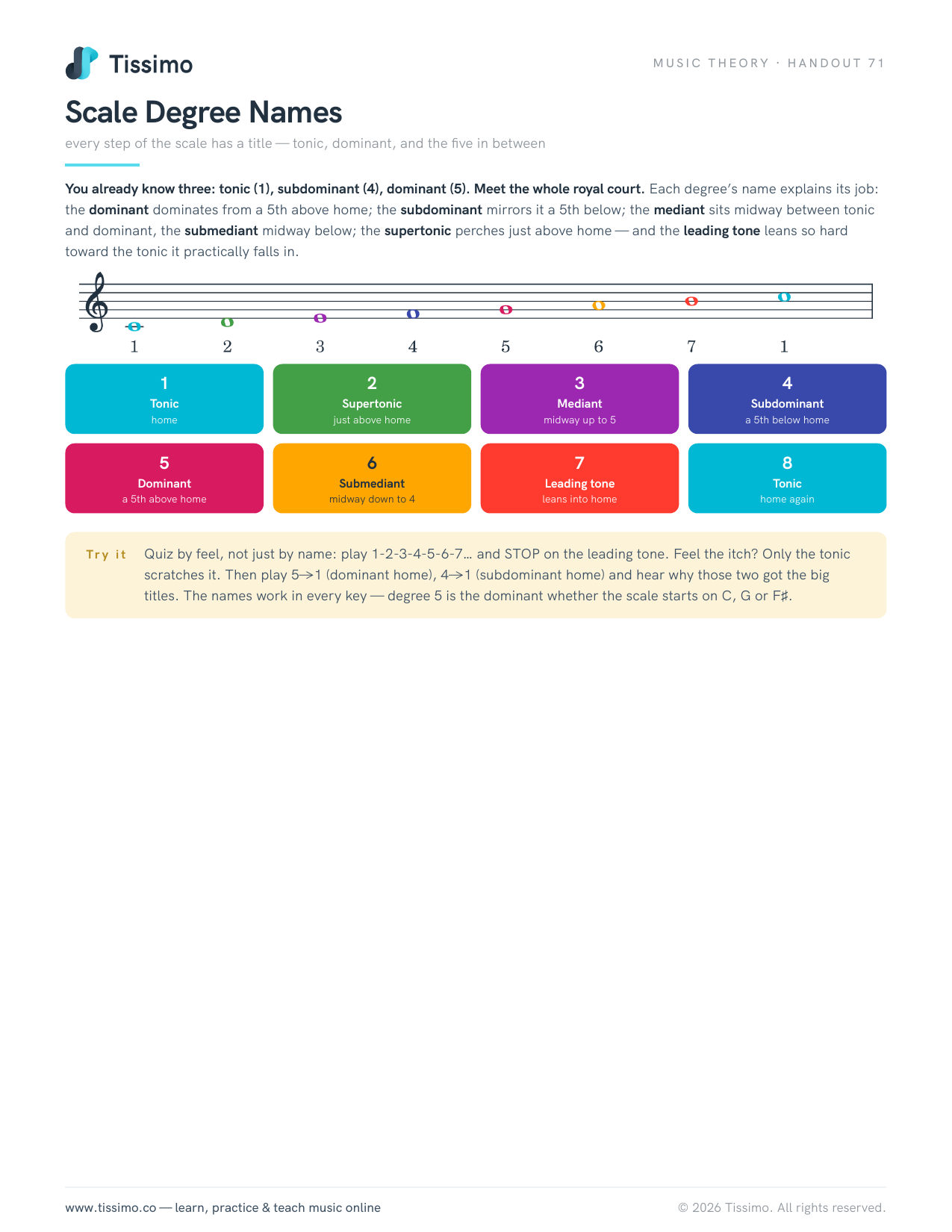 Scale Degree Namesevery step of the scale has a title — tonic, dominant, and the five in between
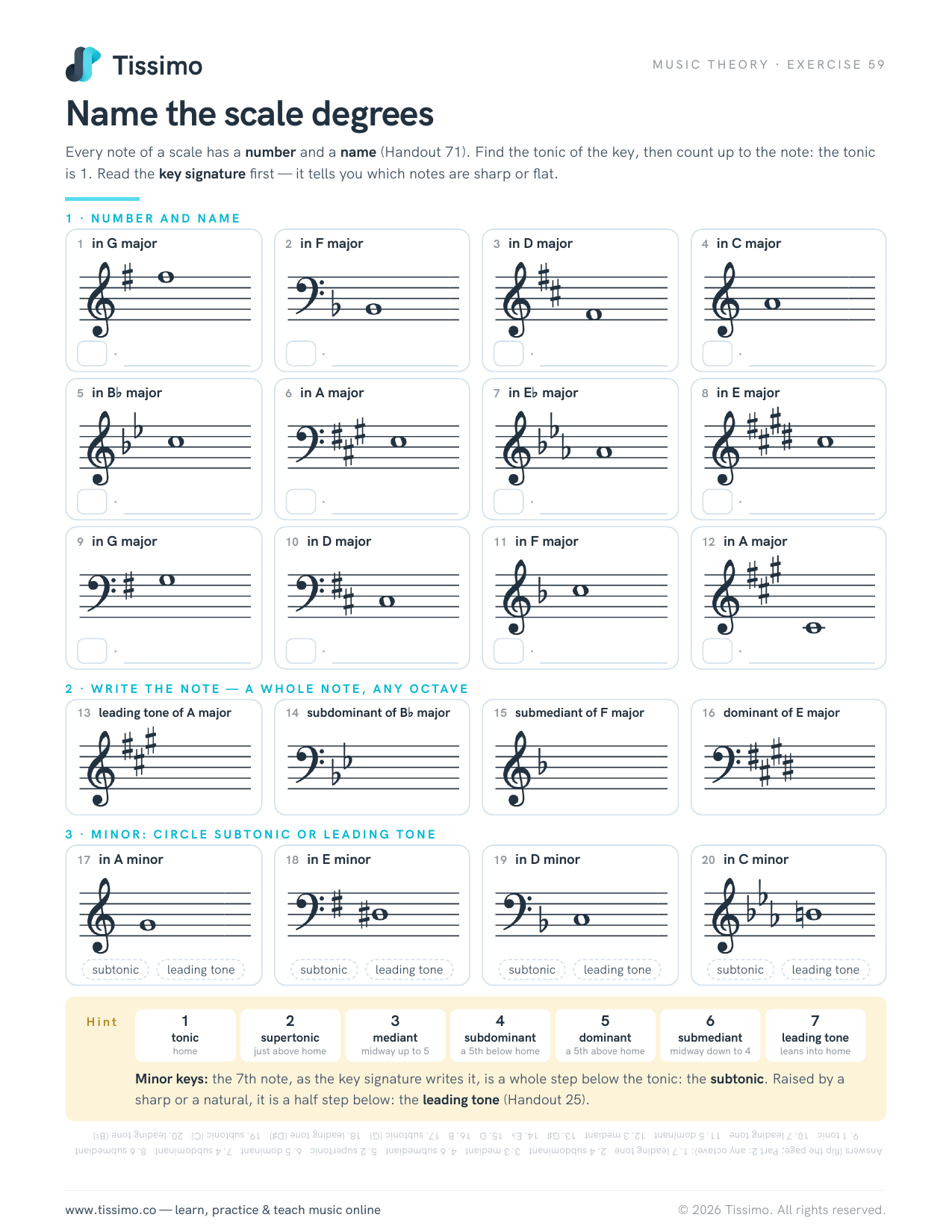 Name the scale degreesEvery note of a scale has a number and a name (Handout 71). Find the tonic of the key, then count up to the note: the tonic is 1. Read the key signature first — it tells you which notes are sharp or flat.
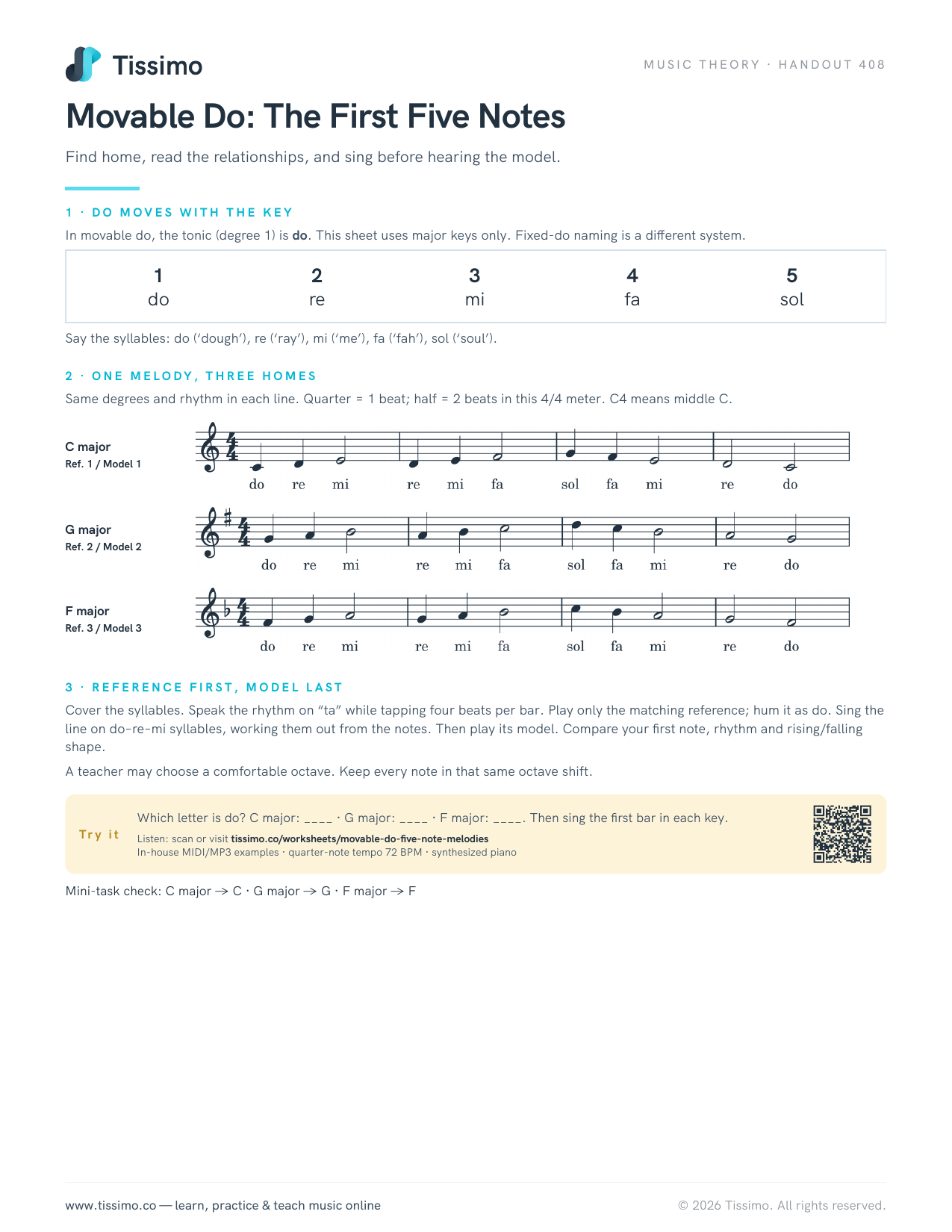 Movable Do: The First Five NotesFind home, read the relationships, and sing before hearing the model.
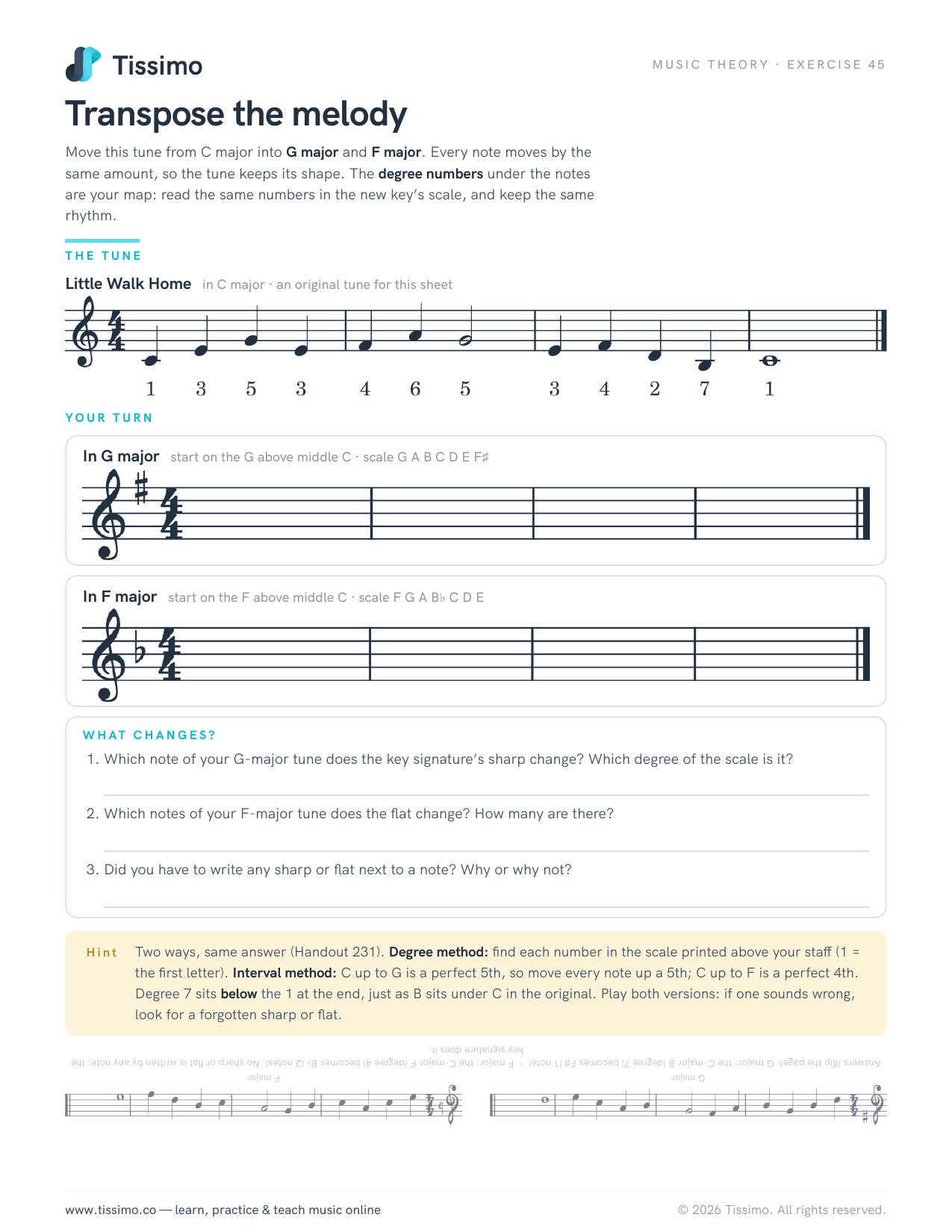 Transpose the melodyMove this tune from C major into G major and F major. Every note moves by the same amount, so the tune keeps its shape. The degree numbers under the notes are your map: read the same numbers in the new key’s scale, and keep the same rhythm.
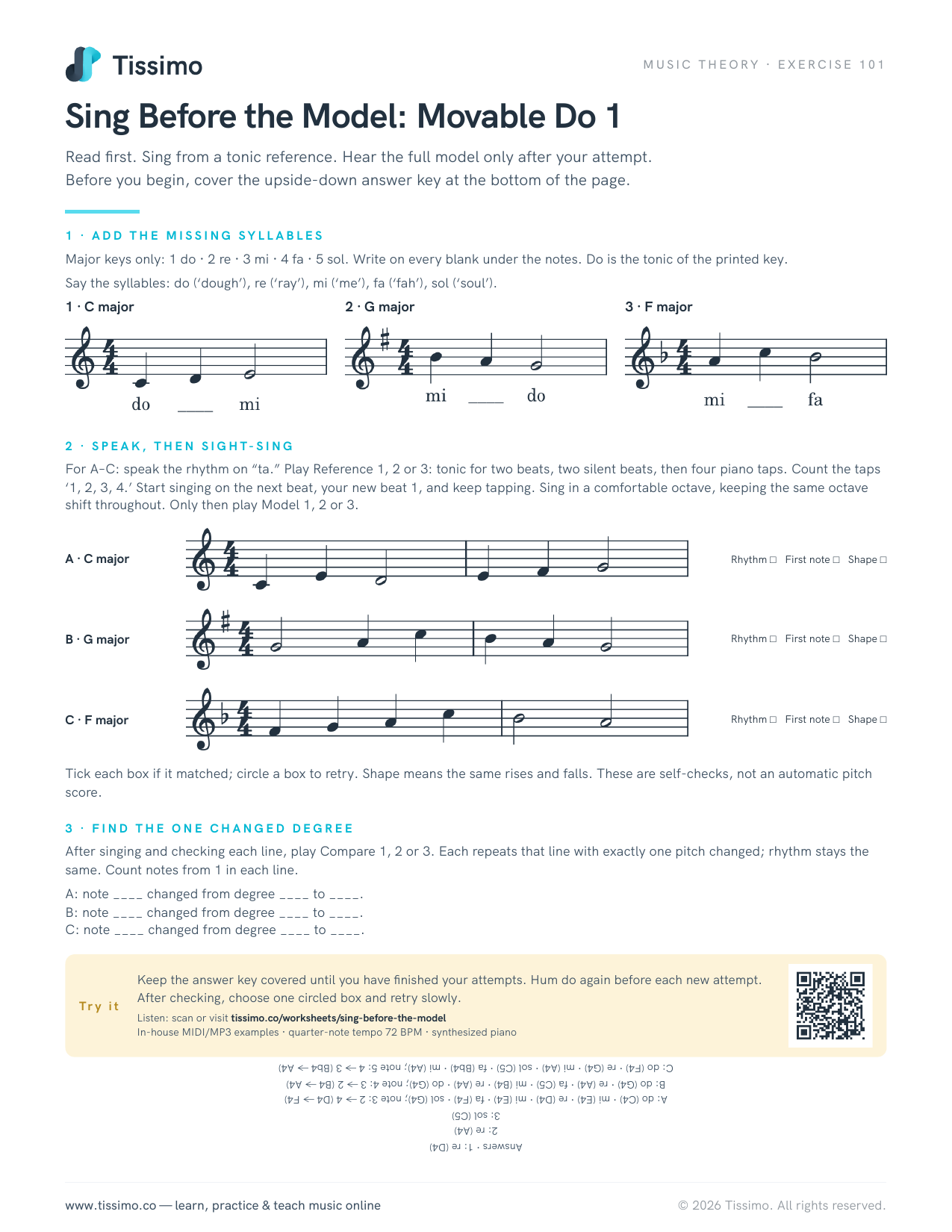 Sing Before the Model: Movable Do 1Read first. Sing from a tonic reference. Hear the full model only after your attempt. Before you begin, cover the upside-down answer key at the bottom of the page.
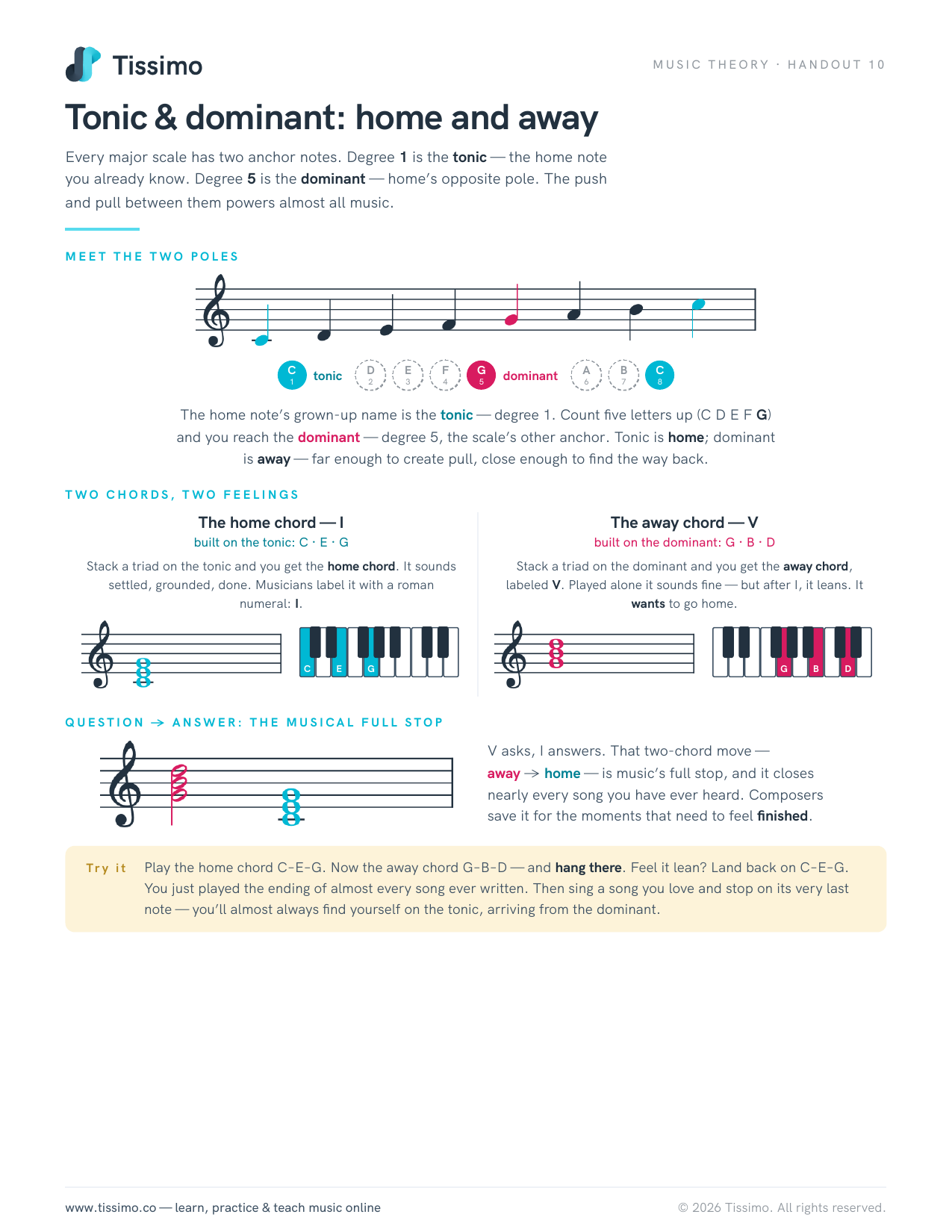 Tonic & dominant: home and awayEvery major scale has two anchor notes. Degree 1 is the tonic — the home note you already know. Degree 5 is the dominant — home’s opposite pole. The push and pull between them powers almost all music.