Scales, Keys & Modes
Supertonic
Pronounced soo-per-TON-ik
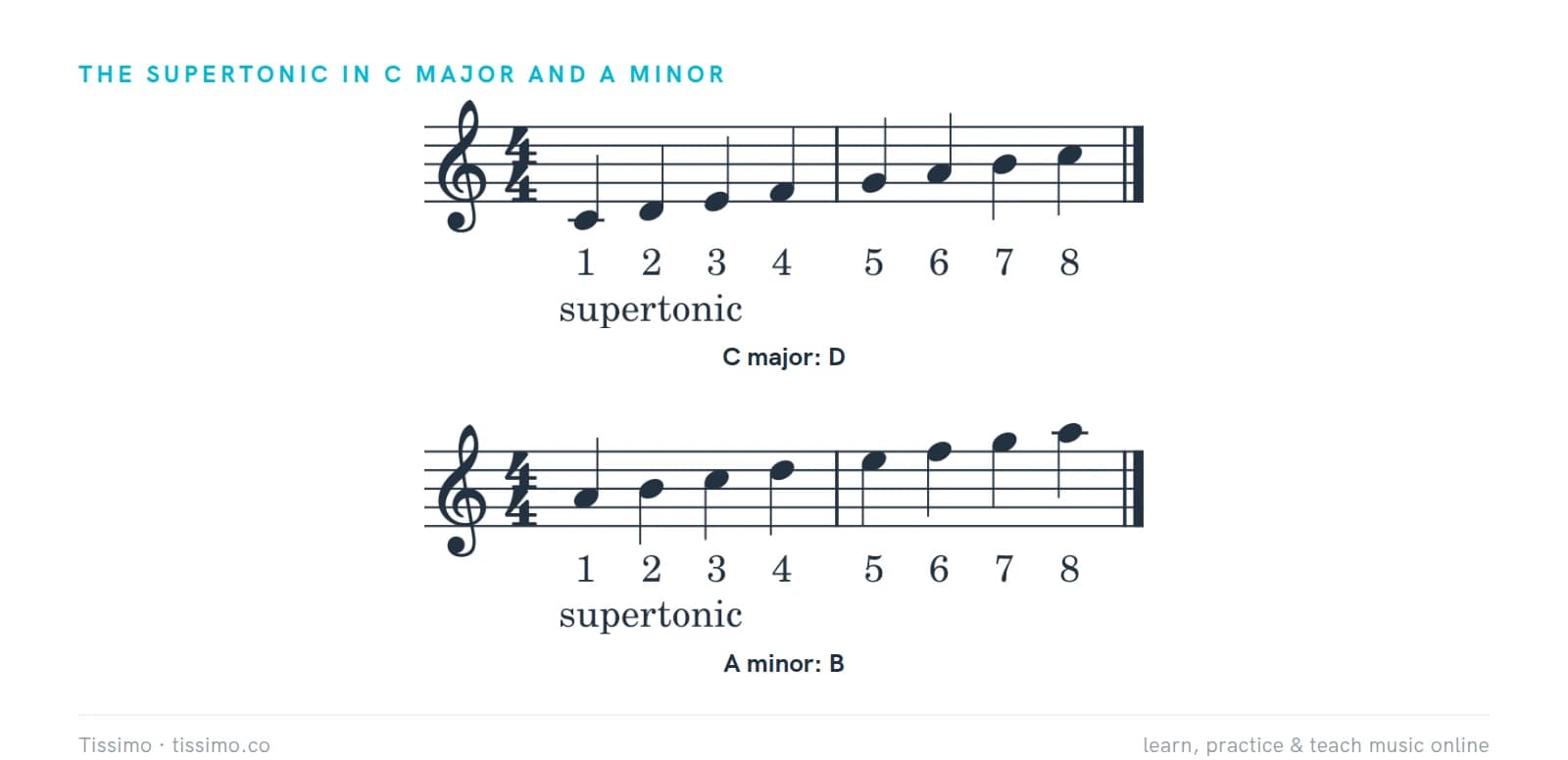
The supertonic is the second degree of a scale, one step above the tonic: D in C major, B in A minor. The chord built on it, ii, usually leads to the dominant.
The supertonic is scale degree 2. Its name means "above the tonic": it sits one step higher than the tonic, a whole step in both major and minor keys. In C major the supertonic is D; in A minor it is B. In major and do-based minor solfège it is re; in la-based minor it is ti.
In melodies
Because it lies right next to the tonic, the supertonic is a natural neighbor and passing note: melodies step 1–2–3 on the way up and 3–2–1 on the way home, and the fall from 2 to 1 is one of the most common melodic endings there is. A phrase that stops on the supertonic sounds open, like a question waiting for its answer.
The supertonic chord
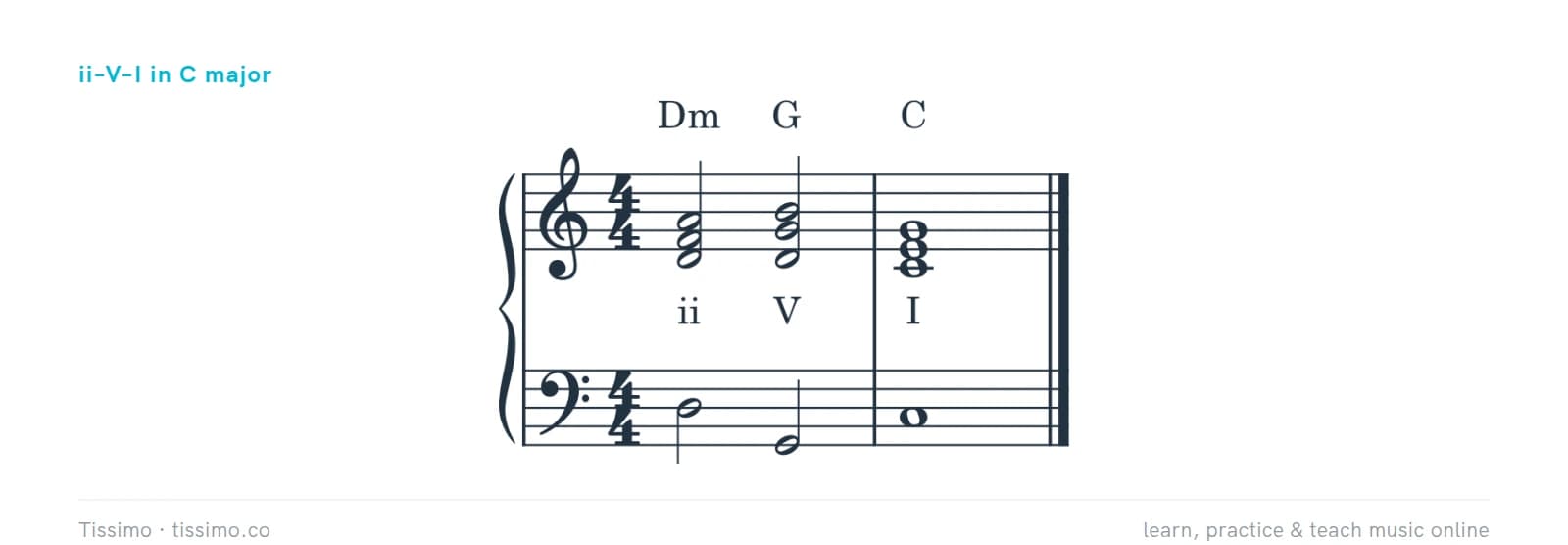
The triad on the supertonic is minor in a major key (D F A in C major, written ii) and diminished in a minor key (B D F in A minor, written ii°). Its usual job is pre-dominant: it comes just before the dominant chord and prepares it. The progression ii–V–I is one of the strongest moves in tonal music and the backbone of jazz harmony, where it usually appears as seventh chords (Dm7, G7, Cmaj7). See ii–V–I progression.
ii works so well before V because its root lies a perfect fifth above the dominant's: D falls a fifth to G just as G falls a fifth to C, so ii–V–I is two steps around the circle of fifths in a row.
Supertonic or second?
The supertonic is a position in the scale, not an interval. Do not confuse it with a major second, the distance of two half steps between any two notes. In most keys and modes the supertonic is a whole step above the tonic, but in the Phrygian and Locrian modes it is only a half step above.
Common questions
What is the supertonic chord?
The triad built on the 2nd degree: D minor (ii) in C major, B diminished (ii°) in A minor. It usually leads to the dominant chord.
Why is it called the supertonic?
Because it sits just above the tonic, one step up. Super is Latin for above.
Practice it: free worksheets
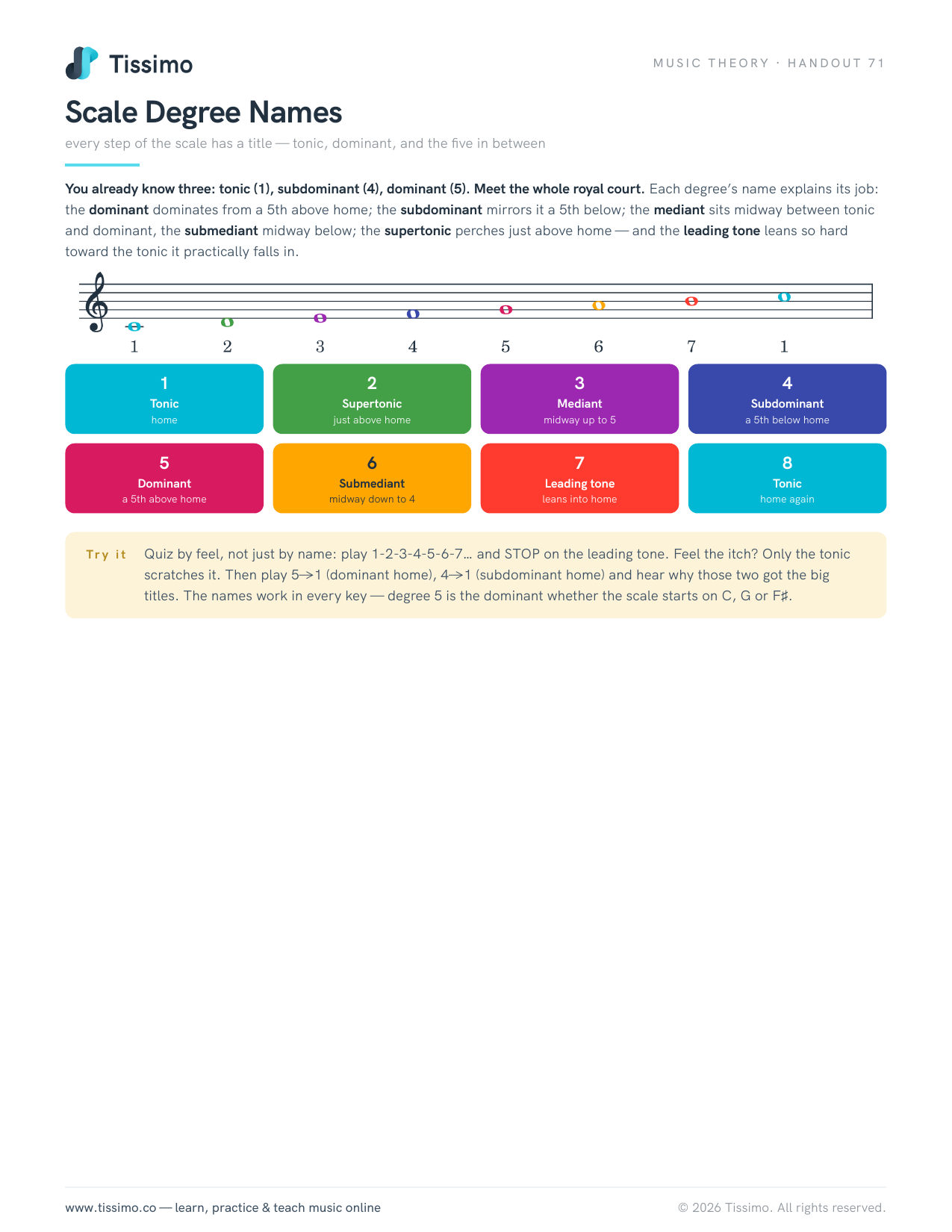 Scale Degree Namesevery step of the scale has a title — tonic, dominant, and the five in between
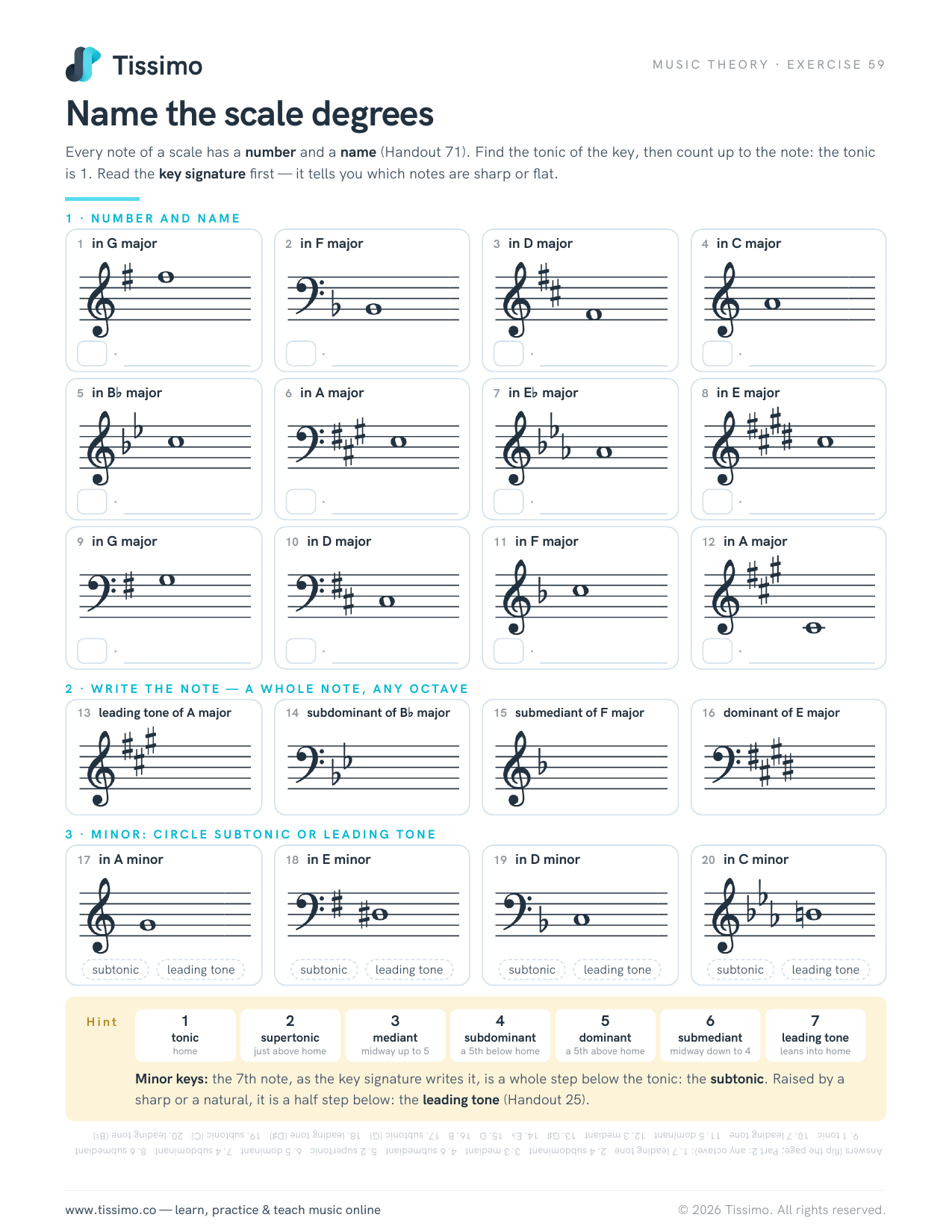 Name the scale degreesEvery note of a scale has a number and a name (Handout 71). Find the tonic of the key, then count up to the note: the tonic is 1. Read the key signature first — it tells you which notes are sharp or flat.
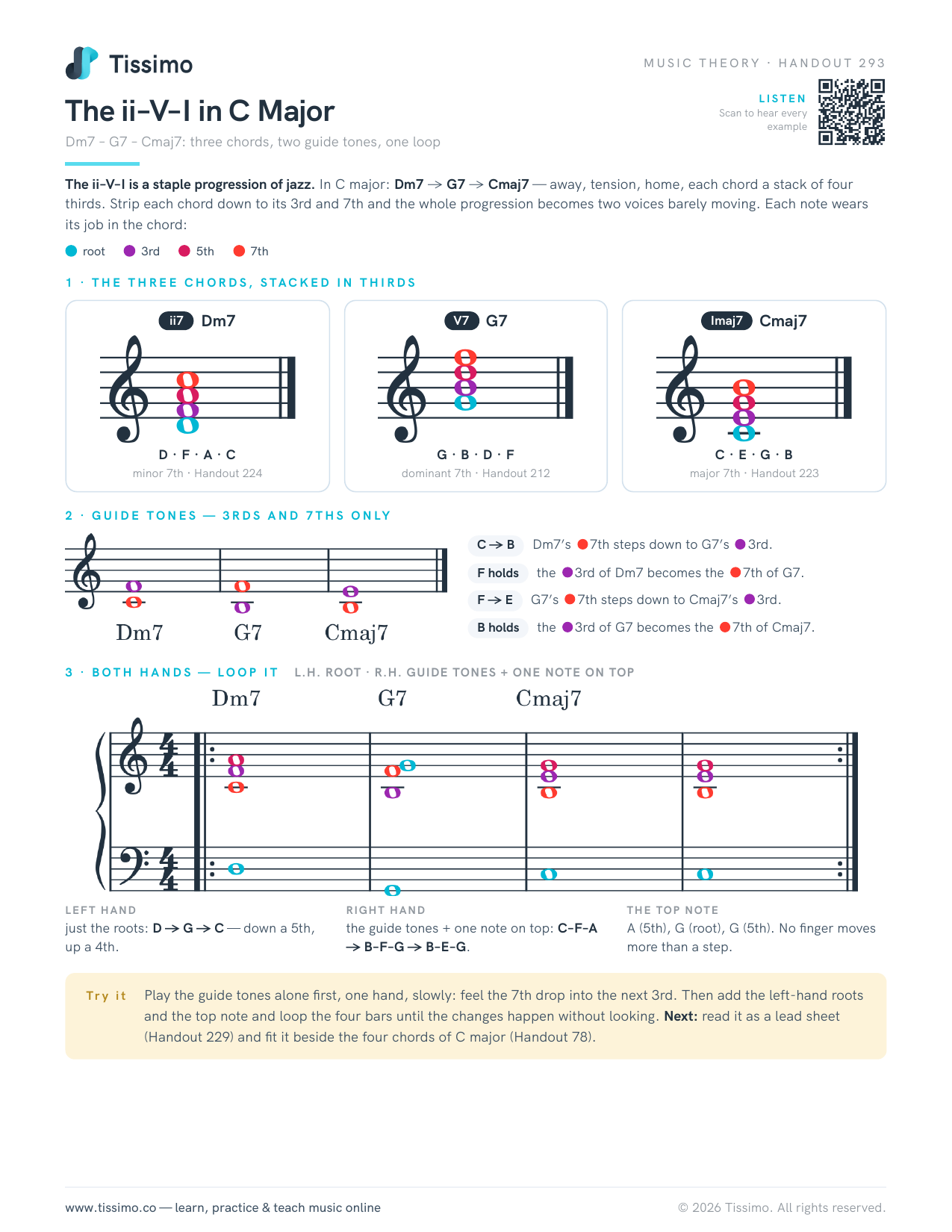 The ii–V–I in Every KeyThe most-played progression in jazz: three chords, two guide tones, one loop, in all 24 keys.
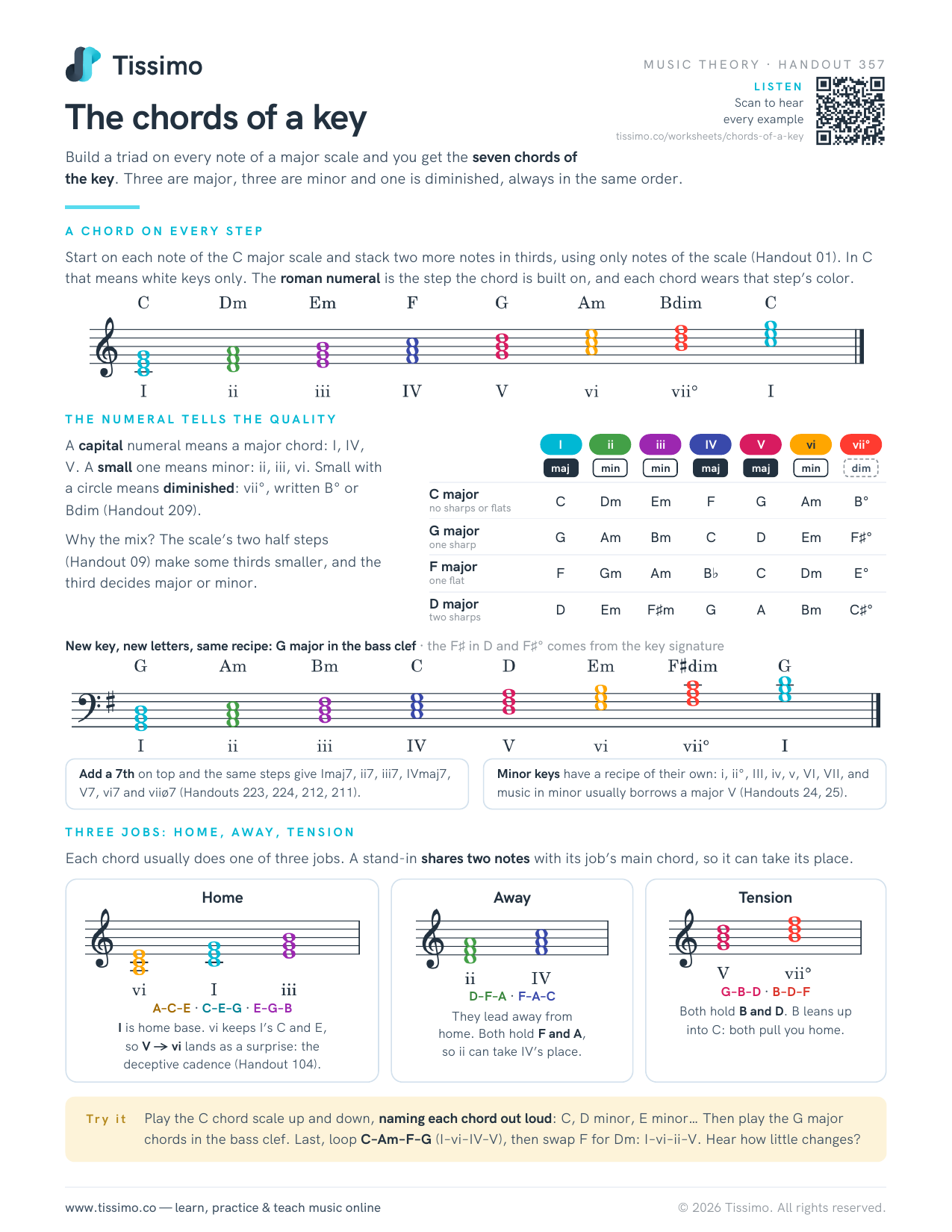 The chords of a keyBuild a triad on every note of a major scale and you get the seven chords of the key. Three are major, three are minor and one is diminished, always in the same order.