Chords & Harmony
Suspended Chord (sus2, sus4)
A suspended chord replaces the third of a triad with the second (sus2) or the fourth (sus4), such as C–D–G or C–F–G. With no third it is neither major nor minor, and it often resolves to a chord that has one.
A suspended chord, or sus chord, is a triad whose third has been replaced by the note a step above or below it. In Csus4 the third (E) moves up to F, giving C–F–G. In Csus2 it moves down to D, giving C–D–G. Without a third, the chord is neither major nor minor. It sounds open and hanging, as if it is waiting to land.
How they resolve
The traditional move is to resolve the sus note to the third: F falls to E (sus4 to major), or D rises to E (sus2 to major). The same works toward minor: Csus4 to Cm moves F down to E♭.
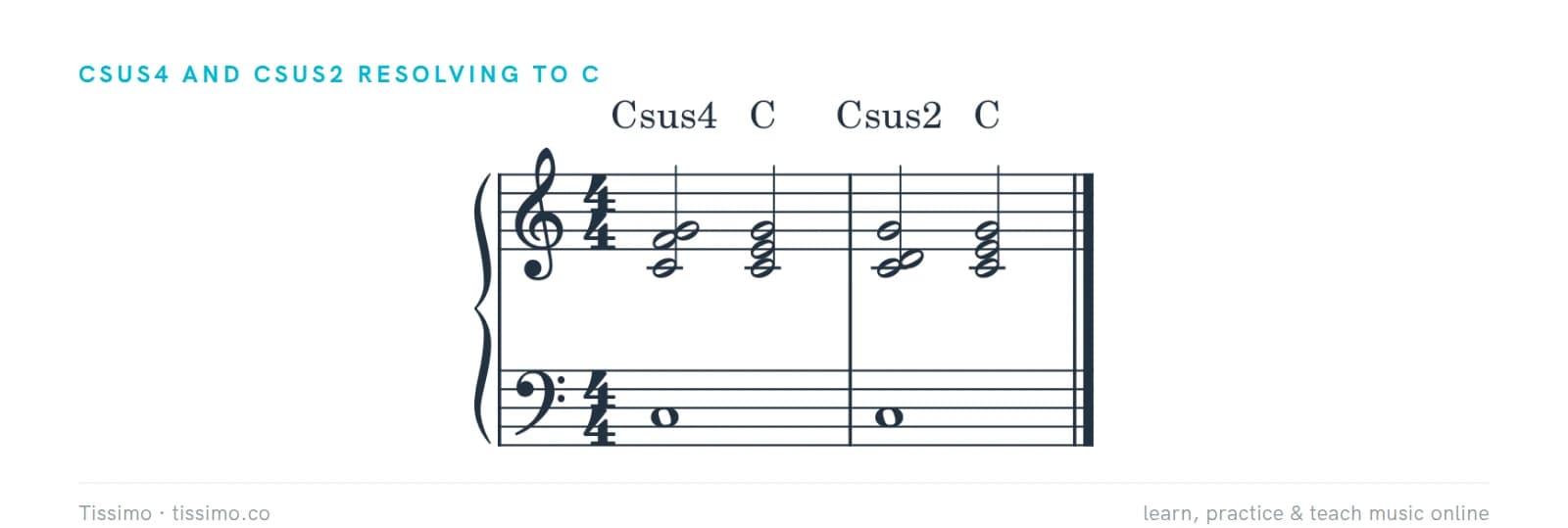
In pop, rock and worship music a sus chord is often a color in its own right. Guitarists flick between D, Dsus4 and Dsus2 to animate a strummed chord, and a song can end on a sus chord without resolving at all.
Where the name comes from
The name comes from the classical suspension, in which a note from one chord is held over into the next and then resolves down by step. A sus4 chord sounds like a 4–3 suspension caught before its resolution. The difference is that a sus chord does not need the preparation, or even the resolution.
sus2 and sus4 can share notes
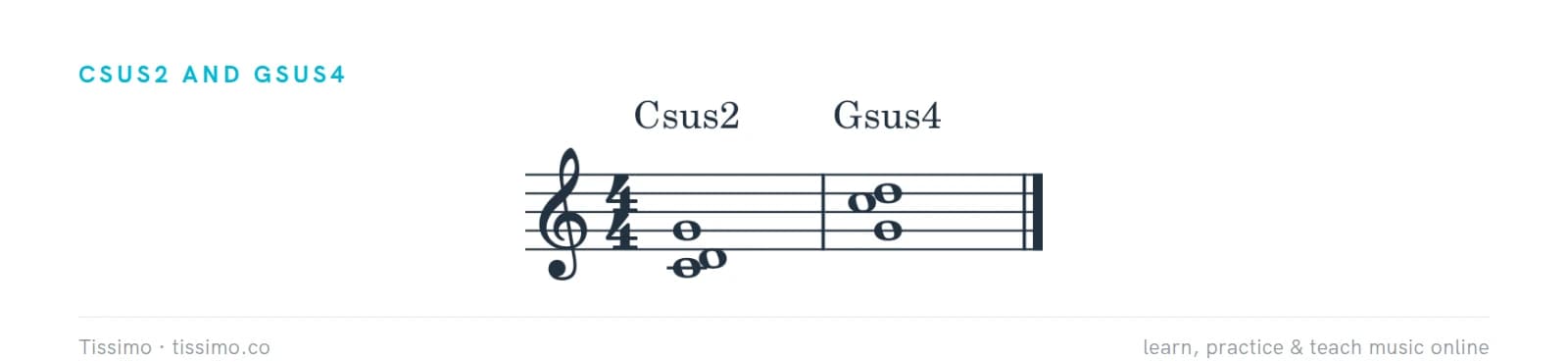
Csus2 (C–D–G) and Gsus4 (G–C–D) contain the same three letters. Which name is right depends on the bass and on the chord that follows.
Sus chords with a seventh
Add a seventh and you get chords such as G7sus4 (G–C–D–F): a dominant seventh with the fourth in place of the third. It is common in jazz, gospel and pop, sometimes resolving to G7 and sometimes moving straight to the next chord.
Practice with Suspended chords: sus2 and sus4 and Chord quality review.
Common questions
Is a sus chord major or minor?
Neither. The third decides major or minor, and a sus chord has no third. The music around it, or the chord it resolves to, tells your ear which way it leans.
What is the difference between Csus2 and Cadd9?
Csus2 (C–D–G) replaces the third with D. Cadd9 (C–E–G–D) keeps the third and adds D on top; see added-tone chord.
Practice it: free worksheets
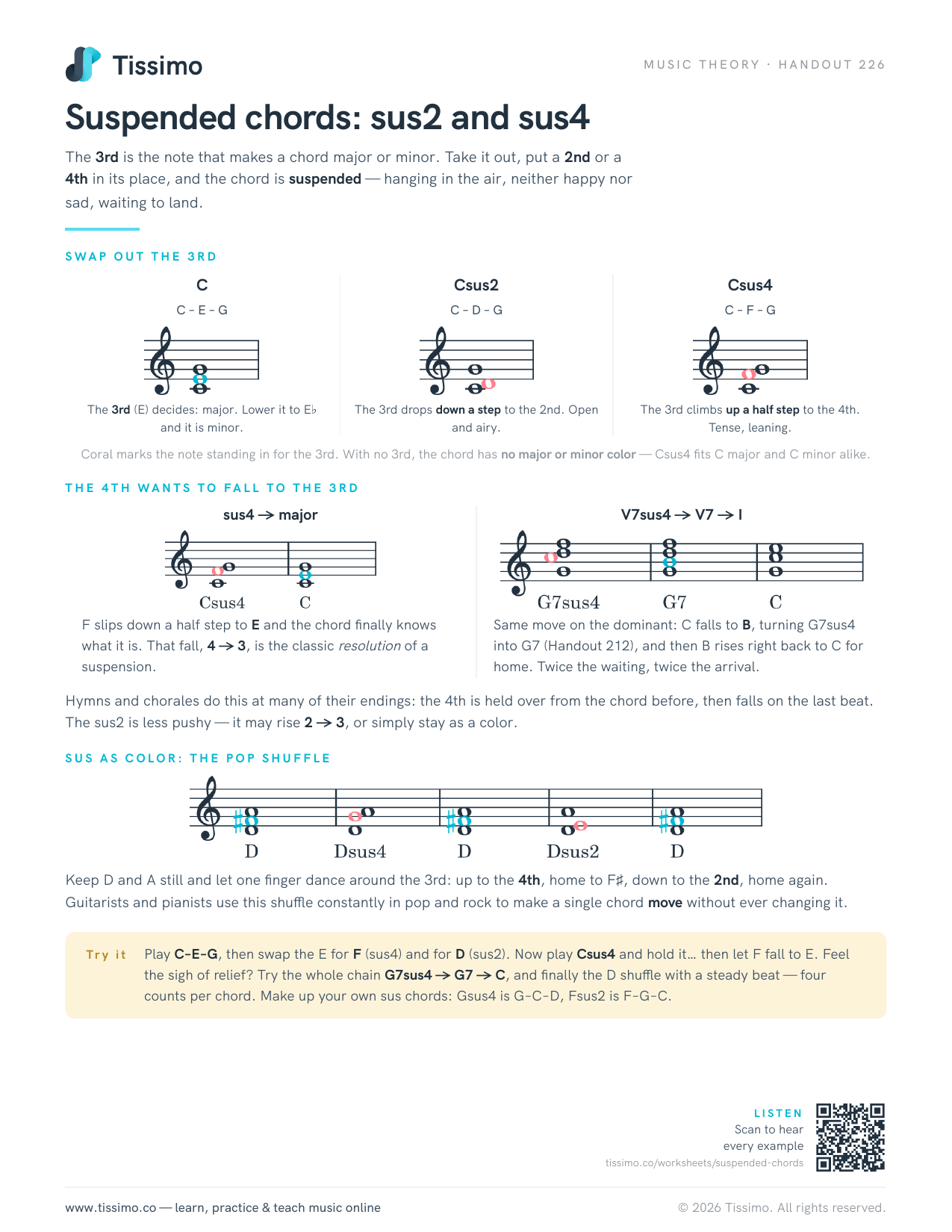 Suspended chords: sus2 and sus4The 3rd is the note that makes a chord major or minor. Take it out, put a 2nd or a 4th in its place, and the chord is suspended — hanging in the air, neither happy nor sad, waiting to land.
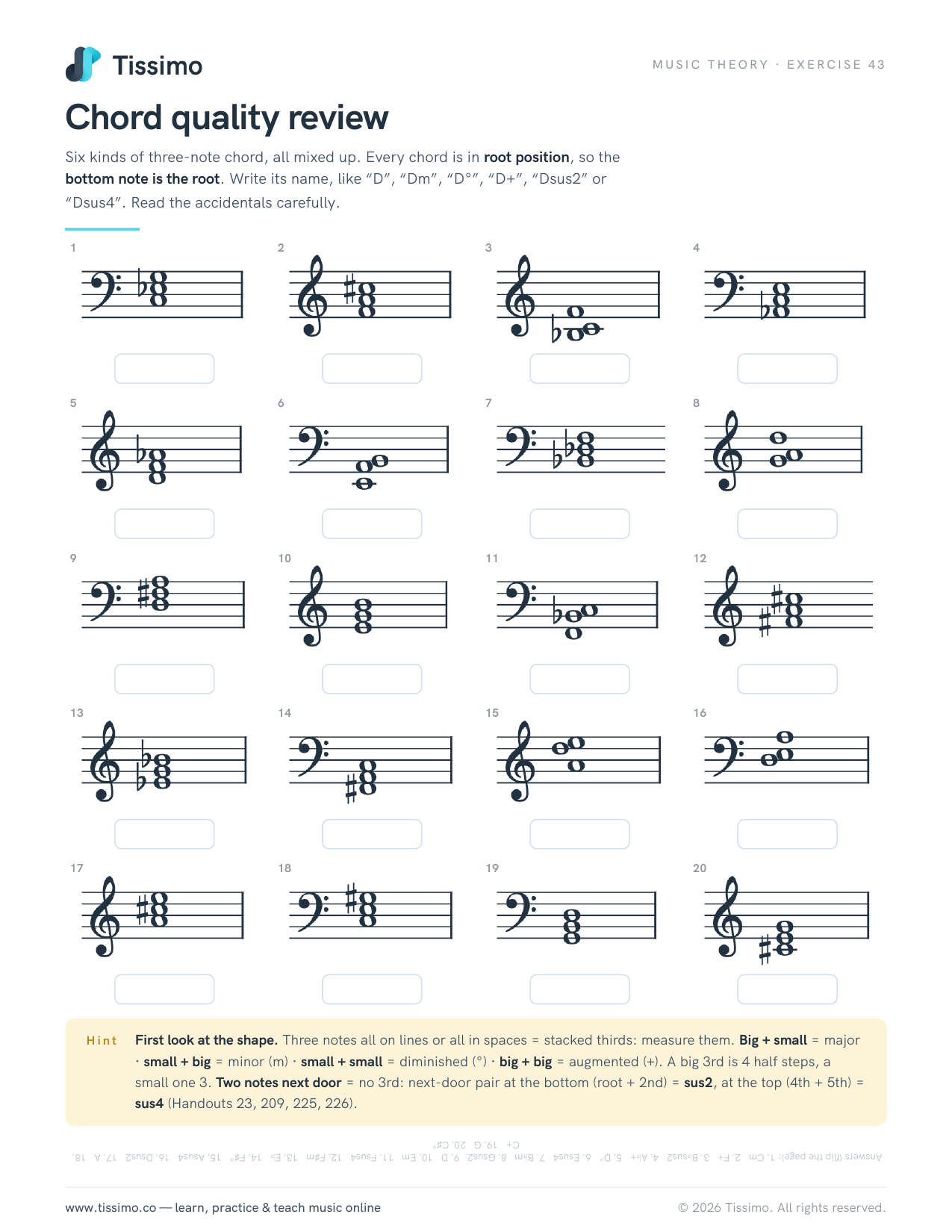 Chord quality reviewSix kinds of three-note chord, all mixed up. Every chord is in root position, so the bottom note is the root. Write its name, like “D”, “Dm”, “D°”, “D+”, “Dsus2” or “Dsus4”. Read the accidentals carefully.
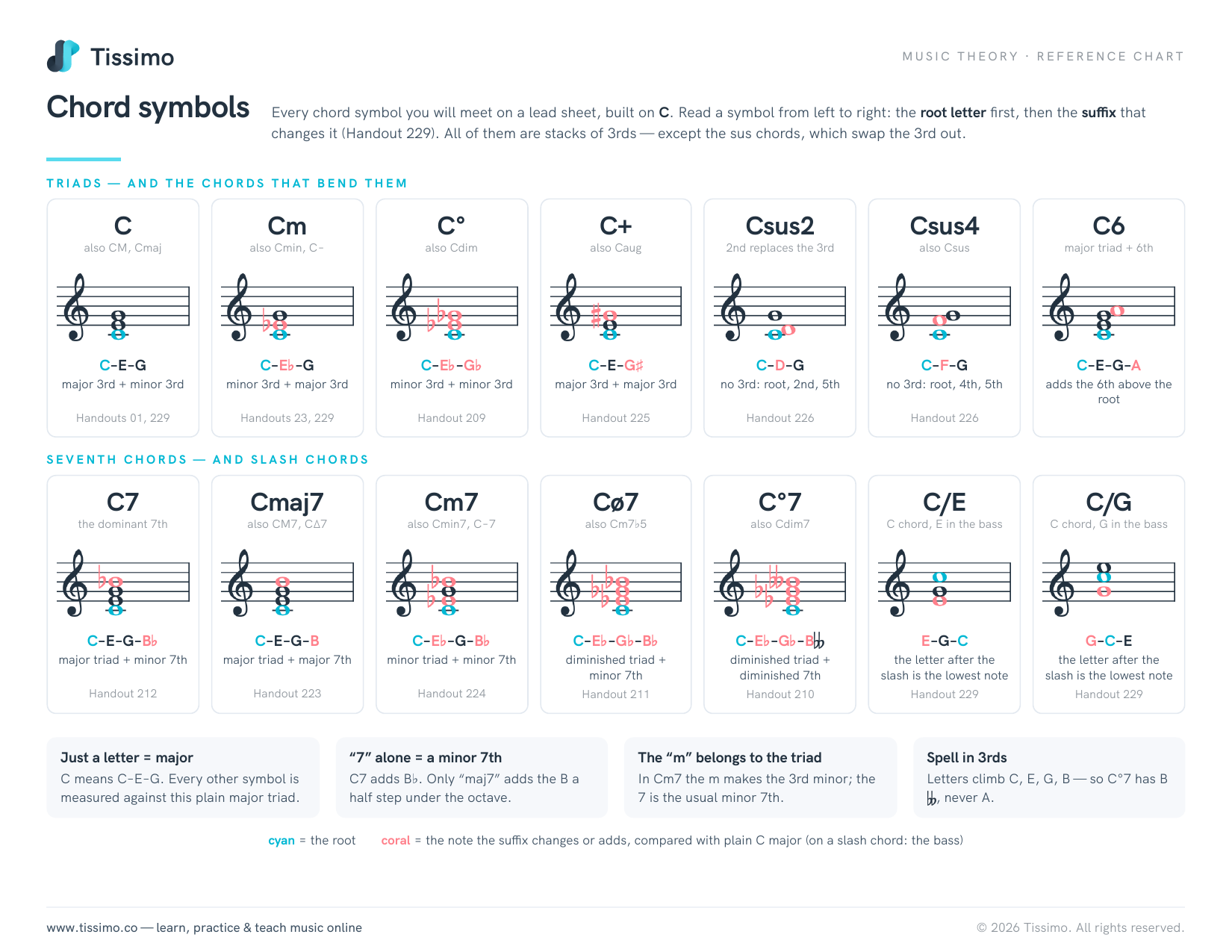 Chord symbolsEvery chord symbol you will meet on a lead sheet, built on C. Read a symbol from left to right: the root letter first, then the suffix that changes it (Handout 229). All of them are stacks of 3rds — except the sus chords, which swap the 3rd out.