Chords & Harmony
Power Chord
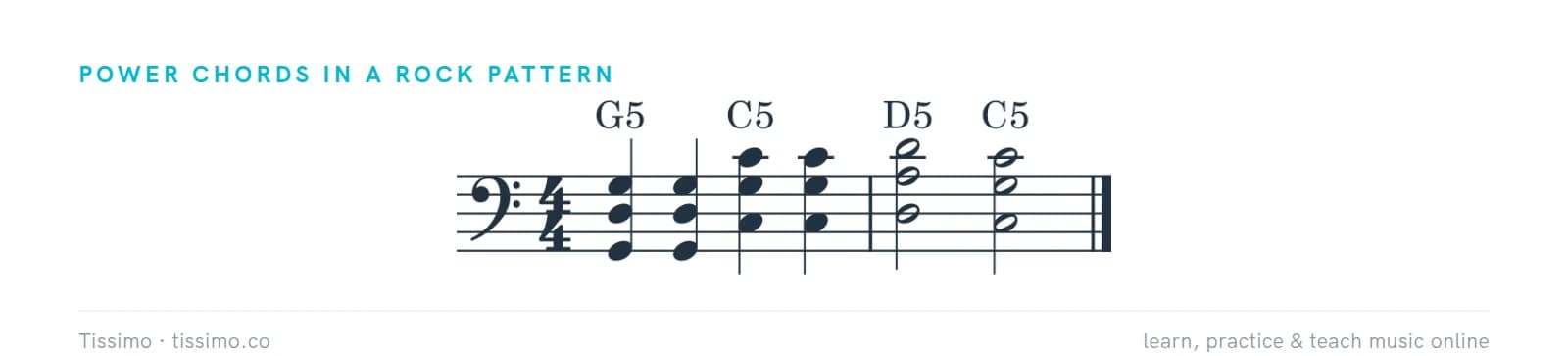
A power chord is a two-note chord of a root and the fifth above it, often with the root doubled an octave higher, such as C–G–C (C5). With no third, it is neither major nor minor.
A power chord is a two-note chord made of a root and the perfect fifth above it, often with the root doubled an octave higher. On C it is C–G, or C–G–C. Its chord symbol uses the number 5: C5, G5, E5. Strictly speaking it is an interval rather than a full chord, since it has only two different notes, but guitarists and songwriters call it a chord.
Neither major nor minor
A power chord has no third, so it is neither major nor minor. That makes it flexible: the same E5 can sit under a melody in E major or in E minor, and the bass line, the vocal and the other instruments tell the listener which one is meant.

Why rock guitarists love it
Distortion adds many extra overtones to each note. A perfect fifth is a simple enough interval to stay clear and punchy under heavy distortion, while thirds and fuller chords can turn muddy. Power chords are also easy to move. On guitar, put your first finger on a note on the low E or A string and your third finger two frets higher on the next string, then slide the shape anywhere on the neck. With the first finger on the low E string at the 3rd fret you get G5 (G and D); add your little finger at the 5th fret of the D string for the octave G.
On the piano
Play the root with your left-hand fifth finger and the fifth with your thumb, or add the octave on top for a fuller sound. Power chords in the bass register make a strong, open foundation, which is why they also turn up in film scores and in piano arrangements of rock songs.
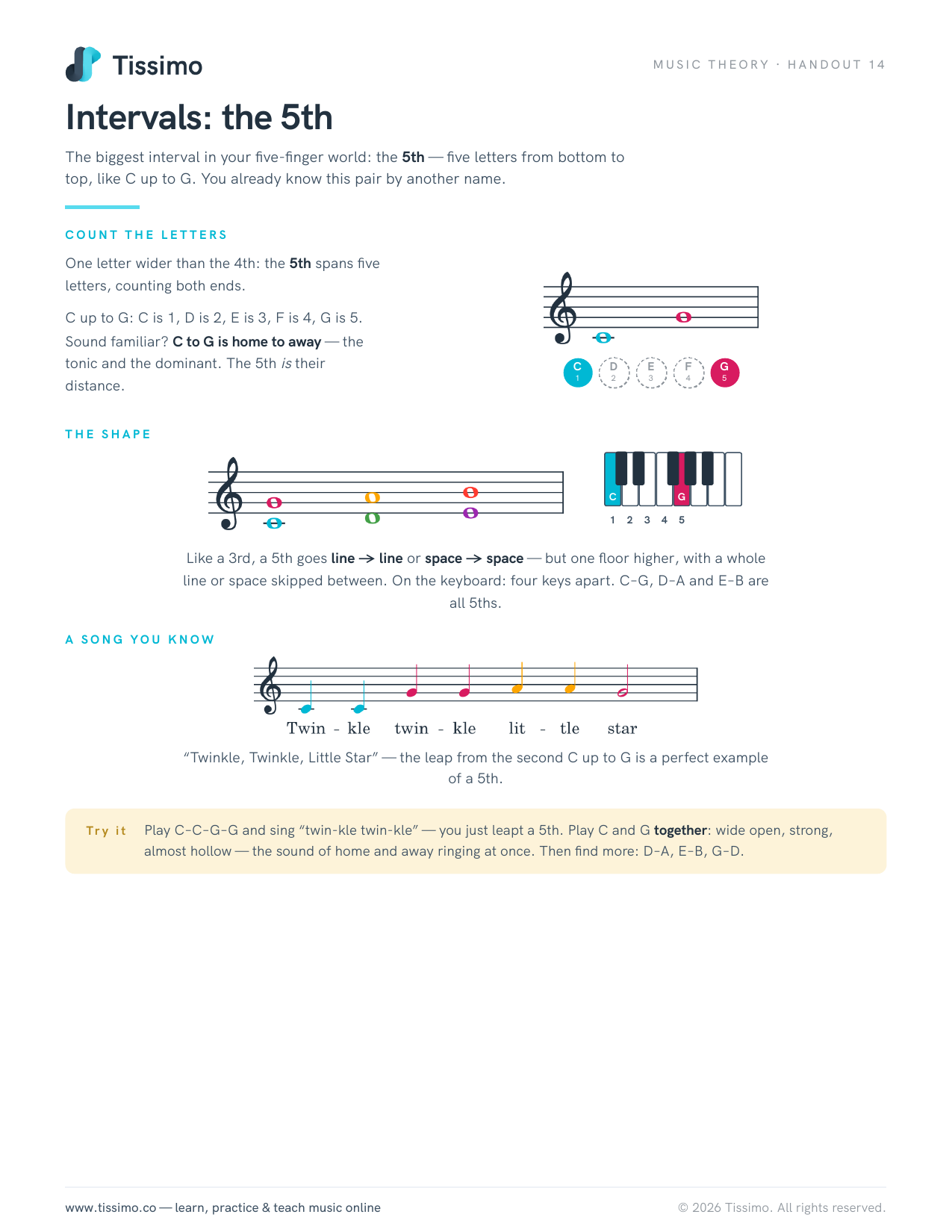
Learn the interval inside it with Intervals: the 5th.
Common questions
Why is a power chord called a 5 chord?
Because it contains only the root and the fifth. The symbol C5 means C plus its fifth, with no third.
Is a power chord major or minor?
Neither. It has no third, the note that decides major or minor, so the same power chord can work in either.