Chords & Harmony
Root Position
A chord is in root position when its root is the lowest note sounding, such as C–E–G with C in the bass. Root-position chords sound the most stable and are the easiest to name.
A chord is in root position when its root is the lowest note. C–E–G with C at the bottom is a C major chord in root position; so is C–G–E–C, or C in the left hand with E and G spread out in the right. Only the bass note decides it. The order of the upper notes does not matter.
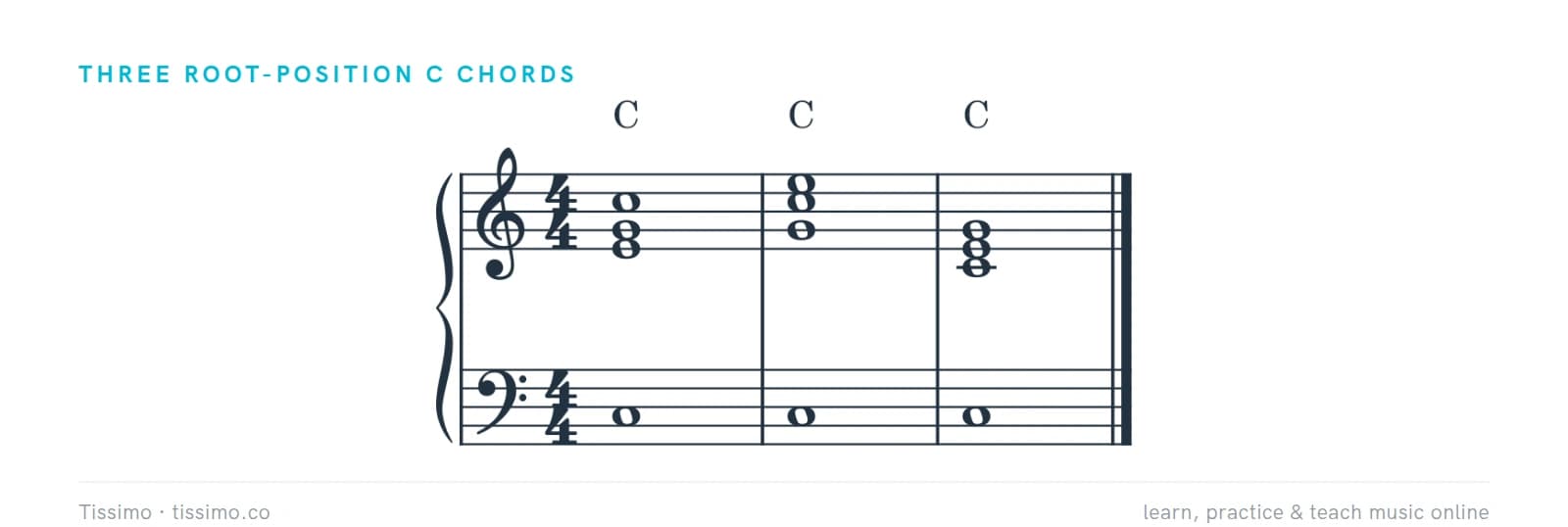
How it looks and sounds
Written as a close stack, a root-position triad is the snowman shape: three notes on neighboring lines or neighboring spaces. Seventh chords in root position add a fourth note on the next line or space up.
Root position is heard as the most stable, grounded arrangement of a chord. That is why so many pieces end on the tonic chord in root position, and why beginners usually learn chords in this shape first.
In figured bass and Roman numerals
In figured bass, a root-position triad is a 5/3 chord: a fifth and a third above the bass. Because it is so common, the figures are normally left out, and a Roman numeral with no figure (I, IV, V) means root position. A root-position seventh chord is written with a 7 (V7). Inverted chords add other figures: I6, I6/4, V6/5 and so on (see chord inversion).
Root position in progressions
A chain of root-position chords gives a bass line that leaps by fourths and fifths: a strong, plain sound heard in hymns, marches and a lot of pop music. The final cadence of a piece usually puts both V and I in root position, as in a perfect authentic cadence.
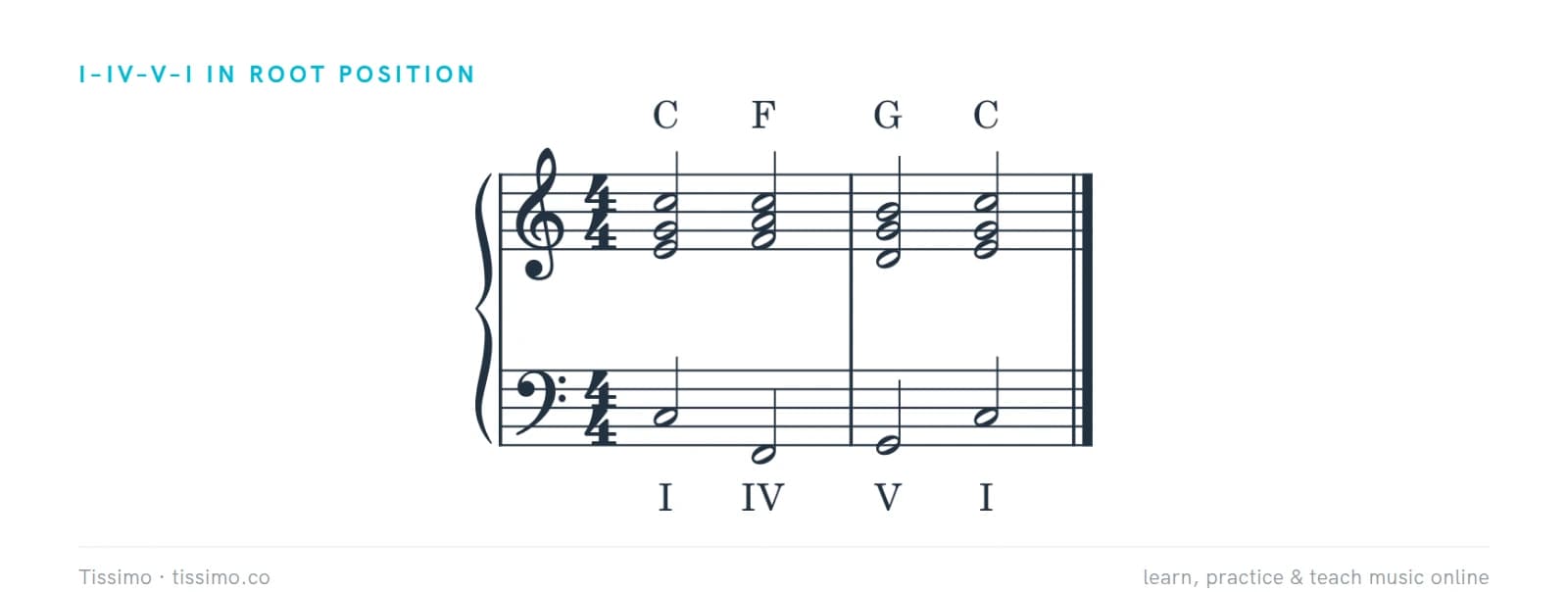
In four-part writing, two root-position chords whose roots are a step apart, such as IV and V, need care. If the upper voices move in the same direction as the bass, you get parallel fifths and octaves, so move them the other way, as the right hand does from IV to V above.
Triads & their inversions and Identify the triads & inversions give you practice telling root position from the inversions.
Common questions
Does root position mean the notes must be in the order C–E–G?
No. Only the bass note matters. With C in the bass, E and G can sit above it in any order or octave and the chord is still in root position.
Practice it: free worksheets
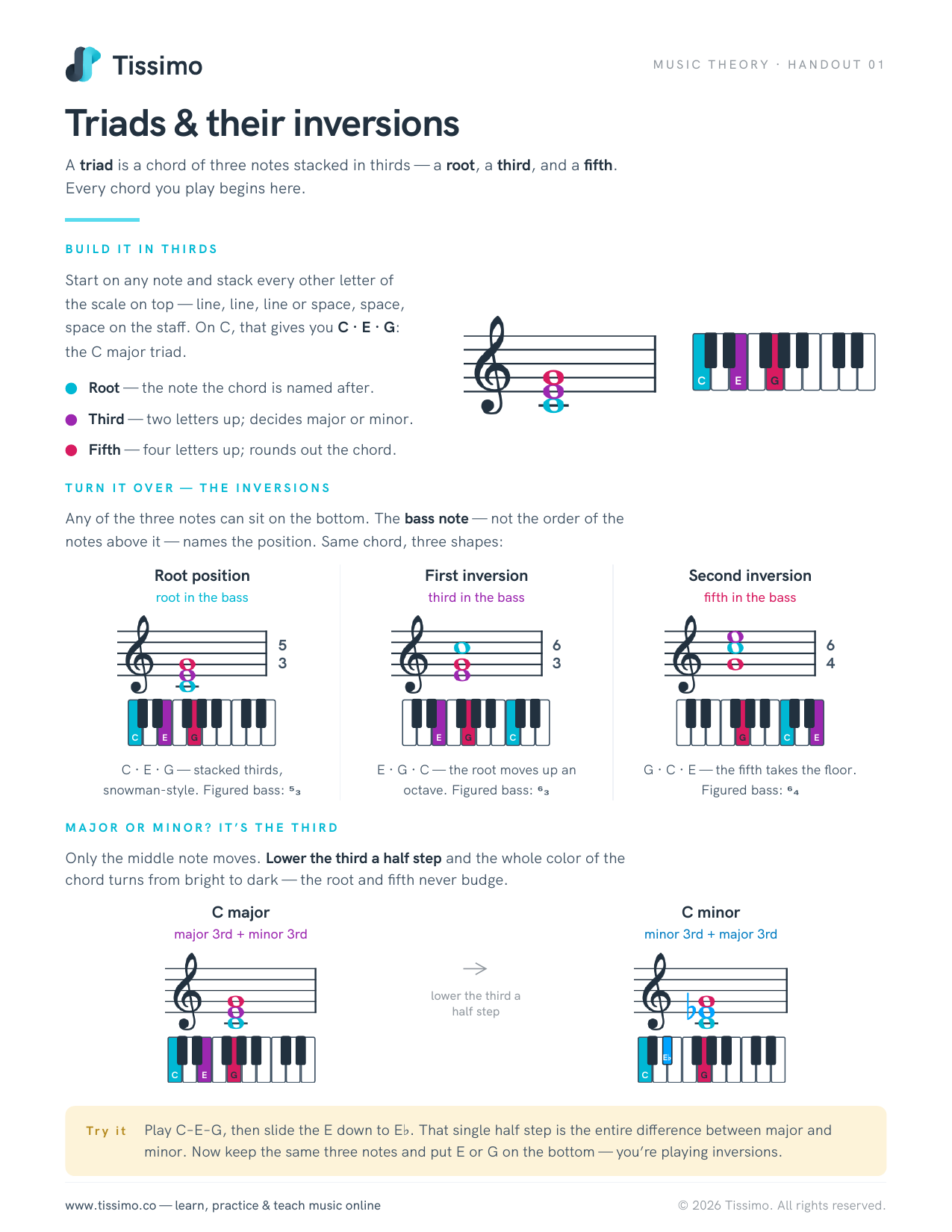 Triads & their inversionsA triad is a chord of three notes stacked in thirds — a root, a third, and a fifth. Every chord you play begins here.
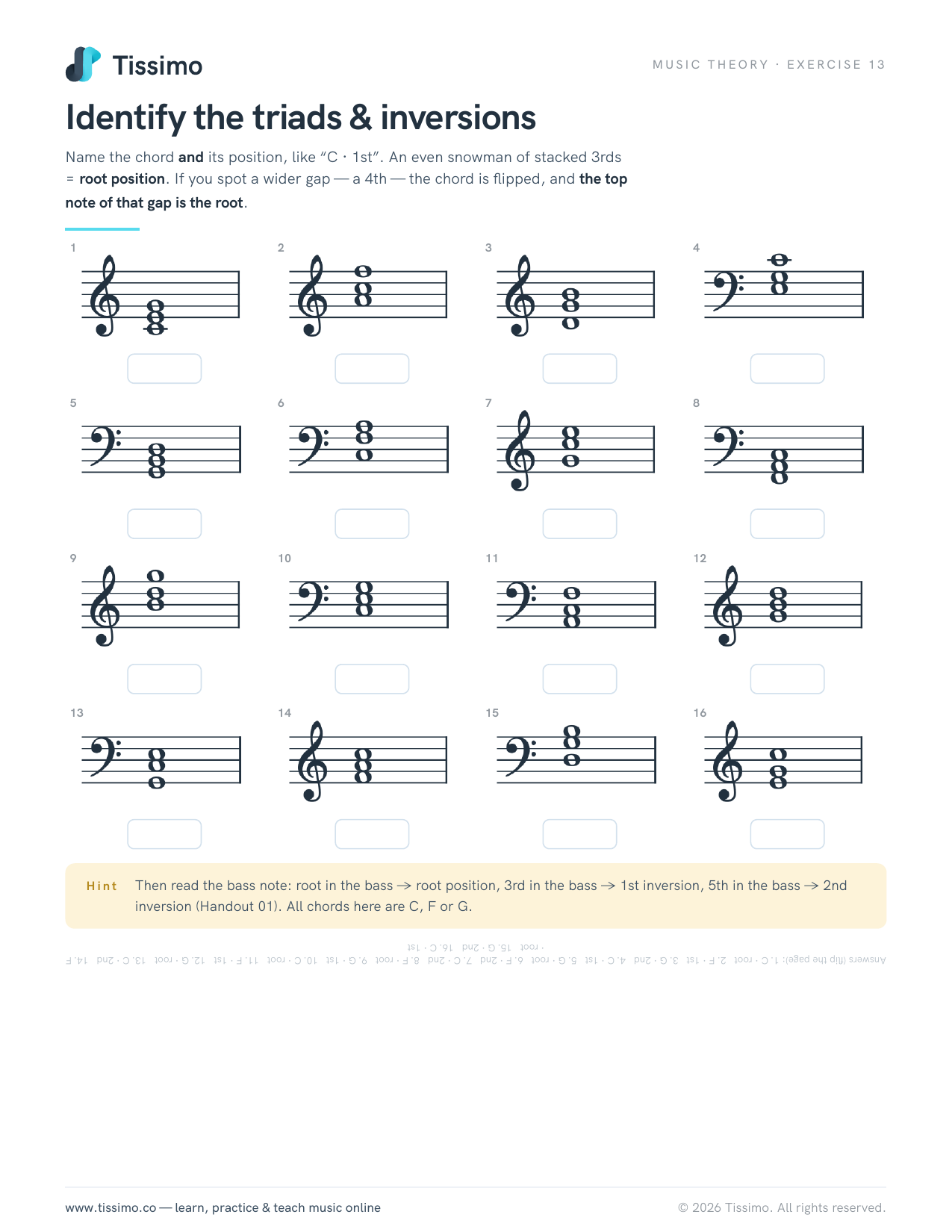 Identify the triads & inversionsName the chord and its position, like “C · 1st”. An even snowman of stacked 3rds = root position. If you spot a wider gap — a 4th — the chord is flipped, and the top note of that gap is the root.
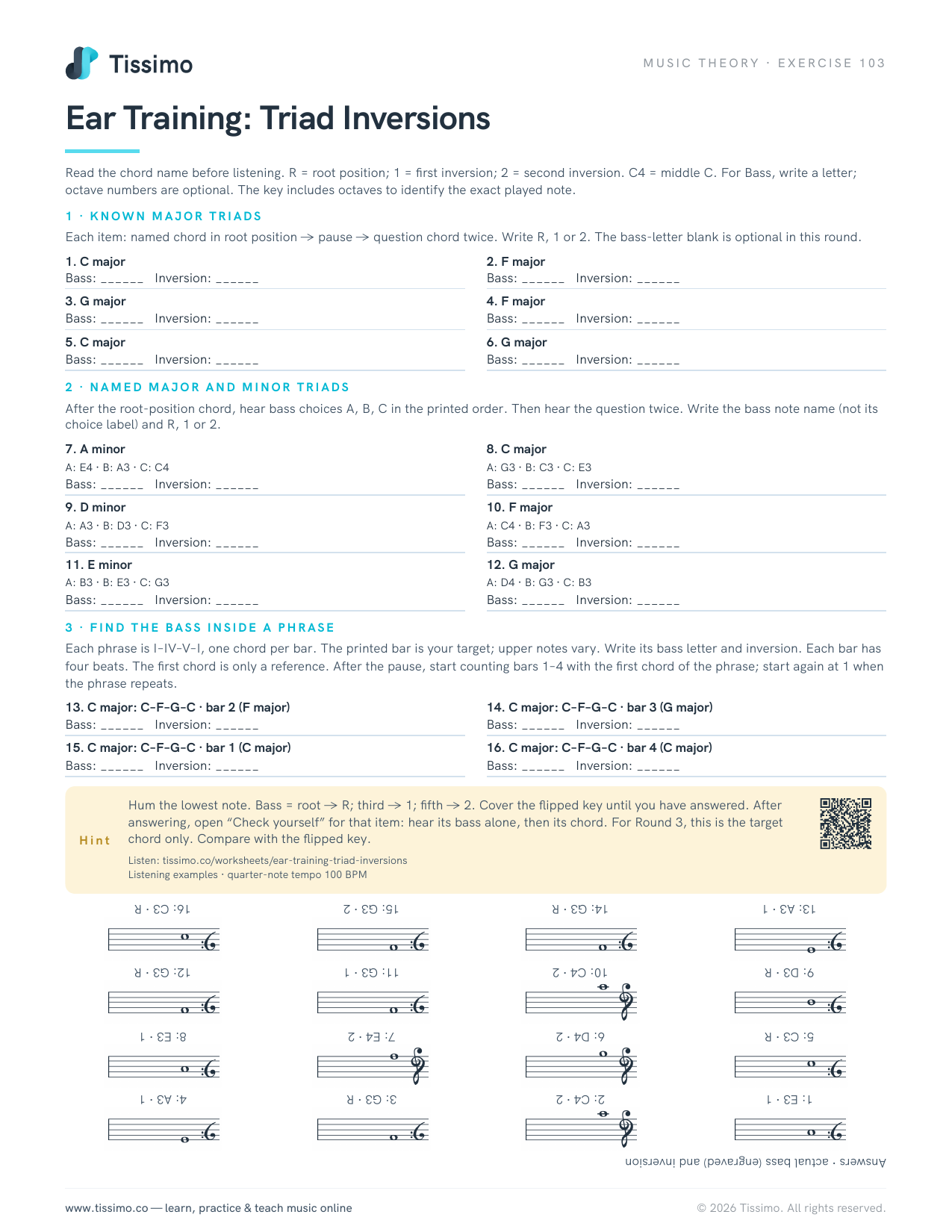
 Hear the Bass of the TriadHear the lowest note of a known chord. Decide whether it is the root, third or fifth.
 Ear Training: Triad Inversions