Chords & Harmony
Figured Bass
Figured bass is a bass line with small numbers (figures) beside its notes, showing which intervals to play above each bass note. Baroque keyboard players read it and improvised the full chords.
Figured bass is a bass line with small numbers, the figures, written under (or sometimes over) its notes. Each figure names an interval to play above the bass note, counted within the key. In the Baroque era a harpsichordist, organist or lutenist read the figures and filled in the chords on the spot, while a cello or bass instrument played the line itself. Together they formed the basso continuo that accompanied most Baroque music. Turning figures into full chords is called realizing the bass.
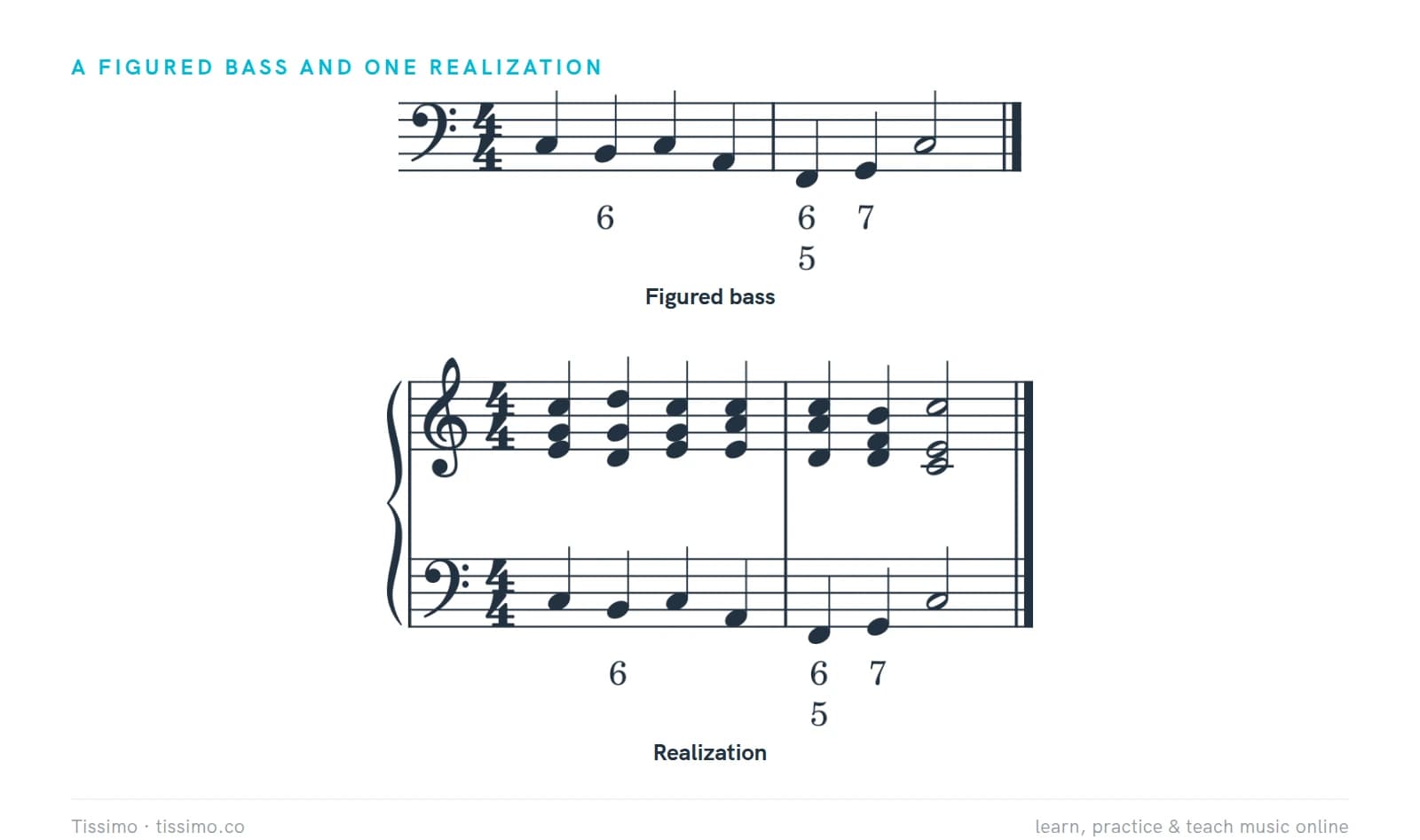
Reading the figures
The figures count up from the bass, using the notes of the key unless an accidental says otherwise, and in any octave.
- No figure: a root-position triad, short for 5/3 (a fifth and a third above the bass).
- 6: a first-inversion triad, short for 6/3.
- 6/4: a second-inversion triad (see six-four chord).
- 7: a root-position seventh chord (7/5/3).
- 6/5, 4/3 and 4/2 (or just 2): the three inversions of a seventh chord.
- An accidental on its own (♯, ♭ or ♮) changes the third above the bass. An accidental beside a number, or a slash through it, changes that interval. In A minor, a ♯ under E asks for G♯, the leading tone.
Realizing a figured bass
- Find the notes each figure asks for above the bass note.
- Spread them among the upper voices, doubling a note where needed.
- Connect the chords with smooth voice leading: keep common tones and move by step.
Baroque players added their own rhythms and ornaments as well, so no two realizations had to be alike.
Figures today
Figured bass gradually disappeared from composers' scores in the later 18th century, but the figures live on in roman numeral analysis: I6, I6/4 and V6/5 borrow their numbers directly from figured bass. Realizing figured bass is still a standard exercise in harmony courses and for early-music keyboard players.
Practice with Figured bass and Realize the figured bass.
Common questions
What does a 6 under a bass note mean?
Play a sixth and a third above the bass note: a first-inversion triad. Under E in C major, 6 asks for G and C, which makes C/E.
Is figured bass still used today?
Mostly in teaching and in early music. Harmony students realize figured basses as exercises, harpsichordists and organists still play from them in Baroque repertoire, and the figures survive in Roman numeral analysis (I6, V6/5).
Practice it: free worksheets
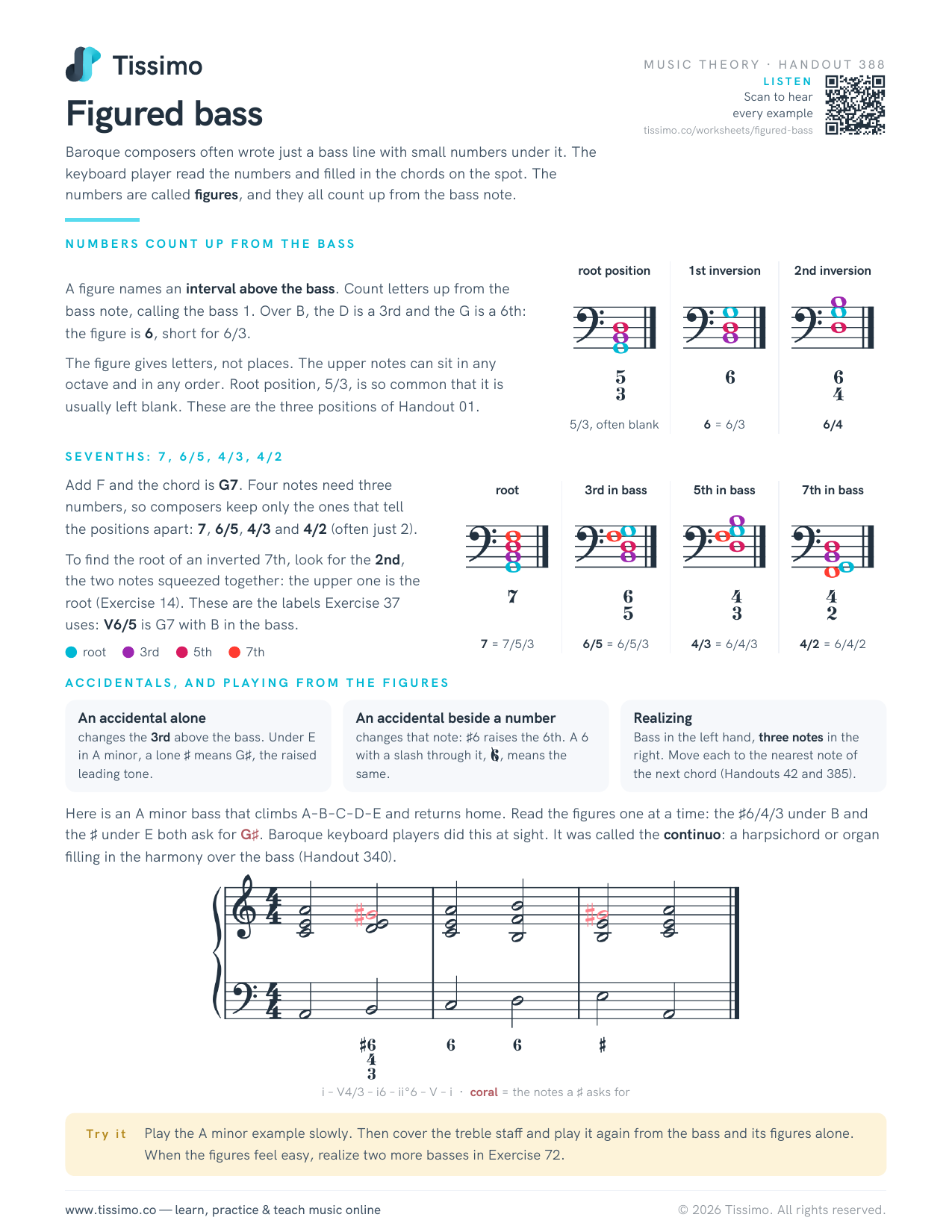 Figured bassBaroque composers often wrote just a bass line with small numbers under it. The keyboard player read the numbers and filled in the chords on the spot. The numbers are called figures, and they all count up from the bass note.
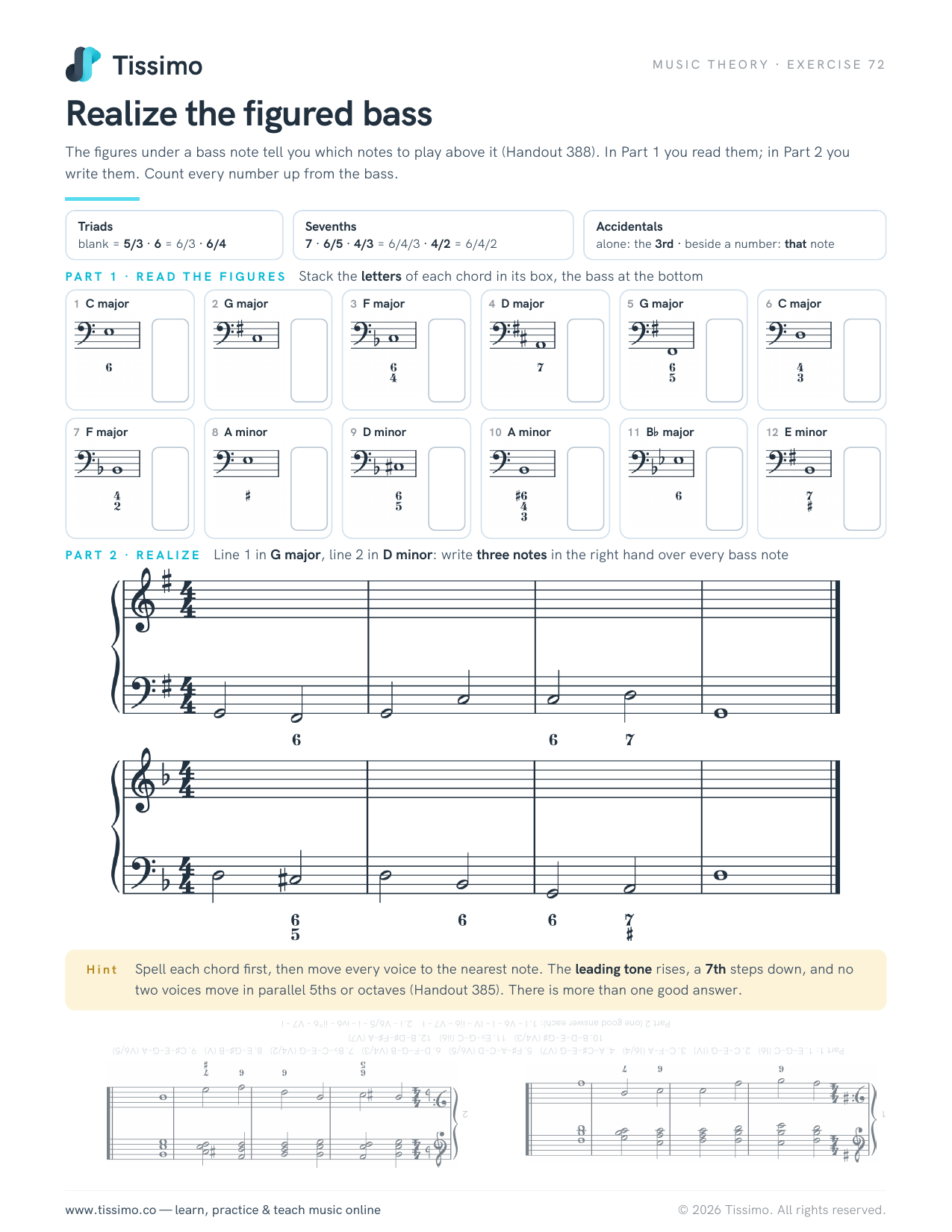 Realize the figured bassThe figures under a bass note tell you which notes to play above it (Handout 388). In Part 1 you read them; in Part 2 you write them. Count every number up from the bass.
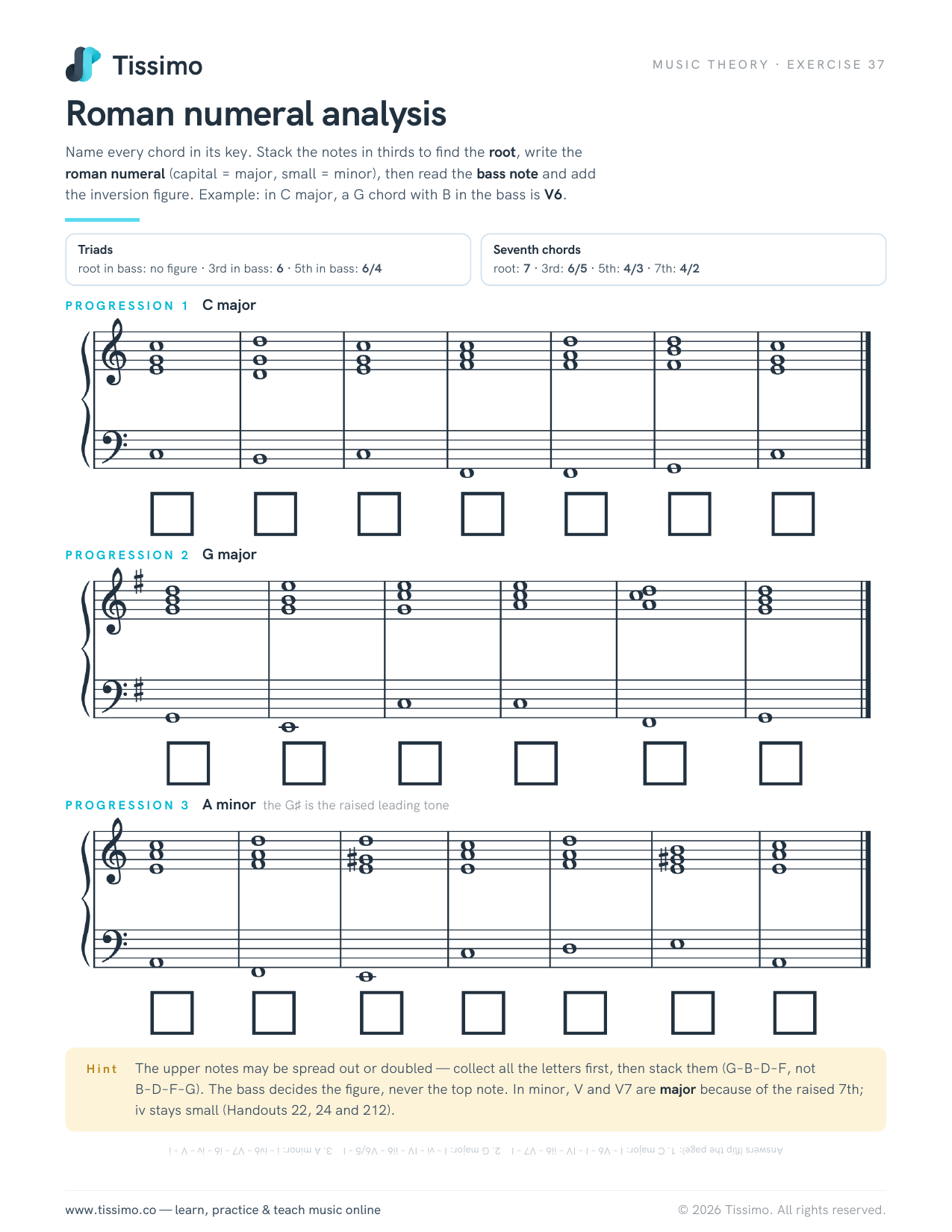 Roman numeral analysisName every chord in its key. Stack the notes in thirds to find the root, write the roman numeral (capital = major, small = minor), then read the bass note and add the inversion figure. Example: in C major, a G chord with B in the bass is V6.