Chords & Harmony
Major Triad
A major triad is a three-note chord built from a root, a major third and a perfect fifth, such as C–E–G. It is the bright, stable chord that most music treats as home.
A major triad is the chord most people picture when they hear the word "chord". It has three notes stacked in thirds: a root, the note a major third above it and the note a perfect fifth above it. On C that gives C–E–G. Its sound is usually described as bright and settled, and a great many pieces in major keys end on a major triad built on the home note.
How to build one
Count half steps up from the root: 4 half steps to the third, then 3 more to the fifth, 7 in all. C to E is 4 half steps (C–C♯–D–D♯–E), and E to G is 3. Because the recipe is a fixed distance, some major triads need sharps or flats to keep it: D major is D–F♯–A, and E♭ major is E♭–G–B♭.
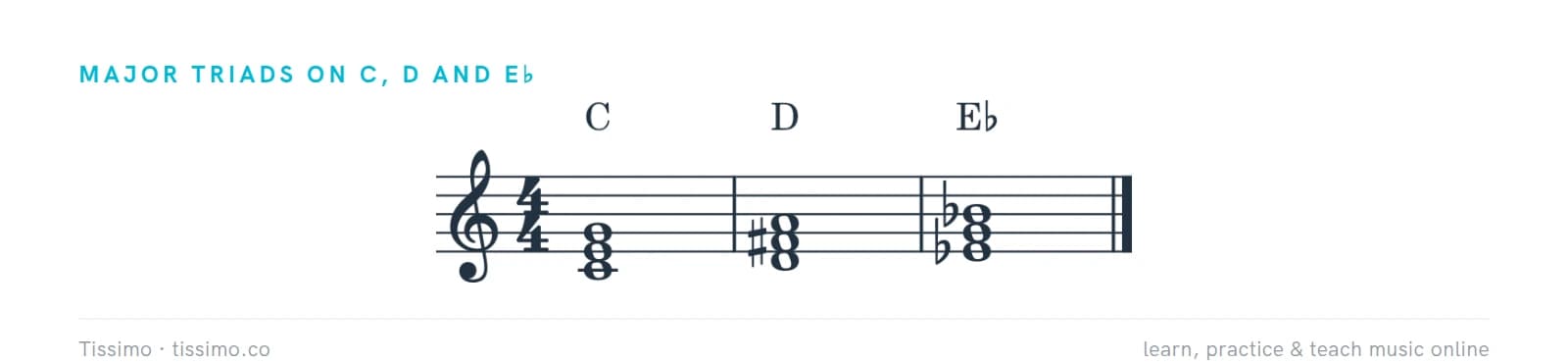
Another shortcut: the root, third and fifth of a major triad are degrees 1, 3 and 5 of the major scale that starts on the same note. The D major scale has an F♯, so the D major triad does too.
On the keyboard
With the right hand, play the root with your thumb, the third with finger 3 and the fifth with finger 5. C, F and G major use only white keys. D, E and A major put a black key in the middle. D♭, E♭ and A♭ major turn that around: black keys on the outside, a white key in the middle.
Major triads in a key
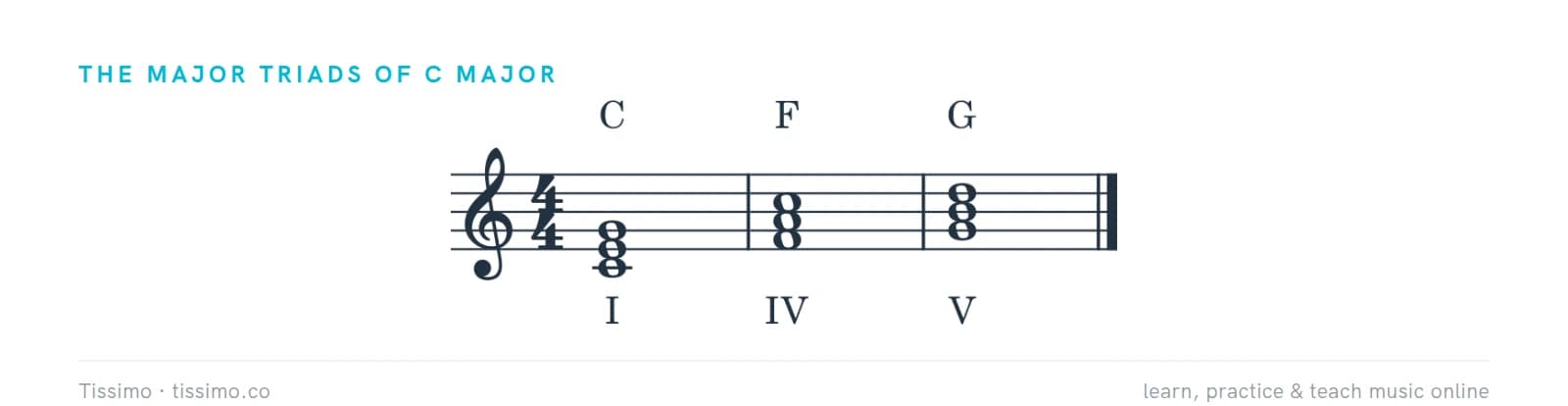
Every major key has three major triads, built on scale degrees 1, 4 and 5. In C major they are C (I), F (IV) and G (V), the primary chords. Roman numerals use capital letters for major triads, and chord symbols use the plain letter: "C" on its own means C major.
Major triad or major key?
A major key contains minor chords too (D minor, E minor and A minor in C major), and a minor key contains major chords. "Major" in a chord's name describes only that chord's own third, not the key around it.
Practice building and spotting them with Triads & their inversions and The primary chords: I, IV & V.
Common questions
What is the formula for a major chord?
Root, major third, perfect fifth: degrees 1, 3 and 5 of the major scale on the same note. In half steps, 4 from the root to the third and 3 from the third to the fifth.
Is a major triad the same as a major chord?
Yes. "Major chord" usually means a major triad. Chords with extra notes, such as Cmaj7 or C6, are named separately.
Practice it: free worksheets
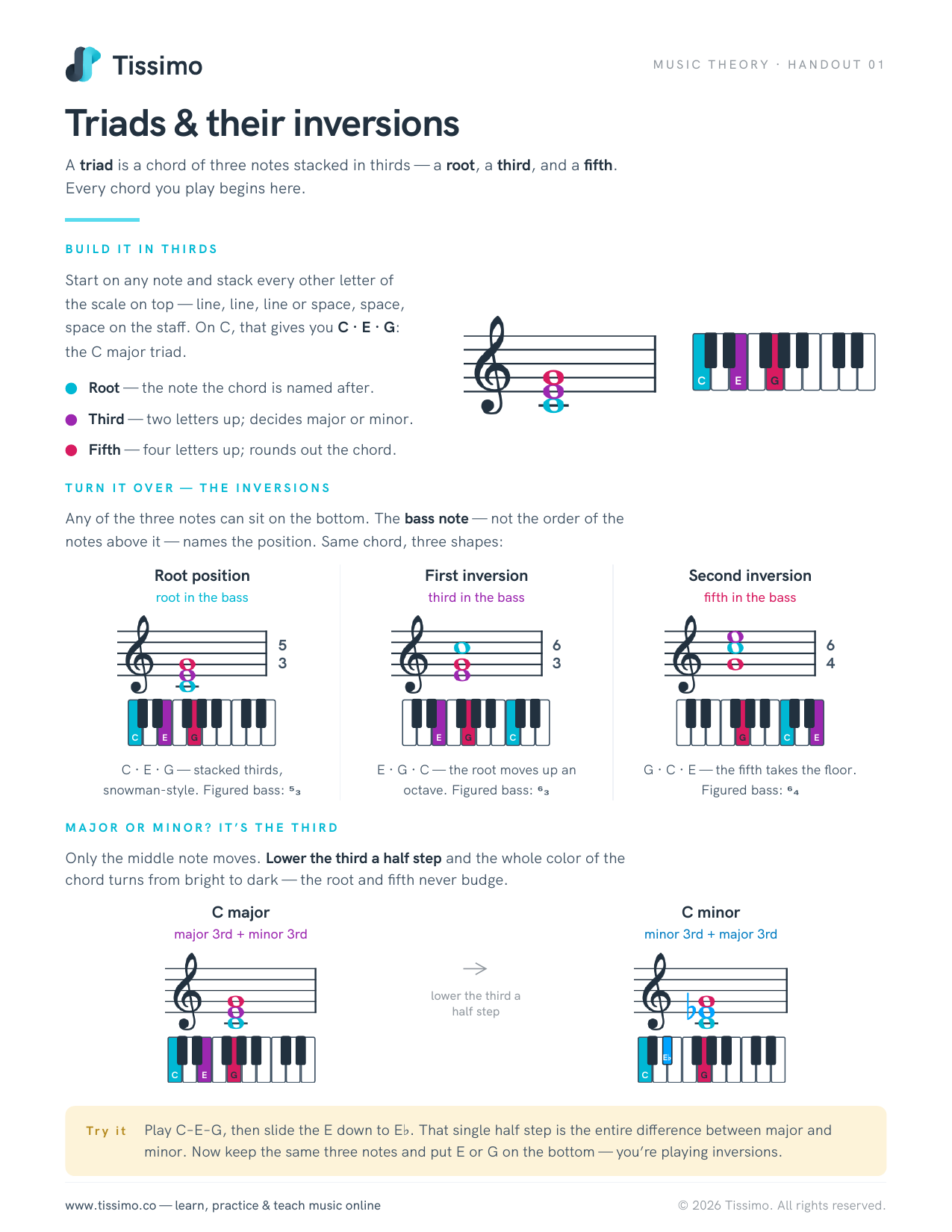 Triads & their inversionsA triad is a chord of three notes stacked in thirds — a root, a third, and a fifth. Every chord you play begins here.
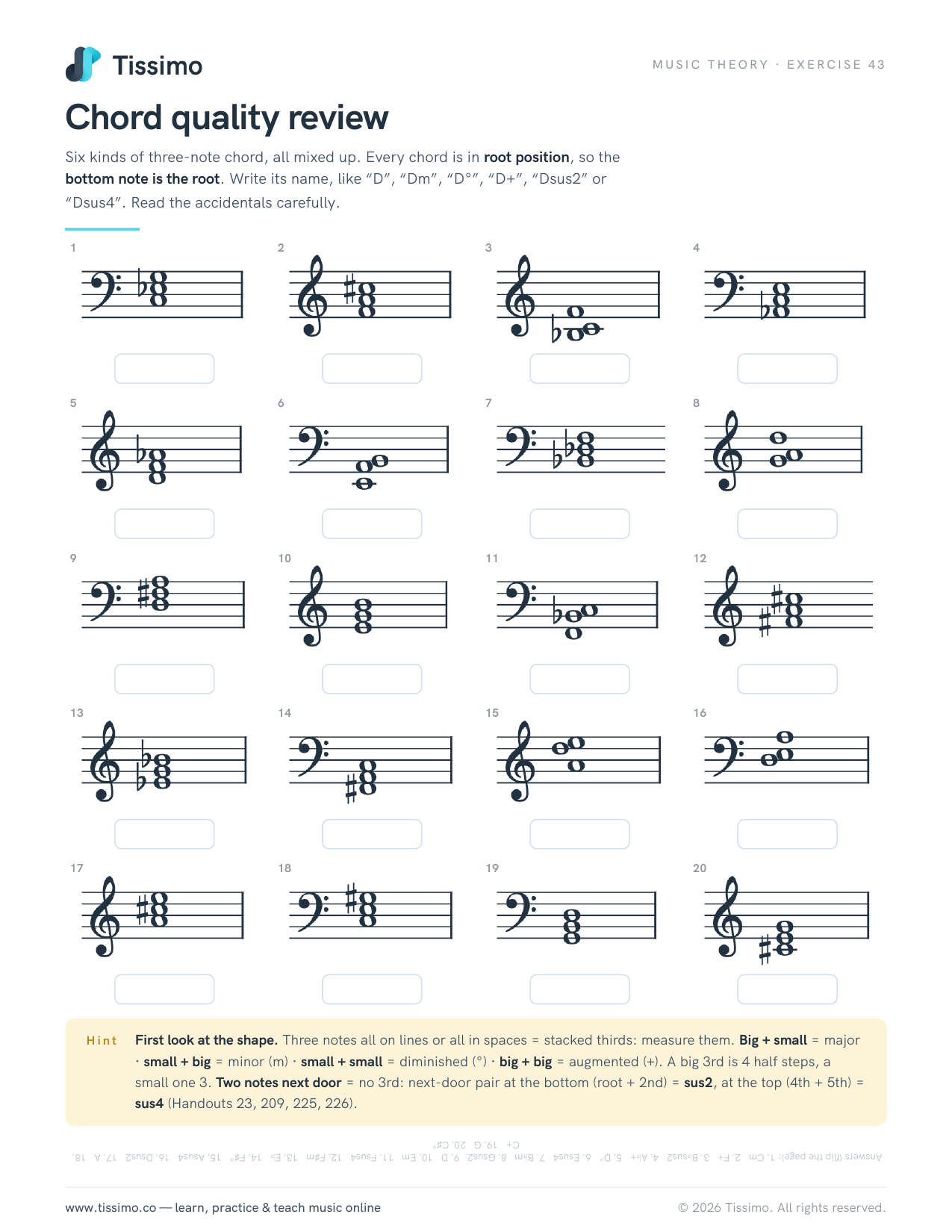 Chord quality reviewSix kinds of three-note chord, all mixed up. Every chord is in root position, so the bottom note is the root. Write its name, like “D”, “Dm”, “D°”, “D+”, “Dsus2” or “Dsus4”. Read the accidentals carefully.
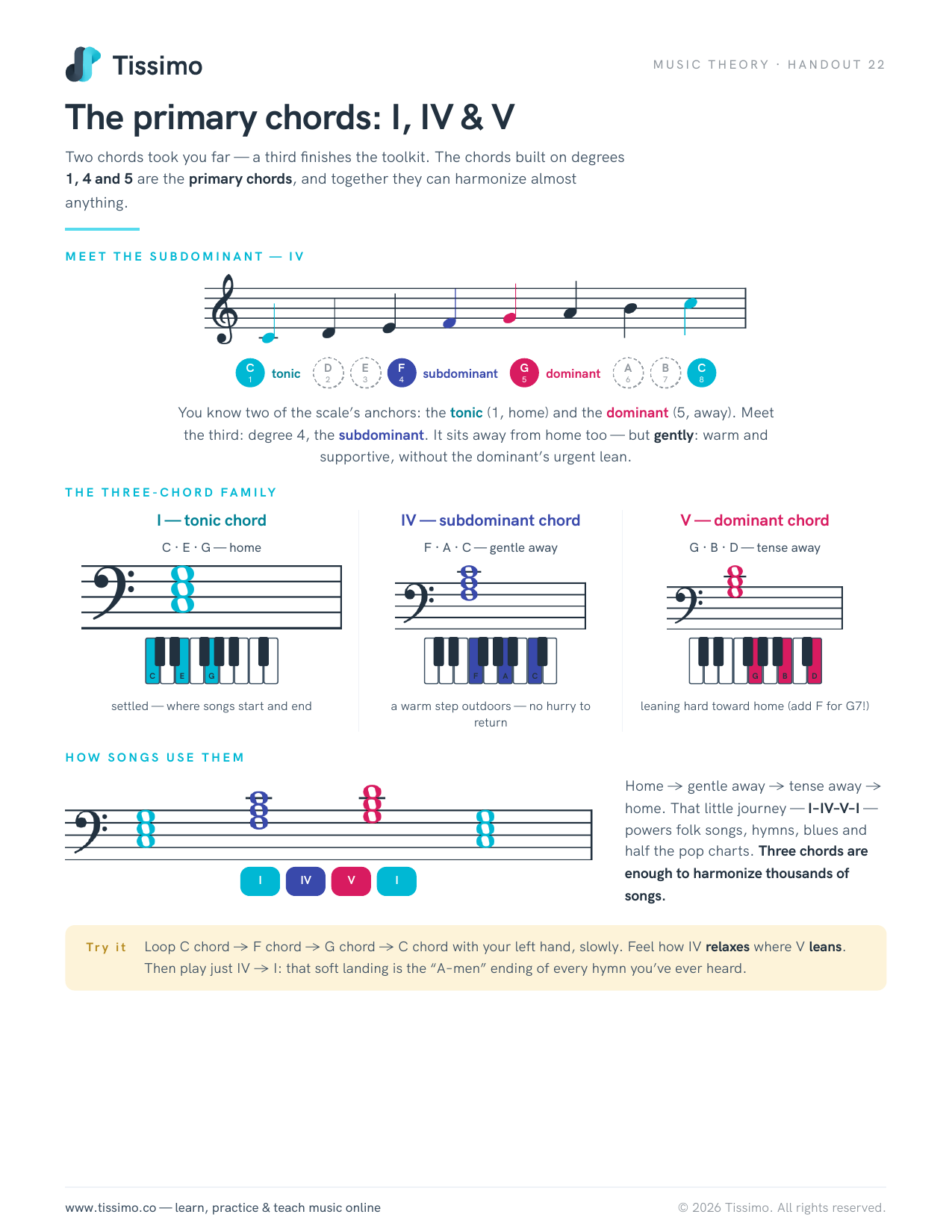 The primary chords: I, IV & VTwo chords took you far — a third finishes the toolkit. The chords built on degrees 1, 4 and 5 are the primary chords, and together they can harmonize almost anything.
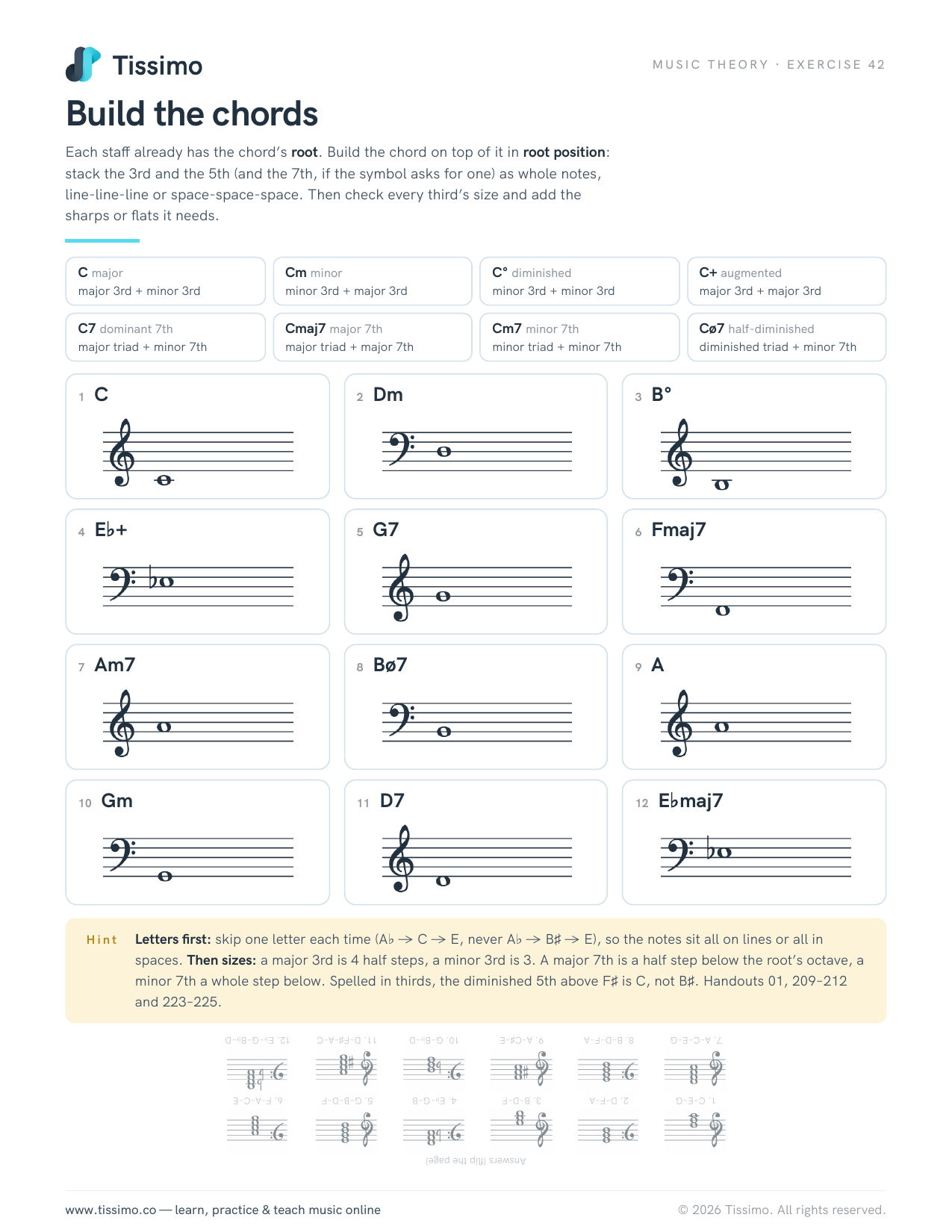 Build the chordsEach staff already has the chord’s root. Build the chord on top of it in root position: stack the 3rd and the 5th (and the 7th, if the symbol asks for one) as whole notes, line-line-line or space-space-space. Then check every third’s size and add the sharps or flats it needs.
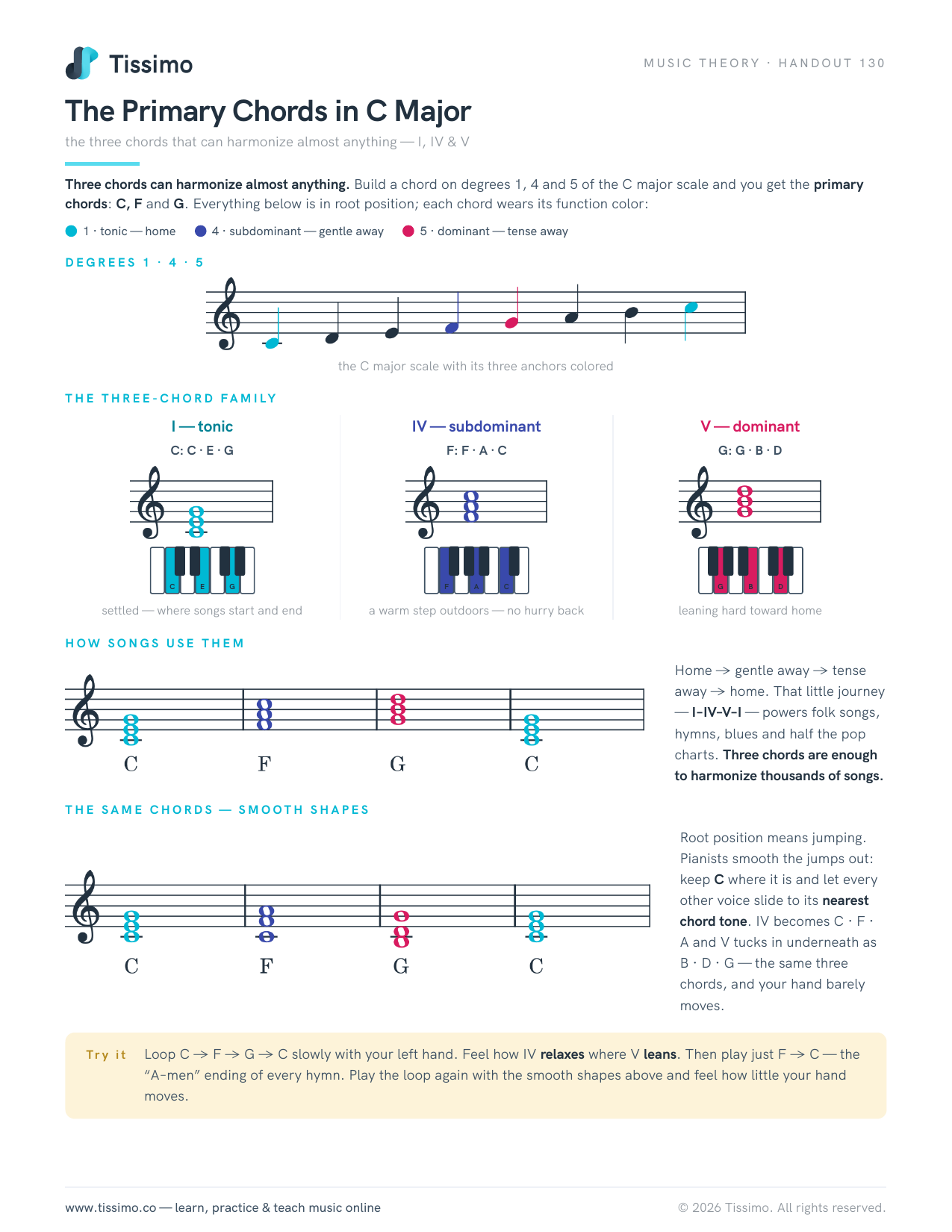 The Primary Chords in Every KeyI, IV and V — the three chords that can harmonize almost anything, in all 24 keys.