Chords & Harmony
Chord Inversion
A chord inversion is an arrangement of a chord with a note other than the root in the bass. In first inversion the third is lowest, in second inversion the fifth; seventh chords also have a third inversion.
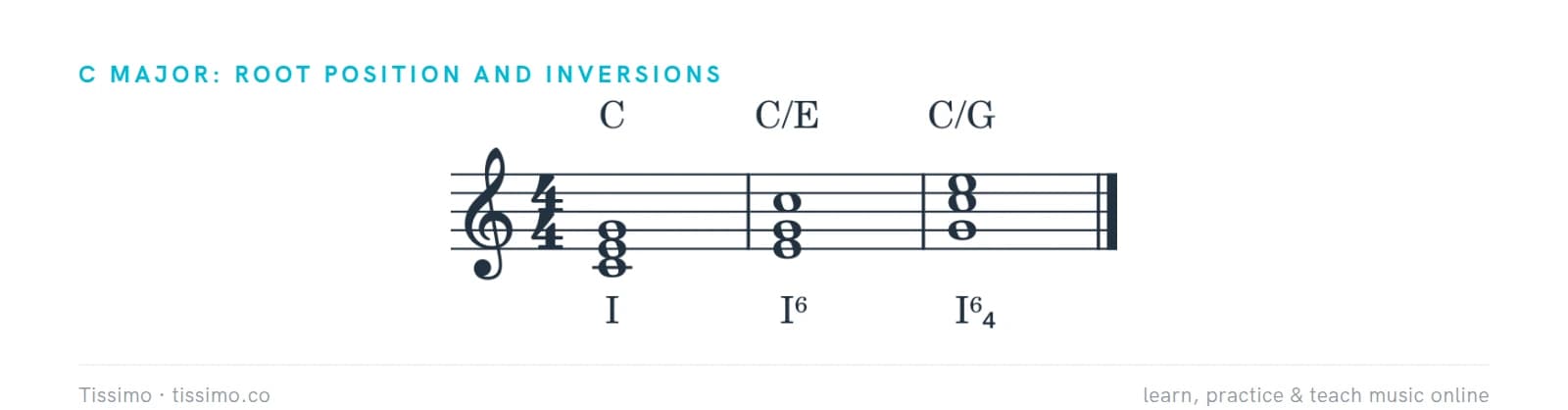
A chord is inverted when a note other than its root is in the bass. The chord keeps its name and its root; only the lowest note changes. C–E–G with E at the bottom is still a C major chord, now in first inversion.
Inversions of a triad
A triad has three notes, so it has three positions:
- Root position: the root in the bass (C–E–G). Figured bass 5/3, usually written without figures: I.
- First inversion: the third in the bass (E–G–C). Figures 6/3, shortened to 6: I6. Chord symbol C/E.
- Second inversion: the fifth in the bass (G–C–E). Figures 6/4: I6/4. Chord symbol C/G.
The figures count intervals above the bass. In E–G–C, C is a sixth above E, which is why a first-inversion triad is often called a "six chord".
Inversions of a seventh chord
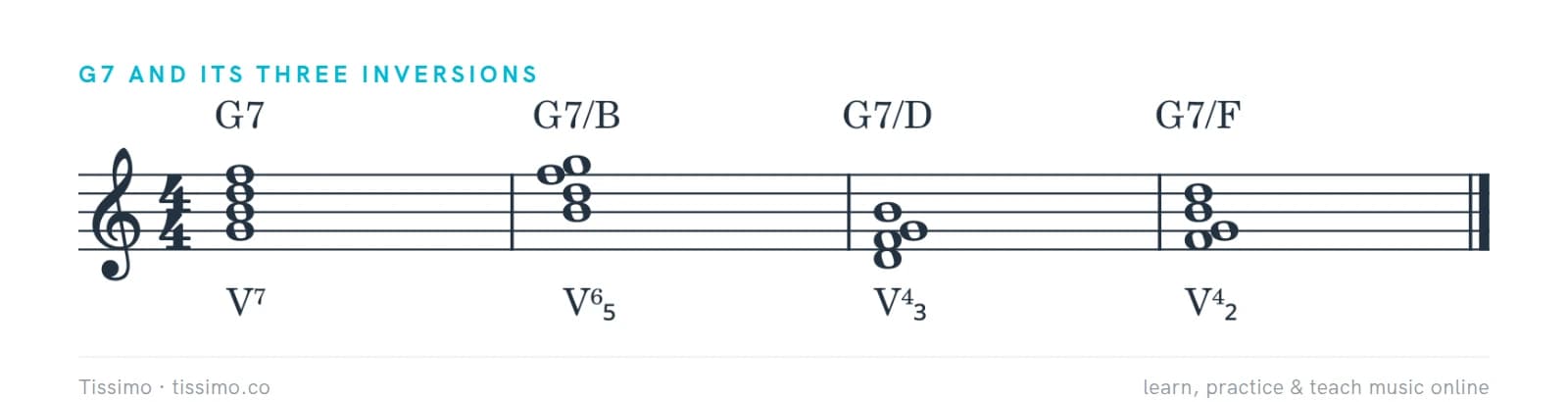
A seventh chord has four notes, so it has a third inversion as well, with the seventh in the bass. For G7 in C major:
- Root position, G in the bass: V7
- First inversion, B in the bass: V6/5
- Second inversion, D in the bass: V4/3
- Third inversion, F in the bass: V4/2 (sometimes shortened to V2)
Why composers invert chords
Inversions let the bass move by step instead of leaping: C – G/B – Am gives the bass line C–B–A. They lighten the sound (a first-inversion chord feels less final than root position), smooth out voice leading, and keep a phrase from sounding finished too early. The second inversion is a special case: the fourth above its bass makes it unstable, so it usually has a particular job to do (see six-four chord).
How to name an inversion
Find the root by stacking the notes in thirds, then ask which chord member is in the bass: root, third, fifth or seventh. The order of the upper notes does not matter.
Practice with Triads & their inversions, Identify the triads & inversions and Identify the dominant 7ths & inversions, then by ear with Ear Training: Triad Inversions.
Common questions
How do you tell which inversion a chord is in?
Stack the notes in thirds to find the root, then look at the bass. Root in the bass: root position. Third: first inversion. Fifth: second inversion. Seventh: third inversion.
What does C/E mean?
A C major chord with E in the bass, its first inversion. The letter after the slash is the bass note; see slash chord.
Is a chord inversion the same as an interval inversion?
No. A chord inversion changes which chord note is in the bass. An interval inversion moves the lower note of an interval up an octave, turning a third into a sixth or a fifth into a fourth.
Practice it: free worksheets
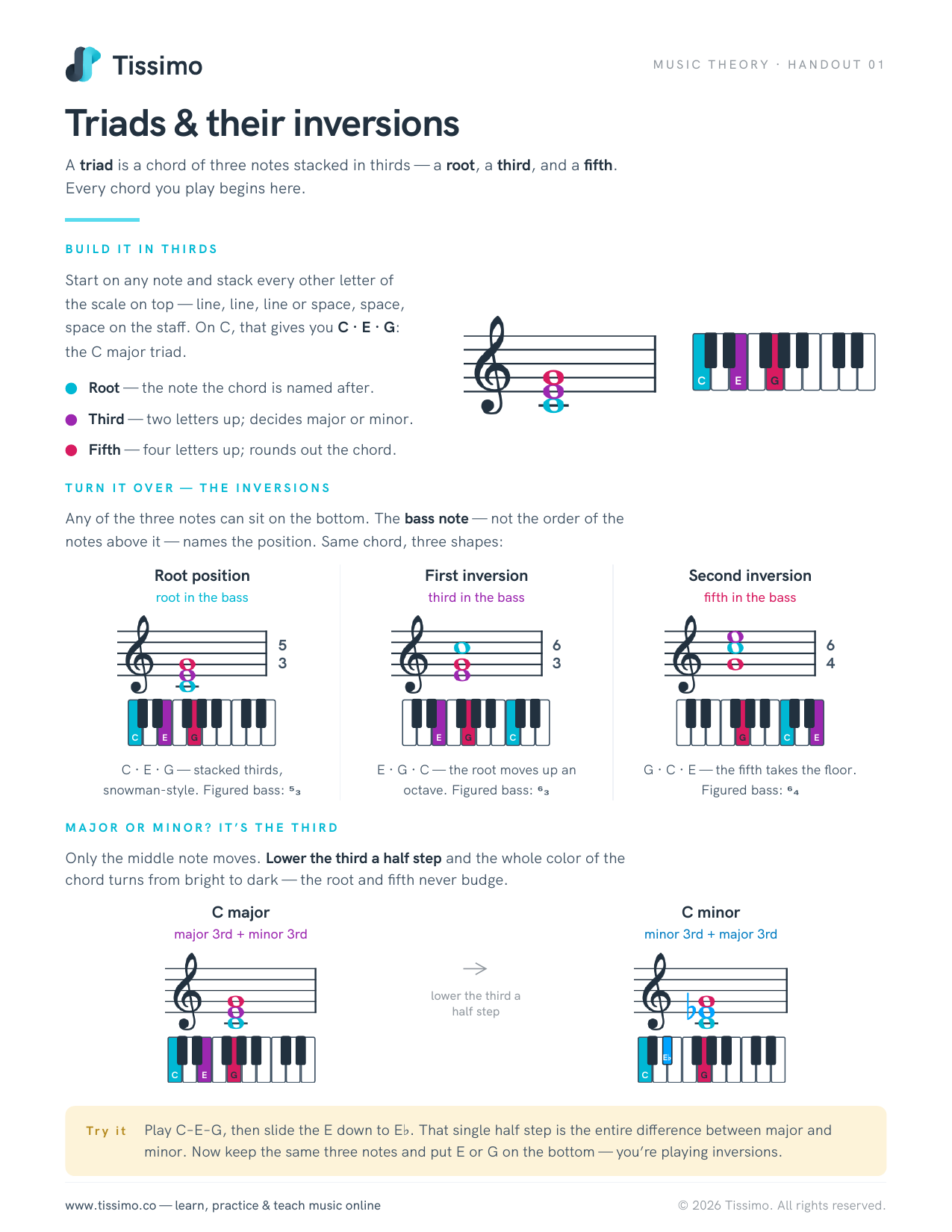 Triads & their inversionsA triad is a chord of three notes stacked in thirds — a root, a third, and a fifth. Every chord you play begins here.
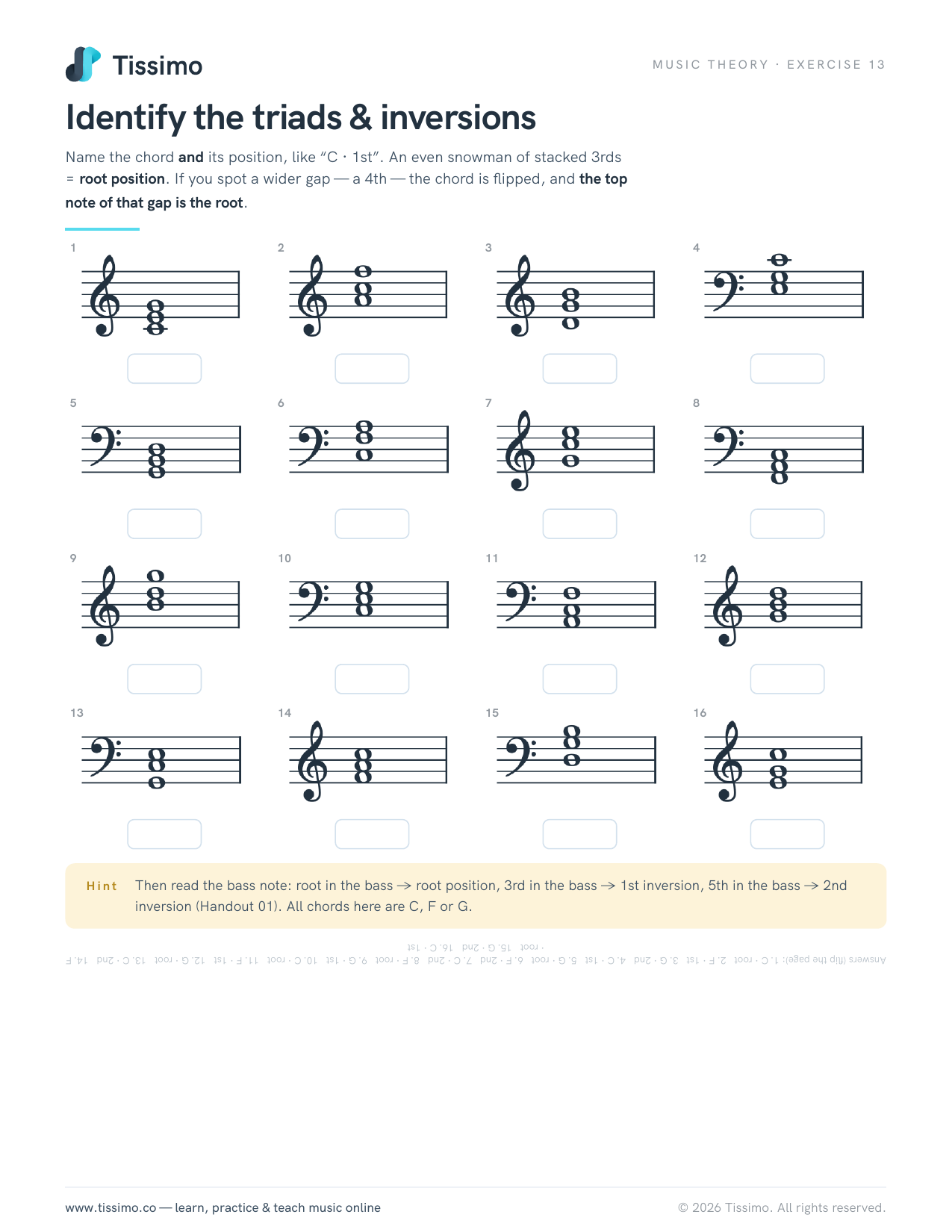 Identify the triads & inversionsName the chord and its position, like “C · 1st”. An even snowman of stacked 3rds = root position. If you spot a wider gap — a 4th — the chord is flipped, and the top note of that gap is the root.
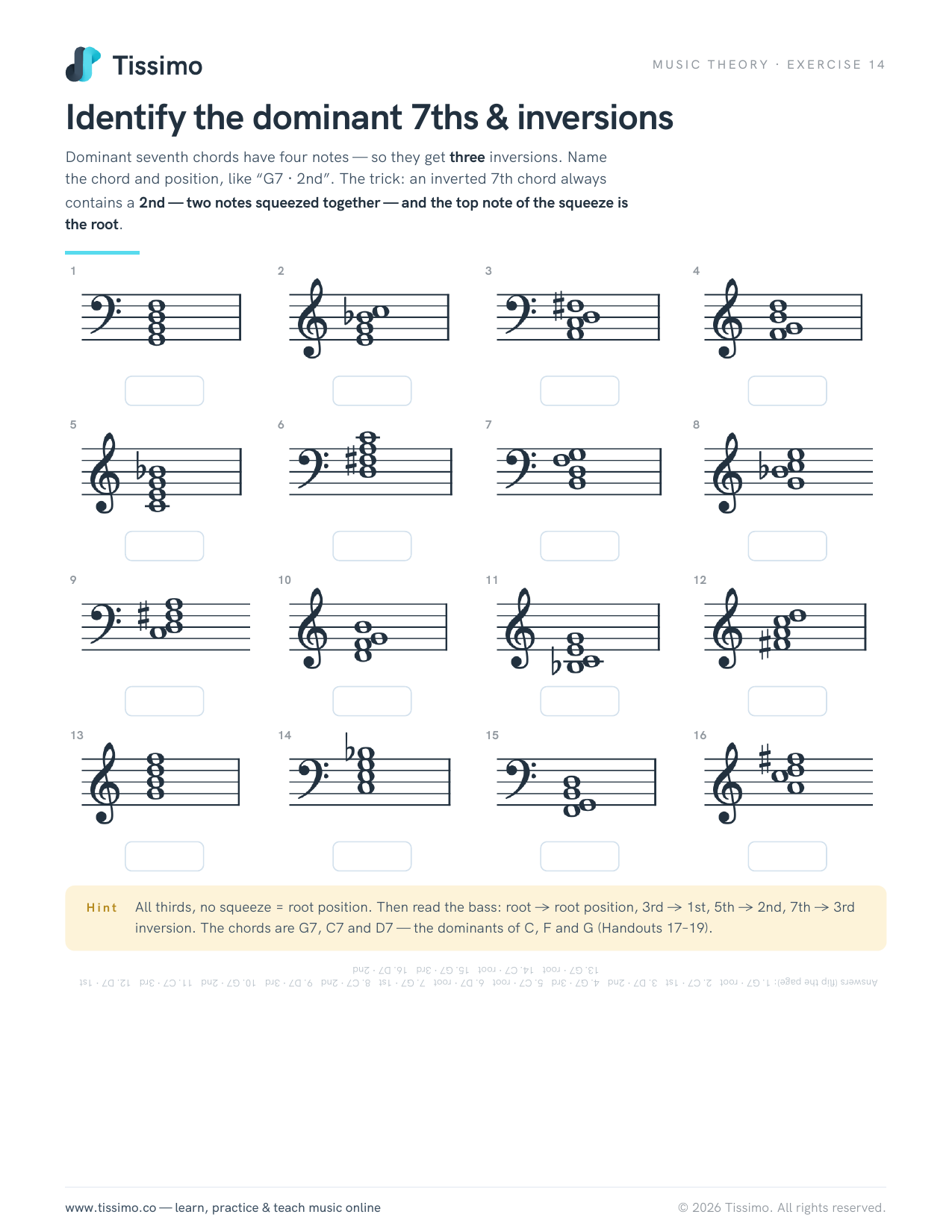 Identify the dominant 7ths & inversionsDominant seventh chords have four notes — so they get three inversions. Name the chord and position, like “G7 · 2nd”. The trick: an inverted 7th chord always contains a 2nd — two notes squeezed together — and the top note of the squeeze is the root.
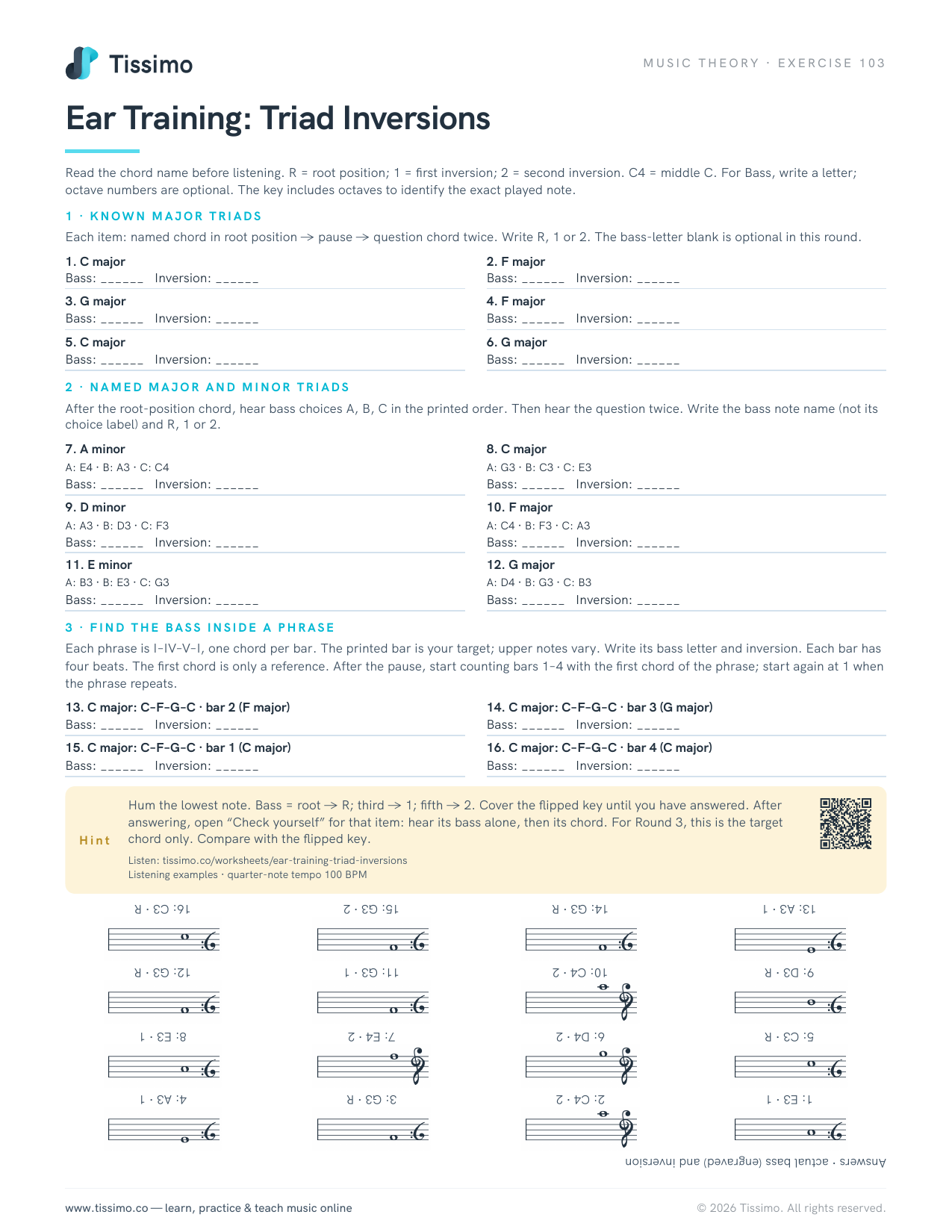 Ear Training: Triad Inversions
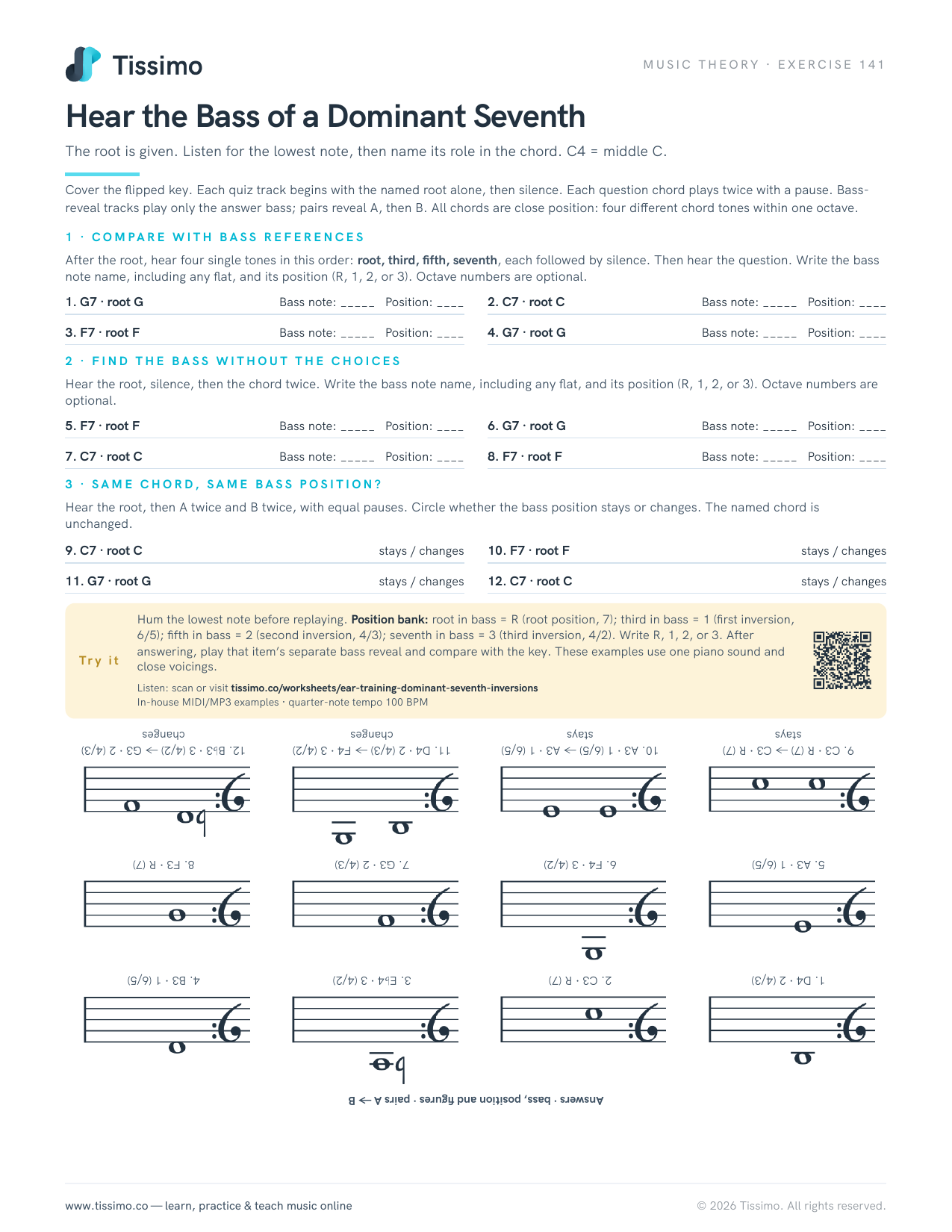 Hear the Bass of a Dominant SeventhThe root is given. Listen for the lowest note, then name its role in the chord. C4 = middle C.
 Hear the Bass of the TriadHear the lowest note of a known chord. Decide whether it is the root, third or fifth.