Chords & Harmony
Slash Chord
A slash chord is a chord symbol with a bass note after a slash, such as C/E or F/G. The letter before the slash names the chord; the letter after it names the lowest note to play.
A slash chord is a chord symbol with a second letter after a slash: C/E, G/B, F/G. Read it as "C over E". The letter before the slash names the chord, and the letter after it names the bass, the lowest note you play. Slash chords let a lead sheet say exactly which note belongs at the bottom, something a plain chord symbol leaves open.
Two kinds of slash chord
- The bass is a chord tone. C/E puts E, the third of C major, in the bass; C/G puts G, the fifth, there. These are inversions: C/E is a first-inversion C chord, and G7/F is G7 in third inversion.
- The bass is not in the chord. F/G puts G under an F major triad, which does not contain G. The result is a new, blended sound, in this case a soft-edged dominant chord that leads smoothly to C. C/D and B♭/C are built the same way.
Why musicians use them
The main reason is the bass line. Slash chords let the bass move by step while the chords above it change slowly or stay the same. Below, C – G/B – Am – Am/G – F walks the bass down C, B, A, G, F, a sound heard in countless songs and in Baroque bass lines alike.
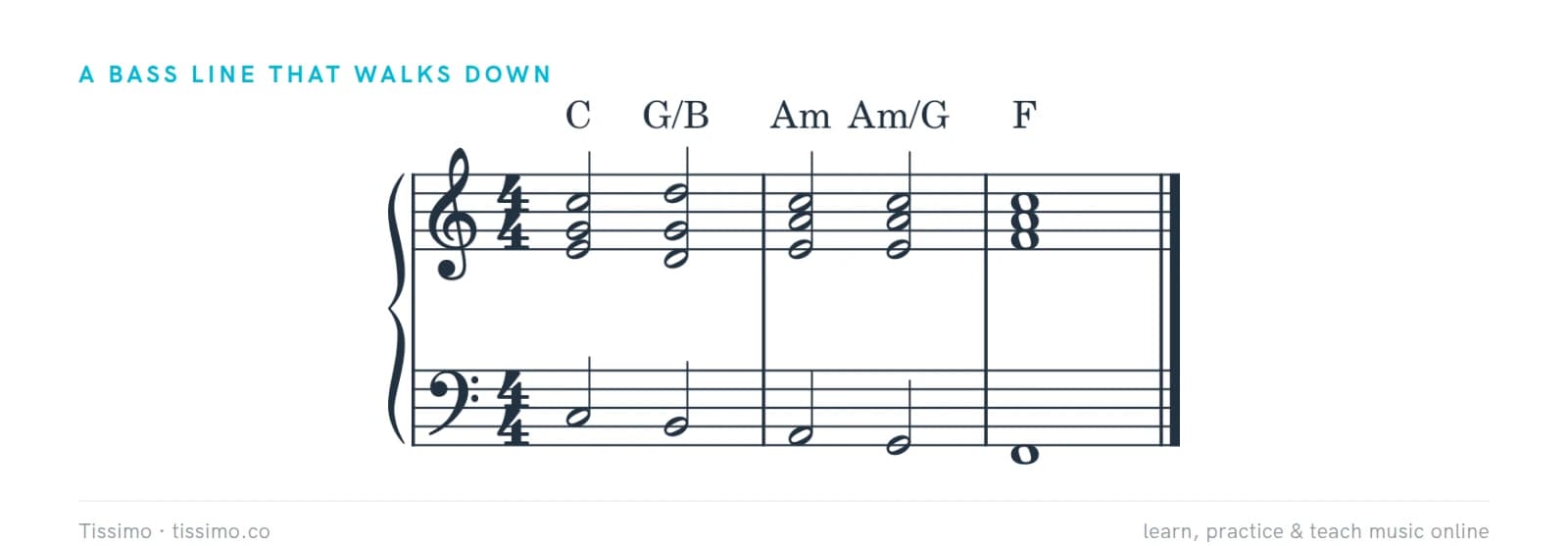
Slash chords also make pedal points easy to write (C – F/C – G/C – C keeps C in the bass throughout), and they name color chords like F/G that would be awkward to spell any other way.
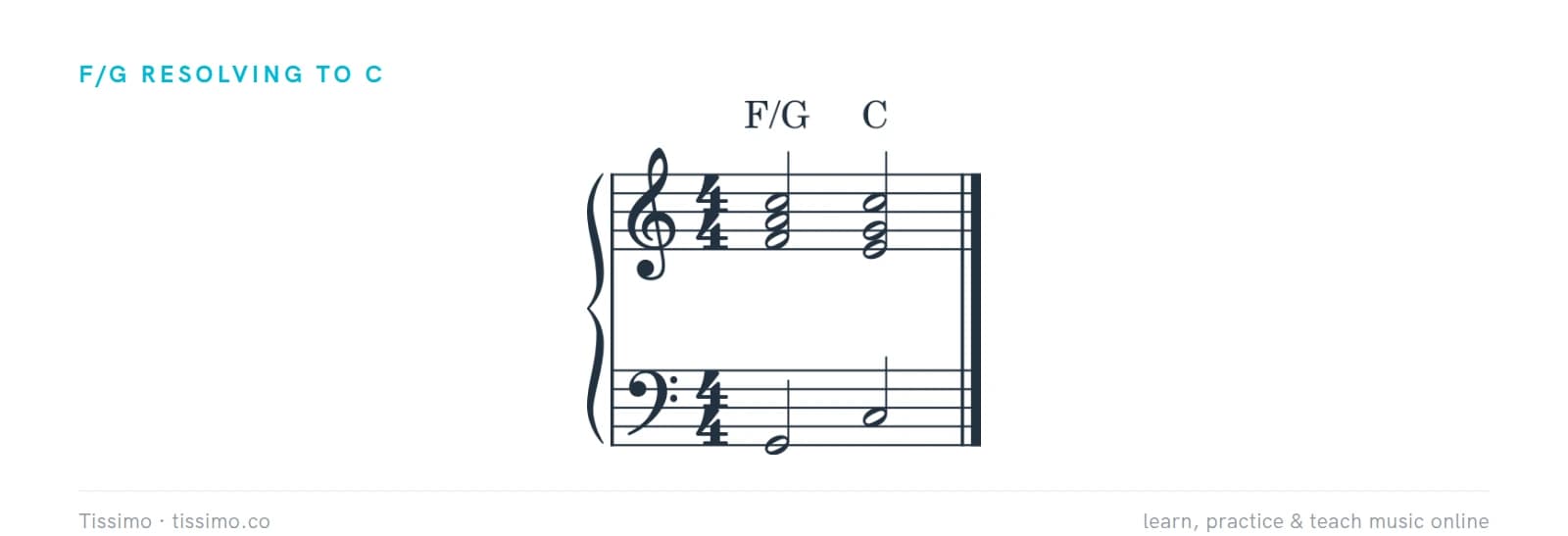
How to play one
On the piano, play the bass note with the left hand and the chord with the right. On guitar, play the chord shape and make sure the named bass note is the lowest string that sounds; some slash chords need a new fingering, or a bass player, to get the right note at the bottom.
Not the same as a Roman-numeral slash
In roman numeral analysis a slash means "of", not "over": V/V means "the dominant of the dominant", a secondary dominant. In chord symbols, the slash points to a bass note.
Practice with Reading a lead sheet and Realize a lead sheet.
Common questions
How do you read a slash chord like C/E?
Say "C over E": play a C major chord with E as the lowest note.
Is a slash chord the same as an inversion?
Sometimes. When the bass note belongs to the chord (C/E, C/G) the slash chord is an inversion. When it does not (F/G, C/D), it makes a different sound that is not an inversion of the chord before the slash.
Practice it: free worksheets
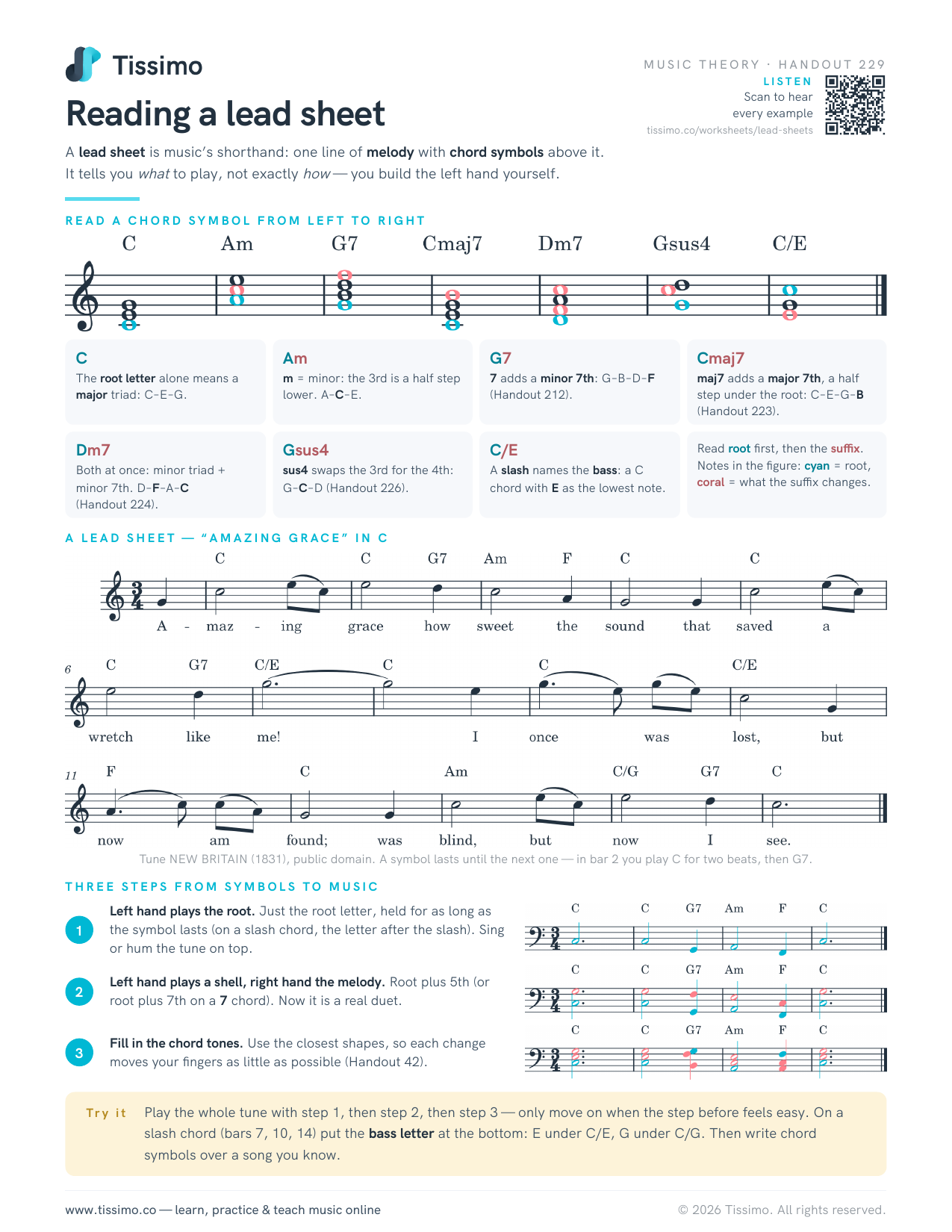 Reading a lead sheetA lead sheet is music’s shorthand: one line of melody with chord symbols above it. It tells you what to play, not exactly how — you build the left hand yourself.
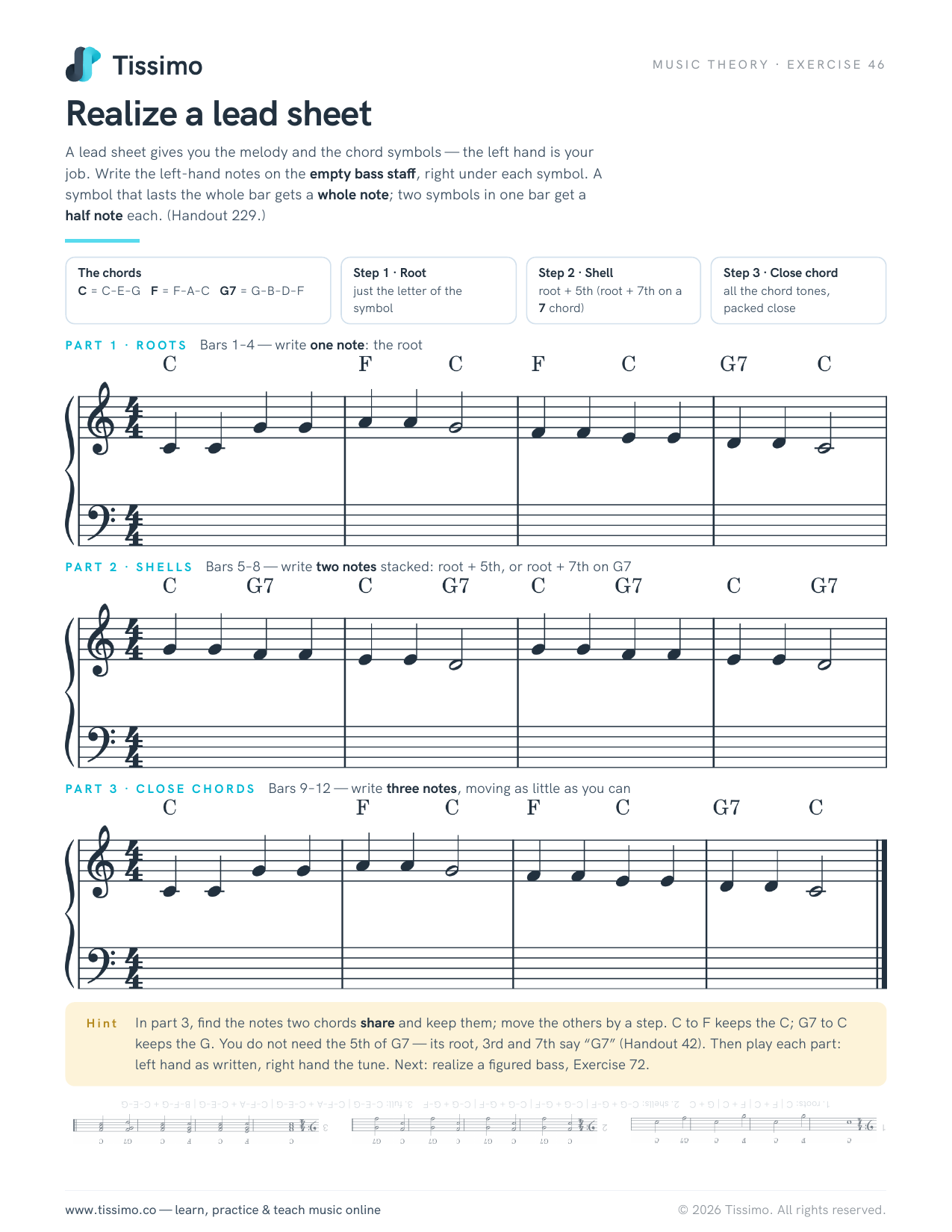 Realize a lead sheetA lead sheet gives you the melody and the chord symbols — the left hand is your job. Write the left-hand notes on the empty bass staff, right under each symbol. A symbol that lasts the whole bar gets a whole note; two symbols in one bar get a half note each. (Handout 229.)
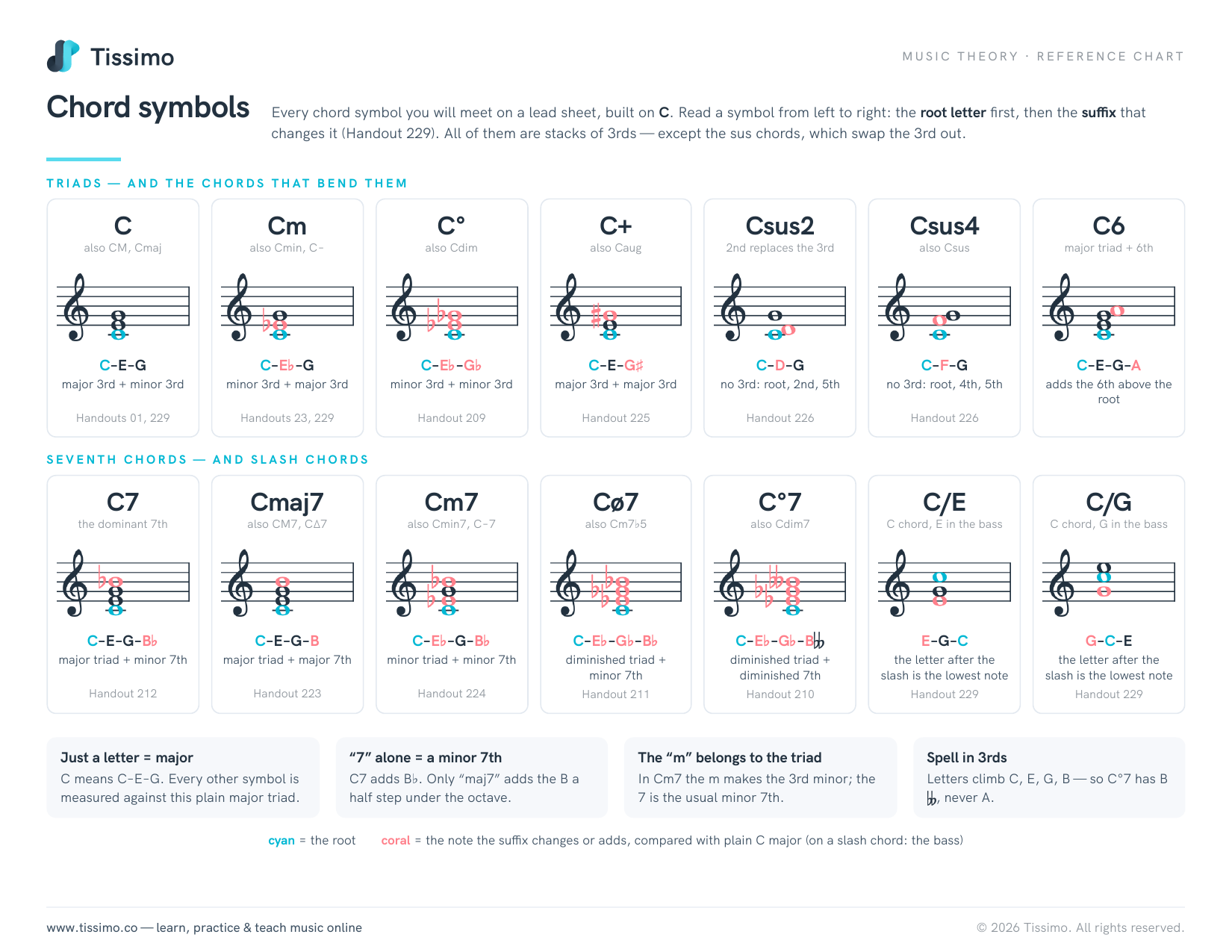 Chord symbolsEvery chord symbol you will meet on a lead sheet, built on C. Read a symbol from left to right: the root letter first, then the suffix that changes it (Handout 229). All of them are stacks of 3rds — except the sus chords, which swap the 3rd out.
 Hear the Bass of the TriadHear the lowest note of a known chord. Decide whether it is the root, third or fifth.