Notation & Symbols
Slur
A slur is a curved line grouping notes for connected playing or instrument-specific articulation: usually legato on piano, without new tonguing on winds, or in one bow on strings. Slurs can include repeated pitches.
A slur is a curved line drawn over or under two or more notes. It usually asks for a smooth connection, called legato, or indicates how to group the notes for a particular instrument. Unlike a tie, it does not combine their durations into one sustained note.
What a slur asks each instrument to do
- Piano: hold each key until the next one goes down, so there is no gap between the notes. At the end of the slur, lift the hand slightly before the next group.
- Wind and brass: tongue only the first note under the slur; the rest change with the fingers or the lips, in one breath.
- Strings: play all the notes under the slur in one bow stroke (see bowing).
- Voice: sing all the notes under the slur on one syllable, as in a melisma.
Short slurs and long slurs
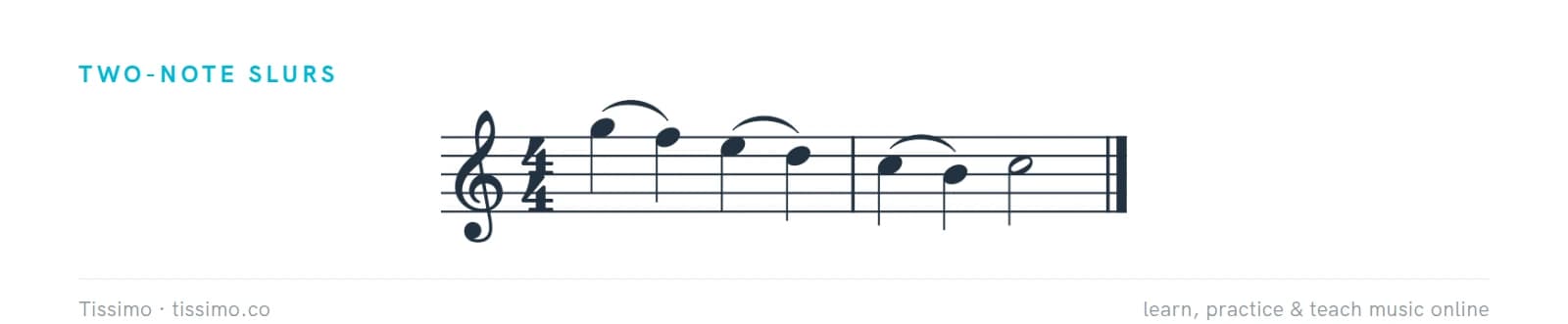
A two-note slur usually means a small gesture: lean a little into the first note and let the second be lighter and shorter, like a sigh.
Over longer stretches, slurs often show phrasing: where a musical sentence begins and ends. These long phrase marks are a guide to shaping and breathing, not always a strict order to connect every note; a pianist may still need to lift the hand somewhere inside one.
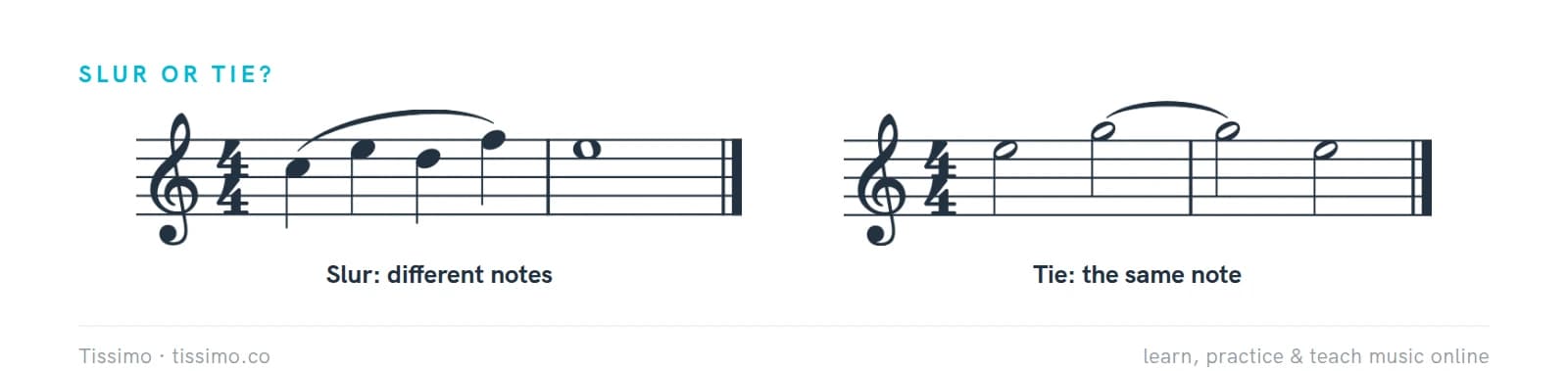
Slur or tie?
The curves look similar, but their functions differ:
- A tie joins successive notes of the same pitch into one sustained sound. Play once and hold for their combined duration.
- A slur groups notes that are still articulated individually as appropriate to the instrument. It can contain repeated pitches or begin and end on the same pitch with other notes between.
Look at the whole group and the placement of the curve, not just its endpoint pitches. Repeated notes under a string slur, for example, may be separated within one bow stroke.
Slurs with other marks
Staccato dots under a slur ask for portato: notes slightly separated but still gently linked, like a soft pulse within one breath or one bow. A slur can also carry accents and tenuto marks; the notes stay connected while those marks shape them.
Practice with Ties vs Slurs, Two-Note Slurs and Phrasing.
Common questions
What does a slur mean in music?
Play the notes under it smoothly connected (legato): without gaps on the piano, in one breath on a wind instrument, in one bow on a string instrument.
How can you tell a slur from a tie?
A tie joins successive same-pitch notes into one held sound; a slur groups separately played notes. Slurs can also contain repeated pitches or have matching endpoint pitches, so inspect the whole group and the curve's attachment rather than relying only on pitch.
Practice it: free worksheets
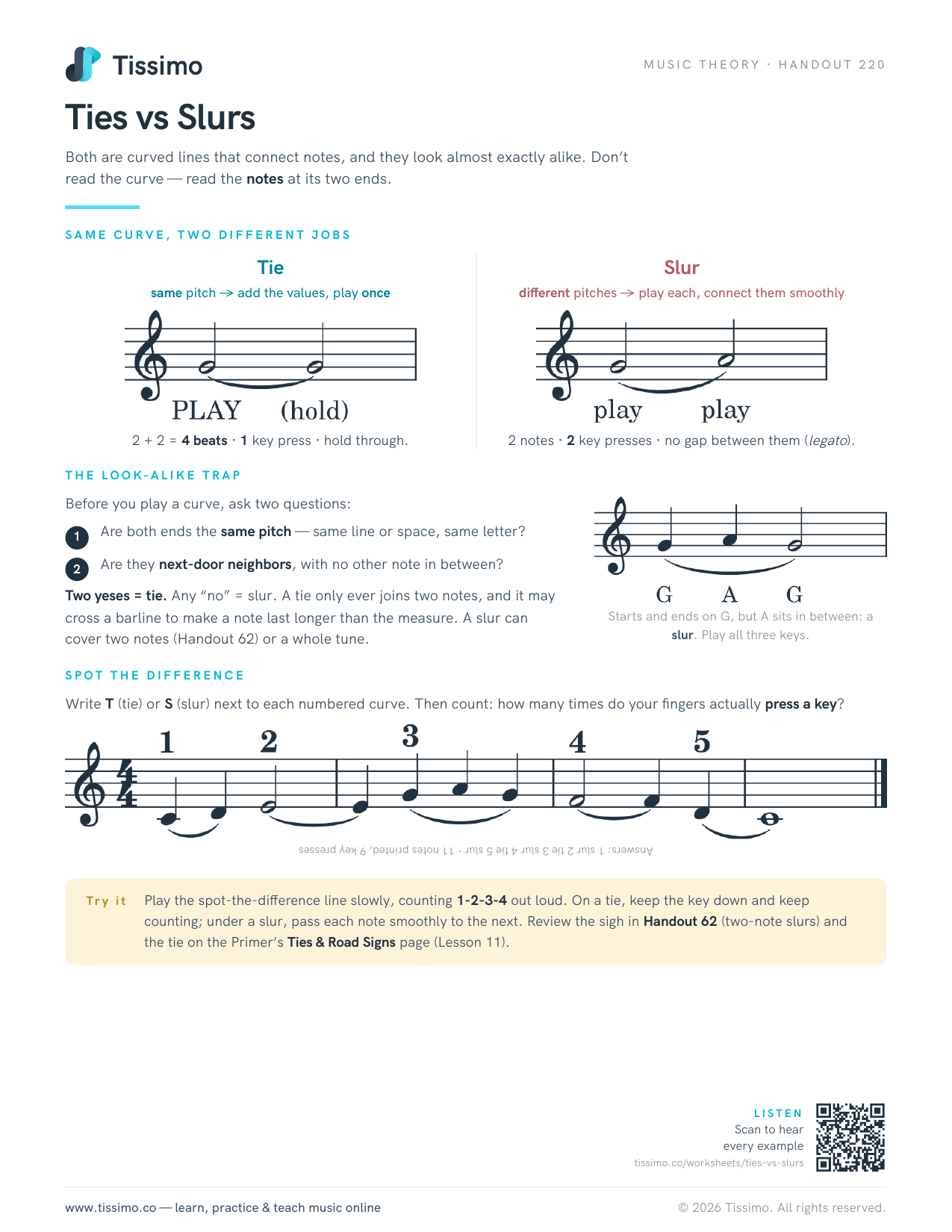 Ties vs SlursBoth are curved lines that connect notes, and they look almost exactly alike. Don’t read the curve — read the notes at its two ends.
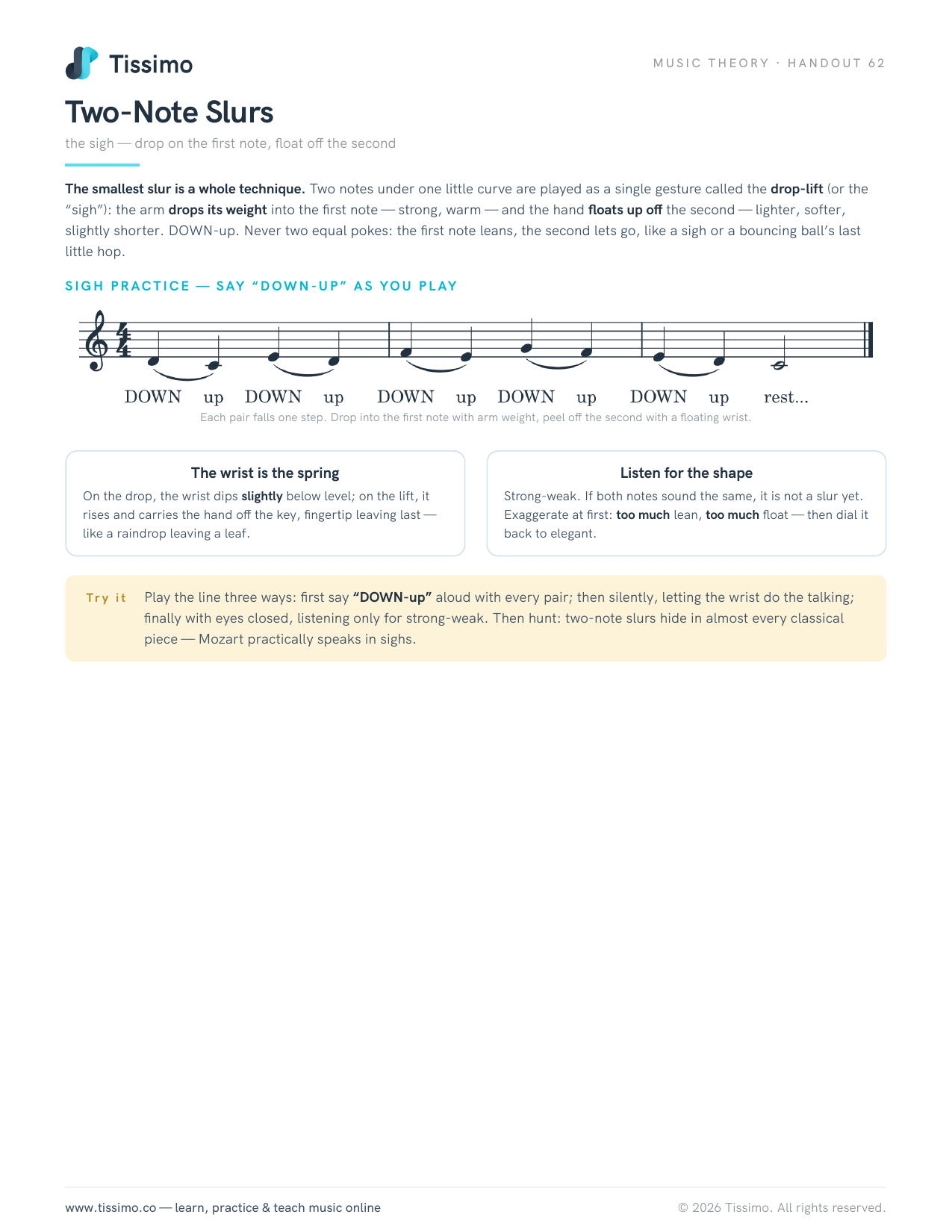 Two-Note Slursthe sigh — drop on the first note, float off the second
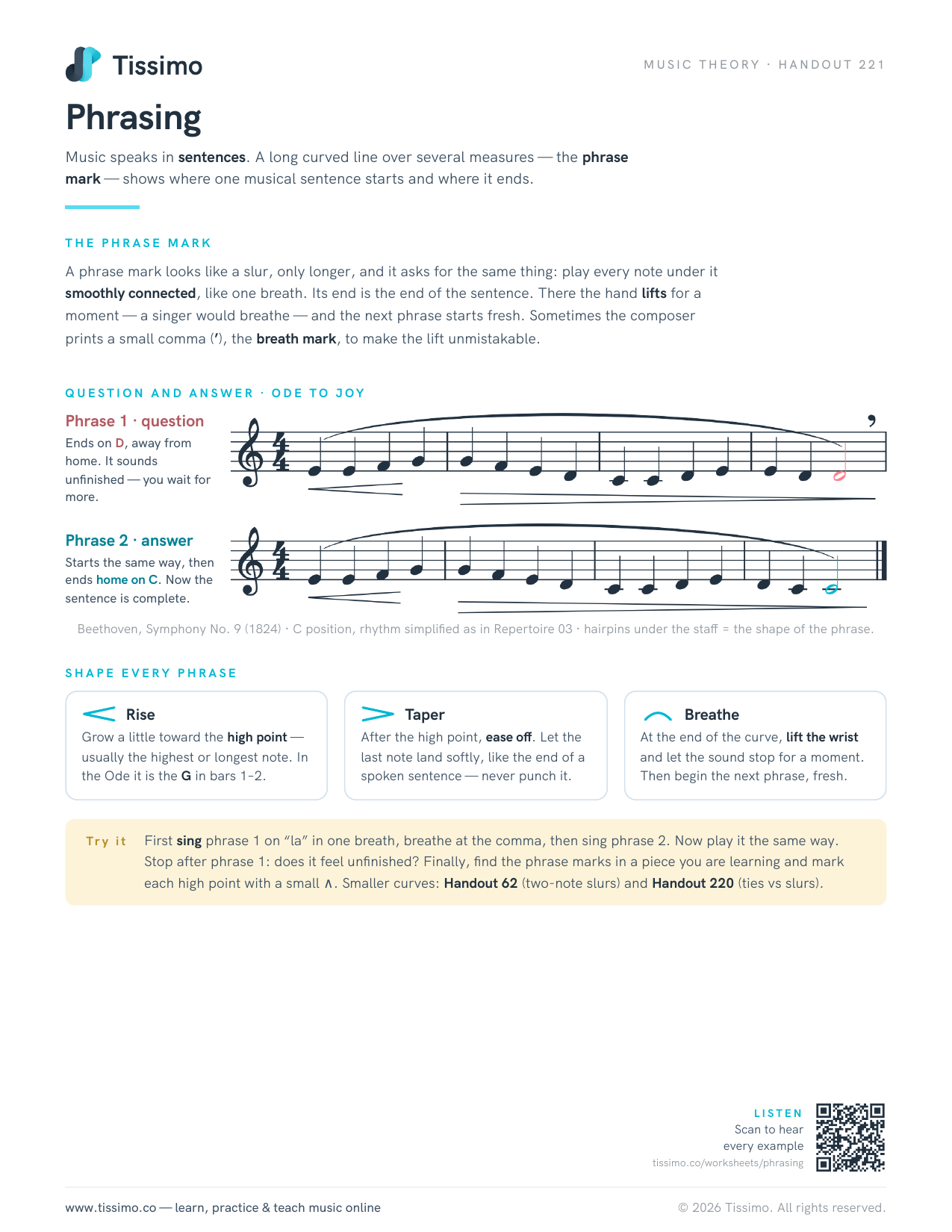 PhrasingMusic speaks in sentences. A long curved line over several measures — the phrase mark — shows where one musical sentence starts and where it ends.
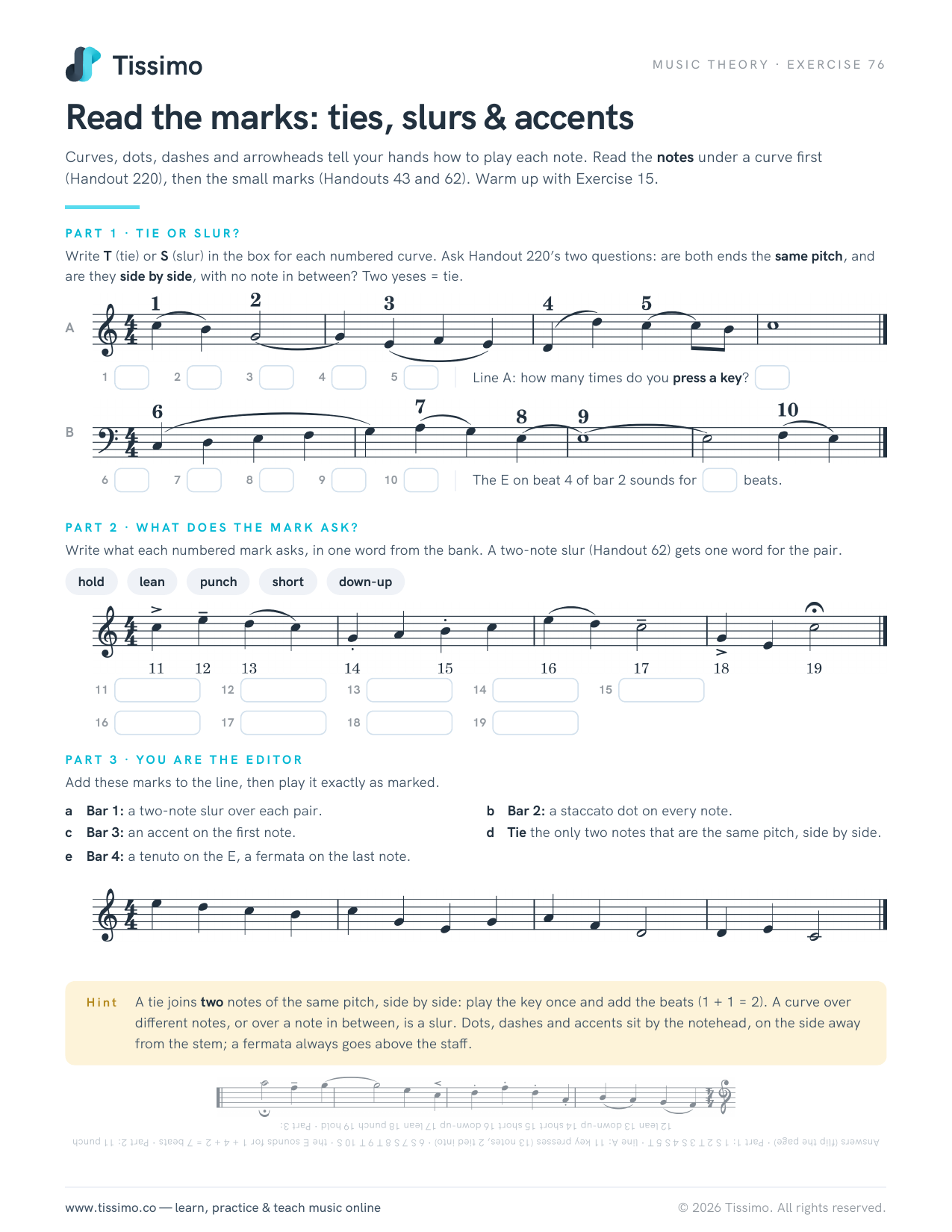 Read the marks: ties, slurs & accentsCurves, dots, dashes and arrowheads tell your hands how to play each note. Read the notes under a curve first (Handout 220), then the small marks (Handouts 43 and 62). Warm up with Exercise 15.
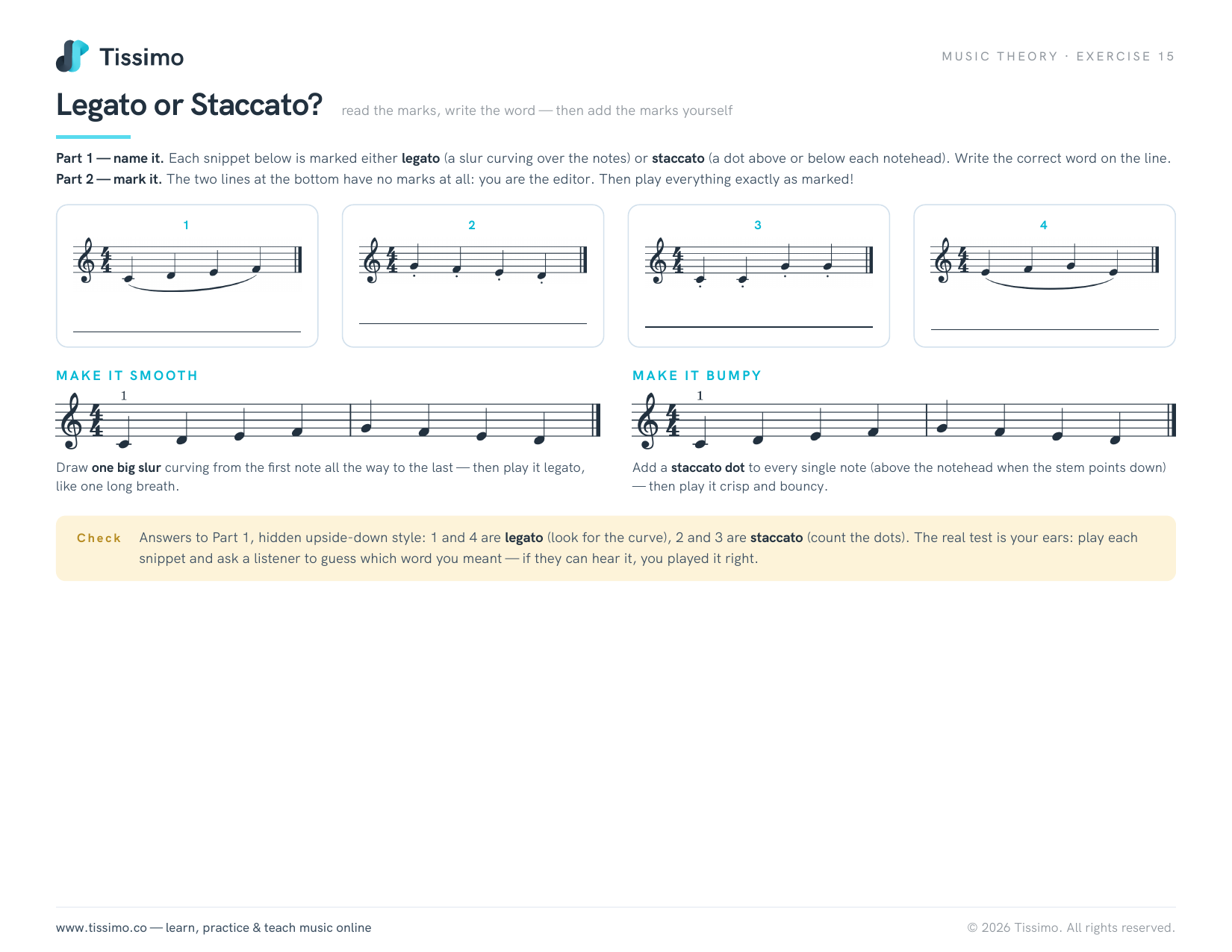 Legato or Staccato?read the marks, write the word — then add the marks yourself