Articulation & Ornaments
Portato (Mezzo-Staccato)
Pronounced por-TAH-toh
Portato, or mezzo-staccato, is an articulation halfway between legato and staccato: each note is gently separated but still weighted. It is shown by dots under a slur or by a line and a dot on each note.
Portato sits halfway between legato and staccato. Each note is separated from the next by a tiny breath of silence, but the notes are still full and weighted rather than short and light. Its other common name, mezzo-staccato, means "half staccato."
You will see it written in two ways: staccato dots under a slur, or a tenuto line combined with a dot on each note. Both mean much the same thing.
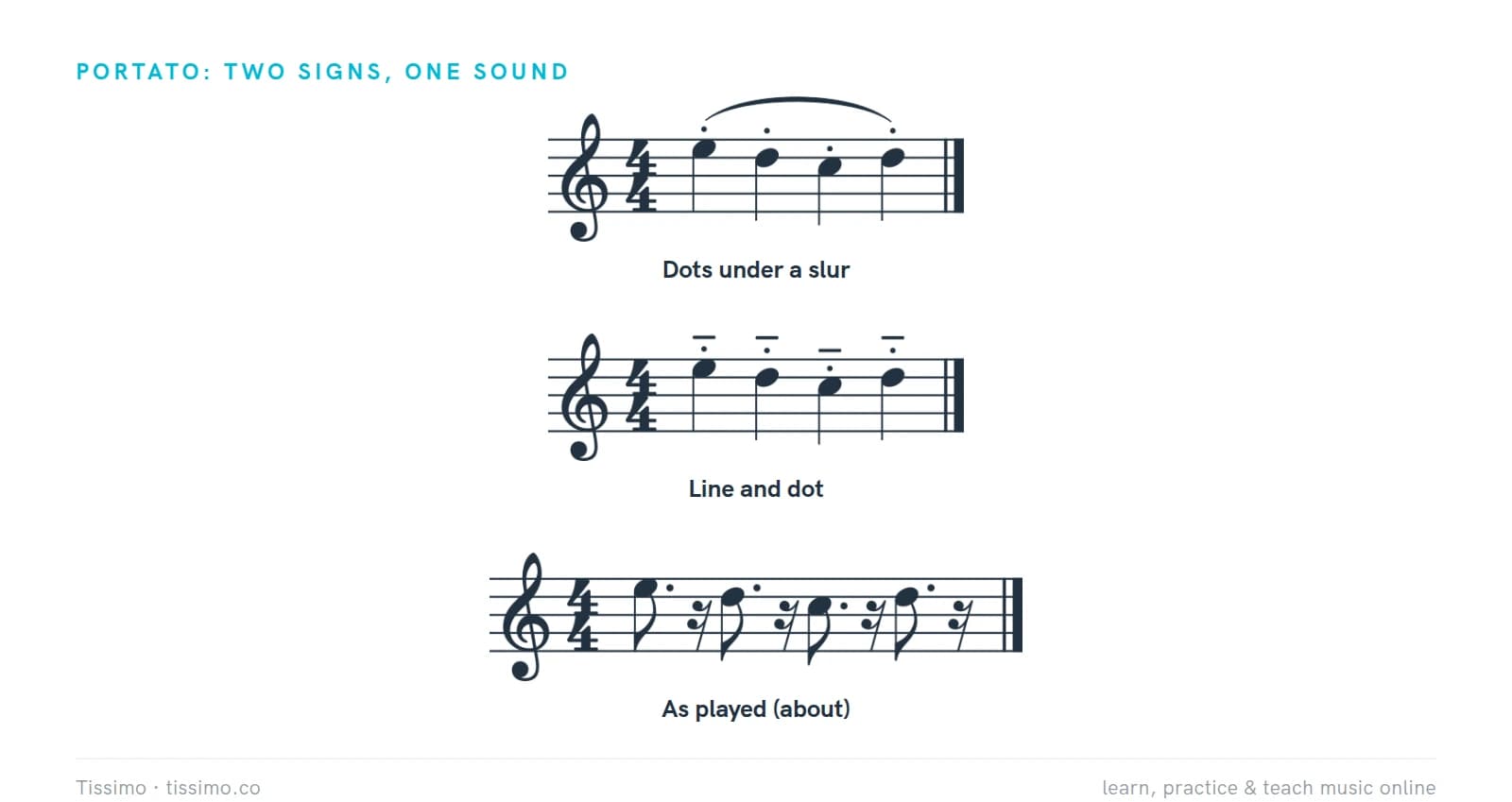
How to play portato
Think of a singer repeating a word gently on each note, or of carrying a full cup across a room with small, careful steps. A common starting point is to hold each note for about three-quarters of its value, a little longer than a typical staccato.
- Piano: let the weight of the arm sink into each key, then lift just enough to break the sound before the next one. The release is gentle, not a bounce.
- Strings: several notes in one bow stroke, each one slightly separated with a small pulse of pressure. String players often call this bowing louré.
- Winds and brass: a soft "du" on each note, with the air kept moving between them.
Where it is used
Portato suits expressive, speaking melodies and repeated notes that need to be heard separately without sounding clipped. It appears often in Romantic piano music and in string writing, wherever a composer wants gentle separation inside a phrase.
Portato or portamento?
The names are close, but the ideas are not. Portato is about separation: small breaks between notes. Portamento, a term used mainly by singers and string players, is a smooth slide of pitch from one note to the next, closer to a glissando. Do not let the shared root fool you.
Practice reading the marks with Read the marks: ties, slurs & accents.
Common questions
What does a staccato dot under a slur mean?
It means portato (mezzo-staccato): keep the notes in one gentle group, but separate each one slightly. The notes are longer and more weighted than a plain staccato.
Is portato the same as portamento?
No. Portato separates notes slightly. Portamento is a smooth slide in pitch from one note to the next, used mainly by singers and string players.
Practice it: free worksheets
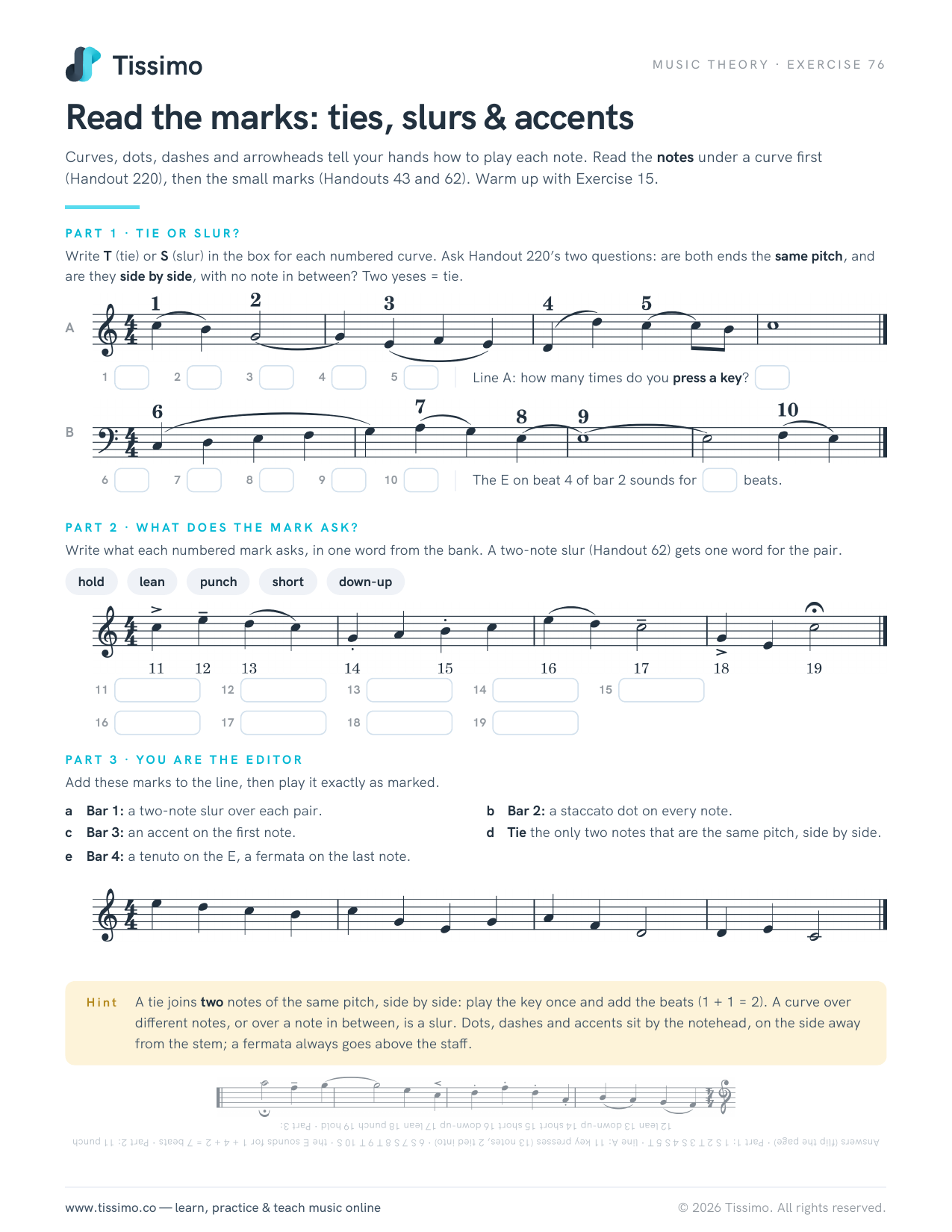 Read the marks: ties, slurs & accentsCurves, dots, dashes and arrowheads tell your hands how to play each note. Read the notes under a curve first (Handout 220), then the small marks (Handouts 43 and 62). Warm up with Exercise 15.
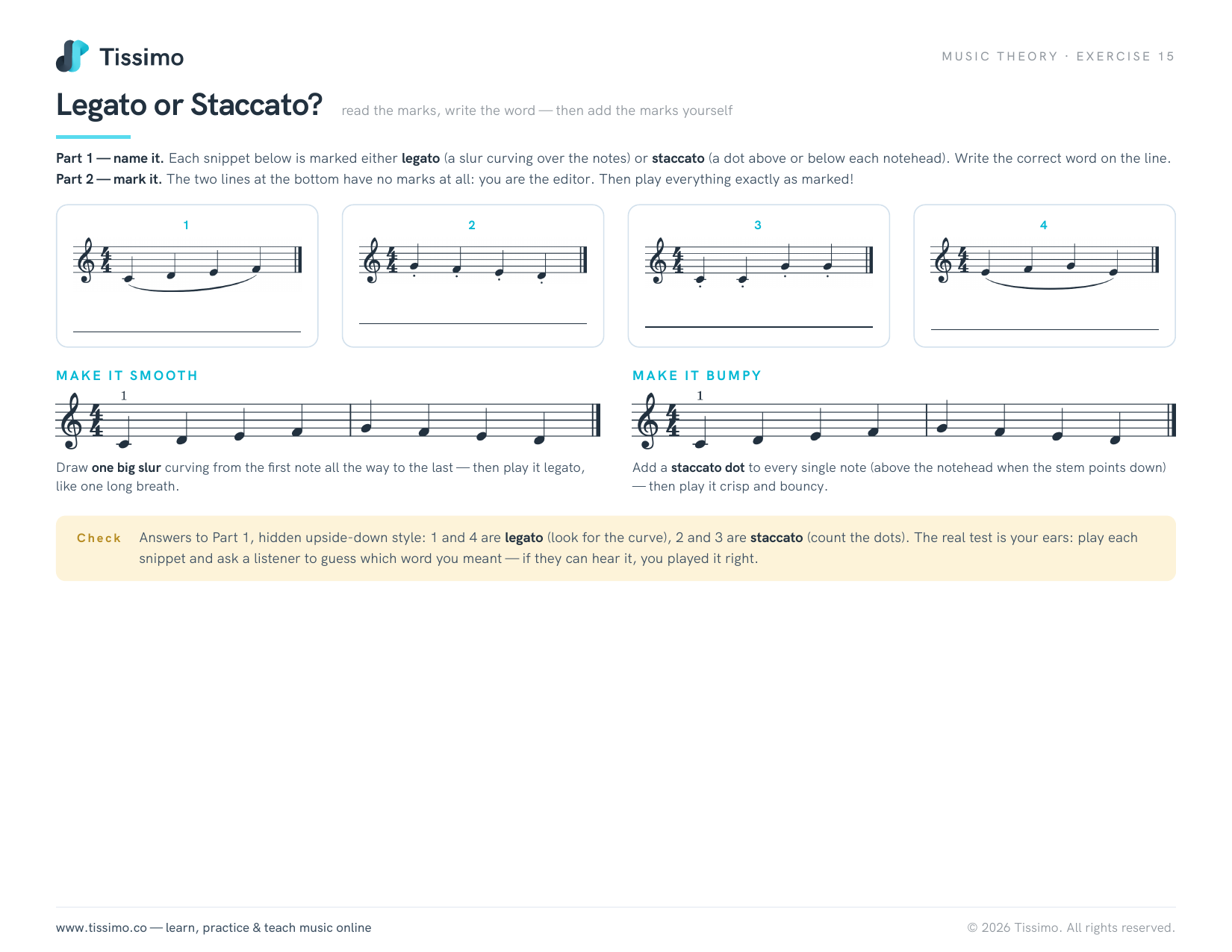 Legato or Staccato?read the marks, write the word — then add the marks yourself