Articulation & Ornaments
Mordent
Pronounced MOR-dent
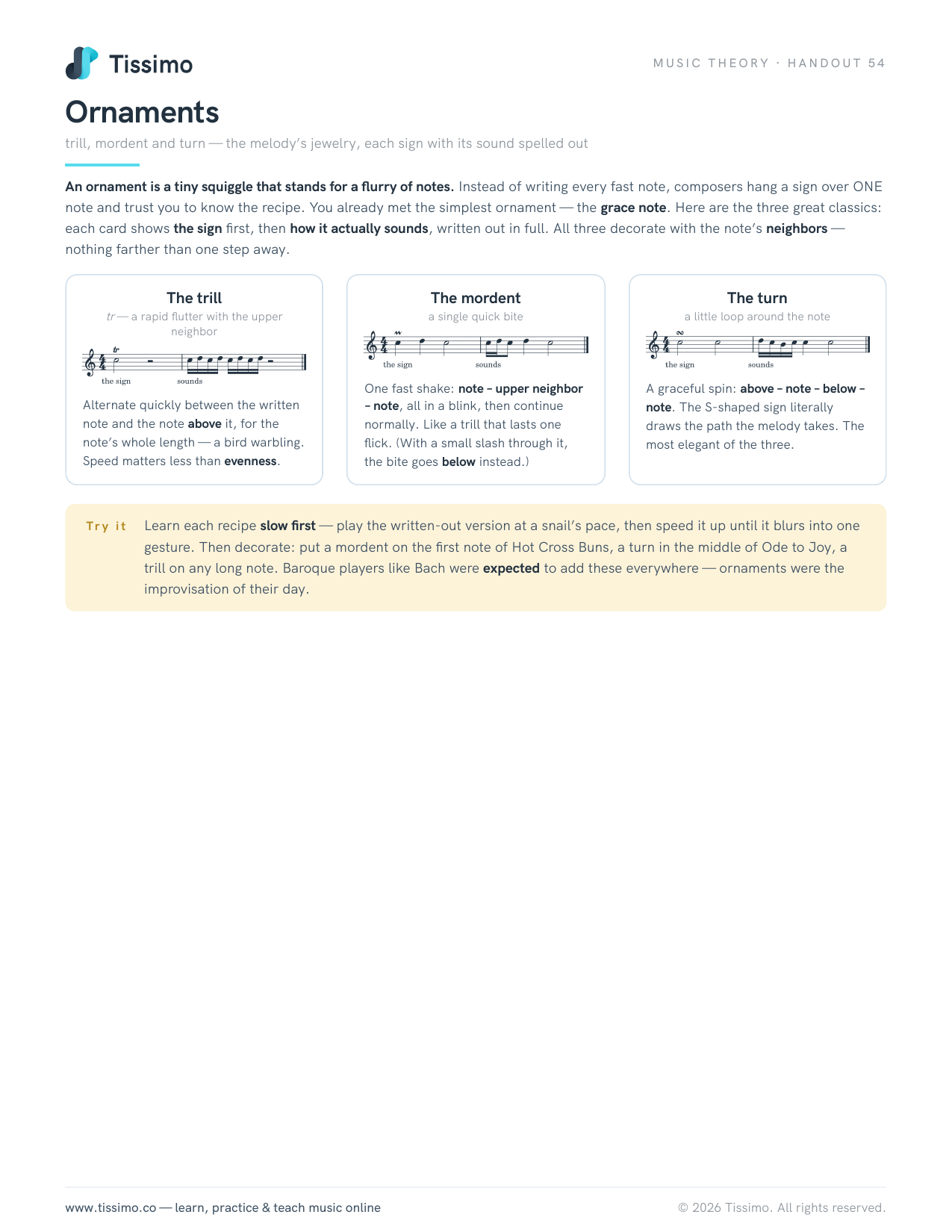
A mordent is a quick ornament of three notes: the written note, the note below it, and the written note again. Its sign is a short wavy line with a vertical stroke through it.
A mordent is a quick three-note ornament: the written note, the note just below it, and the written note again, all squeezed into the start of the written note. Its sign is a short wavy line with a small vertical stroke through the middle, placed above the note. The name comes from the Italian for "biting," which describes its quick, sharp sound well. To tell it apart from its opposite, many books call it the lower mordent.
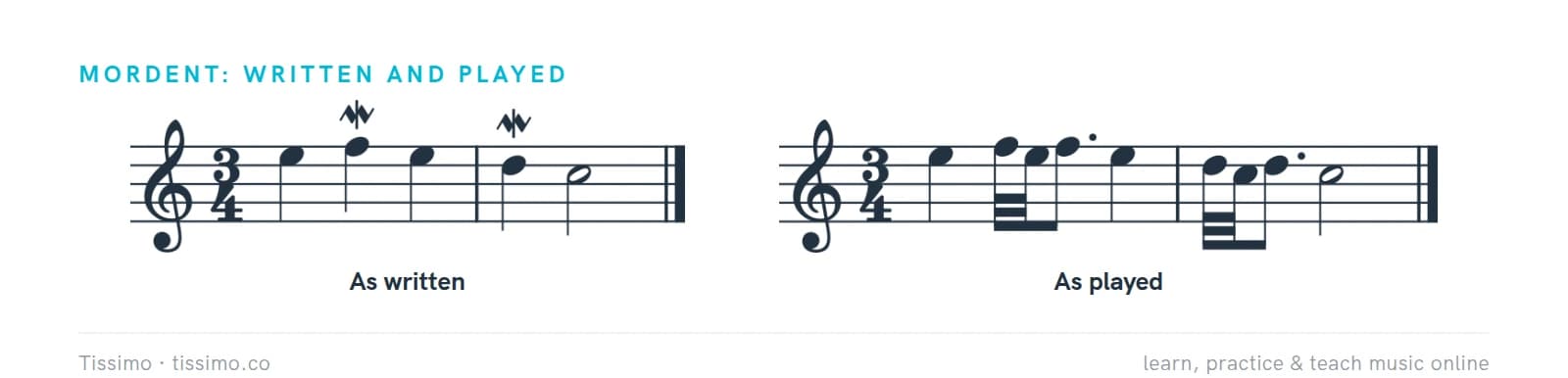
How to play a mordent
- Play the written note on the beat.
- Drop quickly to the note below and come straight back.
- Hold the written note for the rest of its value.
The two extra notes are very fast, and the main note is where the weight sits. The lower note follows the key signature. A small accidental with the sign changes it; very often it is raised by a half step, so that the lower note is only a semitone away.
In the 18th century a long note could take a longer mordent, with the pair repeated: main, below, main, below, main. Most of the time, though, the three-note version is what you want, and it is the usual reading from Bach to today.
Mordent or inverted mordent?
The two signs differ only by the stroke:
- With the stroke: mordent, going down to the note below.
- Without the stroke: inverted mordent (short trill), going up to the note above.
Names vary from book to book, and a few 19th-century methods used the signs differently, so go by the stroke, and check your edition's notes if a passage seems odd.
Practice tip
Find a mordent in bar 5 of the Minuet in G, and practice writing them out in Write out the ornaments.
Common questions
What is the difference between a mordent and an inverted mordent?
A mordent (with a vertical stroke through the wavy line) goes to the note below and back. An inverted mordent (no stroke) goes to the note above and back.
Is a mordent played on the beat?
Yes. Start the written note on the beat, then play the quick lower note and return, so the ornament fills the very start of the written note.
Practice it: free worksheets
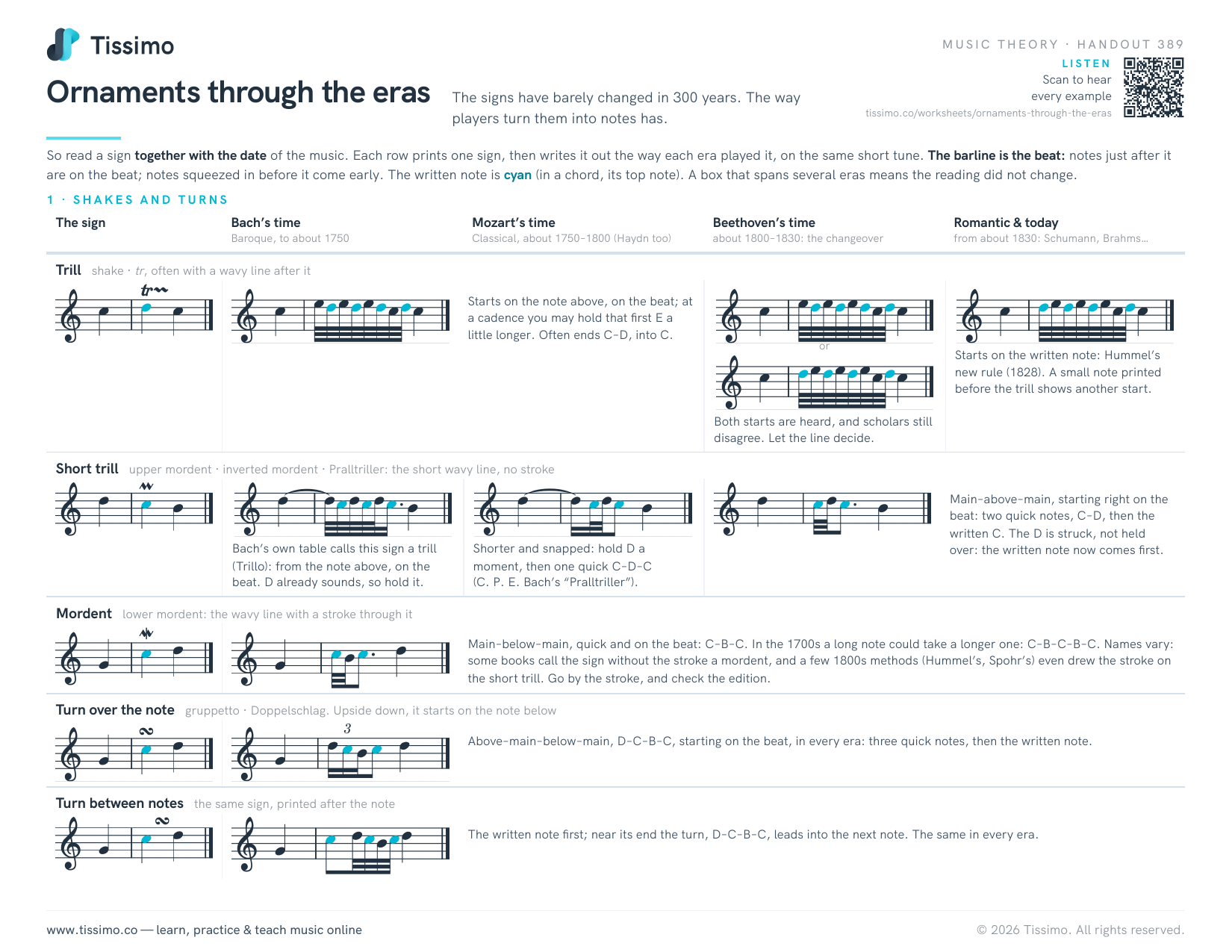 Ornaments through the erasThe signs have barely changed in 300 years. The way players turn them into notes has.
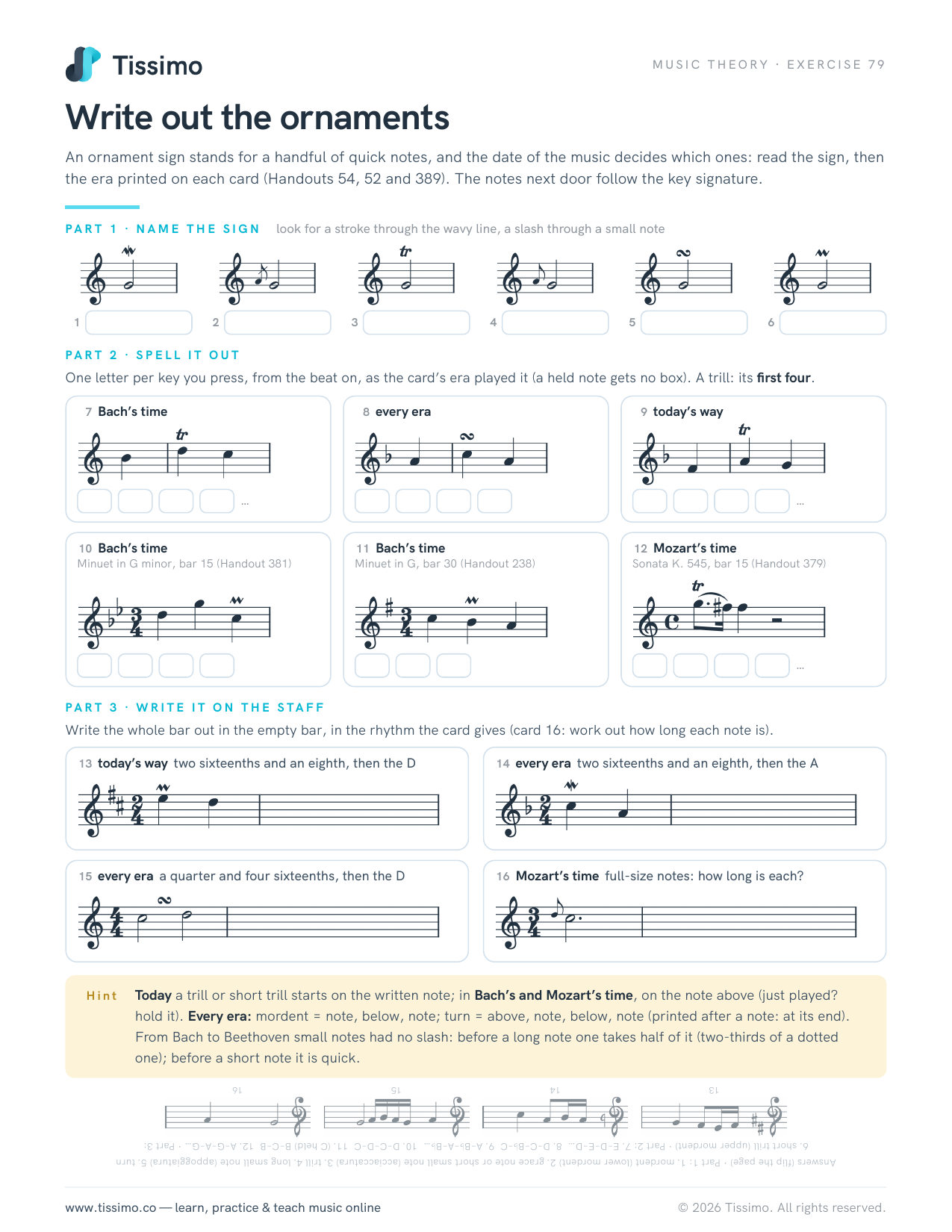 Write out the ornamentsAn ornament sign stands for a handful of quick notes, and the date of the music decides which ones: read the sign, then the era printed on each card (Handouts 54, 52 and 389). The notes next door follow the key signature.
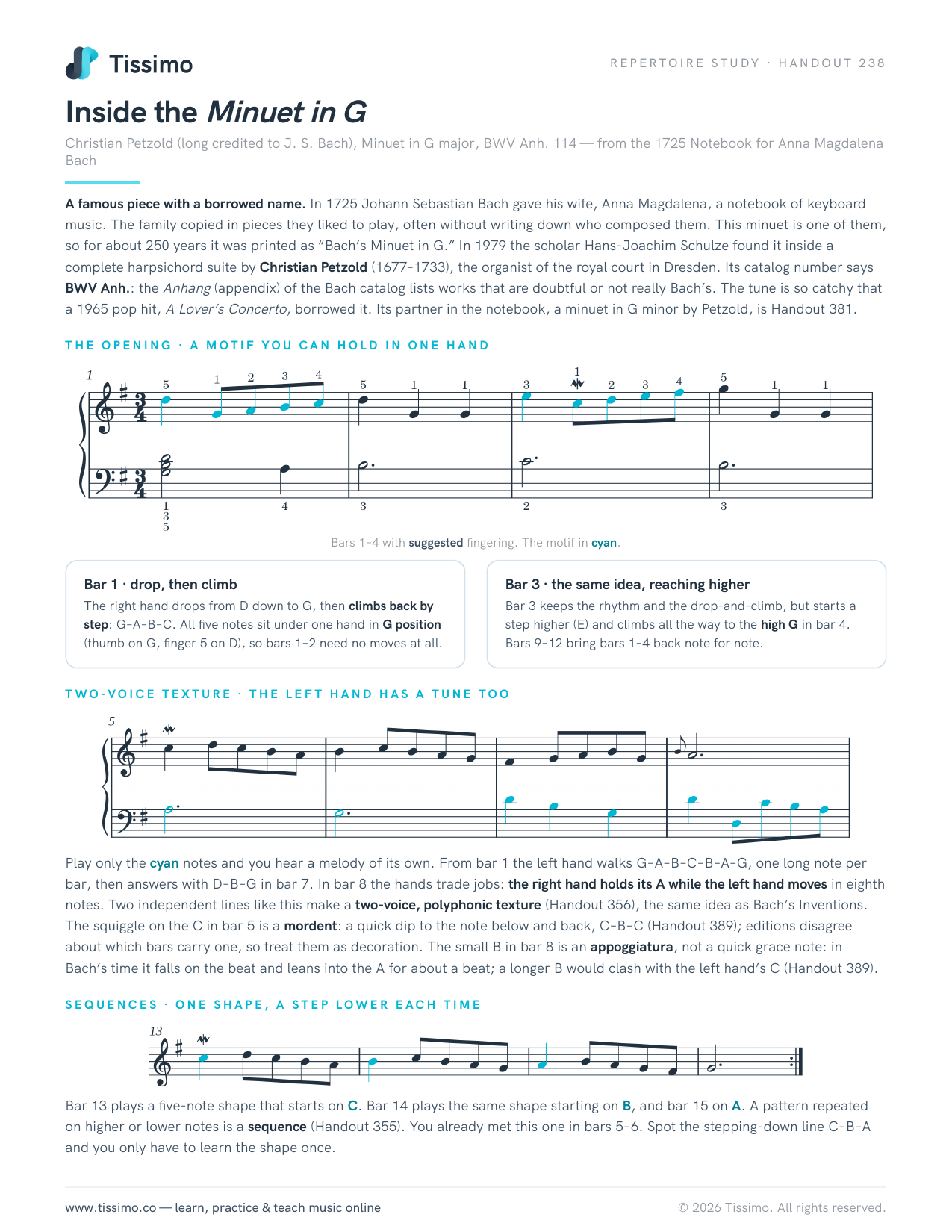 Inside the Minuet in GChristian Petzold (long credited to J. S. Bach), Minuet in G major, BWV Anh. 114 — from the 1725 Notebook for Anna Magdalena Bach
 Ornamentstrill, short trill and turn — the melody’s jewelry, each sign with its sound spelled out