Articulation & Ornaments
Turn
A turn is an ornament of four notes that circle the written note: the note above, the written note, the note below, and the written note again. Its sign looks like a sideways S.
A turn is an ornament that winds around the written note: the note above, the written note, the note below, and back to the written note. Its sign looks like a letter S lying on its side. Italian musicians call it a gruppetto ("little group"), German musicians a Doppelschlag.
Where the sign is printed changes when the turn happens.
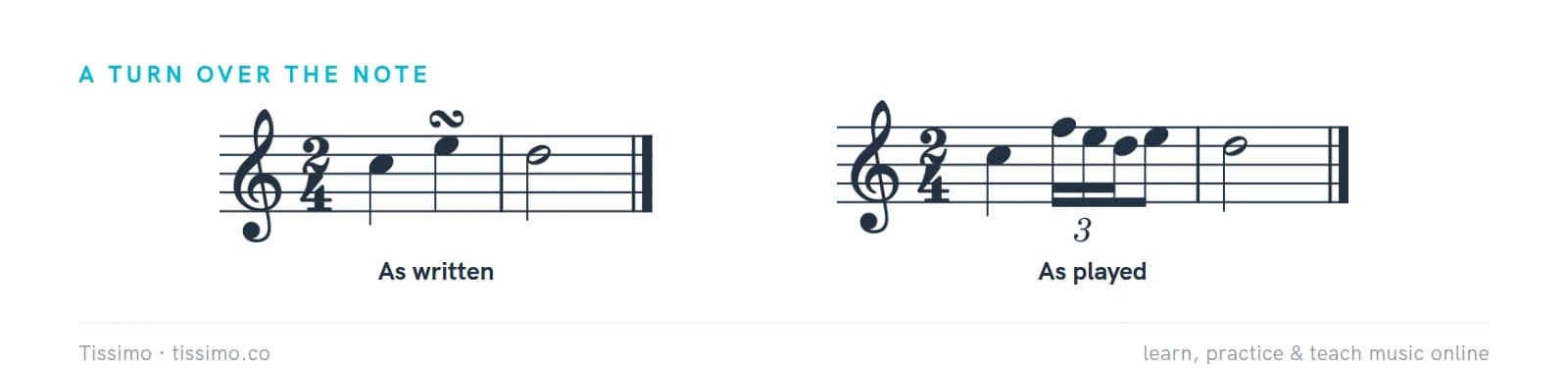
Turn over the note
When the sign sits directly above the note, the turn starts on the beat: three quick notes (above, main, below), then the written note for the rest of its value.
Turn between two notes
When the sign is printed a little to the right of the note, between it and the next one, play the written note first. Near its end, the four notes of the turn lead smoothly into the next note.
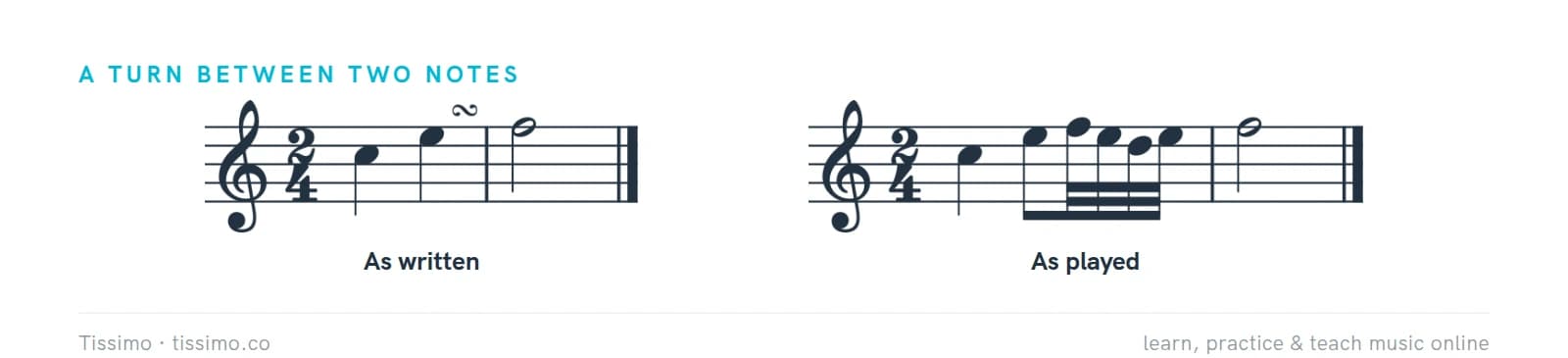
Both readings have stayed much the same from the Baroque period to today, though the exact rhythm is flexible: quick and crisp in lively music, broader and more singing in slow music, where the turn can take up more of the beat.
The inverted turn
A turn sign drawn upside down, or crossed by a short vertical line, is an inverted turn: it starts below instead of above (below, main, above, main).
Accidentals with a turn
The upper and lower notes follow the key signature. A small accidental above the sign changes the upper note; one below the sign changes the lower note. A raised lower note, only a half step below the main note, is very common, because it makes the turn pull back to the main note more strongly.
Hear both kinds in Ornaments through the eras, and write them out in Write out the ornaments.
Common questions
How do you play a turn in music?
Play the note above, the written note, the note below and the written note again. If the sign is over the note, start the turn on the beat; if it is printed after the note, play the written note first and put the turn at its end.
Practice it: free worksheets
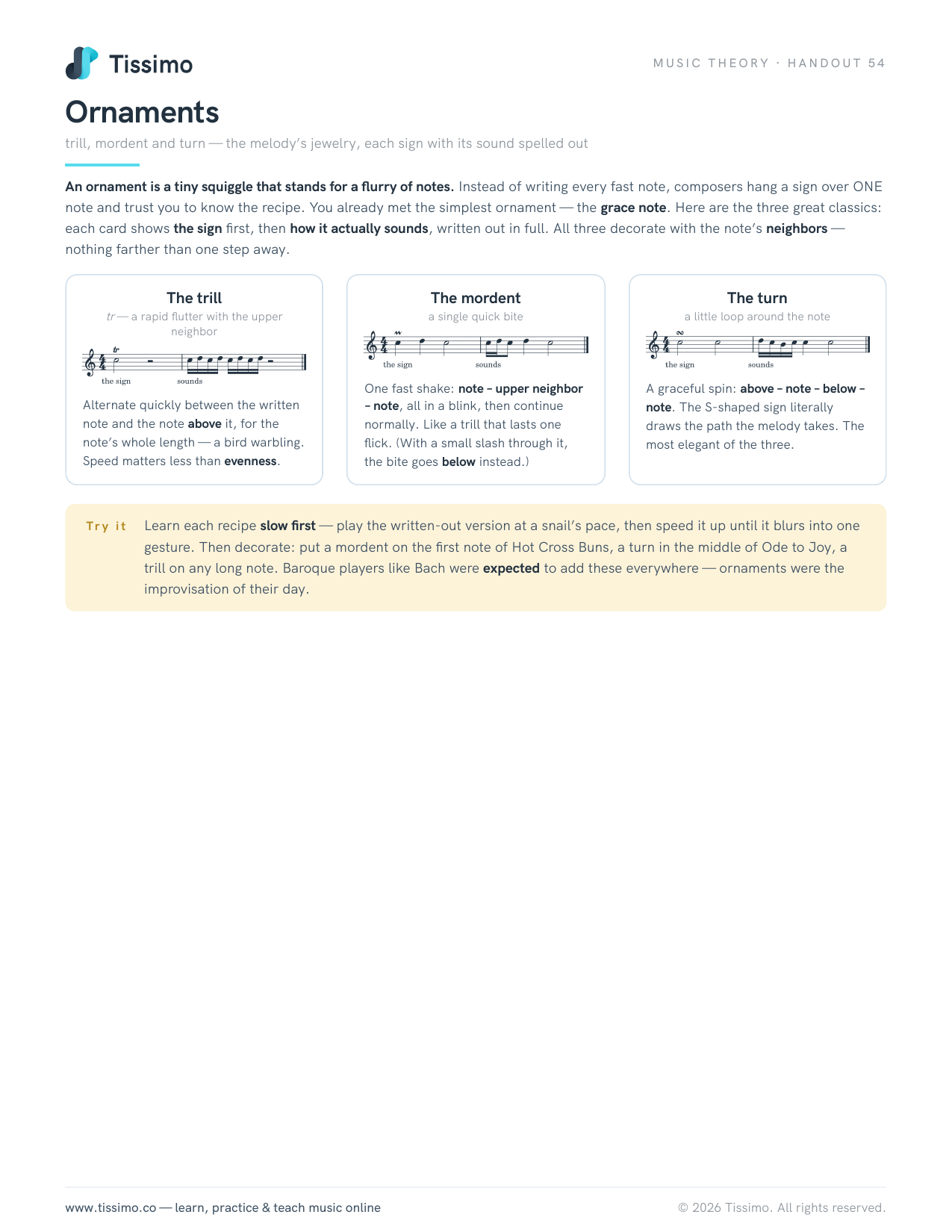 Ornamentstrill, short trill and turn — the melody’s jewelry, each sign with its sound spelled out
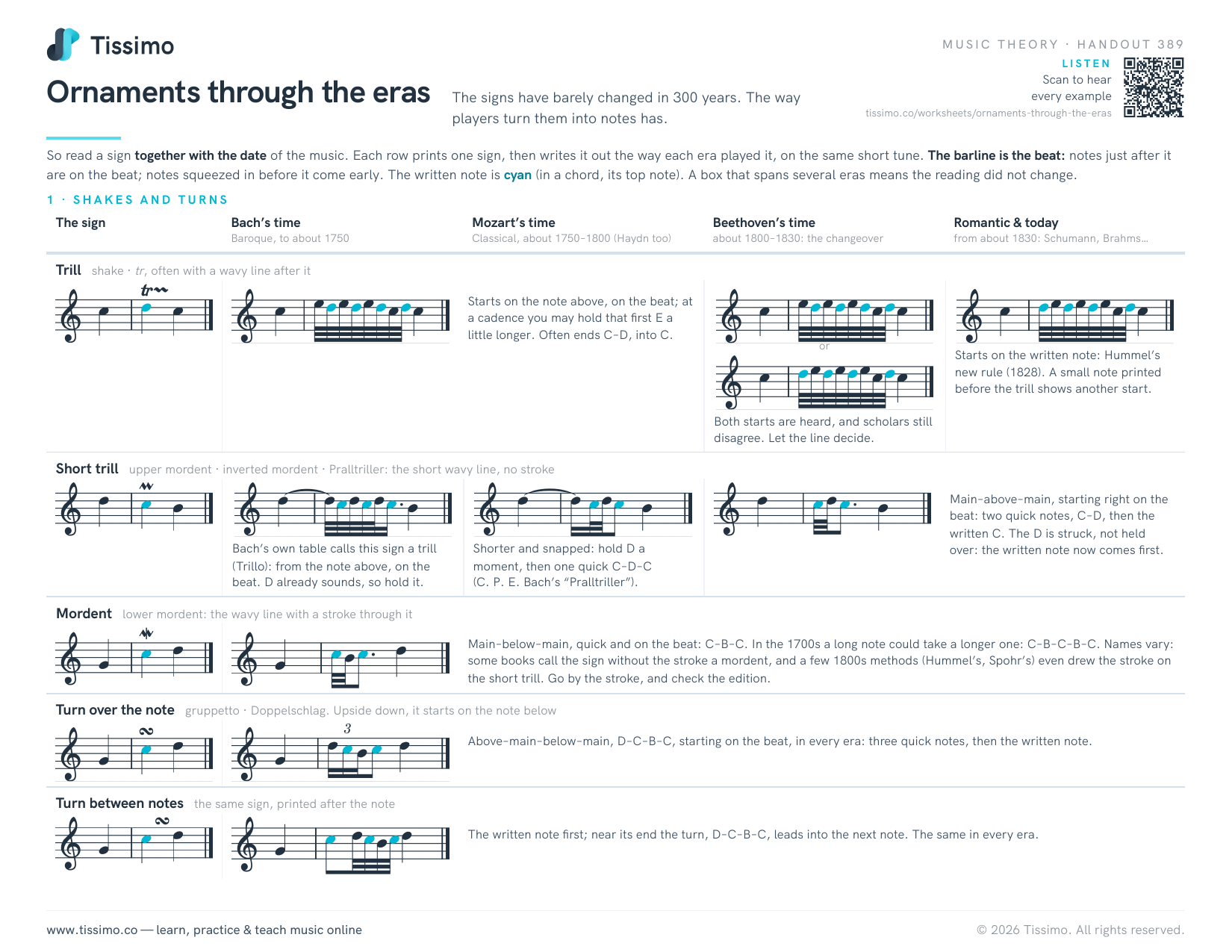 Ornaments through the erasThe signs have barely changed in 300 years. The way players turn them into notes has.
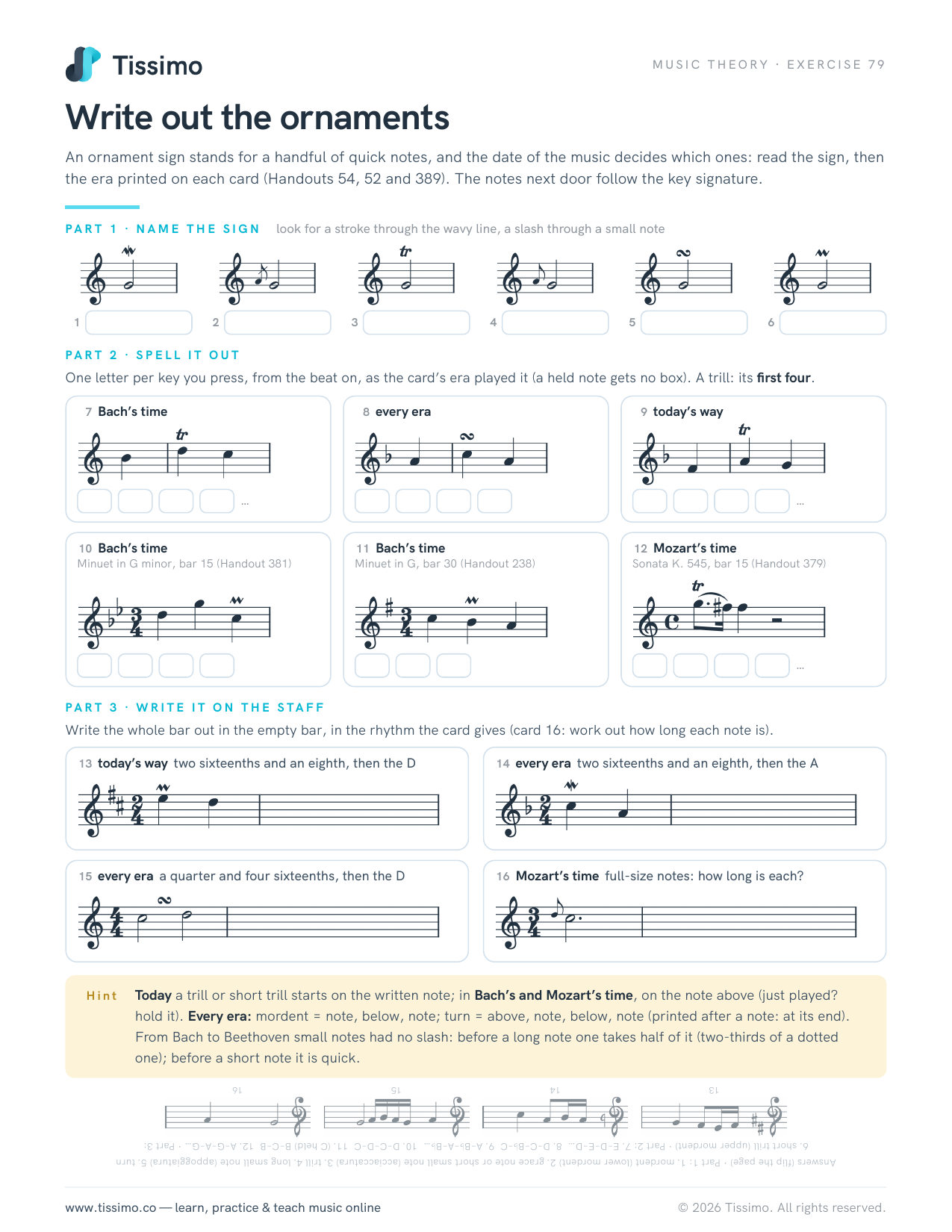 Write out the ornamentsAn ornament sign stands for a handful of quick notes, and the date of the music decides which ones: read the sign, then the era printed on each card (Handouts 54, 52 and 389). The notes next door follow the key signature.