Articulation & Ornaments
Appoggiatura
Pronounced uh-pah-juh-TOOR-uh
An appoggiatura is a leaning note: an ornamental note, often a small note without a slash, played on the beat and taking part of the main note's time before resolving to it by step.
An appoggiatura (from the Italian appoggiare, "to lean") is a note that leans on the main note. It is played on the beat, takes part of the main note's time, and then resolves to the main note by step. In 18th-century music it is usually printed as a small note without a slash in front of the main note.
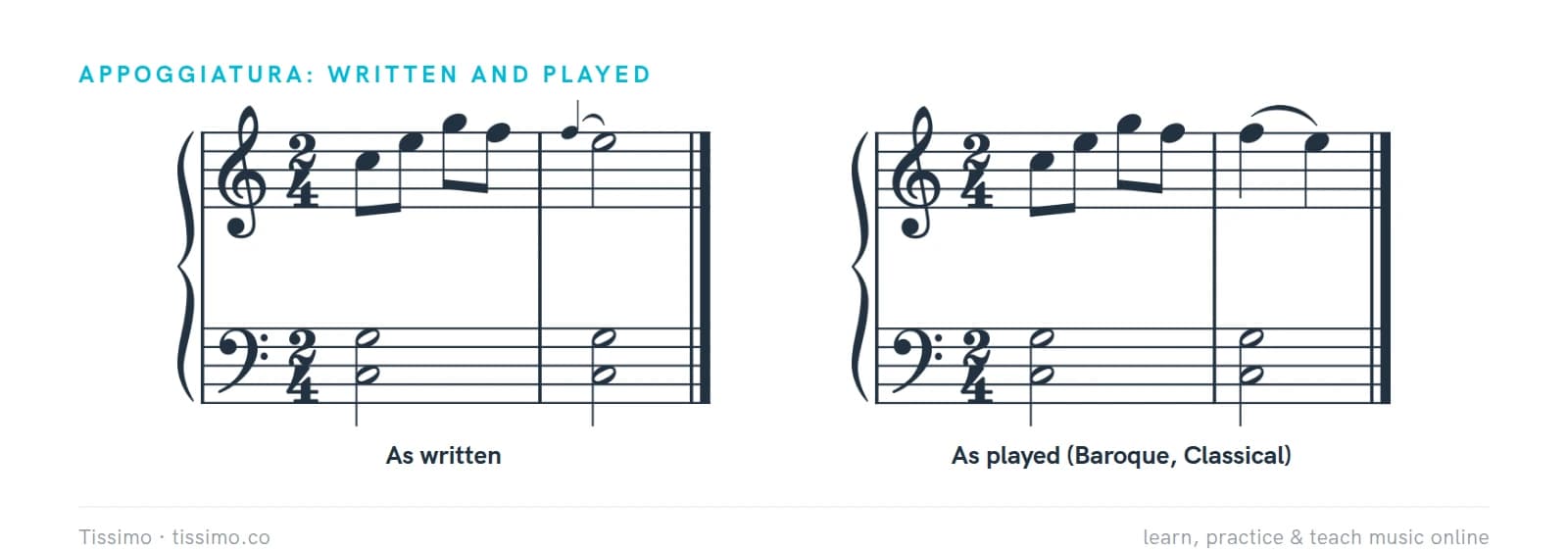
How long is an appoggiatura?
In Baroque and Classical music the usual guideline is:
- before an ordinary note, the appoggiatura takes half its value;
- before a dotted note, it takes two-thirds of its value.
So a small note before a half note becomes a quarter note, followed by the main note as a quarter, as in the example. Some 18th-century composers printed the small note at the length they wanted; others were less consistent, so the guideline and the context decide.
Why it sounds expressive
An appoggiatura is usually a dissonance: a note that clashes with the harmony underneath, arriving on a strong beat. The clash creates tension, and the step to the main note releases it. That is why it is played with a gentle lean: the appoggiatura a little stronger, the main note softer, the two joined by a slur. In the example, the F clashes with the C-and-G harmony and sinks to E.
Small note or full-size note?
From Beethoven's time on, composers more and more often wrote long appoggiaturas out in full-size notes, so that their length was clear. In Romantic and later music, a small note in front of a main note is usually short: an acciaccatura or quick grace note. In music before about 1800, an unslashed small note may well be a long appoggiatura, so check the period, and your edition's notes.
The appoggiatura in harmony
Harmony books also use the word for a kind of non-chord tone: a note that arrives by a leap on a strong beat and resolves by step. The idea is the same: a stressed dissonance that leans into the chord tone.
Compare the long and short small notes in Ornaments through the eras and Grace Notes.
Common questions
What is the difference between an appoggiatura and an acciaccatura?
An appoggiatura leans: it is on the beat and takes a real share of the main note's time, often half. An acciaccatura is crushed: it is as short as possible and takes almost no time. In printed music the acciaccatura usually has a slash through its stem.
How long should an appoggiatura be?
In Baroque and Classical music, usually half the value of the main note, or two-thirds of a dotted note. In later music long appoggiaturas are normally written out in full-size notes.
Practice it: free worksheets
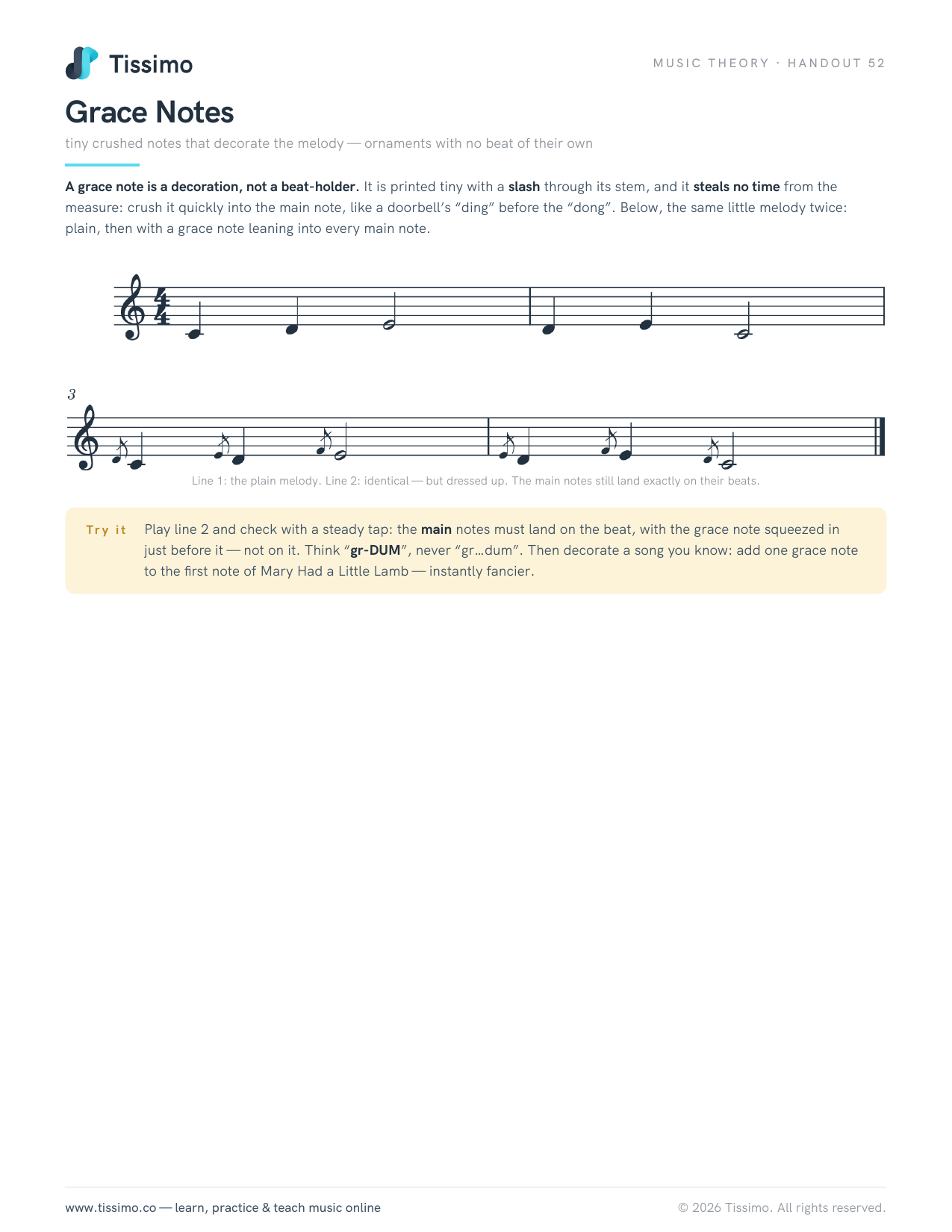 Grace Notestiny crushed notes that decorate the melody — ornaments with no beat of their own
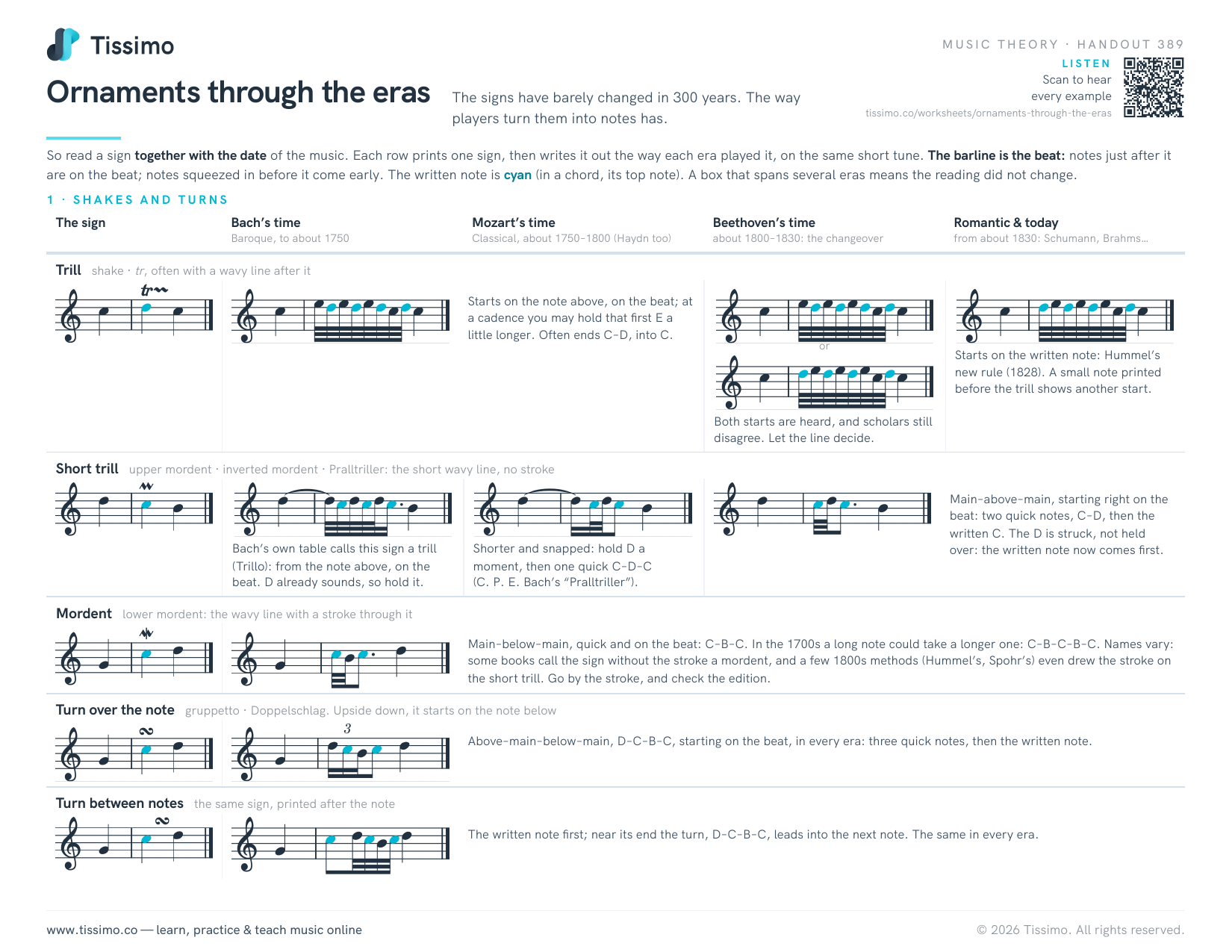 Ornaments through the erasThe signs have barely changed in 300 years. The way players turn them into notes has.
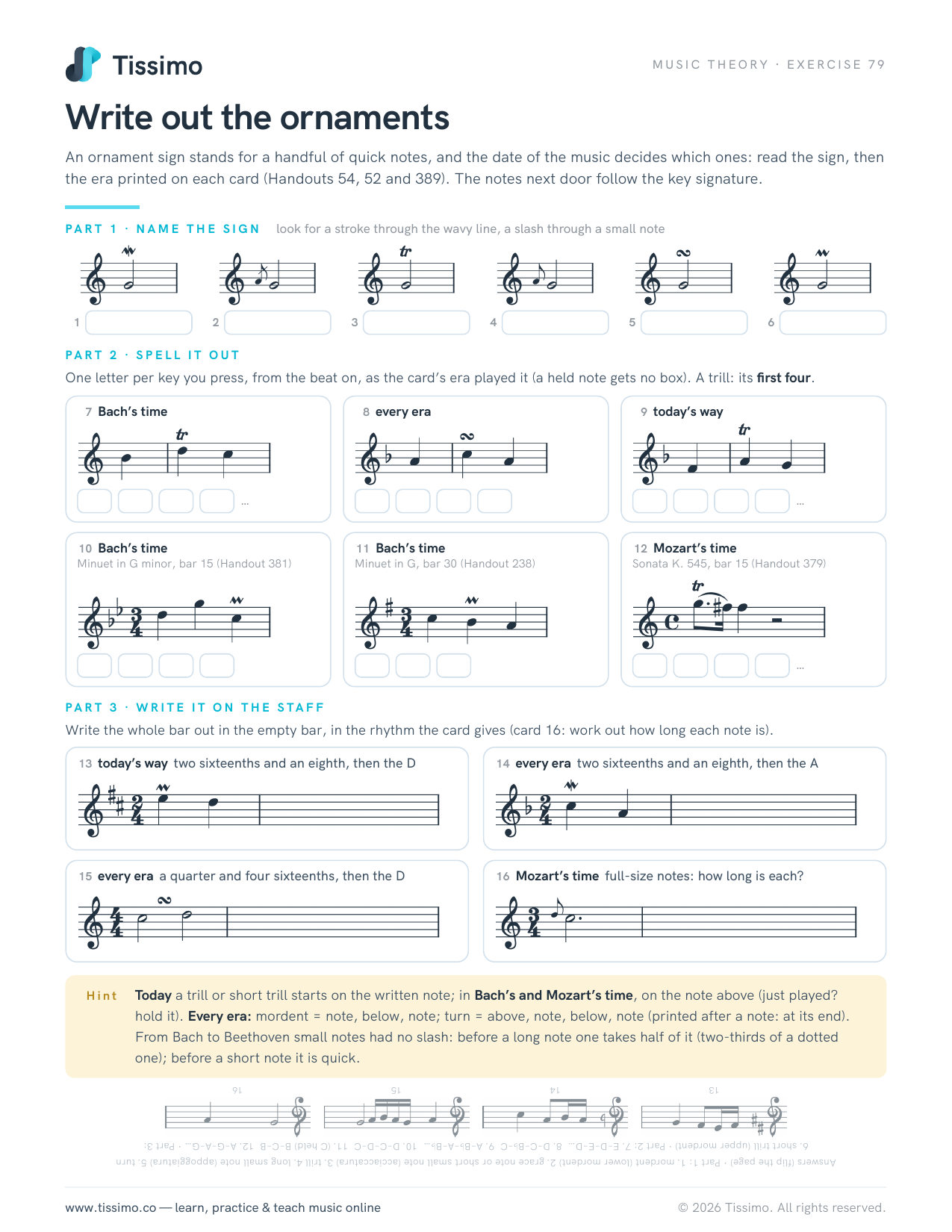 Write out the ornamentsAn ornament sign stands for a handful of quick notes, and the date of the music decides which ones: read the sign, then the era printed on each card (Handouts 54, 52 and 389). The notes next door follow the key signature.