Articulation & Ornaments
Acciaccatura
Pronounced uh-chah-kuh-TOOR-uh
An acciaccatura is a very short ornamental note, printed as a small note with a slash through its stem, that is crushed in just before or together with the main note and takes almost none of its time.
An acciaccatura (from the Italian acciaccare, "to crush") is a quick ornamental note that is "crushed" against the main note. It is printed as a small note, usually an eighth note, with a slash through its stem and flag. It takes almost none of the main note's time: the weight and the length belong to the main note.
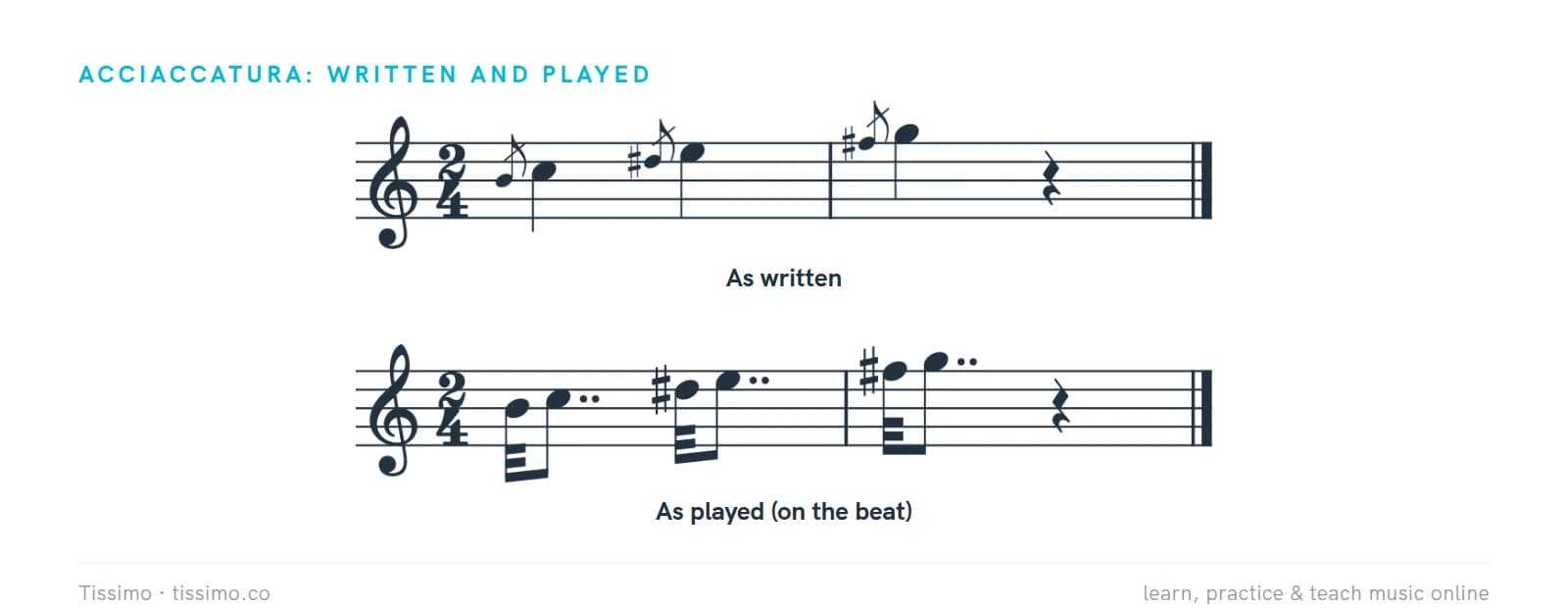
On the beat or before it?
Players differ, and so do periods:
- On the beat: the acciaccatura sounds with the bass or the beat, and the main note follows a split second later, as written out in the example.
- Just before the beat: the small note slips in at the very end of the previous note, so that the main note lands exactly on the beat.
Either way, it is so quick that the difference is small. What matters is that the main note keeps its weight and the rhythm of the melody stays clear. Listen to recordings of the style you are playing, and ask your teacher which suits your piece.
How to play it
On the piano, play the small note and the main note almost as one gesture, as if you were sliding a finger from one key to the next. Do not accent the small note; let it flick into the main note. An acciaccatura a half step below its main note, as on the D-sharp before E, is especially common and gives the main note a little twang.
Slashed and unslashed small notes
The slash became the usual sign only in the 19th century. Earlier, short and long small notes looked the same, and the player decided from the context whether a small note was a quick acciaccatura or a long appoggiatura. In later music, a small note without a slash is still usually short.
In Baroque keyboard music the word also described something different: a dissonant note struck together with a chord and released at once, to add bite to the harmony.
Practice reading small notes in Grace Notes.
Common questions
Is an acciaccatura played on the beat or before it?
Both are heard. Many players put it on the beat with the bass; others slip it in just before so the main note lands on the beat. It is so quick that the main note keeps its place either way.
What does a slash through a small note mean?
It marks an acciaccatura: play the small note as quickly as possible and give the time and weight to the main note that follows.
Practice it: free worksheets
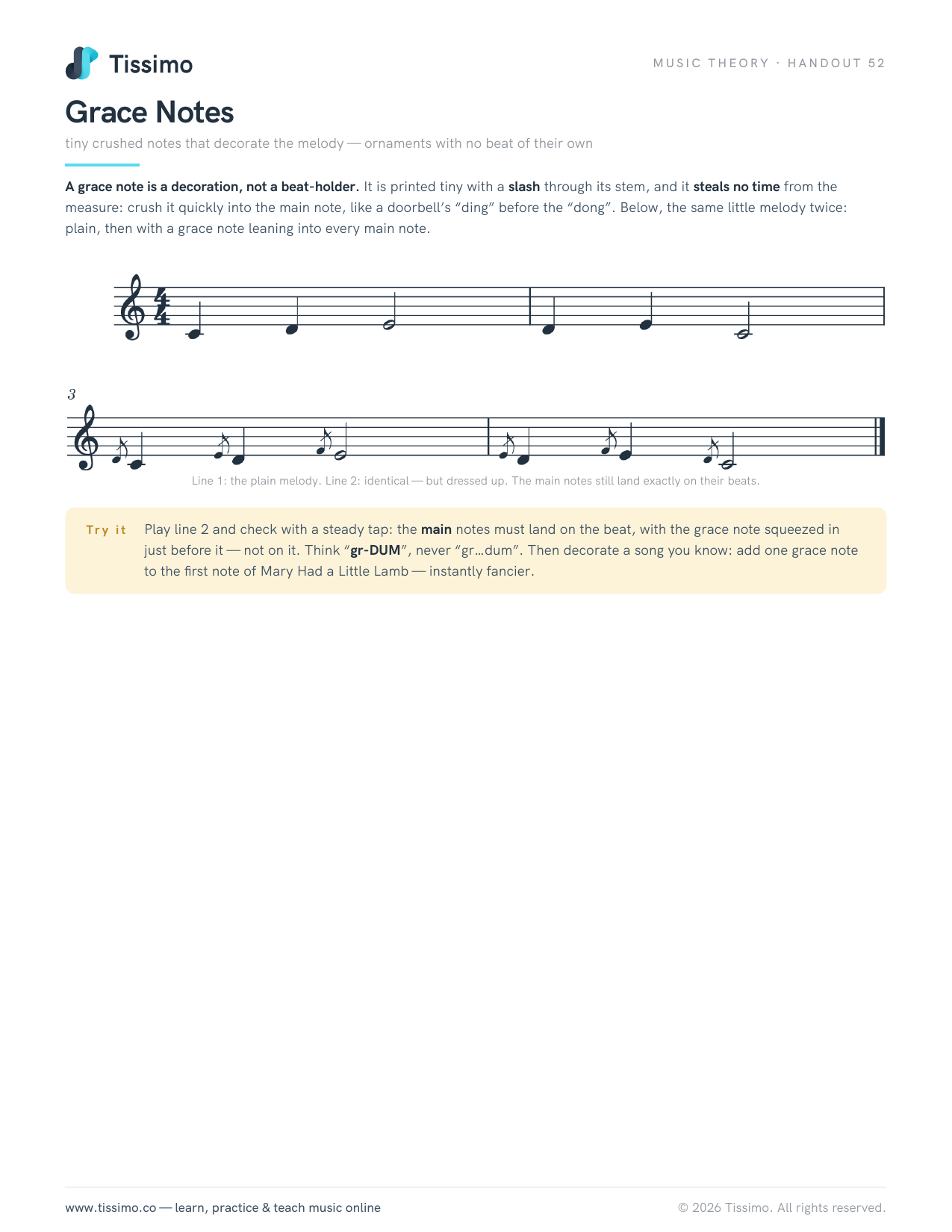 Grace Notestiny crushed notes that decorate the melody — ornaments with no beat of their own
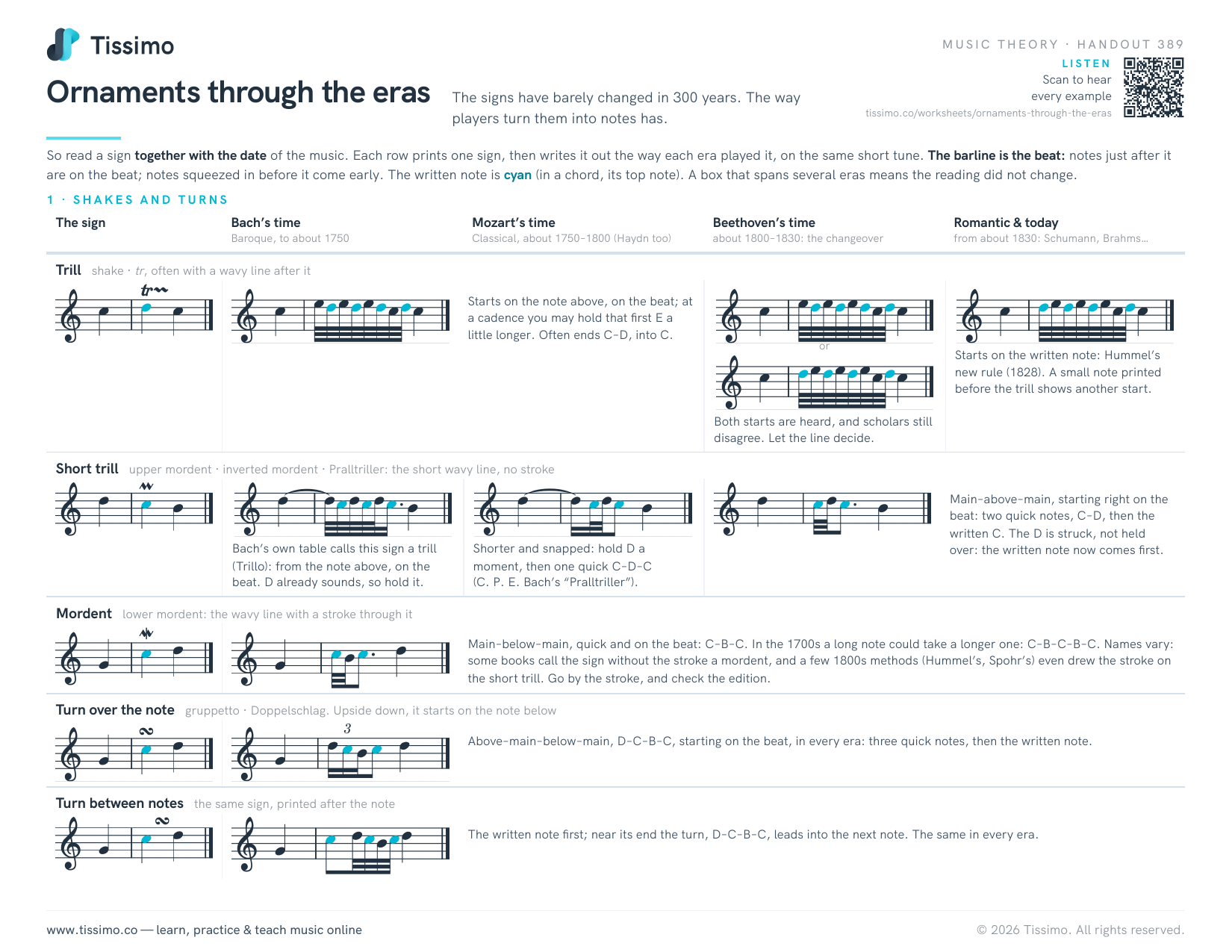 Ornaments through the erasThe signs have barely changed in 300 years. The way players turn them into notes has.
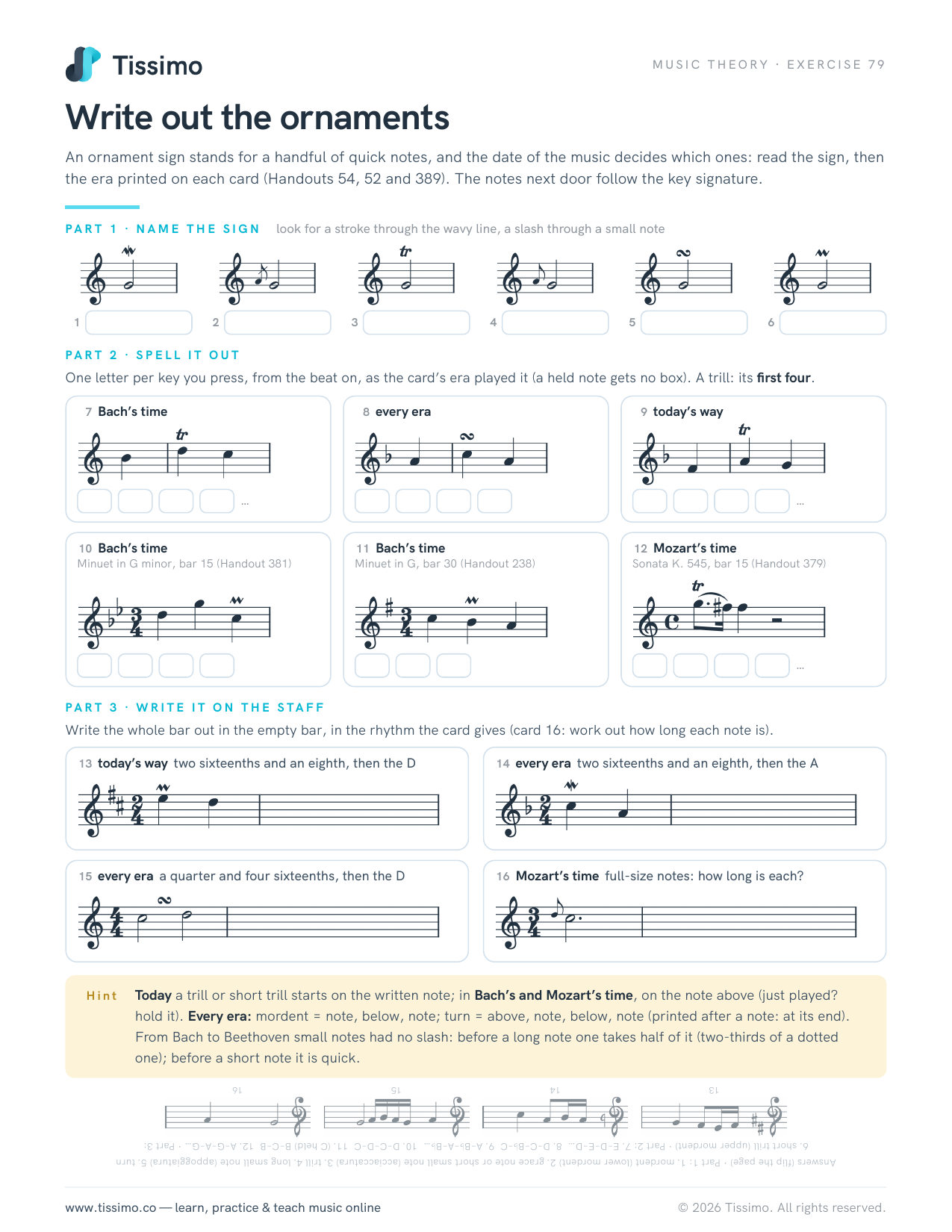 Write out the ornamentsAn ornament sign stands for a handful of quick notes, and the date of the music decides which ones: read the sign, then the era printed on each card (Handouts 54, 52 and 389). The notes next door follow the key signature.