Articulation & Ornaments
Grace Note
A grace note is a small ornamental note printed in front of a main note. It does not count in the bar's rhythm; its time is borrowed from a neighboring note. A slash through it means play it very quickly.
A grace note is a small note printed in front of a main note. It decorates the main note but does not count in the rhythm of the bar: if you add up the beats, you skip it. Its time is borrowed, usually from the main note, sometimes from the note before.
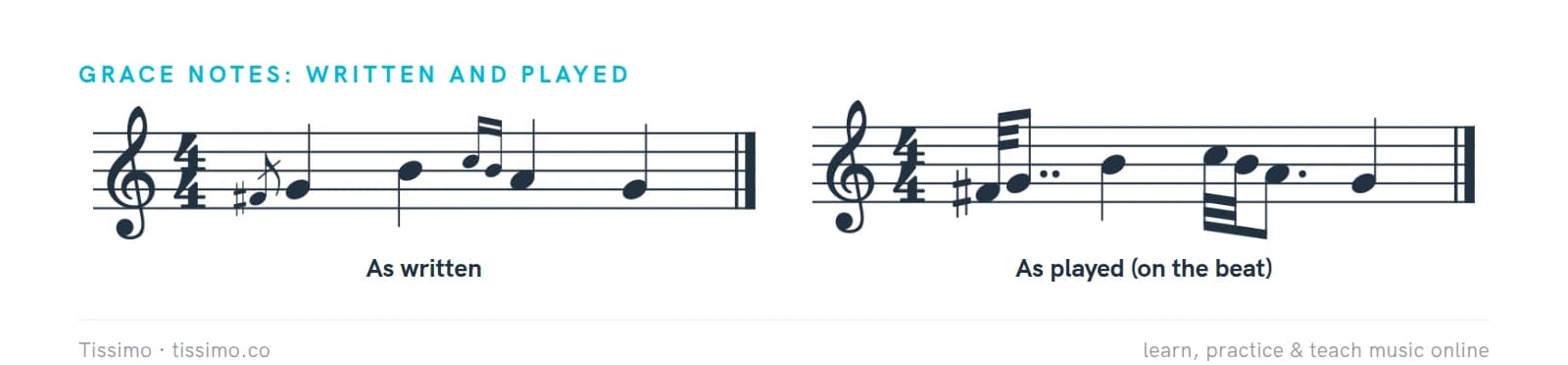
The kinds of grace note
- One small note with a slash through its stem: an acciaccatura, played as quickly as possible.
- One small note without a slash: in music before about 1800, often a long, leaning appoggiatura; in later music usually quick as well.
- A group of two or more small notes, usually beamed sixteenths or thirty-seconds: played quickly and lightly, flowing into the main note.
- Small notes after a note, such as the two notes that end a trill: they belong to the note before and lead into the next one.
How to play grace notes
First learn the main notes and the underlying rhythm. Then place the grace notes according to the style: a quick grace note may begin on the beat, delaying the main note slightly, or just before it. A long appoggiatura instead takes a substantial share of the main note's time and is often accented before resolving more softly. Not every grace note should be quick or lighter than its main note.
When you learn a new piece, practice the melody without the grace notes first. Once the main notes are secure, add the small ones back in.
Grace notes beyond classical music
Many traditions decorate melodies with very quick notes. Highland bagpipe music is full of grace notes, partly because the chanter cannot stop between notes, so grace notes are used to separate repeated notes. Irish fiddle and flute players use "cuts" and "taps," and blues and rock players add quick hammer-ons and slides that work the same way.
Practice reading and playing them with Grace Notes, and compare the periods in Ornaments through the eras.
Common questions
Do grace notes count in the rhythm?
No. A grace note has no beat of its own. Its time is borrowed from the main note or the note before, so the bar adds up without it.
What is the difference between a grace note and an acciaccatura?
Grace note is the general name for any small ornamental note. An acciaccatura is one kind: a single small note with a slash, played as quickly as possible.
Practice it: free worksheets
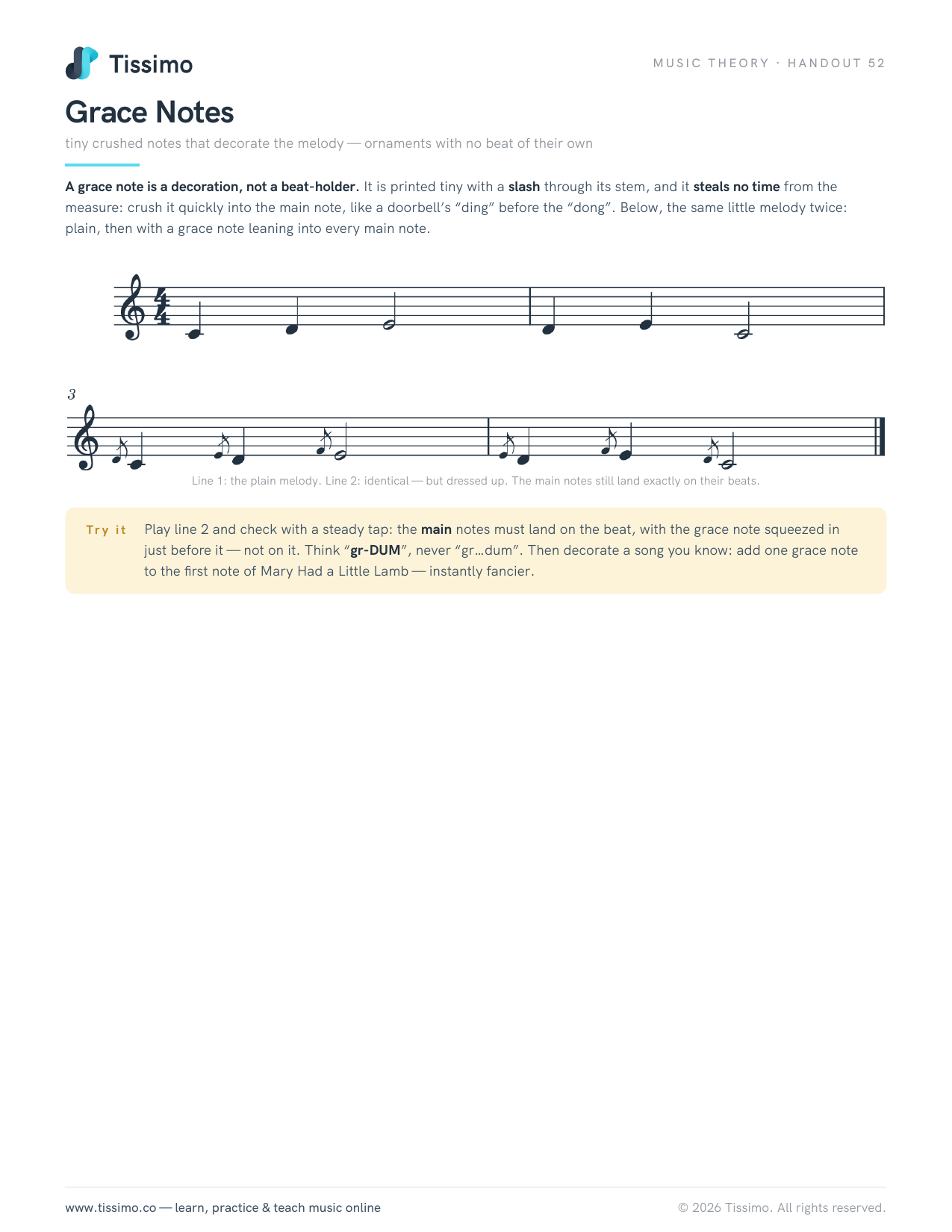 Grace Notestiny crushed notes that decorate the melody — ornaments with no beat of their own
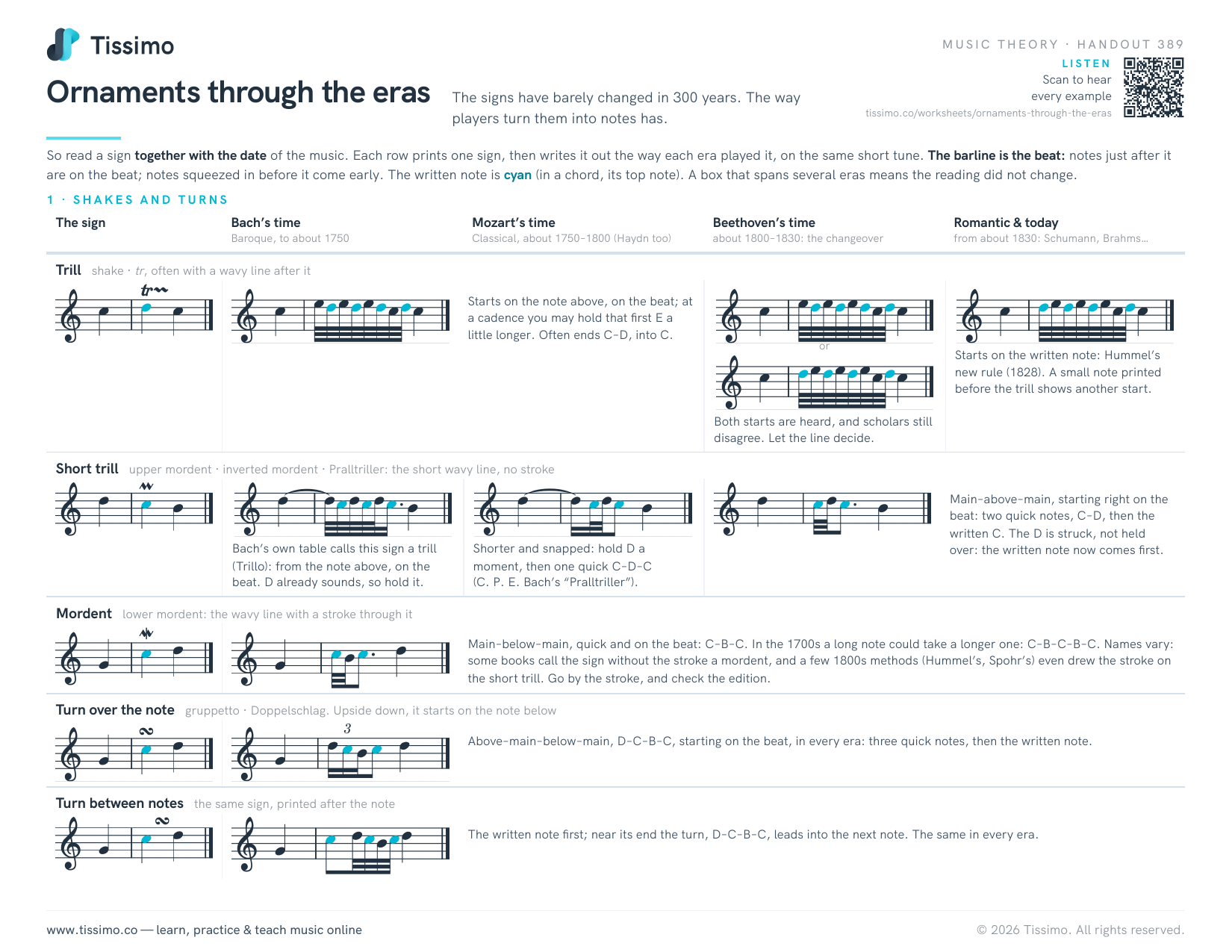 Ornaments through the erasThe signs have barely changed in 300 years. The way players turn them into notes has.
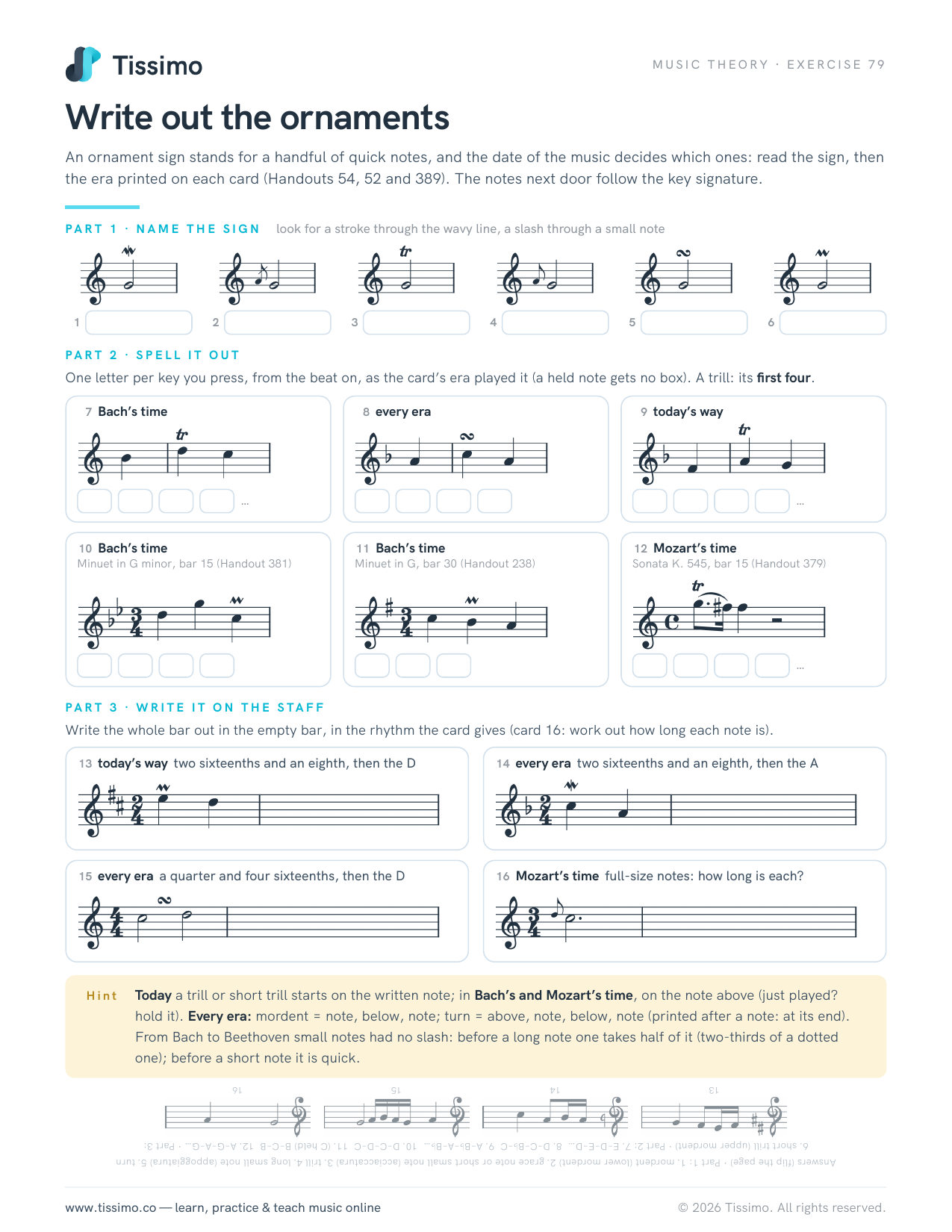 Write out the ornamentsAn ornament sign stands for a handful of quick notes, and the date of the music decides which ones: read the sign, then the era printed on each card (Handouts 54, 52 and 389). The notes next door follow the key signature.
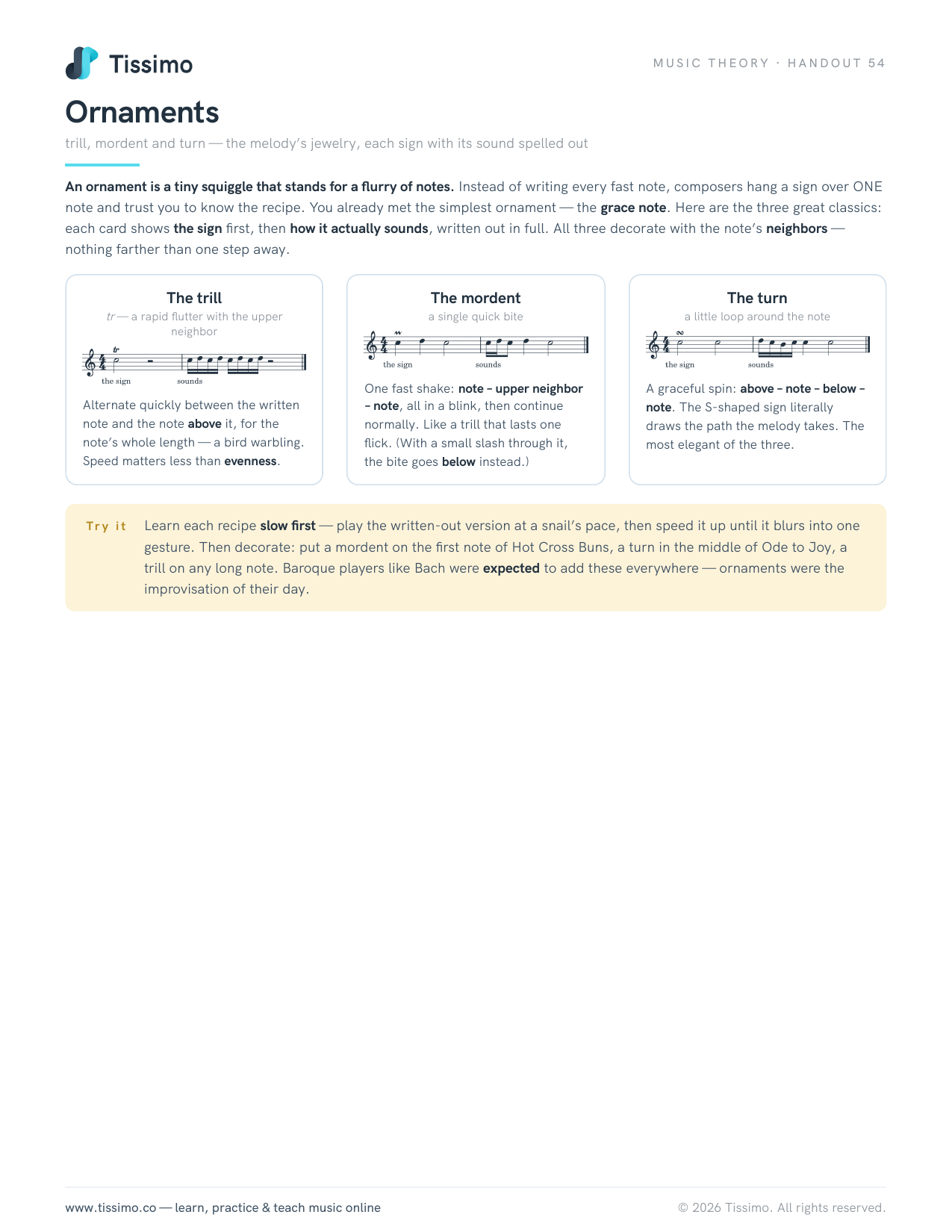 Ornamentstrill, short trill and turn — the melody’s jewelry, each sign with its sound spelled out