Styles, Genres & Eras
Gospel Music
Gospel music is Christian music rooted in African American church traditions, known for powerful solo and choir singing, call and response, rich harmony and driving rhythm. It shaped soul, R&B and pop singing.
Gospel music is religious music that proclaims the Christian message, the "good news" that gives it its name. The best-known tradition, African American gospel, grew in Black churches in the United States in the early 20th century, drawing on spirituals, hymns, the blues and jazz. A separate tradition, Southern gospel, developed in white churches of the American South, often sung by male quartets.
Musical features
- Powerful, expressive singing: soloists use wide dynamic range, growls, falsetto and long runs of decoration (melismas).
- Call and response between the lead singer and the choir or congregation.
- The choir singing in close, rich harmony, often in three parts (soprano, alto, tenor).
- Piano and Hammond organ at the center of the band, later joined by bass, drums and guitar.
- Rich harmony: seventh and extended chords, passing chords and the "amen" plagal cadence (IV–I).
- Rhythmic drive: handclaps on the backbeat, rising tempos and repeated vamps that build in intensity.
Key figures
- Thomas A. Dorsey, a former blues pianist, is often called the "father of gospel music." His song "Take My Hand, Precious Lord" (1932) is a standard.
- Mahalia Jackson became gospel's most famous singer, admired far beyond the church.
- Sister Rosetta Tharpe brought electric guitar and swing into gospel and influenced early rock and roll.
- The Edwin Hawkins Singers' "Oh Happy Day" (1969) became an international pop hit.
- Later artists such as Andraé Crouch and Kirk Franklin blended gospel with contemporary R&B and hip-hop.
Influence
Gospel shaped the sound of popular music. Many soul and R&B singers, Aretha Franklin among them, began singing in church, and gospel vocal style, harmony and piano playing run through R&B, soul, rock and pop.
Playing gospel piano
Gospel pianists fill the space between the singer's phrases, use passing chords that move in parallel, and play strong left-hand octaves. A good start is to harmonize a hymn with the primary chords, add a IV–I amen ending, then decorate it with passing chords. The Cadences and Chords & Progressions worksheets cover the basics.
Common questions
What is the difference between gospel and spirituals?
Spirituals are older religious folk songs created by enslaved African Americans, passed on orally. Gospel developed in the 20th century as composed, published church music, often with piano, organ and a choir.
Who is the father of gospel music?
Thomas A. Dorsey is usually given that title. He wrote hundreds of gospel songs, including "Take My Hand, Precious Lord."
Practice it: free worksheets
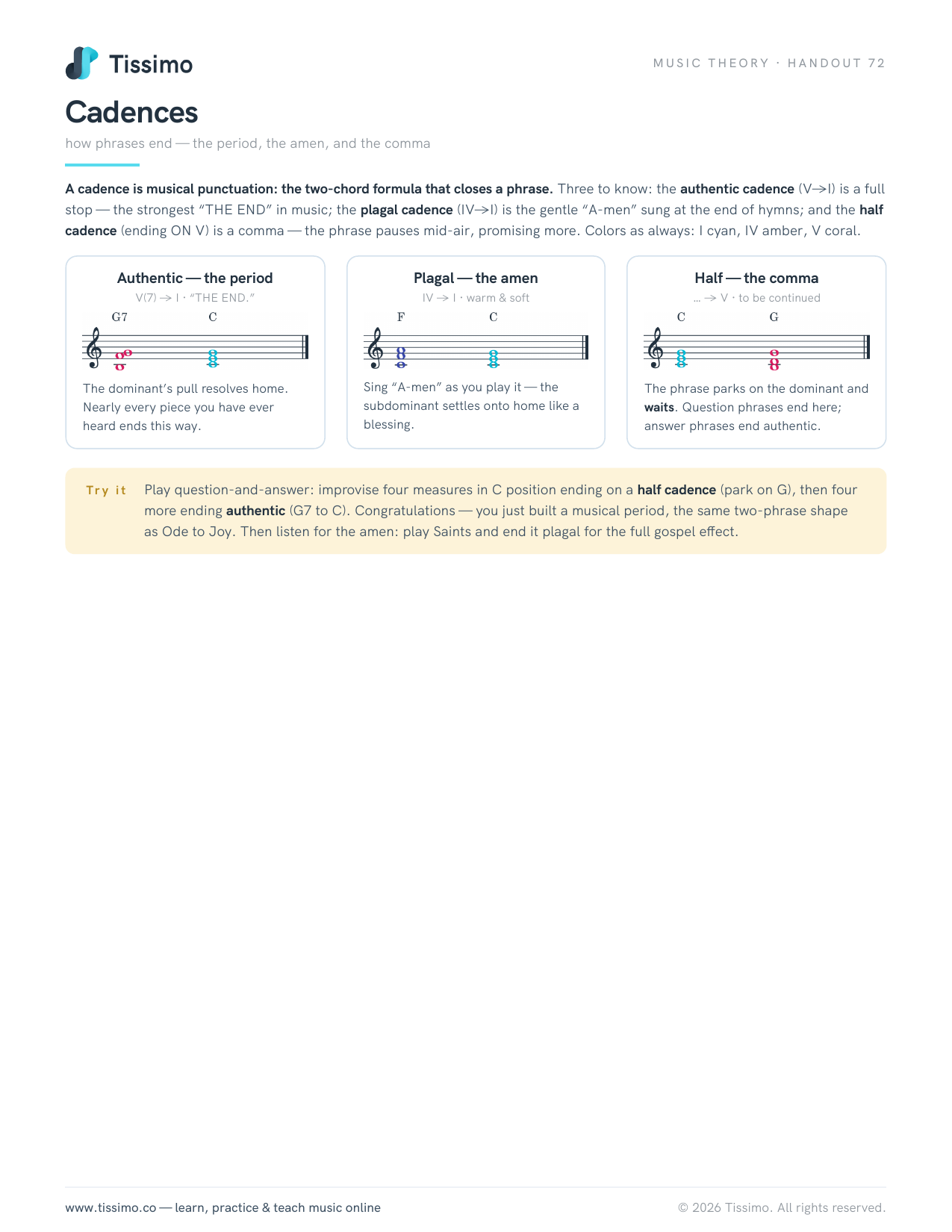 Cadenceshow phrases end — the period, the amen, and the comma
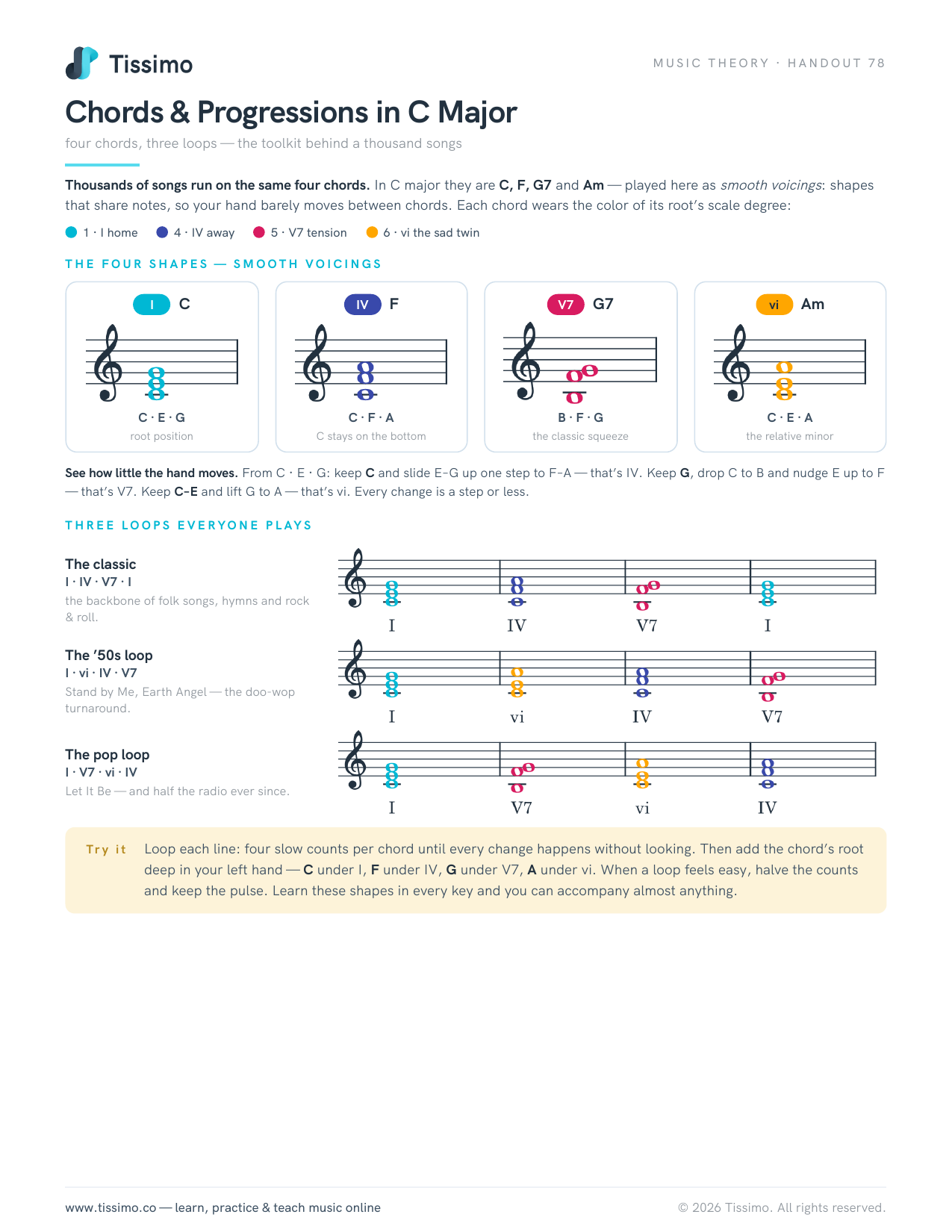 Chords & Progressions in Every KeyFour chords, three loops — the toolkit behind a thousand songs, in all 24 keys.
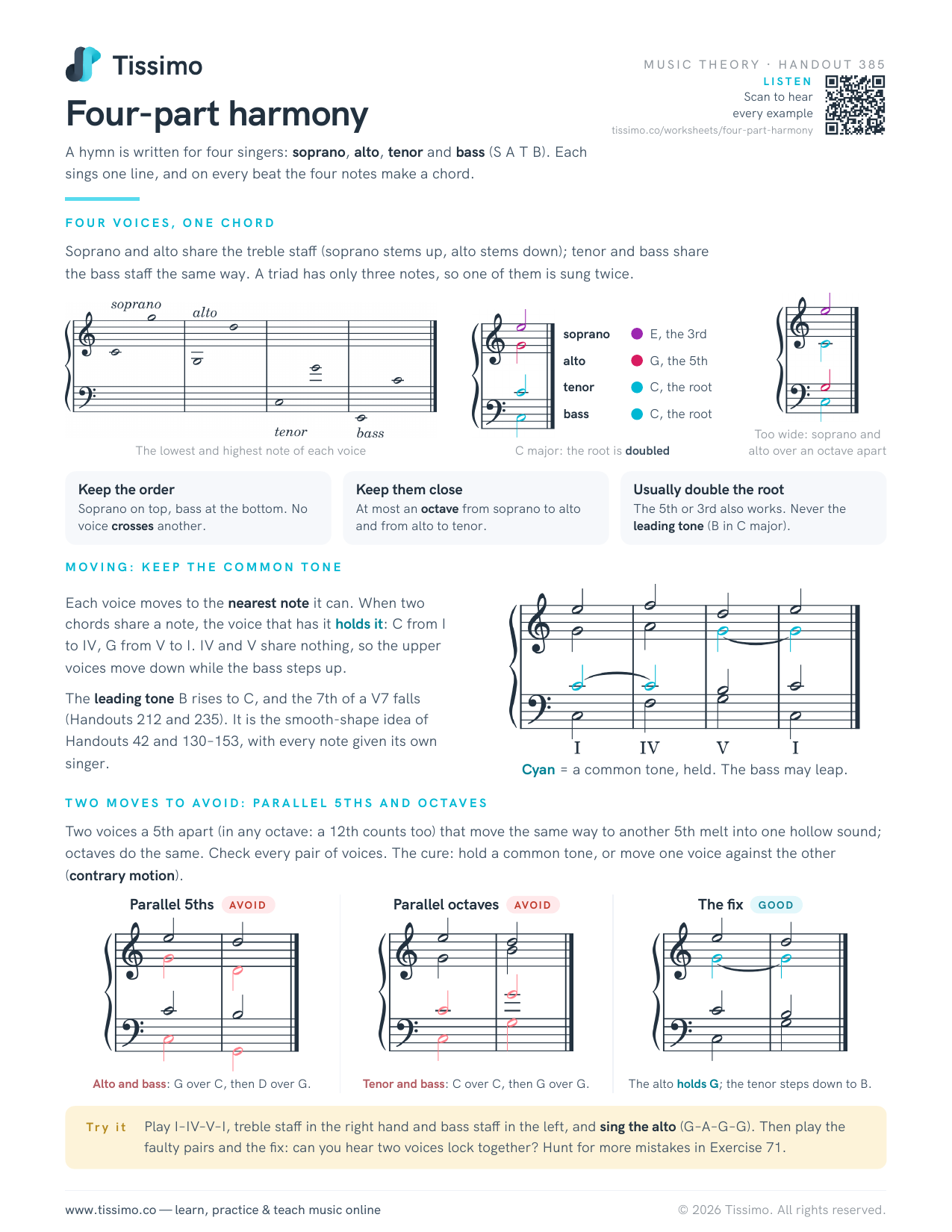 Four-part harmonyA hymn is written for four singers: soprano, alto, tenor and bass (S A T B). Each sings one line, and on every beat the four notes make a chord.